Sam Leith

Sam Leith

Sam Leith is literary editor of The Spectator.

How Noddy and Big Ears conquered the world

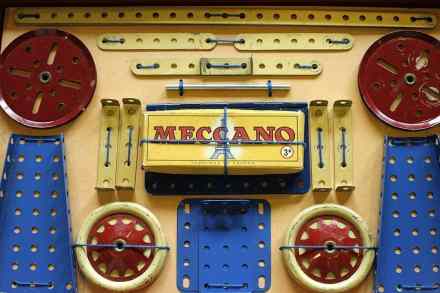
Perhaps the funniest of the many funny jokes in Sue Townsend’s The Secret Diary of Adrian Mole, Aged 13¾ is its protagonist’s struggle with Enid Blyton. Having turned the corner into adolescence, Adrian is mortified by the Blyton characters on the wallpaper in his childhood bedroom and sets about repainting the room in black, the better to represent his turbulent soul. And yet, though he slaps on coat after coat of black paint, the shiny yellow bells on Noddy’s cap continue to show through. He’s reduced to colouring them in one by one. (‘Went over hat bells with black felt-tip pen, did 69 tonight, only 124 to go.

Kevin Birmingham: The Sinner and The Saint

39 min listen

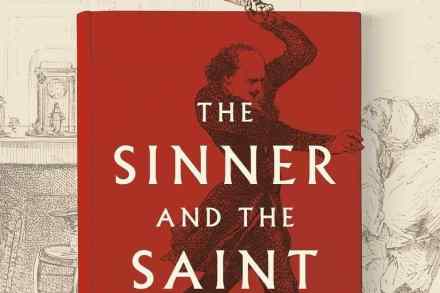
My guest in this week's Book Club podcast is Kevin Birmingham, whose new book The Sinner and The Saint: Dostoevsky, A Crime and its Punishment, tells the extraordinary story of how Dostoevsky came to write Crime and Punishment – and the underexplored story of the real-life murderer whose case inspired it. Physical agony, Siberian exile, vicious state censorship, old-school nihilists – and the astonishing personal resilience of one of Russia's greatest writers... it's all here.

Meghan woz right

The Duchess of Sussex’s legal ding-dong with the Mail on Sunday (which published her private correspondence with her father) has been one of those battles where you regret it’s not possible for both sides to lose. But one side did lose, and it deserved to. Meghan was in the right. I half wish she hadn’t been, if only so we didn’t have to read her statement after the court of appeal found in her favour. It managed the peculiar feat of crowing and simpering at the same time:  ‘This is a victory not just for me, but for anyone who has ever felt scared to stand up for what’s right.

Judy Golding: The Children of Lovers

35 min listen

This year Faber and Faber started the project of republishing the late Nobel Laureate William Golding's back catalogue -- starting with Pincher Martin, The Inheritors and The Spire. I'm joined by his daughter Judy Golding -- author of The Children of Lovers: A Memoir of William Golding By His Daughter -- to talk about Golding the writer and Golding the man. What were the deep fears that drove his work and were eased by drink? How did the war change his worldview? And what was the nature of the religious sensibility that underpinned his visionary allegories of folly and evil?

The forever ‘war on Christmas’

It seems to get earlier each year, doesn’t it? It's not yet even December, and the Mail on Sunday has splashed on 'NOW THE WOKE ‘BLOB’ TRIES TO BAN CHRISTMAS'. Lordy be. I say this every year and every year my woke comrades fail to learn. We have a leak, a chatty flake, I say. Someone’s feeding our plans to the Mail on Sunday, I say. We need a major overhaul of woke blob op-sec if we’re ever going to get this whole Christmas-banning thing done, I say. And do they listen? To be honest, I thought we were onto a good one this time. It was subtle. As the paper reports, our attempt to ban Christmas came in an innocuous guise.

What to get a gamer for Christmas

The bad news for video game fans – and the parents or grandparents of same – as Christmas approaches is that our old friend 'supply chain issues' means that the latest consoles – the PS5 and the XBox Series X – are going to be tricky to get your hands on. Best hope that Santa drops a bumper sack of the elusive components they need down the industrial chimneys of the Sony and Microsoft manufacturing plants. The good news, though, is that 2021 has bought a goodly crop of new games to play in the consoles you already have; or to download onto your PC via Steam. First off, whoohoo! There’s a new Halo.

Paul Muldoon: Howdie-Skelp

39 min listen

On this week's Book Club podcast, I'm joined by one of the most distinguished poets in the language, Paul Muldoon, to talk about his new book Howdie-Skelp. He tells me of his unfashionable belief in inspiration; why he thinks poetry -- even his -- needn't be difficult just because it's difficult; how writing song lyrics differs from writing poetry; and how he came to work with Sir Paul McCartney.

The paradoxical integrity of our dodgy honours system

We are told that the Prince of Wales had no idea at the time that his underlings were offering to sell honours to random zillionaires. That’s lucky. Instead of being tarred by the sticky brush of corruption, then, he emerges from this minor scandal as a benign old nitwit, shovelled from one place to another by his suited aides, shaking hands and offering tea to this Russian biznizman, that Chinese philanthropist, that Saudi moneybags ('Mahfouz bin Mahfouz, Sir. Very important chap. Great benefactor.' 'Yes, jolly good. Have you come far, Mr Mahfouz?') I’m inclined to take the denial that he knew what was going on pretty much at face value.

Tessa Dunlop: Army Girls

47 min listen

My guest on this week's Book Club podcast is the historian Tessa Dunlop. Tessa's new book is Army Girls: The Secrets and Stories of Military Service from the Final Few Women Who Fought In World War Two. She tells me about how she gathered testimony and formed friendships with the nonagenarian veterans of the Second World War amid the Covid lockdown; about the class-ridden rivalries between the women's services; and how while still not officially in the front line, women during the war nevertheless found themselves in the thick of it.

Rest in peace, Wilbur Smith

A sparrow falls. The death of Wilbur Smith at the weekend deprives the world of one of the great luminaries of popular fiction of the second half of the last century. He joins Jameses Michener and Clavell, Hammond Innes and Harold Robbins in the great 1970s dad bookshelf in the sky. Kids of today will say: 'Wilbur who?' But I owe that man a debt of gratitude. He was one of the first 'grown-up' novelists I really got stuck into; along, of course, with Stephen King. Like Stephen King, he was grown-up in just the right way to appeal to children — really, a hop and a skip from Willard Price’s Adventure series, except with some real history in them and lashings of rumpty-pumpty. And the titles! The Sound of Thunder. The Angels Weep. Men of Men. The Burning Shore.

Armando Iannucci: Pandemonium

25 min listen

My guest on this week's Book Club podcast is Armando Iannucci – the satirist behind Alan Partridge, The Thick of It, Veep and The Death of Stalin. What many of his fans might not know is that he's also a devoted scholar of Milton – whose influence is to be found in his first published poem Pandemonium: Some Verses on the Current Predicament. Armando tells me what hurt him into verse, identifies the moment that led him to abandon an English Literature PhD for a career in comedy – and explains why there's as much sadness as savagery in his mock-epic description of the Covid epidemic.

The Bitcoin delusion

Cast your mind back a few years to last week – when there was much laughing and wailing at the collapse of Squid coin, a meme cryptocurrency launched to capitalise on the popular Netflix show. It had gone to market, had rocketed 23 million per cent in value to $28,000-odd a unit... and then plummeted to zero on Monday morning after the creators cashed out for real-world money. Yet like the battle-hardened protagonist of the show, amazingly, the currency is down but not out. Yesterday it was reported to have been the top gainer in the global crypto market, having rocketed more than 800 per cent in 24 hours to... $0.65. Not much consolation, I suppose, to those who bought the peak, but hope obviously springs eternal.

Claire Tomalin: The Young H G Wells

25 min listen

In this week’s Book Club podcast, my guest is Claire Tomalin. Claire’s new book, The Young H G Wells: Changing the World, tracks the extraordinary life and rocket-powered career of one of the most influential writers of the Edwardian age. She tells me how drapery’s loss was literature’s gain, why casting the goatish Wells as a #metoo villain isn’t quite right - and why we should all be reading Tono-Bungay.

Should we forgive Penelope Jackson?

The most poignant detail, I think, about the story of Penelope Jackson – jailed for 18 years for stabbing her husband to death – was the reaction of her late husband’s younger brother Alan. He said he intended to visit her in prison:  'I want to say to her, ‘What you’ve gone through I can quite imagine. I know what he was like towards me and my wife. You’re not on your own’.'  Alan Jackson was estranged from his brother – whom he described as an 'arrogant bully' – and said:  'No one deserves to die the way he did but I can believe Penny would have been pushed to her limits.

Jane Ridley: George V

36 min listen

In this week’s Book Club podcast, Sam's guest is the historian Jane Ridley, talking about her new book George V: Never A Dull Moment. She tells him there’s so much more to the 'boring' monarch than shooting grouse and collecting stamps. Hear how he navigated some of the worst constitutional crises in memory, saved the British monarchy as the grand dynasties of Europe started toppling… and then inadvertently imperilled it again by his treatment of his son and heir.

Why did we decide that Covid was over?

Look, I don’t know much epidemiology. Can’t pretend to. So what follows is, necessarily, a personal finger to the wind. But perhaps it chimes with your experience.  First time round — back in the days when we were all huddled indoors, leaving the house only to stand on the doorstep of a Thursday night to bang pans with a wooden spoon, or making solo expeditions to a denuded supermarket where we do-si-dohed around each-other in the aisles… yes, back in those days, I didn’t know very many people who got Covid. Acquaintances, the odd friend. Some scary stories. Some scarier statistics. But not so many ‘rona stricken friends. Could we inch towards herd immunity down a road scattered with corpses rather than heaped with them?

James Holland: Brothers In Arms

36 min listen

In this week's Book Club podcast I'm joined by the historian James Holland to talk about his fascinating new book Brothers In Arms: One Legendary Tank Regiment's Bloody War from D-Day to VE-Day. James's story follows the Sherwood Rangers from El Alamein to the D-Day Landings, and on through the last push through Europe into Germany. He tells me how he put together this richly detailed account and what it was like, hour by hour and day by day, for the men who fought in tanks.

The death of David Amess and the narcissism of the discourse

The speed with which tragedy turns into farce these days is quite something. Within minutes of Sir David Amess’s death being announced, social media was filled with sizzling hot takes. The back-and-forth centred on whether the decline in 'civility' and the use of dehumanising language in politics was to blame for the murder of an MP. It recalled nothing so much as the recriminations after Jo Cox’s death, except that the teams here had, as it were, swapped shirts at half-time. Back then, the left more or less directly attributed Jo Cox’s murder to the language used by the partisans of Brexit: 'traitors', 'saboteurs' and so on. Back then, the right accused them of playing politics with a tragedy.

Baby doomers: why are couples putting the planet ahead of parenthood?

38 min listen

In this week’s episode: Why are a growing number of people putting the planet before parenthood? Madeleine Kearns writes about this phenomenon in this week’s issue and thinks that some of these fears might be unfounded. Tom Woodman author of Future is one of these people that Madeleine’s piece talks about. Tom has very real worries about bringing a child into the world. It's not only the least green thing he could do but also that the standard of living for that child could be severely limited due to a climate catastrophe. (00:47)Also this week: Has Boris Johnson brought Conservatism full circle? That’s the argument Tim Stanley makes in this week’s Spectator. He joins Lara on the podcast along with one of the MPs mentioned in the piece, Steve Baker.

Joan Bakewell: The Tick of Two Clocks

32 min listen

In this week’s Book Club podcast my guest is Joan Bakewell, who talks to me about her new book The Tick Of Two Clocks: A Tale of Moving On. It describes how she made the decision to sell the house she lived in for half a century, and what it meant to her to face up to old age, and take stock of the past.