Sam Leith

Sam Leith

Sam Leith is literary editor of The Spectator.

We live in a one-way shame culture 

Anyone who has ever published a book and been dismayed by an anonymous review online will have cheered inwardly at the story of David Wilson. Professor Wilson is a criminologist and historian who has published several books. Each of his books has received a scathing one-star review on Amazon from a pseudonymous critic calling himself 'Junius'. The latest was posted, he says, within a few hours of his new book being published: 'abysmal... avoid... low quality... poor research... would disgrace an undergraduate dissertation'.  Such reviews aren’t just words: they can cause material harm to books in Amazon’s ranking system.

Katja Hoyer: Beyond The Wall

50 min listen

In this week's Book Club podcast, my guest is the historian Katja Hoyer, whose new book Beyond The Wall: East Germany 1949-1990 tells the story of four decades which are vital to understanding modern Germany, but which tend to be quietly relegated to a footnote in history. Born in the GDR herself, Katja tells me how much more there is to the East German state than the Berlin Wall, the Stasi, and the grey totalitarian dystopia of popular imagination. She tells me about Erich Honecker's wild side, about the importance of coffee to East German morale, and about how inevitable or otherwise were the historical forces that saw Germany first divided, and then reunited.

Henry Dimbleby & Jemima Lewis: Ravenous

45 min listen

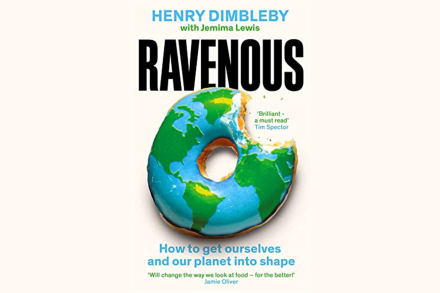
On this week's Book Club podcast my guests are the former government food tsar Henry Dimbleby and his wife and co-author Jemima Lewis, to talk about their new book Ravenous: How To Get Ourselves and Our Planet Into Shape.

Is it time to ban second jobs for MPs? 

There are some genres of newspaper story that never die. Among them are sightings of Lord Lucan, public moralists discovered in adultery – and foolish MPs being caught out offering themselves for hire to undercover hacks. A fine example of the third of these broke yesterday thanks to the situationist campaigning group Led By Donkeys, who started out as Brexit-bashers but have expanded their remit to the broad-brush embarrassment of MPs. You’d think, by now, that senior MPs would be a bit more on the qui vive for this sort of thing. But no: they never learn.

Victoria Smith: Hags

46 min listen

My guest on this week's Book Club podcast is the writer Victoria Smith, whose new book Hags: The Demonisation of Middle-Aged Women explains why one of the oldest forms of misogyny is seeing a vicious resurgence in our own age. She says some of the worst of it now comes from young women. She tells me why she thinks feminists of each new generation seem destined to forget or reject the lessons learned by the previous one, and why female bodies – and the life experiences which go with them – are something that can't be wished away by postmodern theory.

In praise of the dashcam citizens policing our roads

Jeremy Bentham, thou shouldst be alive and doing a ton through the Mickleham Bends at this hour. Bentham’s great contribution to carceral theory, as most readers will know, was the panopticon. He imagined a prison where the cells were arranged in a rotunda so a guard in the middle could watch every prisoner without having to clop round from cell to cell. What was so clever about the idea, and why it fired Michel Foucault’s imagination, was not that it saved shoe-leather. It was that, because the prisoners didn’t know whether they were being watched or not at any given time, they would be forced to assume that they were and behave accordingly.

Ian Buruma: Collaborators

49 min listen

My guest in this week’s Book Club podcast is the writer and editor Ian Buruma, to talk about his new book Collaborators: Three Stories of Deception and Survival in World War Two. A Chinese princess who climbed into bed with Japanese nationalist gangsters; an observant Jew who sold his co-religionists to the Nazis; and Himmler’s personal masseur. Ian describes how their stories link and resonate, and how murky morality gets in a time where truth loses its meaning altogether.

Let’s talk about sex education

Ah, sex education. I remember it like it was yesterday. It would have been 1987. Our entire year assembled in the school theatre. A beige, moustachioed, Open-University-looking chap stood alone on the stage with a slide projector. We’d never seen him before and never saw him again. He had been hired in especially for the occasion, I fancy, in much the same way and for much the same reason Russia uses the Wagner group to supply combat troops.   On one of the early slides was a long list of synonyms for the male organ of generation. 'Penis,' he intoned solemnly, indicating the word with his pointer. 'Willy,' he said. 'Dick,' he said. 'John Thomas.' Pause. 'Todger.' You can imagine how this was all greeted by 250-odd thirteen-year-old boys.

Sara Wheeler: Glowing Still

41 min listen

On this week's Book Club podcast, my guest is Sara Wheeler, who looks back on her travelling life in Glowing Still: A Woman's Life on the Road. She tells me why it's 'a book about tits and toilets', as well as a meditation on the past and future of travel writing and a lament for the books – in one case thanks to having children and the other to the modern fatwa on 'cultural appropriation' – she didn't get to write.

Starmer will regret appointing Sue Gray

Keir Starmer has thrived, over the past few years, by being a bit boring. Every day, I fancy, he wakes up in the morning, and after he has finished sanding his face and arranging his hair with Araldite, solemnly addresses the mirror and promises himself: no unforced errors. He probably has a list of don’ts: don’t in a moment of absentmindedness call for a national strike; don’t demand the eradication of the state of Israel; don’t promise to tax the rich till the pips squeak; don’t appear in the same hemisphere, let alone same photograph as anyone with a grey beard. Geese routinely walk unstartled across his path.

Carlo Rovelli: Anaximander

48 min listen

On this week’s Book Club, I’m joined by the theoretical physicist Carlo Rovelli to talk about his new book Anaximander and the Nature of Science, in which he explains how a radical thinker two and a half millennia ago was the first human to intuit that the earth is floating in space. He tells me how Anaximander’s way of thinking still informs the work scientists do everywhere, how politics shapes scientific progress and how we can navigate the twin threats of religious dogma and postmodern relativism in search of truth.

Blame, Brexit and the great tomato shortage of 2023 

It's funny how powerful a concrete example of something can be, isn’t it? The thing that brings a situation home to where you live. It’s a reminder of how basic, for all our theoretical sophistication, humans really are. Tell someone that bond yields are increasing at an alarming rate, and unless they are a bond trader they won’t feel that alarm in their gut. But tell them that it’s going to be impossible to buy salad in the supermarket, and unless they are Jordan Peterson, they will freak the hell out.  The tomato shortage is what the young folk call 'relatable content', and those empty tomato shelves are a political Rorschach blot. You see in them whatever you want to see. Brexit, for instance.

Robert Douglas-Fairhurst: Metamorphosis

34 min listen

My guest on this week’s Book Club is Robert Douglas-Fairhurst. In his new book Metamorphosis: A Life in Pieces, Robert describes how being diagnosed with Multiple Sclerosis plunged him from his comfortable life as an English literature professor at Oxford into a frightening and disorienting new world; and how literature itself helped him learn to navigate around it.

The senseless re-editing of Roald Dahl

Roald Dahl was, in many respects, a horrible man. He was a narcissist, a bully, a liar, an anti-Semite, a tax-dodger, a faithless husband and – if his daughter’s account is to be believed – a cruel and thoughtless father. None of which has anything whatever to do, it scarcely needs saying, with the content of his books. But for once it’s the contents of the books, rather than the adult prejudices of the author, that are drawing heat.  Puffin books, as the Telegraph reported at the weekend, has quietly reissued edited versions of Dahl’s canon: ‘This book was written many years ago, and so we regularly review the language to ensure that it can continue to be enjoyed by all today.

Richard Bradford: Tough Guy

37 min listen

My guest on this week’s Book Club podcast is the scholar and biographer Richard Bradford, whose new book Tough Guy: The Life of Norman Mailer looks at the rackety life and uneven oeuvre of one of the big beasts of 20th-century American letters. Mailer, as Richard argues, thought his self-identified genius as a writer licensed any amount of personal bad behaviour – up to and including stabbing one of his wives. As the book makes clear Mailer was a racist, misogynist, homophobe, thug and a boor. But was he also, actually, any good? And will he last?

It’s time for ‘reality-based’ politicians to start addressing Brexit

Praise be. A day or two ago, something potentially quite exciting took place in Ditchley Park in Oxfordshire. It was a two-day conference and its guiding question – according to documents obtained by the Observer – was: ‘How can we make Brexit work better with our neighbours in Europe?’ Gathered there, and not a moment before time (though some might say five or six years ago might have been better still), were a number of politicians and public figures. It’s described as having been a ‘private discussion’. There are two things that seem worth noticing about this.

Robert Kaplan: The Tragic Mind

29 min listen

My guest on this week's Book Club podcast is the American writer, reporter and foreign policy expert Robert Kaplan, whose new book The Tragic Mind: Fear, Fate and the Burden of Power argues that it's in Greek tragedy that we can find the most important lessons in how to navigate the 21st century. He tells me how the reflections in the book arose from his remorse at having influenced the Bush administration with his support for the Iraq War, why it still makes sense to think about 'fate' in a world without gods and why George H W Bush was a paragon of the tragic mindset while his son George W Bush was a tragic hero.

Liz Truss, Brexit and the petulant anger at reality

The time it takes to mount a political comeback gets shorter and shorter, doesn’t it? The last prime minister but one barely got his toes in the sand on his first holiday after leaving the post before he was flying home with thoughts of mounting a return to high office. Now his successor, too, is campaigning to get on track to get her old job back.  The first wallop of Liz Truss’s one-two punch was a long article for the Sunday Telegraph explaining why the mini-Budget that so spectacularly sunk her premiership was, in fact, absolutely the right thing to do; punch number two will be an interview with Spectator TV that goes up this very afternoon. I’m interested, as I expect we all are, to see how she develops there the arguments that her piece for the Telegraph set out.

Tania Branigan: Red Memory

57 min listen

My guest in this week's Book Club podcast is the reporter Tania Branigan, whose experience as a correspondent in China led her to believe that the trauma of the Cultural Revolution was the story behind the story that made sense of modern China. In her new book Red Memory: Remembering and Forgetting China's Cultural Revolution, she explores how the memory of that bloody decade, and the drive to forget or ignore it, shapes the high politics and daily lives of the Chinese nation. She tells me why official amnesia on the subject is a surprisingly recent development, how 1989's Tiananmen Square protests changed the course of the country, and why so many ordinary Chinese people still, extraordinarily, pine for the days of Mao.

Who thought the Prince Andrew sex bath picture was a good idea?

How big does a bath need to be for 'sex frolicking' to be a possibility? That’s not, if you’d asked anyone six months ago, the question on which the reputational future of the monarchy might be in part held to depend – and yet here we are. A bizarre photograph has been released by the brother of Ghislaine Maxwell in an attempt to discredit Virgina Roberts Guiffre's claims of abuse. The photograph made the front page of the Daily Telegraph, no less. It showed two people, described in the accompanying story as 'acquaintances' of Ghislaine Maxwell, sitting facing each-other, fully clothed, in the bathtub of Maxwell’s old home.