Sam Leith

Sam Leith

Sam Leith is literary editor of The Spectator.

Andrew Lloyd Webber and the dangerous truth about alcohol

From our UK edition

There’s something, I think, very heartening and touching in reading Andrew Lloyd Webber talk about joining Alcoholics Anonymous at the ripe old age of 78. He told the Sunday Times’s Melissa Denes: “I am a recovering alcoholic. Sixteen months ago I decided that I needed help and it’s the best thing that ever happened to me.” He waxes lyrical about his delight in going to AA meetings every day. There may be some grumbling in AA circles about Lord L-W's candour Bloody good on him. Especially given that most people who nurse a lifelong addiction find it very hard to recover by the time they are approaching their eighties – if they stay alive that long in the first place.

Joe Sacco: The Once and Future Riot

From our UK edition

25 min listen

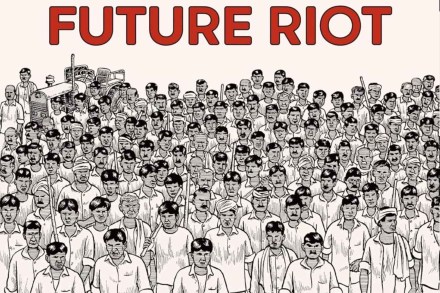
My guest in this week’s Book Club podcast is the reporter – cartoonist Joe Sacco, talking about his most recent book The Once and Future Riot, about Hindu/Muslim violence in rural India. He tells me how he knows when he’s onto a story, what cartooning can do for reportage, and why he draws himself so differently.

Joe Sacco: The Once and Future Riot

London hasn’t fallen

From our UK edition

“London Has Fallen.” Little did I imagine, when I sat on the sofa with my friend Tanya gorging on Quality Street and enjoying the latest instalment of Gerard Butler’s heroically average action-movie series, that the film’s title would come to sum up a major strand of global political propaganda.

Mason Currey: Making Art and Making a Living

From our UK edition

42 min listen

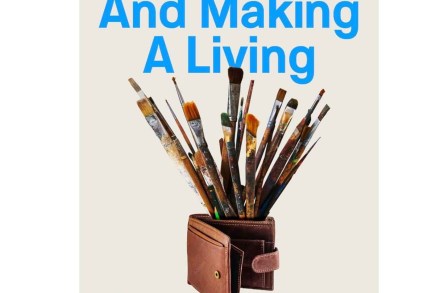
My guest in this week's Book Club podcast is Mason Currey, author of the new book Making Art and Making a Living: Adventures in Funding a Creative Life. He tells me how artists, writers and composers have wrangled through history with the challenge of scraping by, and how that has affected their art, from Baudelaire's lifelong outrage at being forced to live on an allowance and John Berryman's disastrous stint as a door-to-door encyclopaedia salesman to Haydn reinventing the musical idiom of his time because he was so far in the boondocks with his day job that he didn't know what the musical idiom of his time was, exactly.

Mason Currey: Making Art and Making a Living

Why Artemis II matters

Weren’t those images beamed back from the Artemis II mission something to catch the breath in the throat? If something in you wasn’t stirred by the sight of Earth, glimpsed through the window of the space capsule past the silhouetted face of the astronaut Christina Koch, I don’t think you can be fully alive. And what about the thought that for the first time in history, human eyes will look directly on the dark side of the moon; or that the inhabitants of that spacecraft will travel further from our home than any humans have ever done? That for a few tens of minutes before earthrise, they will be wholly out of contact with home as they travel through the vast dark? Stir the soul it might; but why, some will reasonably ask, should we be doing it at all?

Yann Martel: Son of Nobody

From our UK edition

30 min listen

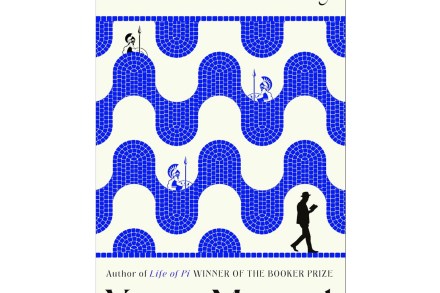
Sam Leith's guest in this week’s Book Club podcast is Yann Martel, talking about coming late to Homer, definitely not being influenced by Pale Fire, why he can’t resist a silly animal, and his new book Son of Nobody.

The illusion and delusion of Matt Goodwin

From our UK edition

Sometimes, a nickname comes along so excellently unkind that you know it's going to stick. One such is “MattGPT” – which will, I suspect, follow former academic and failed Reform candidate in the Gorton and Denton by-election Matt Goodwin to his grave. “MattGPT” is a nickname that will follow former academic and failed Reform candidate Matt Goodwin to his grave The taunt gained traction after the writer Andy Twelves noticed a series of factual errors in Goodwin’s self-published new book Suicide of a Nation: Immigration, Islam, Identity. (He seems to have been strongly inspired in theme as well as in choice of title – intellectual homage, or Salieri eyeballing Mozart?

Heartbreak, Triumph, Genius and Obsession in the World of Competitive Scrabble

From our UK edition

49 min listen

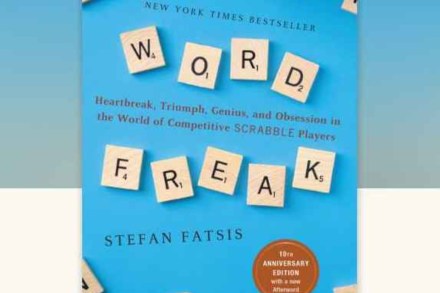
My guest in this week’s Book Club podcast is Stefan Fatsis, whose classic Word Freak: Heartbreak, Triumph, Genius and Obsession in the World of Competitive Scrabble is 25 years old this year. Stefan tells me how a journalistic project turned into a quarter-century obsession, how dramatically tournament Scrabble differs from the living-room game, why we’re still having the same arguments over word lists … and how it has become a family story for him.

Heartbreak, Triumph, Genius and Obsession in the World of Competitive Scrabble

The case for cloning the Queen’s corgis

From our UK edition

‘Vulgar, vulgar, vulgar,’ was the verdict of the late Lord Charteris on Sarah Ferguson. He did not, I think, mean it as a compliment. But her subsequent career has shown quite how liberating such a disposition of character can be. Combine a complete lack of class or taste with a resoundingly innocent love of money, and there’s really nothing you can’t do. Or won’t, perhaps. Fergie says she was “surprised” to get a pair of corgis rather than jewellery or money Hence yesterday’s Mail on Sunday headline, which offered welcome relief from all that stuff about oil prices and collateral damage: ‘Fergie’s Plot to Clone the Queen’s Corgis for Reality TV.

Howard Jacobson: Howl

From our UK edition

38 min listen

My guest in this week’s Book Club podcast is the Booker Prize-winning novelist Howard Jacobson, whose new novel Howl emerges from his rage and despair at the response to the 7 October massacre. He tells me what the novel can do that journalism can’t, why being funny is essential even in the darkest times, and why Zack Polanski isn’t the man he used to be.

Howard Jacobson: Howl

Glorious: Resident Evil – Requiem reviewed

From our UK edition

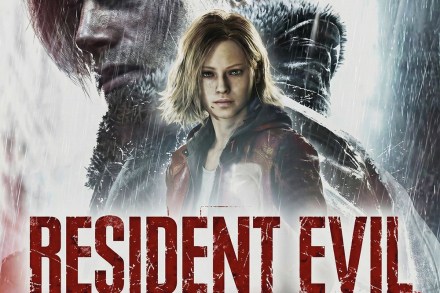
Grade: A Lordy. The Resident Evil survival horror series is three decades old. It probably qualifies by now as Sitting Tenant Evil. Picture it snacking on flies in just the sort of dingy, hasn’t-been-tidied-for-30-years rent-controlled apartment that would make a good setting for a scene in the game. We’re still waiting for the instalment in which the Umbrella Corporation – a biotech firm that makes Purdue Pharma look like a model of caution and probity – faces a class-action lawsuit (X button to file an amicus brief; circle button to object in cross-examination), so for now here’s more of the glorious same. After all these years, it’s still capable of being ace.

Richard Tice’s tax trickery shows he is a true patriot

From our UK edition

Reform’s Richard Tice has been the subject of what I fear is intended as a hit-piece in the Sunday Times. “The Deputy Leader of Reform UK avoided nearly £600,000 in corporation tax after obtaining a rare legal status for his company,” it reports. “Richard Tice then channeled the company’s dividends into an offshore trust and a string of dormant businesses. Several did not pay any tax during the relevant period.” They say all this, I regret to have to report, as if it’s a bad thing. Tice showed just the sort of entrepreneurial ambition we can hope for from a true Brexit believer At issue is the status of a property company majority-owned and controlled by Mr Tice called Quidnet Reit Ltd, between 2018 and 2021.

Lionel Shriver: A Better Life

From our UK edition

38 min listen

My guest on this week's Book Club podcast is Lionel Shriver, whose new novel A Better Life offers among other things a savage send-up of liberal pieties on immigration. I asked Lionel what she was trying to do with the book (why make the argument, for instance, in a novel rather than an op-ed?), whether New York's immigration law really is as nutty as her story paints it, and how she reacts to the opprobrium that this sort of to-the-moment writing stirs up.

Trump is heading for a hard reckoning over Iran

The social media video with which the White House has promoted its attack on Iran is, even by the standards we’ve come to expect from the Trump administration, grotesque on a level that still manages to be flabbergasting. Prefaced in the usual block capitals “JUSTICE THE AMERICAN WAY”, with a flag and flame emoji of the sort favoured by pubescent boys rather than, usually, government agencies, it’s three quarters of a minute of pure brainrot. It isn’t a sign of Trump Derangement Syndrome to consider this video obscene It begins with Tony Stark in front of a bank of computers saying “Wake up. Daddy’s home.

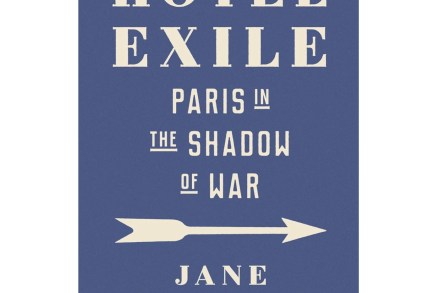
Jane Rogoyska: Hotel Exile – Paris in the Shadow of War

From our UK edition

45 min listen

My guest on this week's Book Club podcast is the historian Jane Rogoyska, whose new book Hotel Exile: Paris in the Shadow of War tells the bloody story of the Second World War through the lens of Paris's Hotel Lutetia – following a cast of exiled intellectuals through the febrile 1930s, the increasing horrors of the war and occupation, through to the devastating aftermath as waves of prisoners returned from the camps. She tells me how she came to this unusual approach, how the connections between her cast of characters proliferated, how close Samuel Beckett came to a concentration camp – and about falling a little bit in love with Walter Benjamin.

Jane Rogoyska: Hotel Exile – Paris in the Shadow of War

Khamenei and the difficult truth about dictators

From our UK edition

So farewell then, Ayatollah Khamenei. I’m put in mind of Private Eye’s cover on the death of Hendrik Verwoerd. “A Nation Mourns” read the headline, under a photograph of four black Africans in ceremonial dress leaping joyfully in the air in a traditional dance. Nobody’s going to be sorry he’s gone. The received wisdom tends to skirt the possibility that some senior Nazis may have been quite cultured But reading his obituary, I confess to surprise and dismay. What was to be found there was not, at least at first, an austere and viciously power-hungry religious monomaniac. Here, from what we know, was somebody who at least in his younger years was disciplined, modest, intellectually curious, and artistically inclined.

Francis Spufford: Nonesuch

From our UK edition

32 min listen

My guest this week is Francis Spufford, whose fabulous new novel Nonesuch is a fantasy adventure set during the Blitz containing magical Nazis, nerdy TV techs and honest-to-goodness angels. He tells me about fantasy world-building and historical research, the pleasures and pitfalls of writing a female protagonist, why C S Lewis is as influential as Tolkien — and supersizing Dr Manhattan. You can read Philip Hensher's review of Nonesuch here.

Francis Spufford: Nonesuch

Does Andrew make the case for republicanism?

From our UK edition

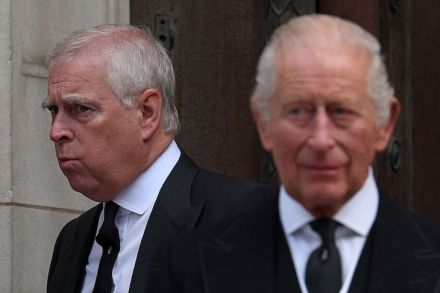
So: is the game up? Looking at the former Prince Andrew’s slumped posture, corpse-grey face and thousand-yard stare in the snatched photographs of him leaving police custody, you might be tempted to think so. He looked like Ebenezer Scrooge confronted by the Ghost of Christmas Future. The future certainly doesn’t hold anything very uplifting for this wretched, silly specimen – but will he take the monarchy with him? The Firm gets away with being secretive in all sorts of ways – not least around money. That must change There are two separate cases here, I think. One is: does the former Prince’s disgrace present a rational case for the abolition of the monarchy?

What Would You Do Alone in a Cage with Nothing but Cocaine?

From our UK edition

45 min listen

My guest in this week's Book Club podcast is the philosophy professor Hanna Pickard, whose new book is What Would You Do Alone in a Cage with Nothing but Cocaine? A Philosophy of Addiction. She tells me why we need a new approach to ‘the puzzle of addiction’. She says the idea that addicts are helplessly in thrall to the compulsions of a ‘broken brain’ is wrong, that we need to understand how sometimes using even if it's looks like killing you can make a sort of sense – and describes how her own one-off experience of morphine set her on the path of trying to change the way we think about drugs.

What Would You Do Alone in a Cage with Nothing but Cocaine?

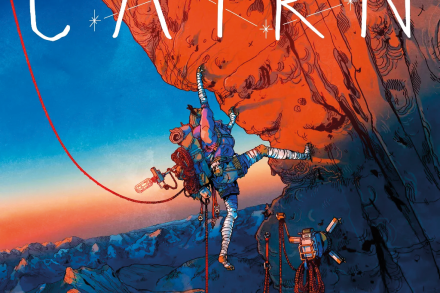
Entirely absorbing – and wonderfully tense: Cairn reviewed

From our UK edition

Grade: A– A cairn, as readers will know, is a pile of stones often placed to mark a grave. Yikes. Not the most encouraging title to give to a videogame about someone trying to climb a mountain. Aava is a dedicated rock-climber determined to make the first solo ascent of Mount Kami, despite the countless lives it has already claimed. Equipped with chalk, rope, pitons, climbing tape and a limited supply of snacks and bottled water, not to mention a friendly robot that follows you around picking up your pitons and screening your calls, off you set. The heart of the game – though the story contains surprising emotional and thematic depth – is the climbing simulation. You position Aava’s limbs one by one, reading the rock-face to find holds and cracks that will take your weight.