Sam Leith

Sam Leith

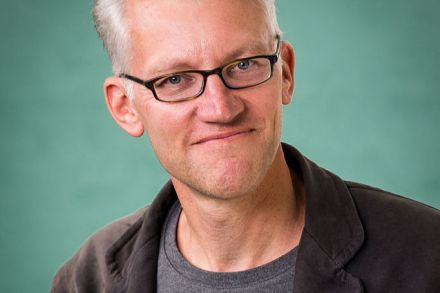
Sam Leith is literary editor of The Spectator.

James Comey: Central Park West

From our UK edition

32 min listen

My guest on this week’s Book Club podcast is the former FBI director James Comey, who is making his debut as a thriller writer with an engrossing police procedural, Central Park West. Jim tells me how he mined his own early career as a prosecutor in the southern district of New York to produce this world of hard-bitten investigators and murderous mafiosi (and how he was able to bring it up to date because it’s a world his daughter now inhabits). And, as the investigator at the centre of the Scooter Libby and Hillary Clinton email cases – among many others involving classified intelligence – he gives me his take on what Donald Trump’s indictment means and where it’s likely to lead.

Is Boris Johnson a great man of history?

From our UK edition

Boris Johnson has always been an enthusiastic proponent of the long unfashionable 'great man' theory of history. As he argued in his short biography of Winston Churchill, Churchill was a living refutation of the notion that great men and women are just 'meretricious bubbles on the vast tides of social history', a 'withering retort to all that malarkey. He, and he alone, made the difference'. Boris’s own downfall is a magnificent demonstration – though perhaps not of the sort he would have hoped for – that he was onto something. Character does make a difference. It wasn’t 'events, dear boy, events' that did for him – though heaven knows he was rocked by a few of those.

Harry’s crusade: the Prince vs the press

From our UK edition

31 min listen

This week:  Prince Harry has taken the stand to give evidence in the Mirror Group phone hacking trial which The Spectator’s deputy editor Freddy Gray talks about in his cover piece for the magazine. He is joined by Patrick Jephson, former private secretary to Princess Diana, to discuss whether Harry's 'suicide mission' against the press is ill-advised. (01:22) Also this week:  In The Spectator professor Robert Tombs details the trouble with returning the Benin Bronzes back to Nigeria, arguing that their restitution is more complicated than some claim.

Peter Turchin: End Times

From our UK edition

48 min listen

In this week's Book Club podcast I talk to Peter Turchin about his new book End Times: Elites, Counter-Elites and the Path of Political Disintegration. He proposes a scientific theory of history, mapping the underlying forces that have led to the collapse of states from the ancient world to the present day, and warns of very turbulent times ahead indeed.

The Schofield story is not a matter of national concern

From our UK edition

I’d kind of hoped, until recently, that Phillip Schofield would not trouble my consciousness in any big way again. I had vague memories of his grinning, chipmunk-like face getting up to antics with Gordon the Gopher in the 1990s. I noticed when he was in Joseph and the Technicolor Dreamcoat, because that was all over the papers. Occasionally I’d see a clip of him on breakfast telly. And then there was the thing where he came out as gay – which seemed to merit an Alan Partridge shrug – and the thing with the Queen’s funeral, which, again, was hard to get worked up about.

Laura Freeman: Ways of Life

From our UK edition

39 min listen

In this week's Book Club podcast, I'm joined by the writer and critic Laura Freeman to talk about her book Ways of Life: Jim Ede and the Kettle's Yard Artists. Laura's book is the portrait of one of those figures who, without ever quite taking the spotlight themselves, was nevertheless hugely influential in kindling the love and appreciation of art in others – a man who knew everyone from Picasso and Brancusi to David Jones and the Nicholsons, and whose home-cum-gallery in Cambridge has been a sanctuary and inspiration to generations of undergraduate pilgrims.

In memory of Martin Amis

From our UK edition

37 min listen

In this week’s Book Club podcast, we celebrate the life and weigh the literary reputation of Martin Amis, who died at the end of last week. I’m joined by the critic Alex Clark, the novelist John Niven, and our chief reviewer Philip Hensher – all of whom bring decades of close engagement with Amis’s work to the discussion.

The price others pay for our next-day deliveries

From our UK edition

When I was not more than nine or ten years old, I sent off in the post for a free poster that I’d seen advertised in a comic. It depicted Superman, whom I held in high regard, scragging a distinctly second-tier villain called Nick O’Teen; the relic of some lame early-eighties anti-smoking campaign. For reasons I can’t now fathom, I burned to have this on my bedroom wall. I remember it now not because of the poster, but because the wait for it to arrive. 'Allow eight weeks for delivery', it said. And it really did take eight weeks to show up – which, when you’re nine and you really, really want a Superman poster, might as well be a lifetime.  The very idea of waiting that long for anything, now, will be incomprehensible to a nine-year-old.

Martin Amis: 1949-2023

From our UK edition

Over the next few days, people will be reaching for certain set phrases about Martin Amis. That he was ‘era-defining’ (though he defined more than one era); that he was ‘genre-defying’ (he defied more than one genre); that he was an ‘enfant terrible’ (it will be wryly noted that he remained an enfant terrible, somehow, into his eighth decade). It's poignant, I think, that a writer who vigilantly waged the career-long battle he called ‘the war against cliché’ will go to his grave heaped with the garlands of the old enemy.  Still, he deserves the content of those tributes if not their form. And it’s not much of a surprise that nobody can write as well about Martin Amis as, in life, he could write about anything else.

Anthony Ossa-Richardson & Richard J Oosterhoff: The Cosmography and Geography of Africa

From our UK edition

53 min listen

In this week's Book Club podcast, we're talking about a very new version of a very old book. Leo Africanus's The Cosmography and Geography of Africa was the first book to introduce Africa to the people of Western Europe. Part Baedeker, part-natural history, part-memoir, part-history book, it dominated the Western understanding of that continent for hundreds of years. Anthony Ossa-Richardson and Richard J Oosterhoff have just published the first new English translation in more than 400 years, and they talk to me about its tangled manuscript history, its mysterious author, and what it gets wrong about giraffes.

Academic publishing is lazy and unethical

From our UK edition

Last week witnessed the first tremors of what could be a welcome revolution: the resignation en masse of the 40-strong editorial board of NeuroImage magazine – regarded as the leading publication for brain-imaging research in the world. The board, whose members include very senior figures in the world of brain science, is protesting what it sees as the publisher Elsevier’s greedy and unethical behaviour.   Objecting to this grotesque situation shouldn’t be an ideological issue.

Madeleine Bunting: The Seaside

From our UK edition

48 min listen

In this week's Book Club podcast my guest is the writer Madeleine Bunting, whose new book is The Seaside: England's Love Affair. She tells me how the great seaside resorts came into their 19th century pomp, how abrupt was their mid-century decline, and of the terrible desolation that has succeeded the idyll of donkey rides, ices and fish and chips.

The glumness of King Charles

From our UK edition

A detail much noted in the commentary on Saturday‘s coronation was that His Majesty decided against making his first trip to the Abbey in the Gold State Coach. Who can blame him? His mother described riding in that particular wagon as 'horrible', and even Queen Victoria had as little to do with it as she could get away with. It may be traditional, and it may look impressive in an antiquated, grotesquely ostentatious, fountains-of-gold-leaf-kind of a way. But by all accounts it is monstrously uncomfortable for its passengers. It was designed for the malnourished and inbred shorties who comprised the royals of a previous generation. It’s freezing cold and has no suspension to cushion the ride so it rattles its occupants half to death.

Shehan Karunatilaka: The Seven Moons of Maali Almeida

From our UK edition

38 min listen

My guest in this week's Book Club podcast is Shehan Karunatilaka, author of last year's Booker Prize winner The Seven Moons of Maali Almeida. Shehan tells me about writing a novel whose protagonist is dead on page one, about putting the chaos of Sri Lanka's long civil war on the page, and about the importance of Shakin' Stevens to a teenager in 1980s Colombo.

Why don’t the Tories want to help genuine asylum seekers?

From our UK edition

It’s not the genuine asylum seekers that Suella Braverman and her crew are determined to prevent reaching our shores, we are often told. It’s the illegals. With our traditional British values of tolerance and fair play, we are one of the most welcoming nations on earth to those in real need. The issue is, we hear again and again, with those who show contempt for the rule of law and turn up in this country without permission.   That all sounds, on the face of it, a perfectly reasonable position: kindness to genuine refugees in a humanitarian crisis; stern measures for criminals and opportunists. And how do we separate the two?

The never-ending appeal of Tetris

From our UK edition

I can remember exactly where I was when I first fell in love with Tetris. It was the student bar of Oriel College, Oxford, in the very early 1990s. I’d gone to visit my friend Ed, and we bunged a few 10ps into the sticky arcade cabinet in the corner of the bar while we chatted and drank our beer. The first game was moreish. By halfway through the second my goose was cooked. That summer I visited the Oriel Bar a lot. I wasn’t visiting Ed. I was visiting the Tetris machine.  Against modern video games – with their complex narratives, orchestral music, photorealistic 3D graphics and vast worlds to explore – Tetris looks like a pushbike racing a Lamborghini.

‘Everything is going to be turned upside down’: Michio Kaku on the new world of quantum computing

From our UK edition

If you’ve ever wondered how an invisibility cloak would work, how to terraform Mars, how to make a forcefield, whether we’re living in a Matrix-like simulation or how far we are from a working teleportation device, Michio Kaku is your man. In books such as Physics of the Impossible, Physics of the Future and Parallel Worlds, Kaku combines the scientific chops of the theoretical physics professor he is with the gee-wow wonder of a sci-fi geek. That’s apt for someone who grew up worshipping at the twin altars of Albert Einstein and Flash Gordon. ‘It all started when I was eight,’ he says. ‘All the newspapers said that a great scientist had died. And they said that on his desk was a manuscript that he could not finish. I was fascinated by that.

Michio Kaku: Quantum Supremacy

From our UK edition

57 min listen

In this week's Book Club podcast my guest is the theoretical physicist Michio Kaku. In his new book Quantum Supremacy, Prof Kaku explains how – as he sees it – the advent of quantum computers is going to turn the world as we know it on its head. He explains the extraordinary possibilities and perils of the quantum revolution, tells me how Albert Einstein and Flash Gordon set him on his path, and argues why when it comes to trying to make sense of the universe, you need to be prepared to be crazy.

Diane Abbott’s surreal U-turn

From our UK edition

It’s sometimes said that there’s a tweet from the surrealist Twitter user @dril to cover everything. So it has proved with Diane Abbott, whose screeching U-turn on a letter to today’s Observer immediately put me in mind of this 2017 classic: ‘issuing correction on a previous post of mine, regarding the terror group ISIL. You do not, under any circumstances, ‘gotta hand it to them.’’ That captures the comical extent of Ms Abbott’s course correction. The letter as published took issue with the writer Tomiwa Owolade for a piece in which he'd argued, under the headline ‘Racism In Britain Is Not A Black And White Issue’, that Irish, Jewish and Traveller communities all suffered from racism. Oh no they didn’t, she declared: They undoubtedly experience prejudice.

Sam Leith, Lionel Shriver and Angus Colwell

From our UK edition

23 min listen

This week: Sam Leith explains how he’s been keeping up friendships by playing online scrabble (00:55), Lionel Shriver questions Nike and Bud Light's recent marketing strategy (06:52) and Angus Colwell reads his review of the V&A Dundee’s tartan exhibition (15:24).