Sam Leith

Sam Leith

Sam Leith is literary editor of The Spectator.

I’ve finally shaken my Candy Crush addiction

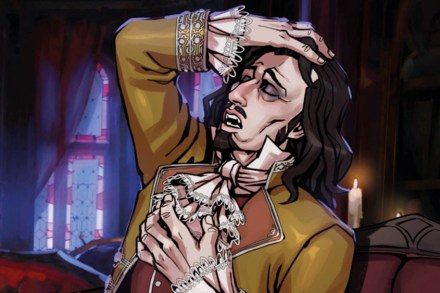
Most of us, once we pass the age when we wash our own underpants, don’t play games on a PC or a console. We think ‘Twitch’ is what you get when your spouse stacks the dishwasher and ‘Discord’ is what comes next. But you bet we play Candy Crush on the commute. Mobile gaming is still gaming, and it’s a big deal. Problem is, most of it’s crap. This is true even when the games are OK. Take the new Strange Horticulture, which ports a well received PC/console original to mobile. It’s a cartoon-gothic puzzle game (you identify plants apothecary-style; there’s a murder plot; vibes abound) which is dragged from a solid B+ to a glum C by the fiddly interface on an iPhone. Peer angrily at the tiny script; stab clumsily at the screen with your Homer Simpson thumbs; give up.

Marlon James: A Brief History of Seven Killings

40 min listen

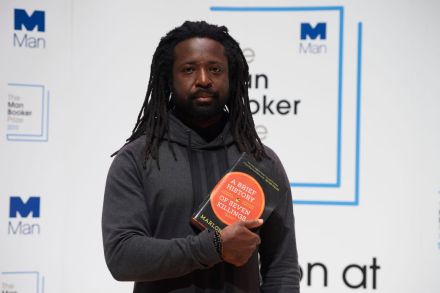
My guest in this week’s Book Club podcast is Marlon James, who ten years ago published his Booker Prize winning novel A Brief History of Seven Killings. He tells me how that remarkable book came about, how he feared it would be 'my Satanic Verses', what genre means to him, the importance of myth, and what he learned from the X-Men.

Richard Flanagan: Question 7

40 min listen

In this week's Book Club podcast, my guest is the Booker Prize winning novelist Richard Flanagan, talking about his extraordinary new book Question 7. It weaves together memoir, reportage and the imaginative work of fiction. Flanagan collides his relationship with his war-traumatised father and his own near-death experience with the lives of H G Wells and Leo Szilard, the Tasmanian genocide and the bombing of Hiroshima. He talks to me about the work fiction can do, the intimate association of memory with shame, and the liberations and agonies of thinking of non-linear time.

Keir Starmer is treating the House of Lords with contempt

We have different approaches to tidying up, my wife and I. It bothers her very much that the house we share with three chaotic children is so untidy. Over the years unsightly, useless, out-of-date items accumulate in every room: incomplete jigsaws, dried-out paints, barely-played boardgames, broken furniture, too-small and obscurely stained clothes, collections of shells and pebbles, or that vibration-sensitive fluffy penguin which flaps its stubby wings and blares out a tinny version of 'Rock Around the Clock' when a spider stamps its foot anywhere within a kilometre of it.   My fantasy, when the clutter gets intolerable, is to have a clear-out in which everything that doesn’t spark joy goes into black bin bags and thence to the dump. She cannot quite bear to do that.

The legacy of Franz Kafka

51 min listen

June 3rd marks the centenary of Franz Kafka's death. To talk about this great writer's peculiar style and lasting legacy, I'm joined by two of the world's foremost Kafka scholars. Mark Harman has just translated, edited and annotated a new edition of Kafka's Selected Stories, while Ross Benjamin is the translator of the first unexpurgated edition of Kafka's Diaries. They tell me what they understand by 'Kafkaesque', the unique difficulties he presents in editing and translation, and the unstable relationship between his published works, his notebooks and his troubled life.

The grandstanding against the Hay Festival is short-sighted 

When the country’s largest literary festival parts ways with its main sponsor, it is not usually a cause for rejoicing among writers, performers, and the sorts of people who like to go to literary festivals. It is usually a disaster for the festival. Yet when on Friday the Hay Festival sacked (yes, it was that way round) the investment fund Baillie Gifford as its main sponsor, it was felt that a mighty blow had been struck against injustice.

Sunak’s election speech was embarrassingly bad

Let’s be fair. It wasn’t Rishi Sunak’s fault it was raining. But it was, a bit, his fault that as someone who has ‘never been prouder to be British’, and so is presumably familiar with the way weather works in this country, he didn’t take one look at the lead-grey sky and make a contingency plan. That contingency plan could have been waiting 24 hours. It could have been delivering his speech indoors. It could have been – I don’t know – getting someone to stand a few feet away with a brolly, just in case.

Conn Iggulden: Nero

43 min listen

My guest on this week's Book Club podcast is Conn Iggulden, probably the best selling author of historical fiction of our day. This week Conn publishes Nero, the first in a new trilogy about the notorious Roman emperor. He tells me about how he learned to write historical fiction, his years-long path to overnight success, and the advantages (and disadvantages) of having an audience comprised of men who can't seem to stop thinking about the Roman Empire.

In defence of Jonathan Yeo

If the basic job of a work of art is to be interesting, as I think it is, then Jonathan Yeo’s new portrait of the King accomplished that admirably. No sooner had an image of this big canvas been released to the public than it sparked a million memes. What did it mean, people wondered, that His Majesty’s face emerged from a great abstract field of rose and crimson? Was it a nod to the blood-soaked legacy of empire? A secret signal of some sort of satanic conspiracy theory? A portentous meditation on the blood royal? An anxious reflection on the King’s recent illness? Was it a nod to the blood-soaked legacy of empire? It has been, to say the least, controversial. Monarchists and republicans alike have taken a close and lively interest in it.

Gorgeous and deeply absorbing: Manor Lords reviewed

Grade: A ‘God games’, as they used to be called, have a storied history. SimCity, Civilisation and the excellently sadistic Dungeon Keeper have all been responsible for many a PhD thesis being delivered late. The Almighty seems to have smiled on the latest iteration of the genre. The product of a one-man-band independent developer, Greg Styczen, its current pre-release version scored a million downloads on the first day it was available. You can see why. It’s made with such care and love. You take the role of a medieval lord of the manor – choose a surly avatar and a coat of arms – who starts with a handful of peasant families in a tented encampment in a drizzly forest. Zoom down and watch them as they drag timber about with their mangy ox.

Olivia Laing: The Garden Against Time

33 min listen

A garden is a lovesome thing, God wot! On this week's Book Club podcast I'm joined by Olivia Laing to talk about her new book The Garden Against Time: In Search of a Common Paradise. Olivia explores what it is we do when we make a garden, through her own experience of restoring the beautiful garden in her now home. She tells me about what gardens have meant in literary history and myth, how they have occluded certain real-world injustices even as they stand in for utopias, and why Candide's injunction cultiver notre jardin will always be an ambiguous one.

Farewell Nadhim Zahawi, you won’t be missed

Nadhim Zahawi’s latest resignation letter was one of the all-time classics of the genre: unctuous, preening and pretentious even by the high standard of unctuousness, preeningness and pretentiousness set by his predecessors (including him).  'Greatest honour of my life,' he wrote. 'Best country on earth…it was where I built a Great [capitalisation sic] British business, YouGov, and it was where I raised my wonderful family. And it was the nation to which I was proud to return such a favour when I led the world-leading coronavirus vaccine roll-out […] called upon to serve my country […] I kept schools open [...] I ensured [...] I was given the unique responsibility...' On he burbled.

The Elphicke affair has made Starmer look incompetent and unprincipled

The defection of Natalie Elphicke to Labour was, no doubt about it, a political coup de theatre. What wasn’t immediately clear, but is becoming clearer now the curtain is up and the players are stumbling around the footlights yelping and tripping over bits of the set, is what sort of theatre: farce.  Elphicke looks like the gift nobody wants to find under their Christmas tree Natalie Elphicke was delivered to Keir Starmer, that sobersides opponent of what he calls ‘gimmicks’, in the manner of a gift-wrapped present. He and his team, in the least gimmicky way imaginable, timed the opening of this present deliberately to ambush the Prime Minister ahead of PMQs. More fool him.

Jackie Kay: May Day

40 min listen

This week, my guest on the Book Club podcast is the poet Jackie Kay, whose magnificent new book May Day combines elegy and celebration. She tells me about her adoptive parents – a communist trade unionist and a leading figure in CND – and growing up in a household where teenage rebellion could mean going to church. We also discuss her beginnings as a poet, her debt to Robbie Burns and Angela Davis and how grief itself can be a form of protest.

Suella Braverman has made herself look silly

Did Suella Braverman run her latest op-ed by No. 10 for approval? That was the question asked at the end of last year when the then Home Secretary wrote an inflammatory article accusing the Met of being biased towards left-wing protesters. The answer then was that she hadn’t, and she lost her job (for a second time).   This time round, nobody needs to bother to ask the question. She doesn't have a job. No. 10 will have been dismayed but probably unsurprised to read her article in the Telegraph yesterday in which she blamed the Prime Minister for the catastrophic local election results.

Survival plan: is Rishi ready for the rebels?

34 min listen

This week: Survival plan: is Rishi ready for the rebels? Ever since his election, Rishi Sunak has been preparing for this weekend – where the most likely scenario is that dire local election results are slow-released, leaving him at a moment of maximum vulnerability. He has his defences ready against his regicidal party, says Katy Balls: the Rwanda plan, a welfare reform agenda and a 4p NI cut (with hints of 2p more to come). And while the rebels have a (published) agenda they do not – yet – have a candidate. Katy joins the podcast alongside Stephen Bush, associate editor of the Financial Times. (02:12) Next: Lara and Gus take us through some of their favourite pieces from the magazine, including Damian Thompson's Life column, and Joel Golby’s notes on ⅓ pints.

Ariane Bankes: The Quality of Love

35 min listen

On this week's Book Club podcast I'm joined by Ariane Bankes, whose mother Celia was one of the great beauties of the early twentieth century. Ariane's new book The Quality of Love: Twin Sisters at the Heart of the Century tells the story of the defiantly bohemian lives of Celia and her twin sister Mamaine, whose love affairs and friendships with Arthur Koestler, George Orwell, Albert Camus, Edmund Wilson and Freddie Ayer put them at the centre of the political and intellectual ferment of their age.

The parable of Blackpool’s potholes

I read the news today, oh boy. Four thousand holes in Blackpool, Lancashire. Well, in fact, not quite as many as 4,000. The number of holes in the Lancashire town that the Beatles didn’t sing about was a very precise 2,628 – or, translated into another scale, just over half an Albert Hall’s worth. That’s how many potholes Blackpool Council has filled in over the last year alone.   In a world where every other bulletin is of swirling climate catastrophe, economic precarity, hot wars, riots, migrant drownings, gusts of online hate and all the jollity of the day-to-day news cycle, this local council has been getting on, patiently and methodically, with the work of filling little holes in the road.

Kathryn Hughes: Catland

40 min listen

My guest in this week’s Book Club podcast is the author and historian Kathryn Hughes, whose new book Catland tells the story of how we learned to love pusskins. Content warning: contains Kipling, Edward Lear, some stinking carts of offal, and the troubled life and weird art of the extraordinary Louis Wain.

Tony Blair is a post-democratic product

Why was it that when I read a big interview with Tony Blair over the weekend – the ostensible premise being to wonder if he’d be pulling the strings of a Starmer government – I found myself humming something from T.S. Eliot by way of Andrew Lloyd Webber? ‘You may seek him in the basement, you may look up in the air – / But I tell you once and once again, / It’s Tony bloody Blair.’ Eliot’s Macavity the Mystery Cat, of course, is a dyed-in-the-wool criminal who breaks laws up to and including the law of gravity, whereas our former prime minister is as upright and law-abiding figure as you will find in possession of business cards reading ‘Tony Blair’. But they share the ability to be everywhere and nowhere. He’s in and out of the White House.