Sam Leith

Sam Leith

Sam Leith is literary editor of The Spectator.

Lovingly designed, touching and immersive: Neva reviewed

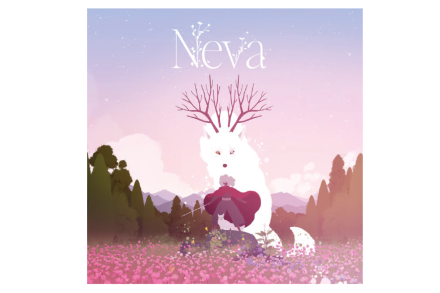
Grade: A- There’s a very faint echo of Jeff VanderMeer’s unheimlich Southern Reach Series in the new indie side-scroller Neva. You’re plonked at the start of the game into a pleasant dreamlike landscape of pastel foliage, benign fauna and the gentle twitter of birds. But as you progress you start to encounter something darker – literally. An unexplained corruption is infecting the land. Black patches on the ground send up spooky alien tendrils. Birds fall out of the sky.  Soon you’re guiding the story’s protagonist, Alba – a little-red-riding-hood figure with a darning-needle blade – through a deepening nightmare. Patches of black petals spawn demons whom you must dodge and dispatch with your sword. You’ll find yourself running before a giant black beetle.

Nick Harkaway: Karla’s Choice

32 min listen

My guest in this week’s Book Club podcast is the novelist Nick Harkaway, whose new book Karla's Choice sees him pick up the mantle of his late father, John le Carré, in writing a new novel set in the world of George Smiley. He tells me why, having spent a career trying to put clear blue water between his own work and that of his father, he’s now steering in the opposite direction; about growing up with Smiley; about his relationship with the man so many outsiders have seen as secretive and opaque; about seeking advice from Stephen King’s son, Joe Hill; and why moving from his own style to that of his dad is just a ‘turn on the dial’.

Those signing the general election petition should know better

Every now and again, a newspaper will run – and portentously headline – a survey on the future of the monarchy. There was a fashion, a few years back, for consulting the public on the question of whether the crown should skip a generation, so that Prince William could take over from his grandmother. The correct response to all such consultations was a heavingly contemptuous Alan Partridge shrug. The whole point of having a hereditary monarchy is that it’s hereditary and that the general public don’t get a say in the matter. If we want rid, it’ll take a bit more than a poll commissioned by the Sunday Times to do the trick.

The Book Club: Josh Cohen

38 min listen

My guest in this week’s Book Club podcast is the psychoanalyst and writer Josh Cohen. With anger seemingly the default condition of our time, Josh’s new book All The Rage: Why Anger Drives the World seeks to unpick where anger comes from, what it does to us, and how it might function in the human psyche as a dark twin of the impulses we think of as love.

Elon Musk and the age of the troll

There has been a cheering new development in the struggle against scam phone callers. AI can now be used to automate the satisfying but tricky business of ‘scambaiting’. I give you Daisy, the ‘AI granny’ – whose only purpose in life is to keep phone fraudsters on the line for hours that they would otherwise spend predating on real human victims. Scammers, as we know, play on human psychological weaknesses – the panic we feel when we’re told our accounts have been compromised, our deference to authority, our confusion about how technology works. Now, flip-flop: the AI plays on scammers’ psychological vulnerabilities – primarily, the idea that an old lady with a quavering voice will be an easy mark.

Michael Moorcock: celebrating 60 years of New Worlds

43 min listen

My guest in this week's Book Club podcast is the writer, musician and editor Michael Moorcock, whose editorship of New Worlds magazine is widely credited with ushering in a 'new wave' of science fiction and developing the careers of writers like J G Ballard, Iain Sinclair, Pamela Zoline, Thomas M Disch and M John Harrison. With the release of a special edition of New Worlds, honouring the 60th anniversary of his editorship, Mike tells me about how he set out to marry the best of literary fiction with the best of the pulp tradition, how he fought off obscenity charges over Norman Spinrad's Bug Jack Barron, about his friendship with Ballard and his enmity with Kingsley Amis – and why he's determined never to lose his vulgarity.

Peanut the squirrel shows Elon Musk is wrong about the mainstream media

Was it Peanut wot won it? One of the stranger and more incendiary aspects of the run-up to the recent US election was a Twitter/ X howl-round about Peanut the squirrel. The house where Peanut lived was raided, and this blameless rescue-rodent euthanised, after a complaint was apparently filed to a government agency by a neighbour. And Peanut’s story went super-viral.  The shoot-first-and-ask-questions-later approach to 'news' can leave any or all of us riddled with bullets. Just ask Peanut Rather than seeing it as a local hard-luck story, many social media users supposed this to be a paradigmatic instance of what was at stake in the election. This wasn’t human interest: this was front-page stuff.

Trump’s comeback, Labour’s rural divide, and World of Warcraft

37 min listen

This week: King of the HillYou can’t ignore what could be the political comeback of the century: Donald Trump’s remarkable win in this week’s US election. The magazine this week carries analysis about why Trump won, and why the Democrats lost, from Freddy Gray, Niall Ferguson and Yascha Mounk, amongst others. To make sense of how Trump became only the second President in history to win non-consecutive terms, we’re joined by the journalist Jacqueline Sweet and Cliff Young, president of polling at Ipsos (00:58).Next: is Labour blind to rural communities? The changes to inheritance tax for farmers are one of the measures from Labour’s budget that has attracted the most attention.

Much more than just a game: World of Warcraft at 20

On 23 November, the video game World of Warcraft celebrates its 20th anniversary. That’s no small thing. By most metrics, it is the most successful video game of its type in history. At its peak, it had more than 12 million active subscribers, and in its two-decade-and-counting lifetime it has made more than three times as much money as the highest-grossing Hollywood movie of all time. Yet many, if not most, of you will never have heard of it or will have only the dimmest idea what it is. As someone who has played this daft game for several hours a week for years, I commend it to your attention, then – because a) there’s much innocent joy to be had in playing it, and b) World of Warcraft and games like it are an unignorable part of the cultural landscape.

100th anniversary of A A Milne and E H Shepard, with James Campbell

36 min listen

On this week's Book Club podcast we're celebrating the 100th anniversary of a landmark in children's publishing, When We Were Very Young — which represented the first collaboration between A A Milne and E H Shepard, who would (of course) go on to write an illustrate Winnie-the-Pooh. Sam Leith is joined by James Campbell, who runs the E H Shepard estate. He tells Sam how the war shaped the mood and success of that first book, why Daphne Milne's snobbery and ambition left Shepard out in the cold, what happened to Christopher Robin... and how Pooh became Pooh.

Do we care that the King is rich?

For the first time, the true extent of the property held by the King and the Prince of Wales’s private estates, the Duchies of Lancaster and Cornwall has been revealed, according to a splashy Sunday Times investigation. There are 5,410 separate properties up and down the country paying millions of pounds annually in rents and fees and charges. The NHS pays to warehouse its ambulances, the Navy pays for the use of jetties, charities rent London office blocks, and money rolls in for everything from the training of troops on Dartmoor to the housing of prisoners in a jail on His Maj’s land. 'Revealed,' the headline hoots, 'The property empires that make Charles and William millions.

Christopher Caldwell, Gus Carter, Ruaridh Nicoll, Tanya Gold, and Books of the Year I

34 min listen

On this week’s Spectator Out Loud: Christopher Caldwell asks what a Trump victory could mean for Ukraine (1:07); Gus Carter argues that leaving the ECHR won’t fix Britain’s immigration system (8:29); Ruaridh Nicoll reads his letter from Havana (18:04); Tanya Gold provides her notes on toffee apples (23:51); and a selection of our books of the year from Jonathan Sumption, Hadley Freeman, Mark Mason, Christopher Howse, Sam Leith and Frances Wilson (27:08).  Produced and presented by Patrick Gibbons.

The Book Club: John Suchet

42 min listen

My guest in this week’s Book Club podcast is John Suchet whose new book In Search of Beethoven: A Personal Journey describes his lifelong passion for the composer. He tells me how the ‘Eroica’ was his soundtrack to the Lebanese Civil War, about the mysteries of Beethoven’s love-life and deafness, why he had reluctantly to accept that Beethoven was ‘ugly and half-mad’; and how even in the course of writing the book, new scholarship upended his assumptions about events in the composer’s life (from his meeting with Mozart to the circumstances of his death).

Why is Elon Musk so obsessed with Diablo IV?

Grade: A- I usually try to write about new games, but indulge me in addressing Blizzard’s open-world dungeon crawler Diablo IV this week even though it came out last year. Why? Because along with simultaneously trying to save American democracy and make humanity an interplanetary species, Elon Musk’s third preoccupation is Diablo IV. When he’s not tweeting about the first two things, he’s tweeting clips of himself roaring through Diablo’s endgame content, slaying hordes of very high-level demons in timed dungeon runs. He’s good at this, and since it takes getting on for a solid week without eating or sleeping even to reach the endgame, he’s sinking a lot of time into it. ‘Finished faster after masterworking my rod three times,’ he tweets, proudly.

Keir Starmer, Karl Marx and the cant of ‘working people’

Labour has promised that, come what may, they will not be increasing taxes on ‘working people’. Well, jolly good. Those of us who work for a living will tend to welcome such a promise. So will hedge fund managers, who go to work every day, and the CEOs of Fortune 500 companies, and the lawyers and accountants who manage vast offshore tax efficiency schemes. Working people all. ‘Working people’ is a cant phrase, which – as Bridget Phillipson was forced to admit when she struggled to say if small business owners counted – means nothing concrete at all. It has the advantage, as all such cant phrases do, of denoting an automatic good: it’s something nobody can possibly be against.

Rachel Clarke: The Story of a Heart

48 min listen

My guest in this week’s Book Club podcast is Rachel Clarke, author of the Baillie Gifford longlisted new book The Story of a Heart. Rachel tells me how she came so intimately to tell the story of 9-year-old Keira, whose death in a car accident and donation of her heart gave a chance at life to a dying stranger, Max. She describes the medical and conceptual changes that led up to that extraordinary possibility and explains how, as a medic, you have to be able to combine technical professionalism with a sense of the sanctity of the human beings you work with. And she catches us up on how Max is doing eight years on. This podcast is in association with Serious Readers. Use offer code ‘TBC’ for £100 off any HD Light and free UK delivery. Go to: www.seriousreaders.

Is it time to ban the boy band?

It was Oprah Winfrey, I think, who said that ‘if you come to fame not understanding who you are, it will define who you are’. I read that to mean that if you get famous when you are young – get famous before you have a stable sense of yourself – then you are in trouble.   One Direction’s Liam Payne, who struggled with depression and addiction before falling to his death last week after what seems to have been his umpteenth relapse on drink and drugs, is only the latest in a long line of those who reached adulthood damaged beyond repair by fame.

Why shouldn’t English teachers use video games?

English is in crisis. And no, not the sort of crisis caused by signs in supermarkets saying ‘ten items or less’. It’s caused by students hating their GCSE English Language lessons and refusing to continue the subject at A-level. A-level take-up has dropped by 40 per cent since 2012. You might giggle that this just throttles the supply of mournful Yeats-quoting burger-flippers but I think it’s a concern. There are all sorts of reasons that it’s worth studying English and only some of them are being able to quote Yeats. A very large number of young gamers engage voluntarily with text related to the games they love In response to this crisis, there seems to be consensus among teachers that GCSEs need to change.

Sue Prideaux: Wild Thing, A Life of Paul Gaugin

41 min listen

In this week's Book Club podcast Sam Leith’s guest is the great Sue Prideaux who, after her prize-winning biographies of Nietzsche, Munch and Strindberg, has turned her attention to Gauguin in Wild Thing: A Life of Paul Gauguin. She tells me about the great man's unexpected brief career as an investment banker, his highly unusual marriage and his late turn to anticolonial activism. Plus: why she starts with his teeth. This podcast is in association with Serious Readers. Use offer code ‘TBC’ for £100 off any HD Light and free UK delivery. Go to: www.seriousreaders.com/spectator Produced by Patrick Gibbons and Oscar Edmondson.

Labour were right to protect Taylor Swift

Still making headlines, it seems, is one of the more trivial scandals to have dogged the Labour government in its first 100 days in office: to wit, the police protection given to the pop singer Taylor Swift. File firmly under circuses, you might think, rather than bread. For those who need catching up, the American pop star was given a VVIP police escort around London during the UK leg of her Eras tour – a swishy blue-light motorcade of the sort usually reserved for members of the royal family and foreign heads of state, and the reassuring knowledge that should some loon seek to lob a brick at her, or worse, Tay-Tay could rely on London’s finest to pile in with their side-handled batons and/or firearms.