Sam Ashworth-Hayes

Sam Ashworth-Hayes

Sam Ashworth-Hayes is a former director of studies at the Henry Jackson Society.

Putin is no Hitler

From our UK edition

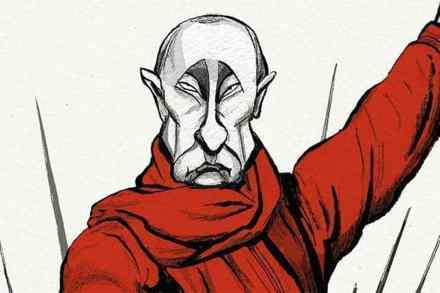
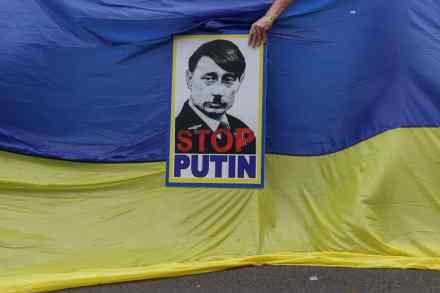
That English history lessons consist of World War II and the Tudors has come back to bite us again. The obsessive focus on learning about the 1940s means there is one historical figure Vladimir Putin has been repeatedly compared to in recent days: Adolf Hitler. It's an unhelpful comparison, to say the least. From the Sun calling Putin 'the Hitler of our age' to Defence Secretary Ben Wallace's 'whiff of Munich' remark, the build up to the war looms large in the British imagination. But while Putin is a nasty piece of work, he is not genocidal. And Hitler, unlike Putin, wasn’t armed with nuclear weapons. The motivations, intentions, and capabilities of both men bear little resemblance to one another.
Putin’s war in Ukraine is about to turn even nastier

From our UK edition

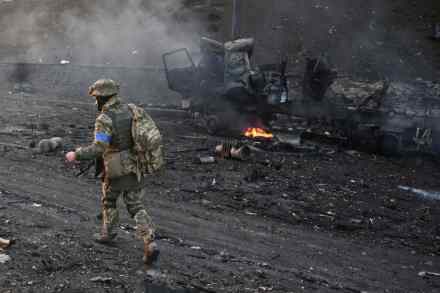
Is Ukraine winning its war against Russia? Watching the conflict through Twitter or broadcast media, you'd be forgiven for thinking so. Despite its overwhelming military superiority, Russia is taking casualties, momentum is stalling, and a succession of stirring stories – Ukrainian soldiers telling Russian troops to go 'fuck yourself' and ordinary Ukrainians rising up to stand in the way of Russian tanks – suggests undaunted resistance. The overwhelming volume of video and audio material posted is coming from the Ukrainian side. Combined with pessimistic statements from Russian figures, this gives the impression of an advance bogged down.

Putin, Ukraine and the end of ‘the end of history’

From our UK edition

As Vladimir Putin ordered Russian troops onto Ukrainian soil, the initial Western response was swift, if not underwhelming. Trade in Russian debt was curbed and a handful of oligarchs have had their assets frozen. Snarky tweets from an American embassy safely withdrawn to Poland, were also sent. While Russia rolled its tanks across the border, European cities lit up buildings in Ukrainian colours. Perhaps predictably, the threat of these measures and the diplomatic disapproval accompanying them did not dissuade Putin from further action. Hard power, and the ability and will to deploy it, count. Putin has all three; the West does not.

Britain is trapped in a Boomerocracy

From our UK edition

‘If young Americans knew what was good for them’ the historian Niall Ferguson once remarked, ‘they would all be in the Tea party’. In his first Reith Lecture, Ferguson argued that austerity would be a boon for the young; public debt merely allowed ‘the current generation of voters to live at the expense of those as yet too young to vote or as yet unborn.’ It is certainly true that successive generations in Britain have run up an almighty tab while assuming the next group along will be able to foot the bill. The problem Ferguson neglected to account for was which voters would end up delivering a pro-austerity government into power.

What is so enraging about a group of white men?

From our UK edition

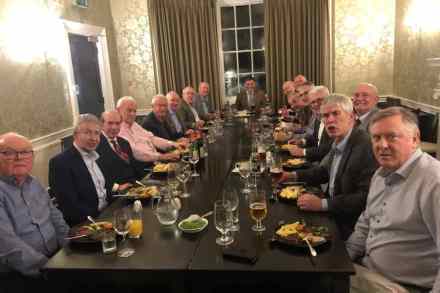
Pity the poor 41 Club. The last time an image of a group of men eating dinner caused this much trouble, the art world was collectively trying to work out whether any of Leonardo da Vinci’s masterpiece was left beneath the latest restoration. For those not inducted to social media’s delights, the Conservative MP Andrew Bridgen posted a photo of his dinner with his local branch of the organisation in a very standard piece of constituency engagement. By 7.30 this morning, that photo had been viewed some 5 million times, the count driven up by a torrent of vitriol. Readers might ask exactly what it was about the photo that attracted so much attention.

What’s worse: kicking a cat or racism?

From our UK edition

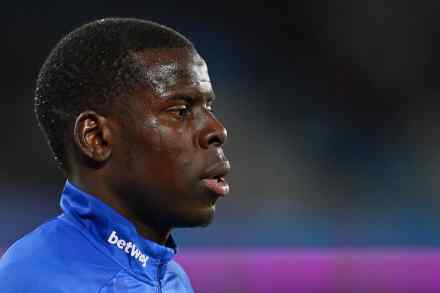
The best football teams are adept at turning defence into attack. After a video of centre back Kurt Zouma practising his distribution with a pet cat led to calls for his prosecution, teammate Michael Antonio responded to the press with a question of his own: 'Do you think what he’s done is worse than racism?' While we could dismiss this as a fairly blatant piece of whataboutery, it’s also quite an interesting question. The response you’d probably get by asking people is 'no, obviously not'. The response you’d get from their revealed preferences is that this is a country that donates £43 million annually to The Donkey Sanctuary.

Life after Plan B: are we ready for the ‘new normal’?

From our UK edition

Is Covid over? With Plan B restrictions finally lifted, there'll be no more working from home. Masks will no longer be required in shops. Covid passes will become a thing of the past. We can go back to normal permanently. Or can we? Things won't be the same as they were in 2019, but they will be close. We will live in a world where occasional booster jabs – and careful monitoring of those arriving in our country – are the only noticeable things separating life before and after the pandemic. This normality is available to us, if we want it. The problem is, I’m not totally certain everyone does. Lockdowns, masks, social distancing and limits on meetings were never intended to be an endpoint. They were a way of managing the pandemic until something better came along.

Operation Save Big Dog and the real scandal of Boris’s leadership

From our UK edition

There is a theory which states the primary reason for Boris Johnson’s political longevity is that there are simply so many scandals that the latest infidelity drives the last one from public consciousness before it really has time to sink in. 'Who paid for his wallpaper? Meal delivery? He had a party while forcing the country into social isolation and atomisation? How many parties— what do you mean the police are investigating him?' At this point, it seems like the revelation most likely to do him in will be the discovery that, at some point in the last two years, Boris Johnson sat quietly in a room and diligently worked through an afternoon without once breaking from his papers to do something outrageous.

There’s nothing quite like Christmas on the Isle of Man

From our UK edition

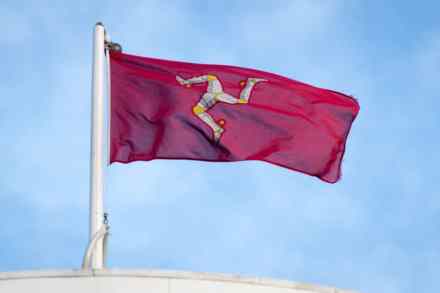
If two years away had left me in need of a reminder that home can be a peculiar place, waking this morning to the sound of air raid sirens would have done the job. Other places left with such equipment would probably not decide that they could fulfil the dual purposes of summoning volunteer firefighters for their shifts, and signalling the imminent end of days, if only because only one of the two is worth getting out of bed for. But then again, the point of the Isle of Man is that it is not quite like anywhere else. Blocking traffic to and from the airport to make way for the annual festive tractor run is the sort of idiosyncratic decision that makes the island what it is.

The Foreign Office isn’t fit for purpose

From our UK edition

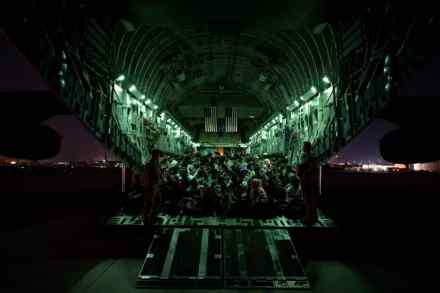
Now that the dust from the choppers has settled, we are left with two abiding images of the West’s adventure in Afghanistan. The first is an American Chinook hovering over its embassy, rescuing staff in a botched evacuation. This debacle unfolded just weeks after president Biden promised the world there would be no parallel with the fall of Saigon, and 'no circumstance where you see people being lifted off the roof of an embassy'. The second is a plane taking off from Kabul laden with 150 pets. The general success of the war in Afghanistan never came down to British policy. It’s for Washington’s post-mortem to confront the difficult truths about the limits of military power in the pursuit of political objectives.

Kyle Rittenhouse and the failure of the American state

From our UK edition

Kyle Rittenhouse is innocent. We knew that anyway, but the simple fact of something being true in no way guarantees that the legal system will recognise it. In this case, we are fortunate that law and reality have decided to agree with one another. Kyle Rittenhouse is innocent, but the state remains on trial. There will be a great deal of commentary after the Rittenhouse trial about ‘what this verdict says about America’. You can see the first green shoots beginning to emerge even now; news outlets are talking about the ‘racial justice protests’ in Kenosha and how the verdict demonstrates the fundamental racial inequities of American society, or even how failing gun laws allowed this to happen. These are the wrong issues to focus on.

Lukashenko and Putin are exploiting Europe’s migration muddle

From our UK edition

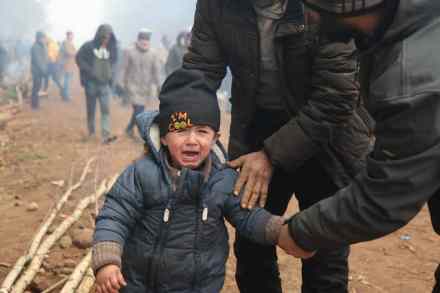
At the border of Belarus and Poland, camps of migrants wait for a chance to cross the border into the EU. Groups attempt to break down the razor wire fences standing in their way, Some 15,000 Polish soldiers stand ready to stop them. Belarusian soldiers urge them on and offer assistance. The Belarusian state shuttles more migrants towards the border by the day, hands out wire-cutters, and prevents them from turning back. Some 30,000 migrants have attempted to cross into Poland since August. That number is swelling by the day, with Belarus now running dozens of flights every week ferrying further desperate people to Europe’s eastern border.

The real harm in the Online Harms Bill

From our UK edition

Following the killing of Sir David Amess, MPs were quick to point to the ‘corrosive space’ provided by social media, the ‘toxic’ conduct of politics, and the general phenomenon of people being cruel to them online. Of course our parliamentary representatives don’t deserve to face waves of abuse for doing their jobs. They shouldn’t receive racial abuse, or threats of violence, or even simple insults for doing their jobs. This goes without saying for any worker, whether serving customers in a supermarket, helping commuters with their tickets, or indeed governing the country.

We need to talk about the killing of David Amess

From our UK edition

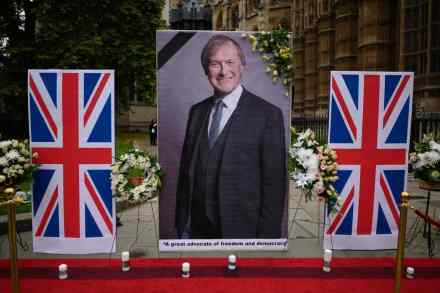
In the world I inhabit, the killing of Sir David Amess has been formally declared a terrorist incident, a suspect has been taken into custody, and the police have identified ‘a potential motivation linked to Islamist extremism’. In a second world, constructed of headlines and commentary and tweets, a conversation is taking place that is almost entirely disconnected from this base reality. In this world, the Home Secretary is primarily concerned about the ‘corrosive space’ provided by social media, the Commons asks questions about the ‘toxic’ conduct of politics, and attention is given to the level of aggression and abuse experienced by MPs. These are important issues.

Why our MPs deserve a pay rise

From our UK edition

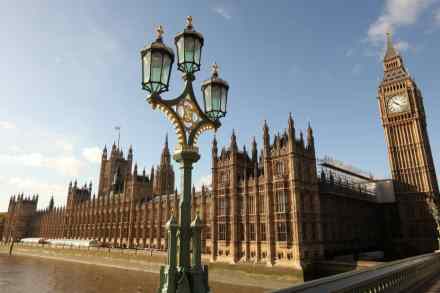
Are MPs underpaid? Yes, according to Sir Peter Bottomley, who declared that life on an MP’s salary of £82,000 can be 'really grim'. In saying so, Bottomley succeeded in uniting his fellow MPs – who would rather not have to deal with a further round of anger at their pay and conditions – and the general public – who resent having to pay for their elected lords and masters in the first place. But the furious backlash doesn't mean Bottomley isn't right. In Parliament, as anywhere else, you get what you pay for. If we want a better class of MP, it’s time to splash the cash. Not everyone sees it this way, of course.

Why the NHS needs more bureaucrats

From our UK edition

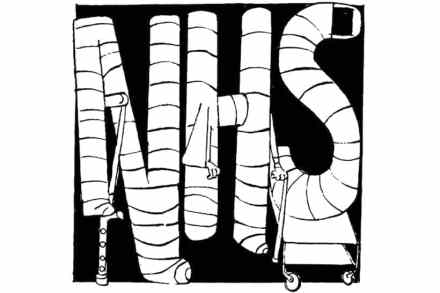
If the NHS's cheerleaders and detractors can agree on one thing, it's this: we need fewer backroom staff. If the health service's doctors, nurses and cleaners are heroes, the pen-pushers, middle-men and legions of drab men in drab suits are sucking the vital lifeblood out of the NHS, while droning on about synergies in management. All this while claiming a salary that could have paid for another two nurses. This debate has re-emerged after it was reported that almost half of all NHS staff are managers, administrators or unqualified assistants. Helen Whately, the care minister, spoke for many when she said she feels 'strongly that the money we put into the NHS needs to go to frontline'.

Oxford has more to be ashamed of than Gove

From our UK edition

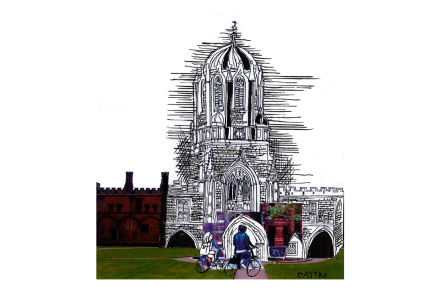
Being the most prestigious university in the English-speaking world comes with its drawbacks. While the rolls of alumni are littered with famous names, not every Oxonian puts their formidable talents towards good. Even the most cursory glance will tell you that it’s not particularly surprising to learn that vice-chancellor Louise Richardson is 'embarrassed' about the behaviour of one particular graduate. Aung San Suu Kyi has, after all, been explaining to The Hague that Myanmar has not been engaged in genocide, merely killing large numbers of an ethnic group that her government did not acknowledge exists. Fortunately for Suu Kyi, she has escaped the ire of the university on this occasion.

What the Afghan animal airlift says about Britain

From our UK edition

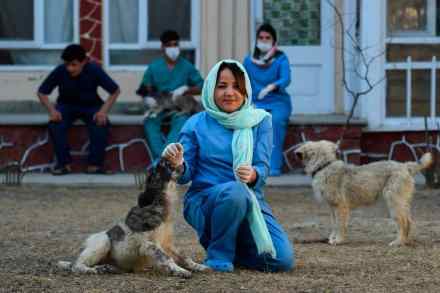
The evacuation of Pen Farthing and his pets from Afghanistan this week is not a ‘feel-good’ story. It is not a charmingly eccentric rescue mission. It’s a moral abomination that shames Britain. While American soldiers lifted their dead for their final flight home, British soldiers were carrying dogs onto a plane. When time was running out to get people who served with us out alive, ministers were sponsoring clearance for his charter flight and senior commanders were dealing with his supporters. Before we go any further, I’d like to be clear about one thing: I don’t particularly blame Pen. I’d probably want to get my pets out of a warzone too. I blame the government for going along with it, and for that I blame the British public too. This one is on us.

The problem with the Met’s morality policing

From our UK edition

Ah, the last days of summer. Long evenings, sunny weekends, and crusty Extinction Rebellion hippies blocking arterial traffic lanes to the audible grinding of teeth from the police officers tasked with standing by and politely watching their sub-art-school amdram productions, rather than getting on with the business of giving them a much-needed hosing down with Boris’s water cannons. As Charlie Peters has pointed out for the Mail, the impression of police impotence has nothing to do with the willingness of the bobby on the beat to break out a truncheon and apply it liberally to the thorax of middle-class graduates enjoying their day off by making everyone else late for work.

It’s no surprise younger voters are losing faith in democracy

From our UK edition

There is an idea of the state that argues that the role of government is to act as a benevolent social planner, redistributing resources for the benefit of the population as a whole. British governance has more in common with Mancur Olson’s concept of the stationary bandit, a tyrant with a captive population and a desire to maximise the wealth he can extract. The only twist is that rather than a group of warriors seizing wealth by force, Britain works to the benefit of a large number of elderly pensioners thanks to their tendency to reliably turn out at the polls. To very briefly recap, years of austerity cuts combined with triple locking pensions ensured that while working-age families — particularly those with children — lost out, pensioners were protected.