Sam Ashworth-Hayes

Sam Ashworth-Hayes

Sam Ashworth-Hayes is a former director of studies at the Henry Jackson Society.

The apocalyptic side to English football

From our UK edition

It had to end this way. Whatever else we might say about the English weather, it is deeply in tune with the national psyche – the emotions of the people over innumerable generations have taken on the grey, leaden cast of their skies – and there could be no more fitting day after that final

The UN’s American obsession

From our UK edition

Under other circumstances I wouldn’t mind living in the American empire here in Britain. The tithes are reasonable and the legal structures hardly onerous. If Washington were content to simply dispatch its governors, collect its money, and crush the occasional revolt in the Celtic provinces I don’t think I’d have any complaints to make. The

Why the Oxford Queen portrait row matters

From our UK edition

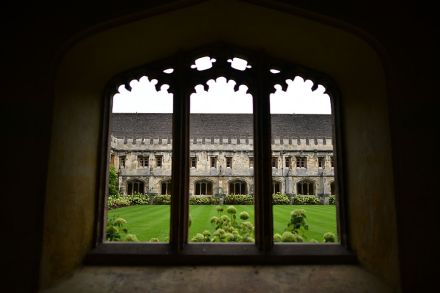
The sheer scale of the outrage over Magdalen College Oxford electing to remove a portrait of the Queen from the postgraduate common room can seem on the face of it to be absurd; why should we care what pictures a group of students choose to put on the wall? We didn’t care when they put

What the England team doesn’t get about ‘taking the knee’

From our UK edition

England’s players being booed by their own fans is not a new phenomenon. But for the booing to be about politics rather than obnoxious personalities and tournament underperformance is. The furore over players taking the knee represents a new and exciting stage in the testy relationship between team and fans, in which each can take

What happens now that Rhodes didn’t fall?

From our UK edition

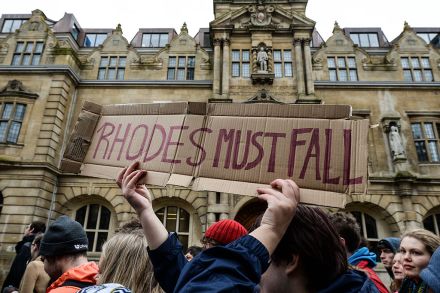
Oriel College, Oxford’s decision to retain the statue of Cecil Rhodes has generated the usual voluminous fury. It has also shown it to be just that: noise. The university’s willingness to face down activists could mark a turning point in proving that when campaigners don’t get their way, the world continues to turn. This might sound obvious but it marks

Let’s call time on Britain’s gerontocracy

From our UK edition

The boomers are eating their grandchildren. They don’t see it this way, of course, but they are doing it nonetheless. Covid, or rather the British state’s response to the pandemic, is just the latest evidence of this. Whatever you make of Boris Johnson’s handling of the pandemic, one thing is clear: the cost of lockdown

Why unconscious bias training doesn’t work

From our UK edition

It’s hard not to feel a bit sorry for Bill Michael, who recently resigned as UK boss of KPMG. While he could have softened the blow, there’s little to find disagreement with in his words:  ‘After every single unconscious bias training that’s ever been done nothing’s ever improved. So unless you care, you actually won’t change.’

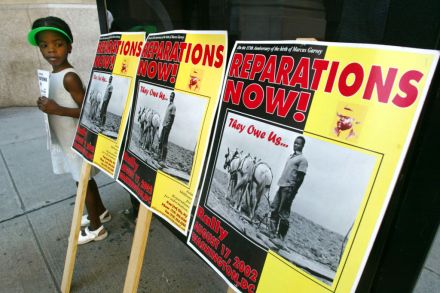
Return the Danegeld: the reparations Britain is owed

From our UK edition

Should Britain return colonial artefacts? For some, the answer is easy: of course. But these people must also be consistent and realise that the arguments posed for the return of stolen goods cut both ways. Just as they can be applied to make the case that the United Kingdom should pay out where it has

Roald Dahl, Ted Hughes and the postmodern inquisition

From our UK edition

On the third day after his cancellation, Ted Hughes rose again. Having published a spreadsheet listing his possible association with ‘wealth obtained from enslaved people or through colonial violence’, the British Library backed down, making a public apology to his widow and withdrawing ‘unreservedly’ the reference ‘to a distant ancestor’. A natural first response to this

Reparations can’t right the wrongs of the past

From our UK edition

It’s all change at Jesus College, Cambridge. The marble memorial to Tobias Rustat is coming down. His portrait is no longer displayed. And his name has been removed from the conferences held at the college. Yet for one emeritus fellow of Cambridge’s Magdalene College, these steps do not appear to go far enough. Colin Kolbert, a retired judge, said:

Britain’s prisons aren’t working

From our UK edition

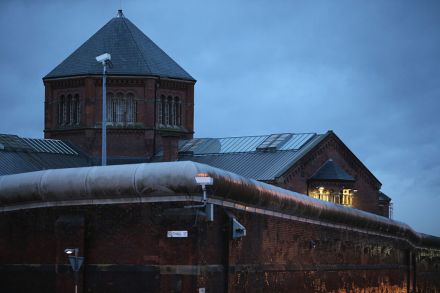
Last April police officers found the bodies of two women, Mihrican Mustafa and Henriett Szucs, stored in Zahid Younis’s freezer. Before their murder Younis had served two jail sentences. The first came in 2005 after he married a 14-year-old in a Walthamstow mosque, got his child bride pregnant, and assaulted her. For this he was

Forever Family and the problem with the Met’s selective policing

From our UK edition

Until relatively recently I was under the impression that preventing people breaking the law was the primary job of a police officer. But is this always the case? Or is tackling crime sometimes substituted for a form of morality-based policing? The protest for reparations in Brixton last Saturday – and the reaction of the police –

If Rhodes falls, we’ll regret it

From our UK edition

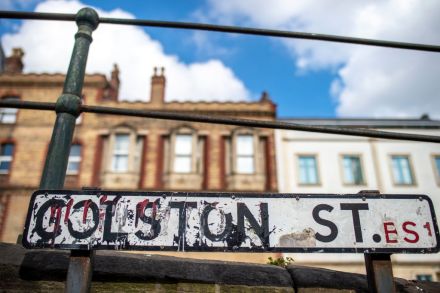
Why should we leave memorials to evil men standing? Even for those who oppose the toppling of statues like Edward Colston’s, it’s a hard question to answer. But one reason to stand against the destruction of memorials to those who have come before is because of what it might mean for those who come after

How should we feel about compensating slave-owners?

From our UK edition

Should Britain have compensated slave-owners? At first glance, the question seems ridiculous. Comedian London Hughes asks if we think it’s ‘disgusting that when slavery ended, the UK government paid out millions to former slave owners as a way of saying sorry’. Academic Jason Hickel notes disapprovingly that British taxpayers ‘were paying reparations from the abolition

Did slavery really make Britain rich?

From our UK edition

‘It’s a sad truth that much of our wealth was derived from the slave trade’, said London’s mayor Sadiq Khan. Others agree: for Al Jazeera’s Imran Khan, ‘Britain was built on the backs, and souls, of slaves’. But there is a problem with this analysis; it’s wrong. Just like the story told of an island

Britain’s energy system needs an upgrade

From our UK edition

In 1698, the English engineer Thomas Savery patented a coal-fuelled steam engine, and in doing so lit the long fuse of the industrial revolution. Over the next 200 years, coal became the dominant source of power in Britain, outstripping wind, water and labour. In 1882, the world’s first coal-fired electric power plant was opened —

When Boris gets it wrong, don’t make excuses for him

From our UK edition

When Boris Johnson received a sharply worded rebuke for his ‘clear misuse of official statistics’ from Sir David Norgrove, the Chair of the UK Statistics Authority, The Spectator rushed to his aid. Steerpike asked why the statistics chief had intervened when ‘every word from Boris (this time) was accurate’.  The short answer is that Norgrove