Sam Ashworth-Hayes

Sam Ashworth-Hayes

Sam Ashworth-Hayes is a former director of studies at the Henry Jackson Society.

The shameful exploitation of Chris Kaba’s death

From our UK edition

Why exactly is it that the journalists and politicians who claim to be most proud of multicultural, multiethnic Britain seem to be the ones most determined to tear it apart? To read the newspapers, you might sometimes think a deep cover cell of white separatists is secretly running the show. Why else would left wing politicians and newspapers who supposedly want us to pull together as one spend their time pumping out racial agitprop in their never-ending search for attention? Why else would they emphasise division and mistrust, undermine institutions, and blatantly mislead people about the country they live in if not to advance a cause which benefits from these things?

Don’t blame the Queen for the British Empire

From our UK edition

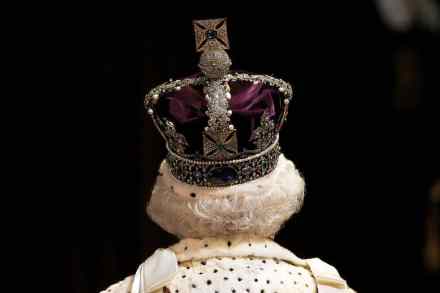
If a country’s greatness can be measured by its enemies, Britain can set fears of national decline aside: we’re still doing pretty damn well. Now that the Queen’s funeral has taken place, the dignitaries have been despatched, and the corgis are in good hands, it seems like the right time to take stock. Most of the world's leaders, from president Biden to president Putin, have paid their respects to Britain’s late monarch, and sent their sorrow to Britain’s mourning people. The exceptions have been few, and noisily promoted by American media organisations desperate to make every world event somehow a commentary on domestic US politics.  The best response to this is simply to ignore it.

Sturgeon’s rent controls will hurt Scots

From our UK edition

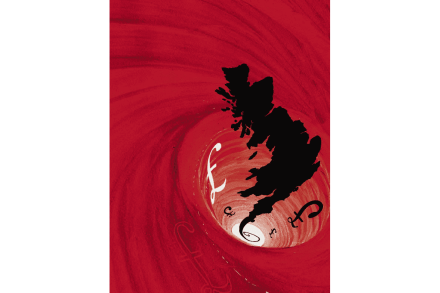
It’s all getting a bit Latin American in Britain and not in a good way. Inflation is stuck stubbornly in the double digits, the current account deficit is at record levels, our new Prime Minister is preparing to spend the annual budget of the NHS on subsidising energy purchases, and regional separatists are tightening their grip on the Scottish economy by introducing price controls. At least the weather’s still good. Nicola Sturgeon’s plan to freeze all rents in Scotland would be a disaster for Scots. Economists almost universally agree that rent control is one of the worst possible ways the government can intervene in a housing market. The short-term consequences are predictable; the policy freezes the price of renting and puts a moratorium on evictions.

The madness of Truss’s energy price cap

From our UK edition

While Boris Johnson used his farewell speech to praise the ‘vital symmetry between government action and free market capitalist private sector enterprise’, the formerly free market Liz Truss was busy briefing out price caps on energy. There are only three possible explanations for this sudden change of heart: No. 10 is haunted by the malign ghost of Clement Attlee, the building is riddled with lead piping, or the electoral incentives facing the Conservative party are so perverse that when push comes to shove, even free marketeers are willing to abandon the free market in the race to expropriate from the young to pay for the old. Given that Truss has yet to officially enter her new residence, my money is on the last option.

Crime is being decriminalised

From our UK edition

In February Joshua Carney, a man with 47 previous convictions, was released from prison early on licence. Five days later, he forced his way into a Cardiff house, locking a terrified woman inside. Her screaming woke her 14-year-old daughter upstairs. Carney raped both daughter and mother in front of each other. On Monday, Carney was jailed for ‘life’; he will be considered for parole in ten years, at the age of 38. The core principle of British justice isn’t public safety. If it was, Carney would never leave prison. This isn’t about the preservation of liberty; the threat of crime is a far greater constraint on the average person’s freedom than the threat of prison.

Britain is not prepared for winter blackouts

From our UK edition

Britain has a bold new plan for dealing with a winter energy crisis: ‘hope for good weather’. It’s hard to see what else is on offer; nobody seems to be seriously discussing what the government can do to secure energy supplies through the winter, how households will heat their homes, and whether we should rescue businesses driven to bankruptcy by soaring energy prices. The state is braindead until Boris Johnson finally departs. His potential successors are engaged in hard-hitting discussions over whether it’s possible to hold a budget without OBR forecasts, or whether tax cuts will drive inflation higher.

Britain’s crippling lack of infrastructure

From our UK edition

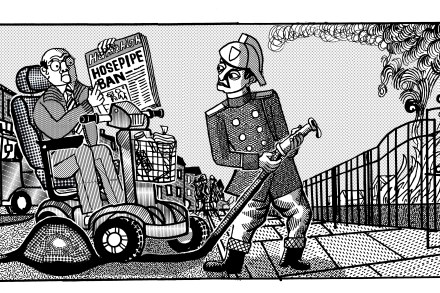
England is in the grip of its most widespread drought in 20 years. Water companies are implementing hosepipe bans. Half the country’s potato crop is expected to fail. Photographs of reservoirs show them drained, dry banks open to the sky. Another heatwave is here, bringing little prospect of imminent relief. Britain hasn’t built a reservoir since 1991. The population has grown. Hot weather has become more frequent. Water use has become more strained. The barriers to actually doing something about it remain in place. Take Layla Moran, Liberal Democrat MP for Oxford West. As late as March, she was doing the media rounds vigorously opposing the construction of a new reservoir in Abingdon; it would be unsightly, the population projections might be wrong, she said.

How Truss plans to bring the Bank of England to heel

From our UK edition

Liz Truss believes the Bank of England has lost control of inflation. If chosen as the country’s next prime minister, she plans to bring it back to heel: 'I want to change the Bank of England’s mandate to make sure in the future it matches some of the most effective central banks in the world at controlling inflation', singling out the Bank of Japan as one model to follow. In the rarified world of monetary policy discussion, this was a bit like chucking a live grenade into a ball pit. Michael Saunders, a member of the Monetary Policy Committee responsible for setting interest rates, noted 'the foundations of the UK monetary policy framework, I think, are really important and best left untouched'.

Ukraine’s fate may rest on a mild winter

From our UK edition

Russia is once again relying on ‘General Winter’. Instead of freezing German advances on Moscow, the plan today is to freeze German pensioners in Berlin. Western sanctions are crippling the Russian economy, driving up inflation and unemployment. In turn, Russian restrictions on gas are driving energy prices in Europe through the roof. Putin’s gamble is that Russia’s willingness to bear economic hardship is higher than the West’s. By winter, Europe could find itself in a literal cold war. Russia is currently throttling gas flows through the Nord Stream 1 pipeline, which is operating at just 20 per cent capacity.

Biden’s word play can’t save the United States from a recession

From our UK edition

Some denials are more worrying than their absence. A company insisting that its director will be vindicated by the forensic auditors is unlikely to succeed in calming investors; a sports team insisting it has total confidence in its coach is likely to receive a flurry of speculative applications; and a president insisting that 'we’re not gonna be in a recession in my view' is unlikely to do consumer confidence a great deal of good. The major difference here is that the White House has the advantage of being able to mark its own homework. No matter what today’s GDP data shows, Biden’s team will be able to claim the US is not in recession by the cunning mechanism of simply choosing a different definition. Output’s fallen for two quarters in a row?

Biden’s word play can’t save the United States from a recession

From our UK edition

Some denials are more worrying than their absence. A company insisting that its director will be vindicated by the forensic auditors is unlikely to succeed in calming investors; a sports team insisting it has total confidence in its coach is likely to receive a flurry of speculative applications; and a president insisting that 'we’re not gonna be in a recession in my view' is unlikely to do consumer confidence a great deal of good. The major difference here is that the White House has the advantage of being able to mark its own homework. No matter what today’s GDP data shows, Biden’s team will be able to claim the US is not in recession by the cunning mechanism of simply choosing a different definition. Output’s fallen for two quarters in a row?

There’s nothing conservative about climate change

From our UK edition

The combination of '40°C temperatures' and 'England' feels about as natural a pairing as 'English football' and 'winning'; God simply did not intend the two to go together as they did this week. And although it feels odd to have to point it out, there’s nothing conservative about believing climate change isn’t a problem. Turning England’s green and pleasant land into scorched savanna should not really be on the manifesto of the least important backbencher, let alone anyone with an aspiration to influence policy. This message has yet to penetrate the cranial shielding of some MPs. Sir John Hayes told the Daily Telegraph we found ourselves in 'a cowardly new world where we live in a country where we are frightened of the heat.

How Germany’s energy crisis could bite Britain

From our UK edition

For now, Berlin can breathe a sigh of relief: after a ten-day shutdown for maintenance, the Nord Stream 1 pipeline is back online. Russia is once again heating German homes, fuelling German industry, and using German money to finance its war in Ukraine. But this happy exchange may not continue; the pipeline is still operating at just 40 per cent of its usual capacity, and Vladimir Putin is warning this could fall to 20 per cent next week.

Germany is at Russia’s mercy

From our UK edition

While Britain bakes in a heatwave, politicians in Germany are worrying about the winter. The Russian state-owned gas company Gazprom has notified its European customers that it can no longer guarantee the supply of fuel due to ‘extraordinary’ circumstances. In Berlin, politicians and regulators are preparing for an ice-cold Christmas, drawing up lists for rationing priorities and emergency plans to stop the population freezing. Entertainment and frivolities will be the first things to go, while newspapers and medical production will be prioritised alongside households and hospitals. Mothballed coal power plants are being prepared for reactivation.

Britain’s sclerotic state

From our UK edition

To listen to the would-be prime ministers of the Conservative party, things in Britain are going pretty well. Sure, Covid knocked the public finances off course, and the war in Ukraine has driven up prices at the pump, but structurally, Britain holds strong. This is about as far from the truth as it is possible to be. Unless the next prime minister can shake off this delusion, Britain is facing a second lost decade of economic growth. It's important to put into perspective just how bad the last few parliaments have been. If the UK continues with the same level of growth it has seen for the last decade, Poland will be richer than Britain in about 12 years' time.

Penny Mordaunt would make a great leader – of the Labour party

From our UK edition

The clouds have cleared, the fog has lifted, clarity has arrived. The first reaction to finding out Penny Mordaunt was well ahead in the polls and the favourite to win the leadership contest – ‘who again?’ – has passed. But after reading a little of her work, I am now convinced that Penny Mordaunt would make a great leader – of the Labour party. For the Conservatives, she would be a complete disaster. There is little in Mordaunt’s public record that suggests she is particularly amenable to Conservative views. The core thrust of her book (written with Chris Lewis) is that Britain needs to be ‘modernised’ – a word that to conservatives generally signals ‘made more amenable to Blairites’. The Houses of Parliament?

It’s time to kill the Online Safety Bill for good

From our UK edition

The Online Safety Bill has been postponed. It should now be killed off for good. Not only is it bad for business, bad for free speech, and – by attacking encryption – bad for online safety, it now seems that there is a possibility, however remote, that the minister responsible for the bill doesn’t fully understand what it actually does. After it was announced that the bill’s passage through parliament would be put on hold next week, leadership hopeful Kemi Badenoch welcomed the delay by describing the bill as being ‘in no fit state to become law’, adding that ‘we should not be legislating for hurt feelings.

The case against all the Tory leadership candidates

From our UK edition

The Tory leadership contenders have set out their pitches. Rishi Sunak is the sensible but boring choice. Liz Truss is the candidate who will cut taxes and get stuff done. Kemi Badenoch is the wildcard. Penny Mordaunt has vowed to restore the Tory ‘sense of self’. And Tom Tugendhat will up defence spending. But what about another option: none of the above. In this dismal election, there are plenty of reasons to think that might be the best choice of all. Let’s start at the top. The word that best defines Rishi Sunak is ‘chutzpah’. The former chancellor packed his launch speech with fulsome praise for Boris Johnson, describing him as 'one of the most remarkable people I have ever met'.

Can the next Tory leader save Boris’s broken Britain?

From our UK edition

Whatever else will be said about him in the days and years to come, Boris Johnson will leave No. 10 having achieved the full extent of his policy ambitions: become Prime Minister. After a little under three years in office, Johnson has been reduced to the status of squatter in Downing Street, pottering about with a cabinet consisting of Nadine Dorries and pocket lint, grumbling about leakers and betrayers. Having successfully weaned itself off foxhunting, the Conservative party meanwhile is preparing for another bout of its favourite triennial bloodsport.

50-year mortgages won’t fix Britain’s broken housing market

From our UK edition

Downing Street has come up with another cunning plan to fix the housing crisis: 50-year mortgages, passed from parent to child. No longer will your ability to afford a home be dependent on your earnings. Once the scheme is in place, you will be able to borrow against the incomes of your future children, in a heart-warming recreation of the age-old tradition of indentured labour. The reasoning goes something like this: young people can’t afford to buy homes. Not only can they not afford to buy homes, they can’t afford to save for deposits. While accommodation has grown ever more cramped – with space per person dropping a quarter between 1996 and 2012 – rents have continued to eat into incomes.