Sam Ashworth-Hayes

Sam Ashworth-Hayes

Sam Ashworth-Hayes is a former director of studies at the Henry Jackson Society.

The British villages that will soon be lost to the sea

From our UK edition

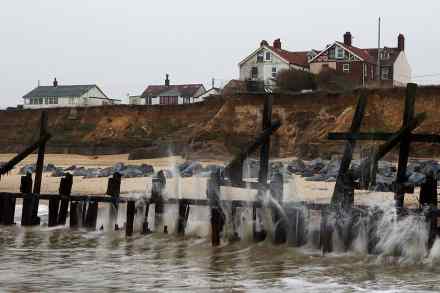
On the Welsh coast, surrounded by Snowdonia, the village of Fairbourne sits on a low, flat stretch of land. With sea on one side and mountain on the other, it seems perfectly situated. It is also doomed. Defended by high banks, the village is already substantially beneath sea level during storm tides. As sea levels rise, the government has decided to abandon it to the waves. Funding for sea defences is set to end by 2054. Fairbourne is far from the only community to face this fate. Over the next 28 years, some 200,000 buildings in Britain are set to end up below sea level. In some places, sea walls and embankments will hold the line. In others, nature will be left to take its course. People have been living in Happisburgh, Norfolk, for a very long time.
America’s abortion debate isn’t coming to Britain

From our UK edition

Politicians are lining up to condemn the US Supreme Court’s overturning of Roe v. Wade. Activists are warning us that this is the start of a fresh assault on abortion rights in Britain. What starts in the core spreads to the periphery; a new wave of pro-life policies will soon be here. What’s less clear is where this wave is meant to come from, given that every major British party is opposed to the Supreme Court decision. Once again, Westminster politics has mistaken Britain for America. The Conservative party may be in hoc to a blonde tousle-haired populist, but it isn’t quietly stacking the judiciary with pro-life justices in order to ban abortion.

How Boris can defeat the railway strikers

From our UK edition

Today, the RMT will succeed where the Luddites failed. For 24 hours, they will unwind the most impressive part of the Industrial Revolution, stripping Britain of trains. They will repeat the feat on Thursday and Saturday. The government, meanwhile, will wring its hands, complain about the losses faced by workers and businesses, and do very little to address them. While this won’t do much for GDP, it does at least offer the possibility of resolving the bulk of the energy crisis by harnessing the Iron Lady’s rotations in her grave. Frankly, I don’t care whether the railway staff are to blame for being intransigent.

Boris should scrap the Ministerial Code

From our UK edition

Last week, Boris Johnson’s ethics advisor - a role that must sit alongside Vlad the Impaler’s anger management therapist in the annals of doomed job descriptions - resigned. Downing Street so far hasn’t commented on whether Lord Geidt will be replaced, with a spokesman saying only that Johnson will ‘take time’ to consider the decision. Well, here’s a hint: you don’t respond to the failure of a chocolate teapot by buying a second one. And while you’re at it, scrap the Ministerial Code too. For all the Westminster rigmarole currently focused on them, neither of these institutions is particularly old. The Ministerial Code dates back to 1997 and Tony Blair’s election landslide, the ethics advisor to 2006.

The uncomfortable truth about Oxford University

From our UK edition

Oxford is a city that makes you proud to be British: its beautiful dreaming spires attract tourists and the cleverest students from across the world. But is there something darker lurking beneath the glorious architecture? Some Oxford students think so.  'Uncomfortable Oxford' is a student-run company which, for £13, takes you on a tour of the city centre. It promised to raise difficult questions about the university and society. 'Through unique walking tours, we generate discussions about racial inequality, gender and class discrimination, and legacies of empire,' its website says. The group met outside Carfax Tower, the last remnant of a church standing at the centre of Oxford.

Asking for a pay rise won’t crash Britain’s economy

From our UK edition

The Bank of England has just raised interest rates for the fifth time in the row, warning that inflation is expected to pass 11 per cent by the end of this year. If it had escaped your notice, everything is getting more expensive, and the government is powerless to help. The extent of the Bank’s assistance has been to tell you not to ask for a payrise. Boris Johnson, meanwhile, seems furious that taxes are so high, and will be having stern words with whoever raised them. Even Freddo bars aren't exempt from the cost of living crisis, shooting up to a frankly outrageous 30p each. Inflation is essentially a problem of too much money chasing too few goods. Markets don’t like unmet demand, or unused supply.

The police have bowed to the mob

From our UK edition

On Saturday immigration enforcement officers went to Peckham to pick up a man suspected of overstaying his visa. When they arrived, a crowd of protesters turned up to stop the ‘immigration raid’, blocking the van from departing. When the police turned up, they also found their way blocked. Eventually, they gave up. The arrested man was released on bail. The Home Office released a statement which said that ‘preventing immigration enforcement teams from doing their job is unacceptable.’ This was accompanied by the universally understood but officially unstated caveat: not that we’d prevent you from preventing officers doing their job. https://www.youtube.com/watch?

Ben & Jerry’s is wrong about Britain’s ‘racist’ Rwanda plan

From our UK edition

Why is an ice cream brand lecturing Britain on the morality of its immigration policy? Ben and Jerry’s, otherwise known for flogging overpriced junk food, has weighed in on the government’s new policy of sending mostly single men dodging Britain’s border control to Rwanda. The plan is 'cruel and morally bankrupt', 'racist and abhorrent', according to the ice cream company, which says sending people 'to a country they’ve never been to, and have no connection with' could 'put people’s lives at risk'. Setting aside the source of these allegations, let’s evaluate these statements.

David Lammy, George Floyd and the trouble with ‘structural racism’

From our UK edition

What planet do our politicians live on? Labour’s video memorialising George Floyd, and pledging radical change to education and justice policies to combat the sort of 'structural racism' that led to his death, suggests which country. All this time I’ve believed I live in Britain, when in fact we’re all living in America.  What other explanation could there be for a party pledging to radically reshape the nation based on events in Minneapolis two years ago? Why else would British politicians like David Lammy line up to say 'he could have been me'? If we didn’t live in America, comparing a Harvard-educated London lawyer to a man living in a city on the other side of an ocean based on little more than the colour of their skin seems facile.

The moral decay at the heart of the Tory party

From our UK edition

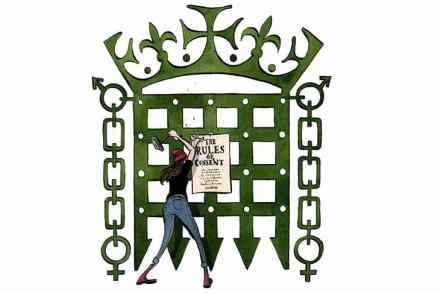
Pigs may fly, Hell may freeze over, and a month may pass without a Conservative MP revealing the moral decay at the core of the party. Yesterday, former MP Imran Khan was sentenced to 18 months in prison for sexually assaulting a 15-year-old boy. In Westminster, meanwhile, rumours circulated that a senior MP had sexually assaulted colleagues. Yet another member was bailed after being arrested in a rape investigation. These stories shouldn’t be confused with the unnamed Conservative MP who was arrested over rape allegations in 2020 before the investigation was dropped or the former government whip Charlie Elphicke who was jailed for sexual assault in 2020.

BLM is dying but its legacy lives on

From our UK edition

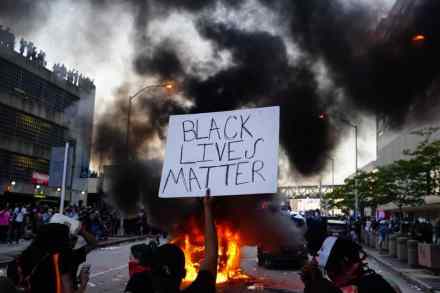
It can be hard to remember just how strange things were during the pandemic. Every day the front pages covered the virus spreading from city to city in minute detail, while politicians and citizens alike excoriated each other for failing to show sufficient concern about the disease. With the benefit of those two years, it’s now – probably – just about safe to say it: the summer of 2020, which was dominated by the Black Lives Matter movement, really was quite strange.

What reason is there for young people like me to vote Tory?

From our UK edition

With a sense of reluctance, I went into a voting booth this week and ticked the boxes corresponding to my local Labour candidates. My rationalisation was simple: I wasn’t voting for Labour, but against the Conservatives.  There is a tangible stench of decay surrounding the Tory party at present. At best, it is incapable of maintaining moral standards. Barely a month passes without some MP's embroilment in a grubby scandal involving sex, money, or both. The party has no vision for the country, no agenda beyond targeting the young to pay for the old. And if you judge them on results, well, there's even fewer reasons to vote Tory. The Conservatives have been in office for over a decade. What are their economic achievements? Prices are rising; wages are stagnant.

Revoking Roe v. Wade is not an assault on democracy

From our UK edition

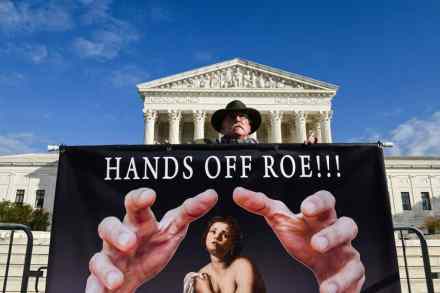
The leak of a draft Supreme Court decision overturning Roe v. Wade has sparked a furious reaction in Britain. Yet for all the backlash in British political circles, the reality is that the proposed shake-up of abortion laws in the United States doesn't really matter here. Our nominally conservative-leaning parliament just voted to make abortion easier, and the issue is nowhere near as salient for the British right as it is in the US. Those who are furiously denouncing the ruling are wading into an issue that will have little to no impact on their own lives. Yet there is something significant for Brits to take from this furious debate: we're lucky that we live under the rule of law rather than the rule of lawyers. How much longer will this be the case?

In praise of Elon Musk’s Twitter takeover

From our UK edition

If there’s one quality that defines Elon Musk other than his entrepreneurship, it’s his ability to drive his detractors mad. From this perspective, his attempt to buy Twitter is his greatest success yet. With Twitter poised to accept a buyout today, we can expect more entertainment on this front. We can also expect a significant improvement to the social network. Musk's motivations are twofold. Firstly, he is a passionate believer in free speech, a quality he views as sorely lacking on the platform. A commitment to enabling unfettered conversation would make it a far more interesting place to be. Secondly, and relatedly, he thinks he can run it better than the current management. Given his track record disrupting other industries, it would be a brave man who bets against him.

What are the Tories for?

From our UK edition

It’s an odd accusation to levy at Boris Johnson’s government, but the Conservative party feels grey. Flights of fancy suggesting a bridge to Northern Ireland or – a thought to make 19th century Royal Navy strategists shudder – to France have given way to a carousel of scandals and disappointments. The former is cheap or cruel; the latter marked mostly by their predictability. This week confirmed a suspicion I’ve held for a while; the Conservative party, being neither meaningfully socially conservative nor particularly interested in using an 80 seat majority, exists for the sole purpose of keeping Labour out of office.

The shameful silence surrounding David Amess’s murder

From our UK edition

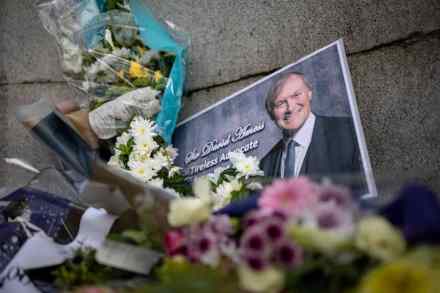
Ali Harbi Ali has been given a whole life sentence. But perhaps this is too steep an introduction. Perhaps, like me, you’re beginning to lose track of the various perpetrators of Islamist terror in Britain as the news blurs into a constant revolving track of incidents, arriving to a sense of outrage deadened by repeated horror. Ali Harbi Ali murdered the MP Sir David Amess in a constituency surgery, in a direct assault on British democracy. He told the horrified crowd that he wanted ‘every parliament minister who signed up for the bombing of Syria, who agreed to the Iraqi war, to die.’ He said he did it ‘because of Syria’. He claimed Sir David ‘deserved to die’.

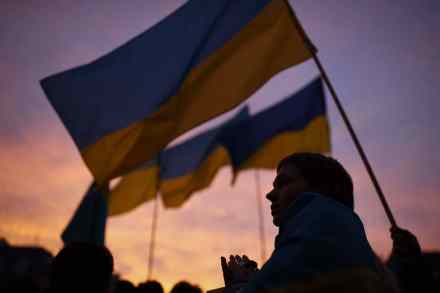
Neither Ukraine nor Russia can win the war

From our UK edition

While Russia has agreed to pull back its troops from Kyiv, the signs of a wider breakthrough in peace talks are far from promising. Ukrainian foreign minister Dmytro Kuleba insists that his country will not trade 'people, land, or sovereignty'; and the US state department believes Russia too is unlikely to make compromises. Yet while striking a negotiated settlement might seem to be against the odds, this outcome remains the best hope for Ukraine. Outright victory is not an obvious possibility for either party to the conflict. The Russian advance has stalled, and the army lacks the troops for a full occupation. Ukrainian forces lack the ability to force Russia to withdraw from its country. Neither side appears sufficiently exhausted by the conflict to simply give up.

Russia has never been a part of the West

From our UK edition

In 1697 Tsar Peter the Great set out on a great journey across western Europe, seeking the support of European monarchs in his confrontation with the Ottoman Empire. Unsuccessful in securing alliances, he returned instead laden with ideas acquired in his travels through Britain and Holland, which he promptly put into action in modernising Russia. The most visible symbol of this new nation was Saint Petersburg, the intended new capital of his empire. By 1858, an English visitor to the city described it as ‘one of the handsomest cities in Europe’, with a street of residences ‘so large that 50 extend over an English mile.

In defence of mutually assured destruction

From our UK edition

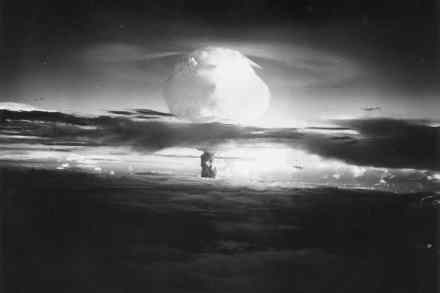
The slow return of the 1980s has reached its logical conclusion. The prospect of nuclear annihilation is haunting our nightmares once again. Vladimir Putin’s invasion of Ukraine has been marked by a willingness to engage in blatant nuclear sabre-rattling of a sort not seen since the end of the Cold War.  From his statement that anyone 'interfering from outside' would 'face consequences greater than any you have faced in history' to his placing Russia’s nuclear forces on 'a special combat duty regime', Putin’s strategy has been to threaten nuclear war to keep the West out of what he sees as his business. But these threats don't mean that Putin is about to send missiles soaring over Europe at any moment.

A no-fly zone is an act of war

From our UK edition

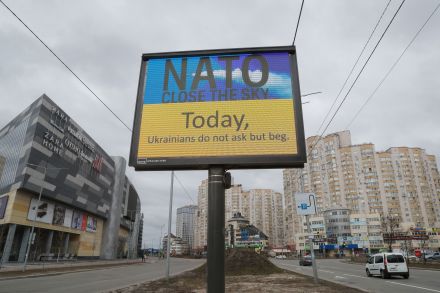
Fuelled by repeated appeals from President Zelensky, western support for a no-fly zone in Ukraine is growing. The number of Americans in favour of a no-fly zone outnumber those against by 45 per cent to 20. People seem to feel that something must be done, beyond the sanctions already in place and the provision of weapons. A no-fly zone is something; therefore it must be done. So far, western leaders have rejected these requests. Nato secretary-general Jens Stoltenberg has explicitly ruled out the idea, as have No. 10 and the White House. On this, if only this, they find themselves in agreement with Vladimir Putin: imposing one would be an act of war.