Rupert Darwall

Rupert Darwall is a senior fellow at the National Center for Energy Analytics.

Biden walks naked into a climate conference

From our US edition

Nye Bevan, the British socialist, famously denounced the nuclear unilateralists in his party for sending a future foreign secretary 'naked into the conference chamber’. Unless Congress passes the stalled budget reconciliation bill, President Biden will fly to the COP26 Glasgow climate conference, which starts in less than three weeks’ time, in a similar state of undress. Before the Paris agreement in 2015, UN climate change conferences were about hammering out the texts of binding climate treaties and agreeing to emissions reduction targets. All that has changed. Climate change targets are now decided in advance by individual countries in their Nationally Determined Contributions, draining climate conferences of drama and turning them into a giant show-and-tell.
climate

Afghanistan and climate change: the West’s twin failures

From our US edition

The West’s humiliation in Afghanistan has an older brother: climate change. As siblings, the two share characteristics, most obviously an inability to confront unwelcome facts. In Afghanistan, there was a large constituency led by the Pentagon invested in the mantra of proclaiming progress in the fight against the Taliban. Climate has its own industrial complex of NGOs, climate scientists, renewable energy lobbyists profiting from the energy transition, eager helpers in the media, and politicians posing as world saviors. Energy experts tell us renewable energy is cheaper than building new fossil fuel power stations. If they’re right, why did China build the equivalent of more than one large coal plant a week last year?

climate change

Who’s cashing in on the climate emergency?

'The climate transition presents a historic investment opportunity,' says BlackRock CEO Larry Fink. 'What the financiers, the big banks, the asset managers, private investors, venture capital are all discovering is: There’s a lot of money to be made in the creation of these new [green] jobs,' chimes in presidential climate envoy John Kerry.  Fink concedes that the economy remains 'highly dependent' on fossil fuels. He also asserts that BlackRock is 'carbon neutral today in our own operations'. It’s a claim open to challenge. 'If a company or individual says to me they are net-zero, I know it is complete crap,' tweeted Glen Peters, research director of the Oslo-based Centre for International Climate Research.

Labour’s reckless net zero promise

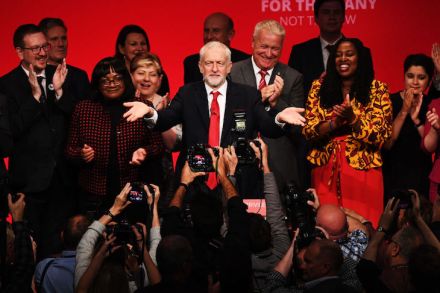
On the face of it, the Labour party conference commitment to bring forward Britain’s net zero greenhouse gas emission target to 2030 is nothing short of reckless. ‘We need zero emissions,’ the economist Paul Johnson and member of the Committee on Climate Change tweeted. ‘Getting there by 2050 is tough and expensive but feasible and consistent with avoiding most damaging climate change. Aiming for zero emissions by 2030 is almost certainly impossible, hugely disruptive and risks undermining consensus.’ The GMB, the union representing what remains of Britain’s industrial workers, warned that it could lead to widespread job losses. The GMB is right. Accelerated decarbonisation is a formula for rapid de-industrialisation.

Elton John and the inconvenient truth about carbon offsetting

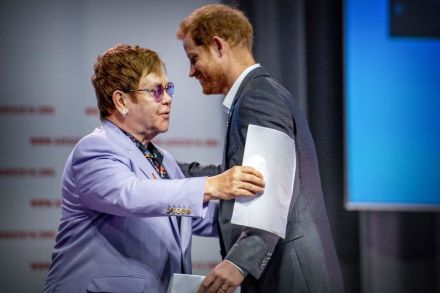
Elton John did his royal pals Harry and Meghan few favours when he revealed he’d bought carbon offsets for the couple’s recent trip to Nice in Sir Elton’s private jet. It was also a mistake. ‘Offsetting is worse than doing nothing,’ according to Manchester university professor Kevin Anderson, one of the vanishingly small number of people in the climate world who actually walks the climate talk. ‘It is without scientific legitimacy, is dangerously misleading and almost certainly contributes to a net increase in the absolute rate of global emissions growth.

It’s the Political Declaration, not the backstop, that could scupper Boris

Here’s a negotiating gambit that seldom fails. Make a blatantly outrageous demand, and the other side won't notice they've been stitched up in the rest of the agreement. That’s what Brussels did negotiating the Withdrawal Agreement. The backstop got so much attention that Britain’s commitments in the Political Declaration – wrongly thought of as optional extras – were ignored. Boris Johnson has already revealed his focus in the negotiations is to scrap the backstop, and has said that: 'No country that values its independence and indeed its self-respect could agree to a treaty which signed away our economic independence and self-government as this backstop does. A time-limit is not enough.. the way to the deal goes by way of the abolition of the backstop.

One-nation Conservatism won’t help the Tories defeat Corbyn

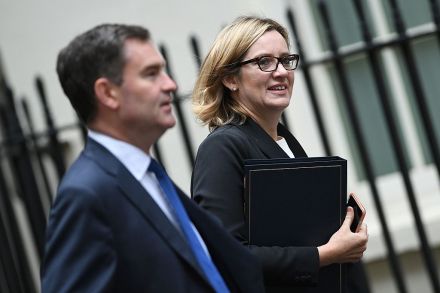
There’s a useful rule of thumb in politics. When Conservative politicians pronounce themselves to be a One Nation Tory, you can be pretty sure they’ve got nothing sensible to say. Instead of addressing voters, they’re conversing with each other in a special form of Tory code. It’s an identifier without substance, a form of ritualistic preening often seen in the animal kingdom. Amber Rudd was at it last week. Claiming that the economy was her top priority, Rudd said she would oppose any Conservative leadership candidate who wanted to cancel HS2. The timing was unfortunate, with the House of Lords Economic Affairs Committee subsequently producing a report recommending the government think again on HS2.

Tesco and the great green scam

Only two months ago, Tesco agreed to pay a £129 million fine for false accounting, when it overstated profits in its August 2014 trading statement. ‘What happened is a huge source of regret to us all at Tesco,’ chief executive Dave Lewis said, ‘but we are a different business now.’ Not so fast. On Monday, the supermarket giant announced that its UK stores and distribution centres would be switching to 100 per cent renewable electricity this year. Tesco backs up its claim by saying that its UK electricity consumption will be supported by renewable energy certificates. As part of the EU’s promotion of renewable electricity, all member states are required to run schemes to guarantee the origin of electricity produced from renewable energy sources.

A Customs Union isn’t the way out of the Brexit mess

For some of those desperate for Britain to stay put in the EU, the Customs Union option functions as a handy obsession. Ministers, too, appear to be rallying behind this as a solution to the Brexit crisis, amid reports that dozens of senior Tories could vote for the UK to stay in a customs union in tonight's vote. They are making a big mistake. There is no substantive case for irrevocably and permanently subjecting Britain to the European Union’s Customs Union. Rather than attempt to demonstrate how being tied to the Customs Union furthers the national interest, the best its proponents can do is pitch it as a tactical compromise.

The problem with Norway Plus

Clear thinking is what Brexit requires but clear thinking is the one thing most lacking. An example is how the Norway model has morphed into Norway plus. As it gathered political support, in the process, it lost any semblance of coherence. At the weekend Labour MPs Alan Johnson and John Denham touted Norway Plus as a compromise offering ‘something for everyone.’ Straight Norway would see Britain exercising its legal rights as a contracting party under the original 1993 treaty establishing the European Economic Area (EEA). It offers two strategic advantages over the Prime Minister’s disastrous approach. First, it would remove the structural negotiating imbalance favouring the European Commission.

What’s the real reason Greg Clark doesn’t like Brexit?

To those who’ve known Greg Clark for any length of time, the transformation of the mild-mannered business secretary into the Cabinet’s most fervent Remainer requires some kind of explanation. So what's the real reason Clark finds Brexit a threat? Forget about protecting the automotive industry and manufacturing generally. The car industry is already reeling from the government’s hostile environment towards car ownership. Last year, car sales fell for the second year in a row, with diesel vehicles down 29.6 per cent. Supply was hit by testing to meet new emissions standards and demand dented by the government’s ongoing war on diesel.

The failure of the Climate Change Act: ten years on

The Climate Change Act is ten years old. It was passed in a different age. David Cameron had been hugging huskies to de-toxify the Tories. It was a year before the Copenhagen Climate Conference. ‘Fifty days to set the course for the next 50 years,’ Gordon Brown declared. China and India’s veto put paid to that, but Britain is still lumbered with a law that puts huge economic power into the hands of an unaccountable body, the Committee on Climate Change, which entrenches climate policy unilateralism. However much greenhouse gases the rest of the world puts into the atmosphere, the Climate Change Act compels Britain to almost completely decarbonise.

How Brexiteers can still save Brexit

Brexit hangs by a thread. The Chequers Plan has already failed. Public hostility and its one-sided nature mean that it cannot provide a durable basis for the UK's future relationship with the EU. Only eighteen months ago, the Prime Minister was saying that Britain could not possibly stay in the EU Single Market. It would mean "not leaving the EU at all." Yet this is precisely what the Chequers Plan does, with its acknowledgment that the Single Market is built on a balance of rights and obligations and its proposal for a new framework that "holds rights and obligations in a fair and different balance." Fair and different is not Brexit.

How Brexiteers can still save Brexit | 30 July 2018

Brexit hangs by a thread. The Chequers Plan has already failed. Public hostility and its one-sided nature mean that it cannot provide a durable basis for the UK's future relationship with the EU.  Only eighteen months ago, the Prime Minister was saying that Britain could not possibly stay in the EU Single Market. It would mean "not leaving the EU at all." Yet this is precisely what the Chequers Plan does, with its acknowledgment that the Single Market is built on a balance of rights and obligations and its proposal for a new framework that "holds rights and obligations in a fair and different balance." Fair and different is not Brexit.

The toxic politics of ‘soft Brexit’

The management principle that in static organisations, people are promoted to their level of incompetence reveals the government’s two most inept politicians to be the Prime Minister and the Chancellor of the Exchequer. Appearing at Davos last week, Philip Hammond pitched the government into its current – conceivably terminal – Brexit crisis. Thanks to his intervention, the Chancellor’s game plan is now obvious: the softest possible Brexit. Getting away with it involves a softly, softly approach. The politics of being outside the EU but ruled by the EU as a de facto Brussels protectorate require copious doses of political Temazepam. This, one would have thought, would have come naturally to Philip Hammond.

The Tories’ green wheeze won’t win them the next election

Conservative ministers are going through a green fit in an attempt to appeal to voters they lost at the last election. They want to show the world they’re doing good. ‘You know what some people call us – the plastic bag party,’ seems to be the political re-branding calculation. As the former No.10 spin doctor Katie Perrior remarked in the Times last week, the Prime Minister’s enthusiasm for protecting the environment may not be insincere, but it is certainly new. In reality, the May government’s greenwashing is classic displacement activity. Productivity numbers released by the Office for National Statistics earlier this month should be front and centre of every government policy.

Donald Trump is right to ditch the Paris Agreement

Yesterday’s announcement by Donald Trump that the United States is withdrawing from the Paris Agreement is truly historic. The Paris accord was the closest the Europeans had come to getting the US to accepting timetabled emissions cuts in the now quarter century saga of UN climate change talks. The first was in the 1992 UN climate change convention itself, rebuffed by George H.W. Bush; the second was in the 1997 Kyoto Protocol, signed by the Clinton Administration, effectively vetoed by the Senate and repudiated by George W. Bush. Now, Donald Trump has dashed their hopes for a third and possibly final time. It’s understandable that the European reaction is one of fury and outrage.

Forecast failure: how the Met Office lost touch with reality

It has been a glorious sunny week in Britain — it feels as if summer is finally here. As Andy Murray was winning Wimbledon, temperatures on Centre Court exceeded 40˚C in the sun. Northern Ireland has been hotter than Cancun. The papers have begun their annual drip-feed of stories about ‘tombstoning’ — young people throwing themselves from cliffs and bridges into water. It is hard to believe that it was just a few weeks ago that the Met Office braced us for a ‘colder-than-average’ July and a decade of soggy summers. Not so hard to believe that they held a crisis meeting recently, to discuss why they have got the weather so wrong for so long.

Tear up Britain’s ‘Renewables Obligation’

Unaffordable and unsustainable, Rupert Darwall explains why Labour’s worst stealth tax must be abolished The bubble has burst; there are no proceeds of growth to share and Britain’s budget deficit is, in the words of one central banker, truly frightening. Can Mr Cameron give voters a break, one which will leave them tangibly better off and is unambiguously good for the economy? Yes he can. The Renewables Obligation can claim to be Labour’s worst stealth tax. Unlike VAT, it is bundled into people’s electricity and gas bills without them knowing how much it costs. The money it raises is then spent with minimal accountability or regard for value for money. Since its introduction in 2002, the Renewables Obligation has cost consumers and businesses £4.

Why Marx would have been a denier

Make no mistake, Karl Marx and Friedrich Engels would have given short shrift to global warming and environmentalism in some of their most colourful prose. As Sherlock Holmes explained to the Scotland Yard detective, there is the curious incident of the dog in the night-time. But the dog did nothing. ‘That,’ Holmes replied, ‘was the curious incident.’ Who heard the Marxist bark? In the history of global warming, that dog was classical Marxism, a Promethean doctrine that argued for the strengthening of man’s power over nature. It is hard to conceive of the pre-Gorbachev Soviet Union being a party to global carbon emissions treaties on ideological grounds, let alone during a strategic race to bury the West.