Rupert Christiansen

Rupert Christiansen is the chief dance critic of The Spectator

A latter-day exercise in Dada: Nature Theater of Oklahoma reviewed

From our UK edition

What to make of the Nature Theater of Oklahoma, which this week made its British debut at the Queen Elizabeth Hall? The bare facts indicate that it’s a ‘crazy shit’ performance group of some repute, the brainchild of Pavol Liska and Kelly Copper, established 19 years ago, based in New York, its weird name taken from Kafka’s unfinished novel Amerika. Beyond that, it’s an enigma. The title of its current show, No President, could suggest that satire of Donald Trump is intended, but if so, quite what is being implied remains obscure to me.

Depressingly corny: Quadrophenia, a Mod Ballet, reviewed

From our UK edition

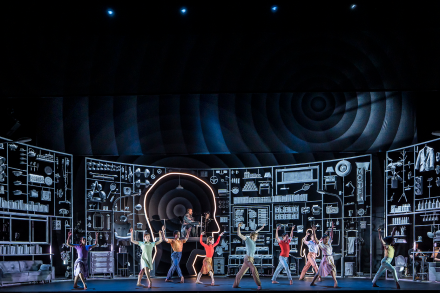
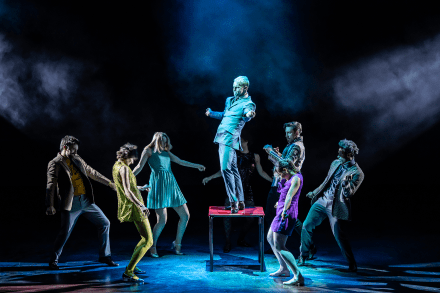
It’s all very well for people like me to sneer at dance makers for drawing on classic rock as a quick way of pulling in the punters, but the trick clearly does the business. Sadler’s Wells was pretty well full on the night I saw Pete Townshend’s Quadrophenia, a concept album that has endured several iterations and rewrites since the recording was first released on vinyl by the Who in 1973. An audience of all shapes and ages seemed to be having a good time, but although there’s nothing disgraceful about the show that director Rob Ashford has overseen, it seemed to me depressingly corny and laboured – a bumpy ride hitched to a creaky old bandwagon.

The cheering fantasies of Oliver Messel

From our UK edition

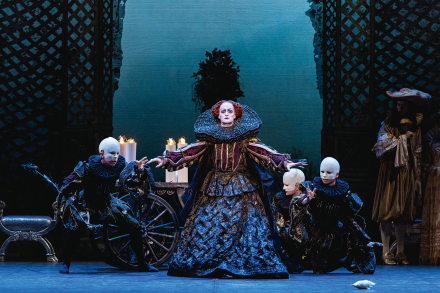
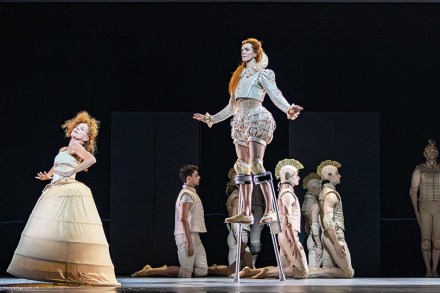
Through the grey downbeat years of postwar austerity, we nursed cheering fantasies of a life more lavishly colourful and hedonistic. Oliver Messel fed them: born into Edwardian privilege, the epitome of well-connected metropolitan sophistication, he doubled up as interior decorator and stage designer, creating in both roles a unique style of rococo elegance and light-touch whimsy that sweetened and consoled – ‘a gossamer world of gilded enchantment’ as Roy Strong soupily put it. ‘Marie Antoinette would have felt at home in any of his settings.’ Like his rival Cecil Beaton, Oliver Messel sums up an era Posterity has not been kind to Messel.

The artistic benefits of not being publicly subsidised

From our UK edition

Paralysed rather than empowered by the heavy hand of Big Brother Arts Council, the major subsidised dance companies are running scared and gripped by dismally risk-averse and short-termist attitudes. Free from the deadening metrics of diversity quotas and targeted outcomes, smaller more independent enterprises – London City Ballet and New English Ballet Theatre among them – can be lighter on their feet: they have inherited something of the pioneering spirit of Marie Rambert and Ninette de Valois a century ago and they deserve support. Another such is Ballet Nights – a series of one-off galas masterminded by Jamiel Devernay-Laurence, who doubles up as an embarrassingly brash compère, introducing each performer as though they were contestants at a rodeo. I wish he wouldn’t.

Christopher Wheeldon’s real gifts lie in abstract dance

From our UK edition

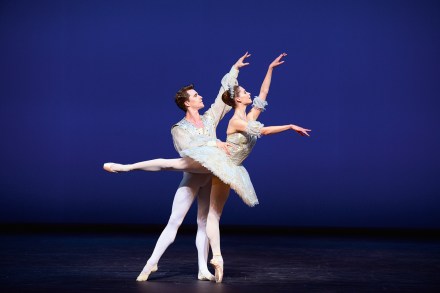
Christopher Wheeldon must be one of the most steadily productive and widely popular figures in today’s dance world, but I’m yet to be persuaded that he has much gift for narrative. His adaptation of the novel Like Water for Chocolate was a hopeless muddle; his response to Alice’s Adventures in Wonderland is mere vaudeville; and I’m praying to St Jude that nobody is planning to import his dramatisation of Oscar Wilde’s downfall, premièred in Australia last year. But as the elegant craftsman, and sometimes the inspired artist, of more abstract dance, he is without doubt a great talent. The Royal Ballet’s programme of four of his shorter pieces showcases his strengths.

Budget Ballets Russes: BRB2’s Diaghilev and the Birth of Modern Ballet reviewed

From our UK edition

Although I doff my hat to Carlos Acosta’s BRB2, Birmingham Royal Ballet’s junior troupe, for a reminder of what is owed to the Ballets Russes – nothing less than the creation of a new art form – the programme it’s presenting in Diaghilev and the Birth of Modern Ballet is neither well balanced nor coherent. Between some highlights of the most familiar Fokine repertory, an extract from Nijinska’s Les Biches has oddly been inserted, and there was nothing here to suggest the fact that Massine was by far the most dominant choreographer of the Ballets Russes’s interwar era and someone indeed who had personally worked with BRB in its previous incarnation.

Exhilarating – but also exhausting: ENB’s The Forsythe Programme reviewed

From our UK edition

The first time I saw the work of Trajal Harrell I stomped out in a huff muttering about the waste of public money and is this what the art of dance has come to. But perversely I was drawn back for more of its weirdness, and after The Köln Concert I am relenting. The guy might be on to something. A middle-aged, Yale-educated African-American with a melancholy air on stage, Harrell should probably be classified as post-post-postmodernist. In any case, don’t expect meaning to emerge clearly or logic to govern the movement he creates. His territory is queer in every sense of the term, dippy-hippie in spirit, and aesthetically far to the left in its rejection of order or hierarchy. Yet it is also open-hearted, innocently comical and slyly beguiling.

Rejoice at the Royal Ballet’s superb feast of Balanchine

From our UK edition

Any evening devoted to the multifaceted genius of George Balanchine is something to be grateful for, manna in the wilderness indeed, but the Royal Ballet’s current offering left me hungry for more. Three works were on the programme, all created in the early stage of the great man’s career, two of them widely familiar, none of them reflective of anything he created post-war for New York City Ballet. Are his executors reluctant to licence productions of later masterpieces such as Agon or Stravinsky Violin Concerto, or is the Royal Ballet fighting shy of their stylistic challenges? Gripe over, and let’s just rejoice in a feast of superb choreography at Covent Garden, performed with much excellence by dancers coached by Balanchine’s apostle Patricia Neary.

What a joy to see some Merce Cunningham again

From our UK edition

How salutary to encounter the cool cerebral elegance of Merce Cunningham’s choreography again. A figure at the heart of the abstract tendency in post-war American culture, the lover and collaborator of John Cage, Cunningham emptied barefoot dance of ideology, symbolism, plot, personality, pretension: instead it became purely an exploration of bodies in movement, responsive to chance, sound and light. Perhaps Cunningham’s language has been so deeply absorbed into the lexicon of modern dance that it no longer shocks or surprises. But its chaste beauty remains inviolate. Lyon Opera Ballet – France’s equivalent to Rambert – has made a speciality of performing Cunningham, who died in 2009 at the age of 90. For an all too brief visit to London, it presented two of his later works.

Irresistible: Osipova/Linbury reviewed

From our UK edition

One of the few indisputably great ballerinas of her generation, Natalia Osipova is a magnificent exemplar of the Russian school, her training at the Bolshoi furnishing her with a steely security of technique, powerful stage personality, and spirit of dauntless daring. Happily based at the Royal Ballet since 2013, she’s now also one of ours. As popular inside the company as she is with audiences, and much missed while she recuperated from an ankle operation last summer, she returned as the focus of a ‘curated’ evening in the intimate environment of the Linbury Theatre. First came a revival of a modernist classic: Martha Graham’s Errand into the Maze dates from 1947, with exiguous designs by Isamu Noguchi and an acerbic score by Gian Carlo Menotti.

I’ve had it with Pina Bausch

From our UK edition

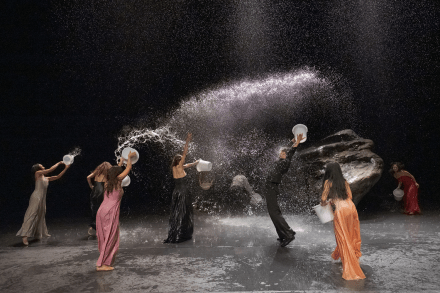
My patience with the cult of Pina Bausch is wearing paper thin. She was taken from us 16 years ago, and I had hoped that the aura of divinity around her memory might now be fading. But no, it only burgeons and having joined with Terrain Boris Charmatz to honour her creations, the official keepers of her flame Tanztheater Wuppertal are back in town to present one of her later works, Vollmond (‘Full Moon’), to ecstatic standing room-only congregations in her temple at Sadler’s Wells. What a bad, bad influence the Blessed Pina has had on dance, providing inspiration for hundreds of her imitators to pull the wool over our eyes by peddling their own pallid versions of her formulas.

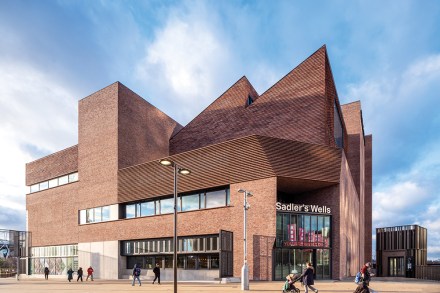
Does Sadler’s Wells really need a lavish new building?

From our UK edition

Arts Council England may be successfully clobbering the poor old genre of opera into the ground, but its sister art dance continues to be nurtured ever more generously, and the London scene is as ebulliently youthful and healthily various as it’s ever been. At the top end there’s the Royal Ballet, currently a match for any company in the world, and English National Ballet, performing to an impressive standard too. Sadler’s Wells thrives, with a rich programme embracing Matthew Bourne’s pantos and all sorts from Rambert and Akram Khan to hip hop and flamenco, alongside a succession of foreign visitors who fill the stage with mud or stand on their heads in the nude.

What a sad thing Strictly Come Dancing has become

From our UK edition

Those of a violently masochistic disposition would have heartily enjoyed the Saturday matinée of the Strictly Come Dancing: Live Tour at the Utilita Arena, Birmingham. Talent loses out to glitter and hype, as shrieking vulgarity envelops all What deliciously perverse pleasure was to be drawn on this bleakly cold afternoon from the vast, snaking queues, the blared injunctions from the Tannoy, the drear concrete ambience, the over-priced merchandise tat and the chaos of the ultra-processed catering outlets – not to mention the £15 charge for leaving an empty backpack in the cloakroom. And then there was the show.

A jewel in the English National Ballet’s crown: Giselle reviewed

From our UK edition

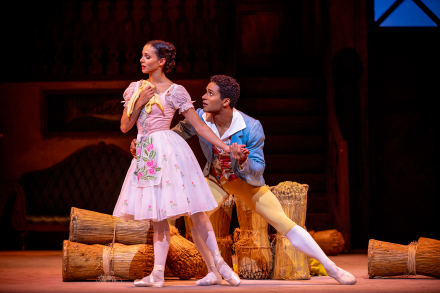
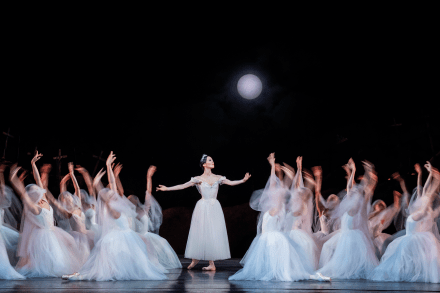
Since its première in Paris in 1841, Giselle has weathered a bumpy ride. For St Petersburg in 1884, Petipa gave Coralli and Perrot’s original choreography the once-over and Fokine grafted on further innovations when Diaghilev brought the ballet to London in 1911. Despite casts led by Pavlova, Karsavina and Nijinsky, it bombed here with critics and audiences, who considered its archetypal Victorian plot of the innocent village maiden betrayed by the local squire prissy and musty. Only a generation later, when the likes of Markova and Ulanova assumed the title role, did the scenario’s mythic simplicity find new life, albeit in versions that departed quite radically from the primary text.

Superb: Ruination, at the Linbury Theatre, reviewed

From our UK edition

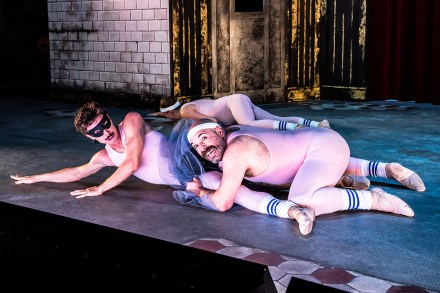
Ruination begins with an ironic prologue in which a choric figure warns the audience that what follows makes unlikely matter for the festive season: look elsewhere if you’re after light entertainment, he says, because this is going to shake you up a bit. And it does. This is genre-defying physical theatre, ‘devised’ by Ben Duke, in which spoken text is combined with episodes of dance and interludes of song, playfully satirical in tone and uprooted from any boundaries of realism or historical period. Although it is somewhat pretentious, I pretty much loved it The choric figure is Hades, and his realm of death is the setting.

‘La Scala was maddening’: an interview with John Macfarlane, the finest set designer of his generation

From our UK edition

Pantomime season is upon us, and unless your taste in colour runs no further than Smarties, there is no more magnificent spectacle on offer than Birmingham Royal Ballet’s production of The Nutcracker – performed so many hundred times since its première in 1990 that two years ago it disintegrated and required reconstruction. Its scenery and costumes are the work of John Macfarlane, a softly spoken Glaswegian who is ranked worldwide as one of the great stage designers of his generation. They demonstrate in abundance a quality that characterises all his work: a brooding chiaroscuro, in which nightmarishly surreal flickers of ruin and decay are shot through with gorgeous sensuality. There is no tinsel-pink prettiness. His Nutcracker has been inspired by the haunted imagination of E.T.

Deeply impressive and beautiful: Akram Khan’s Gigenis reviewed

From our UK edition

After taking a wrong turn culminating in the misbegotten Frankenstein, Akram Khan has wisely returned to his original inspiration in kathak, the ancient dance culture of northern India synthesising both Hindu and Muslim mysticism and mythology. The result is something deeply impressive and beautiful that held me enraptured for an hour. This is the work of a serious artist, without gimmicks or frills, and there isn’t much of that around at the moment. Starting with massive thunderclaps in primal darkness, Gigenis takes us through the cycle of creation, tracing the same epic path as the Mahabharata through fire and air, the birth of a hero, a courtship and marriage, a family feud, a war, a victory, defeat and death.

A spectacular failure: Royal Ballet’s MaddAddam reviewed

From our UK edition

Adapting ballets out of plot-heavy novels set in fantasy locations and populated with multiple characters is a rubbish idea. The profound truth of such a proposal is forcefully borne out by the wretched muddle of Wayne McGregor’s MaddAddam, an over-inflated farrago drawn from a triptych of visionary fictions by Margaret Atwood. McGregor – hugely talented and energetic as he is – needs to calm down and slow down and think small Where to start? Apocalyptic themes – political, environmental and ‘societal’ – are evoked in images and spoken narration without McGregor having any means in his hyperactive choreographic vocabulary to translate them meaningfully into dance.

Demanding but exhilarating: Royal Ballet’s Encounters reviewed

From our UK edition

After opening its 2024/5 season with a run of Christopher Wheeldon’s candy-coloured, kiddie-friendly Alice’s Adventures in Wonderland, the Royal Ballet gets down to business with a demanding but exhilarating programme of new work. Newish, to be accurate; the evening’s only previously unseen piece is Joseph Toonga’s Dusk. Crystal Pite’s The Statement is eight years old and was previously seen at Covent Garden in 2021; Kyle Abraham’s The Weathering followed a year later; and Pam Tanowitz’s Or Forevermore has developed out of a duet that originated during the pandemic. Dusk and The Weathering call for little comment. Both are well-crafted and safely generic, elegiac in mood and unassertive in theme.

I’m done with Hofesh Shechter

From our UK edition

I think I’m through with Hofesh Shechter, and that’s a pity, because earlier work of his such as Political Mother thrilled me with its unedited passion and energy. But after several duds and misfires, I feel that with Theatre of Dreams he’s run out of ideas and hit a dead end. The title suggests what’s gone wrong: labelling something Theatre of Dreams gives you licence to go crazy and do what the hell you like, without any purpose or structure, rhyme or reason. And that’s what has happened here. Over 90 uninterrupted minutes, curtains close and open to reveal a hundred or so snapshot tableaux of 13 dancers doing nothing of any discernible significance in a void. It’s all great if you suffer from attention deficit disorder.