Rupert Christiansen

Rupert Christiansen is the chief dance critic of The Spectator

The best British Nutcracker

From our UK edition

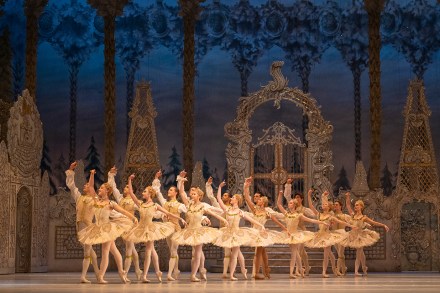
The Nutcracker is one of those Christmas traditions that turns out to be not very traditional at all. First performed in St Petersburg in 1892, it didn’t catch on outside Russia until the late 1950s, when Balanchine’s version for New York City Ballet was repeatedly screened on network television in the USA and Festival Ballet’s production became a hardy perennial at the Royal Festival Hall. The Royal Ballet embraced it only in 1968; since then, it has become globally ubiquitous and an infallible money-spinner. The enormous affection that The Nutcracker inspires is underpinned by a magnificent score that shows Tchaikovsky at his most freshly inventive (it’s bizarre that he composed it joylessly, under duress). Yet the dramatic scenario it illustrates is insolubly problematic.

The award-winning choreographer who fell foul of the mob

From our UK edition

Ebullient, articulate and eminently sensible, Rosie Kay never wanted to be a martyr to the culture wars. A modern dance choreographer with an impressive track record – including 5 Soldiers, an award-winning exploration of army life, contributions to the closing ceremony of the 2012 Olympics and a fellowship at Oxford – she would rather be getting on with the business of creating new work for her small dance company. But she’s been given no choice – and all because of a party she held in August 2021 at her home in Birmingham.

An awesome spectacle: The Mongol Khan, at the London Coliseum, reviewed

From our UK edition

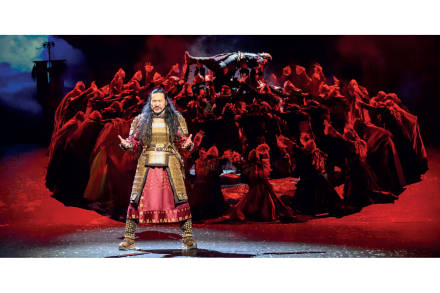
When the Ballets Russes first presented Fokine’s Polovtsian Dances at Covent Garden in 1911, such was its orgiastic savagery that ladies in the audience were said to be genuinely terrified that its grease-painted warriors were about to leap off the stage and ravish them. The Mongol Khan, a great hit imported from Ulan Bator, may not induce genteel screaming, but it has some awe-inspiring moments and belongs in the same ersatz orientalist tradition as Fokine’s ballet – primitive Asiatic culture made colourfully palatable to western tastes.

A farrago of Blakean mysticism and steampunk twaddle: BalletBoyz’s England on Fire, at Sadler’s Wells, reviewed

From our UK edition

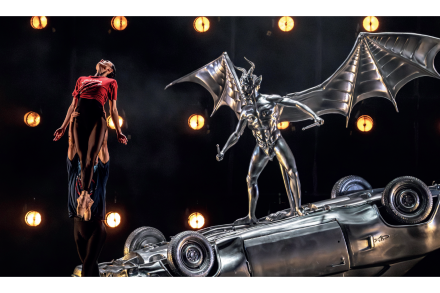
It’s nearly a quarter of a century since Michael Nunn and William Trevitt bravely left their safe haven at the Royal Ballet to set up BalletBoyz, a company aimed at developing the underused potential of male dancers and exploiting Nunn and Trevitt’s passion for film technology. At the time this seemed like a useful mission – stereotypes and prejudices lingered around men in tights, and the formats for smaller dance companies needed loosening up. It lasts a moderate 70 minutes and, in its nutty way, it’s quite enjoyable One measure of BalletBoyz’s subsequent success is that so many of their experiments have been incorporated into the mainstream, and the enterprise no longer seems as edgy or necessary as it did.

Subtle, intriguing and inventive: Rambert’s Death Trap reviewed

From our UK edition

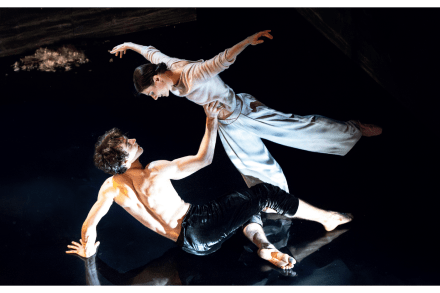
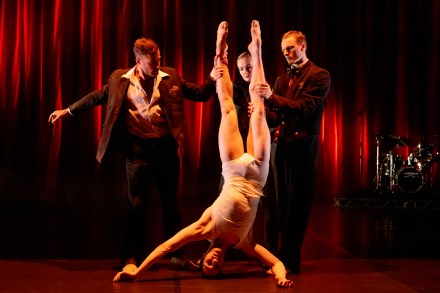
Ben Duke belongs to a class of younger choreographers who have decided to flout the convention that dancers should remain silent on stage. Liberating their voices is by no means a new phenomenon (in 1961 Frederick Ashton had Svetlana Beriosova speak verse by Gide in his sadly forgotten Persephone), but it’s one that particularly suits our culture’s dislike of rigid genres, and Duke makes playful use of it in the double bill entitled Death Trap that makes up Rambert’s current tour, which lands at Sadler’s Wells on 22 November. Rambert’s superb troupe of dancers let rip in bursts of gloriously exuberant jiving Goat is the less successful of his two pieces.

Can everyone please shut up about Maria Callas?

From our UK edition

One thing that exasperated me intensely during my many years as an opera critic was the assumption that I must be a passionate admirer of Maria Callas. She is the only prima donna who most people have heard of, and her supreme status has long been taken for granted, to the point at which the sound of her voice, as well as her personal story, have fomented a myth, a legend, an icon, and made any rational judgment almost impossible. She is Callas, La Divina, the embodiment of opera: one can only fall down and worship. The Callas bibliography runs, according to the British Library, to 136 books In a year that marks the centenary of her birth (she died in 1977), the incense in the temple has become positively stifling.

Uninventive and far too polite: BRB’s Black Sabbath – The Ballet reviewed

From our UK edition

Not being an aficionado of the heavy-metal genre, I snootily suspected that I would rather be standing in the rain flogging the Big Issue than suffer the racket that goes by the name of Black Sabbath. The noise, my dear, and the people! How could they? So I approached Birmingham Royal Ballet’s attempt to dance to its shenanigans armed with earplugs and gritted teeth. It wasn’t nearly as bad as I expected: in fact, it erred towards the polite and tasteful, and I wondered if a crowd largely consisting of hairy and leathery old rockers – some of them possibly anticipating satanic rituals or heads being bitten off chickens – got much out of it.

Striking but not altogether successful: ENB’s Our Voices reviewed

From our UK edition

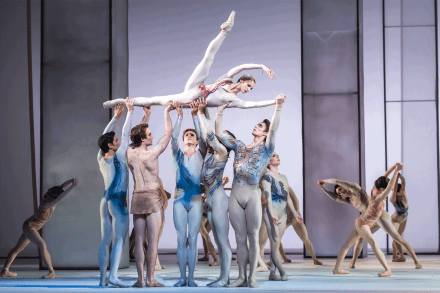
Aaron S. Watkin, an affable bearded Canadian, is the new artistic director of English National Ballet. He arrives from Dresden, where he ran a similarly scaled company comfortably subsidised by public funds. Doubtless, he finds what the Arts Council gives ENB meagre to the point of stingy. One may wonder, therefore, what the attraction is, but he certainly inherits from Tamara Rojo a solid organisation and a fine body of dancers, particularly strong on the male side. His inaugural piece of programming is striking but not altogether successful. It starts gloriously with Balanchine’s Theme and Variations, an essay in his grand tsarist style, set to some noble music by Tchaikovsky, that poses notorious challenges for the leading couple.

A haunting masterpiece: Northern Ballet’s Adagio Hammerklavier reviewed

From our UK edition

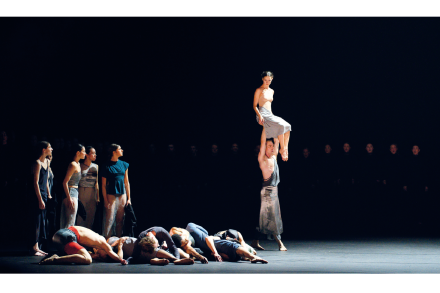
One could soundly advise any choreographer to avoid music so transcendentally great in itself that dance can add nothing except banal images. Only a handful of exceptions sneak past the rule: MacMillan’s setting of Song of the Earth, perhaps, and also Hans van Manen’s Adagio Hammerklavier, his audacious attempt to visualise the infinitely slow movement of Beethoven’s epic piano sonata Op. 106. No individuals stand out; this is an ensemble with a collective identity that rejects the concept of stardom Northern Ballet has honourably revived this haunting masterpiece as part of its autumnal triple bill, and its impact overshadows the two novelties that frame it. What is its secret?

A vanity exercise: Carlos at 50, at the Royal Opera House, reviewed

From our UK edition

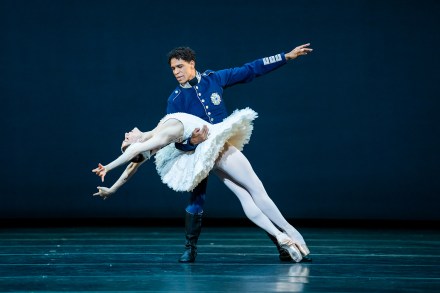
In 2015 Carlos Acosta announced his retirement from the Royal Ballet and the classical repertory. It seemed like the right moment; he was 42 and, truth to tell, some of us could detect a slight waning of his prowess and physique. Time to move on: since then, he has done great work in his native Cuba and is currently a venturesome artistic director of Birmingham Royal Ballet. He is a rather wonderful person. Eight years after his withdrawal from Covent Garden, however, he has made a brief return – addressing an itch, he says, that had to be scratched. The house sold out for five nights running and the reception was rapturous, but I am left with mixed feelings.

Can ballet survive the culture wars?

From our UK edition

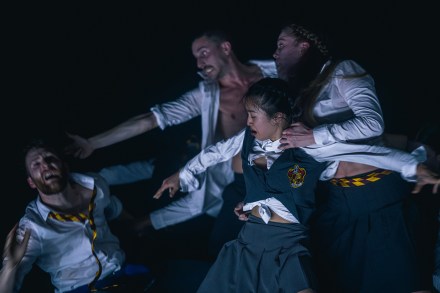
Through several phases of the culture wars, ballet has served as a canary in the coal mine, its intense and exposed physicality highlighting all the issues surrounding sexuality, gender and power that have currently become our unhealthily narcissistic preoccupation. Perhaps the warnings started with the phenomenon of Vaslav Nijinsky. Against the defined masculinity and femininity of the Edwardian era, he stood out as seductively androgynous and effeminate as well as staggeringly charismatic – a godlike hero unashamed to represent le spectre de la rose. Bloomsbury ogled, and rumours about his pederastic relationship with his patron Serge Diaghilev circulated scandalously.

Short of sparkle: Cinderella-in-the-round, at the Royal Albert Hall, reviewed

From our UK edition

Having been unexpectedly delighted by the Royal Ballet’s revival of Christopher Wheeldon’s Corybantic Games at Covent Garden last week, I slapped my wrists for underrating him as a prolific craftsman. After a second exposure to his Cinderella, handsomely mounted by English National Ballet at the Royal Albert Hall, I have reverted to that ho-hum view. Clearly feeling he needed to excavate something different out of a familiar tale and Prokofiev’s score, Wheeldon commissioned the help of the playwright Craig Lucas in constructing a new scenario that removes most of the fantasy and attempts to establish some psychologically realistic back story. A wasted effort.

Same old, same old: Wayne McGregor’s Untitled, 2023, at the Royal Opera House, reviewed

From our UK edition

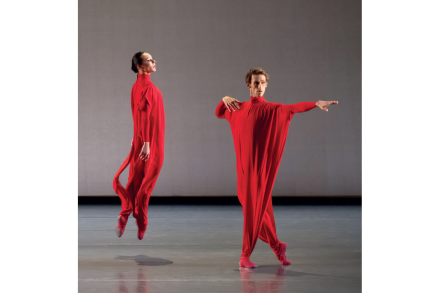
My witty friend whispered that Wayne McGregor’s new ballet Untitled, 2023 put her in mind of Google HQ – it’s certainly a mint-cool, squeaky-clean, future-perfect affair. The set by Carmen Herrera, subtly lit by Lucy Carter, suggests infinite space and distant horizons. The costumes by Burberry are streamlined and sexless. Anna Thorvaldsdottir’s vaporous score hovers over it all in a meditative trance. Ordinary human emotions struggle to express themselves in this brave new world: we have left planet Earth.

Stunts, gimmicks, tricks, hot air: snapshots from the edge of modern dance

From our UK edition

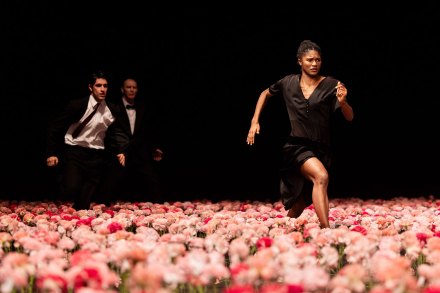
This month I’ve been venturing into the further reaches of modern dance – obscure territory where I don’t feel particularly comfortable. In its hinterland is the Judson Church in New York: it was here, during the early 1960s, that young Turks such as Trisha Brown and Steve Paxton began investigating the idea that dance need not involve formalised gestures or what primary school teachers call ‘movement to music’, but could grow instead out of quotidian activities such as running, jumping and walking. From that point of departure, the journey has become ever more extreme and contorted, traversing the realms of performance art and installation, often politicised and sometimes pornographic.

Patronising to the people of Peterborough: BRB2’s Carlos Acosta Classical Selections reviewed

From our UK edition

Fulfilling its sacred duty to serve regions that higher culture tends to avoid, Birmingham Royal Ballet made a midweek visit to the troubled city of Peterborough. Its New Theatre holds about 1,200 and is normally focused on tribute bands and stand-ups; I would guess that for Carlos Acosta’s Classical Selection only about 60 per cent of its seats had been sold or distributed, and predominantly to a white and female audience. Their response was moderately enthusiastic. Arts Council England’s embattled chief executive Darren Henley was in attendance; I wonder what lessons he drew from the performance. I didn’t feel it quite hit the spot.

A triumph: Nederlands Dans Theater 1, at Sadler’s Wells, reviewed

From our UK edition

Yes, yes, I know. You’ve had your fill of David Attenborough’s jeremiads, you’ve heard enough already about climate change catastrophe. You’ve got the message, ordered the electric car and solar panels: now can we talk for a moment about something less unthinkably apocalyptic? The point is as much to celebrate the grace and beauty of these phenomena as to mourn their passing But the quiet triumph of Figures in Extinction [1.0] is to make the crisis seem freshly urgent and emotionally engaging.

Not an experience you’d want to repeat: Shen Yun, at the Eventim Apollo, reviewed

From our UK edition

If you live in London, you may well have spotted Shen Yun’s enormous candy-coloured posters on the Underground, endorsed by puffs from authorities proclaiming the show to be ‘very, very on top’ and ‘an exemplary display of excellence’. This primitive advertising strategy seems to have worked: on the night I went, the Hammersmith Apollo (capacity around 3,500) was filled to the gills, the crowd made up of the same social mix that you might find at the Cirque du Soleil. What did any of us think we’d be getting?

Time for Akram Khan to move on from climate-change choreography

From our UK edition

It must be 20 years since I first saw Akram Khan dance, and I will never forget the impression he made in a brief impassioned solo; here was a master of the Indian kathak school who had seen how its traditional vocabulary could be related to the less constricted realms of modernism. Since then he has gone on to fulfil his promise and broaden his aesthetic, notably through his extraordinarily powerful Giselle for English National Ballet. At 48, he has virtually retired from performing, but he continues to choreograph and direct his own company, enjoying a considerable international reputation. Most recently he’s homed in on an environmental agenda and I’m ambivalent about the results. Creature was first staged by ENB in 2021, when it drew generally negative reviews.

Distressingly vulgar: Royal Ballet’s Cinderella reviewed

From our UK edition

Despite its widespread rating as one of his masterpieces, Frederick Ashton’s Cinderella is chock full of knots, gaps and stumbling blocks – all of which the Royal Ballet’s new production throws into relief. Ashton isn’t altogether to blame: Prokofiev’s graphic score dictates an excessive amount of time given over to knockabout for the Ugly Sisters (mostly a matter of them bumping into each other) and a tiresome court jester. There’s nothing to be done with an inert third act, which in Ashton’s treatment merely recapitulates previous choreography and ends with a static tableau. The Prince has no personality whatsoever: he’s little more than a handsome porter. Yet genius shines through.

Generous, boundless, turbo-charged: Turn It Out with Tiler Peck and Friends, at Sadler’s Wells, reviewed

From our UK edition

The death last week at the age of 83 of the sublime Lynn Seymour – muse to Ashton and MacMillan, the creator of roles in Romeo and Juliet and A Month in the Country among many others – set me thinking gloomily about the current dearth of ballerinas with her questioning intelligence and free spirit. So much technical proficiency around, so many elegant gymnasts, Dutch dolls and Sugar Plum Fairies, but so little distinctive personality or temperament. Where is the mystique, the grandeur, the ability to ambush our emotions? Her clarity of articulation is bobby-dazzling, her energy apparently inexhaustible Tiler Peck is among the best of the new breed. Star of New York City Ballet, she is all bubble and brilliance, a cheerleader, a can-do sort of dancer with boundless verve.