Ross Clark

Ross Clark

Ross Clark is a leader writer and columnist who has written for The Spectator for three decades. He writes on Substack, at Ross on Why?

The real scandal is how much stamp duty Angela Rayner had to pay

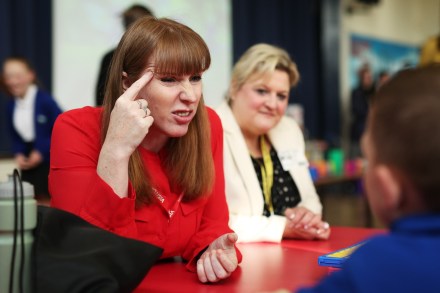
Angela Rayner must resign as Housing Minister and Deputy Prime Minister, obviously. How could she sit on the front bench through a tax-raising budget without everyone’s eyes gravitating towards her, as the minister who thinks tax rises are for everyone else, not her? But the fate of Rayner obscures the bigger scandal here, which is stamp duty itself. No one should be facing a £70,000 bill for buying a two-bedroom flat – nor, for that matter, a £30,000 one, which is the what the bill would be for someone who is genuinely buying a main home for £800,000. The latter sum is not far short of the annual average salary.

Of course tax rises won’t help economic growth

What’s the most idiotic question ever posed by an interviewer? There was the real-life Sally Jockstrap who asked David Gower whether he considered himself a batsman or a bowler. Or the Radio 1 DJ who asked Marc Almond – at the height of his fame with Soft Cell – whether he was going steady with a girl. But my nomination goes to Anna Foster on the Today programme this morning. In the midst of an interview with economist Mohamed El-Erian about Britain’s dire fiscal state, she suddenly posed: 'Would raising taxes at this stage, would that help growth?' I had to listen back on the catch-up facility to check that she really had said these words, but there it was loud and clear.

Digital IDs won’t fix the migrant crisis

Will the compulsory ID card lobby ever give up? For more than two decades it has been trying to exploit every national crisis to push its product on the country: terrorism, violent crime, Covid and now illegal migration. Apparently the answer to all of them is to force all of us to carry about a digital ID on our phones. Digital IDs will do precisely nothing to slaughter the real swine in this case: the European Convention on Human Rights. What difference would that make? Will boatloads of illegal migrants now be turned back mid-Channel because they are unable to show coastguards their digital ID? Er, no. Will asylum applications be speeded up so that those who fail can be returned much more quickly? No chance.

Trump’s tariff war faces its toughest test yet

Trying to work out what is going on with global trade doesn’t get any easier. Just as the world was settling down to the new reality of Donald Trump’s trade war and governments were stitching up hurried trade deals to minimise the sweeping damage from the tariffs announced on ‘Liberation Day’ in April, the Court of Appeals for the Federal Circuit has thrown a very large spanner into the works. It has ruled that the whole exercise is unlawful because the tariffs were not approved by Congress. They will not be removed immediately – the court has allowed them to remain in place until 14 October to give Trump a chance to appeal to the Supreme Court – which he will almost certainly do. But it does rather look as if the matter of trade tariffs will ultimately be decided by judges.

Reeves’s glum Budget briefings are hurting the economy

Rachel Reeves’s error before last autumn’s Budget might have been written off as the act of a ministerial rookie. She kept making us miserable by telling us about fiscal black holes and telling us that huge tax rises would be required to fix it – with the result that, come Budget day, the outlook for the government’s finances was worse than it should have been. Reeves had helped to stall economic growth by damaging confidence. When you and I bleat on about how bad the economy is, nothing much happens. The same even applies to a shadow chancellor. But when you are in office, making the decisions, you have to be a lot more careful what you say. Talking down the economy can all too easily become a self-fulfilling prophecy if you start discouraging people from investing.

Rachel Reeves is itching to whack up taxes

Gosh, Labour really does hate private landlords. Rachel Reeves’ latest property tax proposal to be dangled before the public is to charge National Insurance contributions (NICs) on income from rental properties. This would set it aside from other forms of investment income, which are liable for income tax but not NICs. It would also represent a growing war against small-time private landlords as opposed to corporate ones. Companies letting properties would not be affected by the change and neither would private landlords with substantial salaries be hit badly – there is a ceiling on the main rate of NICs, with income over £50,000 a year taxed at only 2 per cent above that level.

Should we worry about Britain’s ‘hottest summer on record’?

So, according to the Met Office, Britain is reaching the end of what will 'almost certainly' be the warmest summer on record. The average temperature across Britain up until 25 August was 16.13 Celsius, compared with 15.76 Celsius for the previous record-holder, 2018. There is still a week to go, of course, and it is a week which, on average, you would expect to be one of the coolest weeks of the summer, coming as it does right at the end. But let us assume that the Met Office is right and 2025 really does grab its place in the record books. So what? It has also been a largely benign summer in Britain, with little in the way of extreme heat – the maximum for the summer so far was 35.8 Celsius, 4.5 Celsius below the UK record.

Record jobless benefits are a national scandal

Quietly, without even a press release let alone a fanfare, Britain over the past 12 months has just passed a grim milestone. The number of people on out of work benefits has surpassed the peak reached in the early 1990s. Indeed, it is higher now than it was at the peak of Covid-19 in 2020. There are now 6.5 million people living on out of work benefits Remember when unemployment of three million used to generate headlines every week, in the early 1980s and then again a decade later? Well, there are now 6.5 million people living on out of work benefits. Yet it hardly causes a ripple in the political pond because most of them are not officially ‘unemployed’ – they are either on disability benefits or on Universal Credit, many of them without any requirement to look for work.

Is the ‘sixth mass extinction’ a myth?

Are our scientific institutions being colonised by activists less interested in pursing objective truth than in spinning a political narrative? It is worth asking given an extraordinary spat which is developing among evolutionary biologists as to whether life on Earth is experiencing a ‘sixth mass extinction’.

The unions will regret their Autumn of Discontent

Just how thick are the public sector unions? The RMT’s announcement of a week-long strike on the London Underground in September is little short of a death wish. The unions spent 14 years trying to get rid of a Conservative government and its hated 'austerity'. Within days, an incoming Labour government had awarded public sector workers substantial pay rises with no strings attached: no job losses, no demands to improve productivity, no changes to working practices. On the contrary, they were granted new workers’ rights, the right to demand flexible working hours and all the rest. So what do they do in response?

Why we can’t drive, fix or sell our Citroen

If ever there was a symbol of the decline of the European car industry it is my wife’s Citroen. For the past two months it has sat out on the driveway, inert. We can’t drive it, we can’t sell it and we cannot get it fixed. It is a waste of space, but one that we must continue to tax and insure. The little C3 – which I used to think of as a pleasant vehicle without too much of the electronic junk fitted to most new cars – is one of 120,000 Citroens subject to a ‘stop notice’ following the death of a French motorist in June. The cause of her death turned out to be a faulty airbag which exploded, peppering her with metal shards. Every vehicle fitted with these kinds of airbags has been officially grounded.

Why are white children doing worst at GCSEs?

That’s the trouble of trying to measure everything through the metric of race: sooner or later you will arrive at a situation very different from that which you intended. Namely, that in some cases it is white people who appear to be at some kind of disadvantage. At least Education Secretary Bridget Phillipson is not trying to cover up the glaring disparity in GCSE results between ethnic groups. She has admitted that white working-class children are underperforming and suggests that the state has ‘failed them’. But she doesn’t really go on to ask herself how or why.   What is it about being white, for example, that makes pupils underperform in Maths and English? Last year, 63.7 per cent of white pupils achieved a grade 4 pass or above in both subjects, compared with 65.

Rachel Reeves’s ‘mansion tax’ would distort the housing market

Rachel Reeves’s rather crude strategy is becoming painfully clear. Between now and the Budget she intends to float ideas for so many painful tax rises that, come the day, we will all feel pathetically grateful that only a few of them have come to pass. Her latest suggestion – reported from an anonymous briefing, needless to say – is that the capital gains tax (CGT) exemption on the sale of main homes might be removed for higher-value properties. A threshold of £1.5 million has been suggested. Sell a property for more than that and you would become liable to pay CGT at a rate of 24 per cent on the uplift in value since you bought it.

Labour’s grants won’t save the electric car market

Keir Starmer’s government continues to show off its remarkable ability to please absolutely no one. Reintroducing grants for electric cars (EVs) always was an outrage. Why is a government which rails against privilege when it comes to public schools, second homes, etc., splashing out taxpayers’ money to subsidise the second cars of relatively well-off motorists? Most people I know with electric cars also have a petrol or diesel car for longer journeys. Moreover, if you are going to chuck a bung worth thousands of pounds at people who buy a car a little less polluting than a petrol or diesel car, what about people who don’t buy a car at all and walk and cycle everywhere? They are being far more friendly towards the environment, so shouldn’t they get an even bigger handout?

Labour will regret its attack on nature

Environmentalists always feared that Brexit would lead to a weakening of environmental protections, but who would have guessed that it would be a Labour government which would take a bulldozer to legislation acquired through the EU Habitats Directive? Rachel Reeves is reported to be contemplating a second planning bill which would make it far harder for conservationists to hold up infrastructure projects. Reeves has already paved the way – if that is not an unfortunate expression in this context – by saying last month that she cared more about young families getting on the housing ladder than 'protecting some snails'. The ability to use judicial reviews to block projects will be curtailed and the list of creatures offered protection will be shrunk.

Britain has a wind problem

Climate change is giving Britain more violent weather, with ever-increasing storms tearing down our trees and whipping up waves which erode our coastlines. No one ever seems to get into trouble for saying the above – as many did yet again during Storm Floris last week – in spite of it being the inverse of the truth. Actually, Britain has been experiencing a downwards trend in average and extreme wind speeds for the past four decades.

The hot weather has become workshy Britain’s latest excuse

Who are all these people who keep being photographed on Bournemouth beach and elsewhere, frolicking in the midday sun? None of them, obviously, work for the Health and Safety Executive (HSE) or the TUC. None of them can possibly be members of the Unite union, nor Unison, nor the GMB. It is little wonder that UK productivity is on the floor – and falling in the public sector How can I be so sure? Because if they were, they would be surely sheltering indoors, in the shade, with the fan on and their feet immersed in a bucket of cold water. All these organisations have been lobbying the government for a maximum working temperature.

Regulation – not climate change – is making our flats unbearably hot

If you want to spend the sunny weather house-hunting in East London, you will be met with a stark message in one of the windows of a development alongside the A12. ‘Don’t buy these flats,’ it reads, ‘Too hot’. Residents complain of temperatures which do not fall below 27 Celsius even at four in the morning, leaving them feeling breathless and exhausted. The government is fixating on stuffing homes with insulation and hermetically-sealing them to prevent heat loss. Come summer and it is frying people in their homes And of course, it is all the fault of climate change. The Guardian – who else? – links to a study which claims that 10,000 of us are going to die every year as a result excess heat by the middle of this century due to rising temperatures.

Rachel Reeves’s assault on the British economy continues

There really is no hiding place for Rachel Reeves in this morning’s employment figures. The Office of National Statistics (ONS) release shows that 164,000 payrolled positions have been lost in the 12 months to July, Labour’s first year in office. Those figures are still provisional, but the figures for the 12 months to June show pretty much the same picture, with the number of payrolled positions falling by 149,000. In May alone, 26,000 jobs were lost. The unemployment rate rose to 4.7 per cent. For those who are in work, the figures show a healthy rise in real earnings of 0.9 per cent.

Kemi is wrong about council tax

From Lord Kinnock’s demand for a wealth tax and VAT on private health fees to Gordon Brown pressing for gambling taxes, it is plain that Labour has run out of ideas other than dreaming up new ways to part us from our money. Even so, Kemi Badenoch is ill-advised to go on an all-out attack on council tax reform, as she did in a Mail on Sunday column yesterday. You don’t have to be a socialist or even a Labour supporter to see that council tax is horribly regressive According to the Conservative leader, Rachel Reeves is plotting to do as Labour have done in Wales: to set up an IT system to analyse our homes – even down to the size of our garden shed – in order to use it as a valuation tool for new council tax bands.