Ross Clark

Ross Clark

Ross Clark is a leader writer and columnist who has written for The Spectator for three decades. He writes on Substack, at Ross on Why?

The NHS shouldn’t fund a drug that prevents HIV

What would you say if a powerful cyclists’ pressure group ganged up on the NHS and lobbied it to provide free cycle helmets to anyone who asked for one, accusing it of having on its hands the blood of every helmet-less cyclist who died while the NHS tried to spurn the demand? I think I can guess the answer in the case of most readers: shove off and buy your own helmets. Why, then, does it become such a different matter when the National Aids Trust demands that the NHS provide a free supply of a drug known as Pre-Exposure Prophylaxis, or PrEP, to people who want to have unprotected sex with multiple partners.

There’s a grim reason why Belgium has plenty of organ donors

A discussion between two medical ethicists on the Today programme this morning ended with them agreeing on one point: whether or not it is right to breed pigs so that their organs can be harvested for transplantation into humans (as the University of California is experimenting with), the first thing we should do in order to solve the shortage of donor organs is to move to a system of ‘presumed consent’, where the organs of dying patients are considered fair game for transplantation unless they have signed a form excluding this. To leave the pigs for a moment, what is so ethical about presumed consent for human donors?

Why the BMA are no better than Arthur Scargill’s rabble

That’s the trouble with conducting a strike via social media -- press the wrong button and what was supposed to be private becomes very public. A leaked cache of WhatsApp messages has revealed the junior doctors’ strikes for what they were: a politicised dispute which always was about more than the finer details of when doctors would be asked to work and what they would be paid for doing so. The messages, received by the Health Services Journal, reveal how a drawn-out strike was masterminded by the BMA’s Junior Doctors Committee (JDC), a union within a union.

Sir Michael Wilshaw, where are these illegal schools run by the ‘Jewish community’?

Apparently, there are secret Jewish schools in Britain where children are taught nothing but the Jewish faith, where they are exposed to homophobic literature, where all music and the arts are banned and where they are indoctrinated by extremists. How do we know? Because Ofsted chief Sir Michael Wilshaw has told us. Admittedly he didn’t quite say so in those terms but that is what he ended up implying on Radio 4’s PM programme earlier this week. Interviewed by Eddie Mair about the 100 or so illegal schools reported to be operating behind the backs of education inspectors, Sir Michael described the problem. Parents abuse the law providing the right for home education by taking their children out of mainstream schools.

Let’s stop bringing Hitler into the EU debate

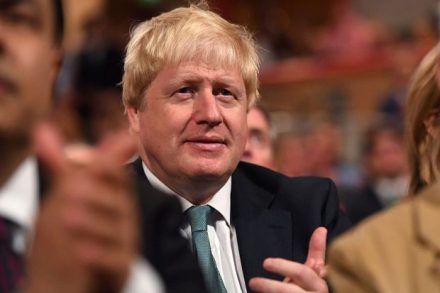
Wouldn’t it be nice if we could get through just a week of political debate on the EU, or indeed any other subject, without old Adolf being dragged into it. It won’t be this week, obviously, not now that Boris has likened the expansive fervour of the EU to the Third Reich.   Last week Hitler was on the other side, of course, with David Cameron claiming it was only the EU which stood between us and a repeat of the Second World War. Shame we can’t ask Adolf himself for his views on the EU referendum. Or maybe we can. Perhaps someone in the backwoods of Brazil could go and doorstep him and ask him how he’d be voting on 23 June.

Why does the government want a gay quota for BBC management?

Of all the things wrong with the BBC, it would be hard to argue that a shortage of gay people making and presenting programmes is one of them. As Andrew Marr observed a decade ago: 'The BBC is not impartial or neutral. It's a publicly funded, urban organisation with an abnormally large number of young people, ethnic minorities, and gay people. It has a liberal bias, not so much a party-political bias. It is better expressed as a cultural liberal bias.' Why, then, is the government intent on making the BBC even more gay? In one of the less-reported sections of this week’s white paper on the future of the corporation, John Whittingdale lays down a target that 10 per cent of senior leadership roles at the BBC be filled by LGBT staff by 2020.

England couldn’t cope with a nuclear accident at Hinkley Point

An EDF board meeting today could spell the end of the wretched Hinkley Point C nuclear power station and its hugely over-priced electricity, for which electricity distribution companies would be obliged to pay double the current wholesale electricity price for 35 years. EDF’s finance director Thomas Piquemal resigned in March claiming that the project could put the entire future of the company at risk. The UN’s Economic and Social Council has put its own boot into the project, saying that the UK has failed to consult with neighbouring countries over the risk of a nuclear accident. But never mind neighbouring countries, the government has failed to take into account the economic consequences of a nuclear accident on local populations.

The housing crisis was Sadiq Khan’s secret weapon

As Isabel Hardman wrote yesterday, many interpret Labour’s failure to fail on a bigger scale in yesterday’s election results as the worst possible result for the party.  Sadiq Khan, who had nominated Corbyn for the leadership, won comfortably in London.  Predicted to lose 150 or more council seats, by midday Labour was down a net 26 seats.    This neither puts them in an encouraging position from which to build towards the 2020 election nor signifies a disaster which might provoke Jeremy’s Corbyn’s defenestration and replacement with a more electable leader. But the Conservatives would be very unwise to take comfort from the results.

Why won’t Labour go for Zac Goldsmith’s non-dom jugular?

Trailing in the polls with three days to go until the London mayoral elections, Zac Goldsmith continues to attack his rival Sadiq Khan by accusing him of having links with extremists.   It is a pretty desperate strategy, reduced to making the charge that Khan has ‘shared a platform’ with extremists.   It is also somewhat undermined by the revelation that Goldsmith himself has been photographed smiling alongside Suliman Gani, the Tooting Iman who is subject of many of the claims.  Gani also appears to have shared platforms with Conservative MP for Battersea, Jane Ellison, on a number of occasions. But one thing puzzles me.

Gordon Brown is to blame for making bankruptcy respectable

Frumpy, out of date and not much fun – Gordon Brown and BHS go together in more ways than one.   A word needs to be put in about the role of the former Chancellor and Prime Minister in the collapse of the chain store this week. Dominic Chappell – who must win this year’s business brass-neck award by attempting to buy back BHS days after it collapsed into administration with him at the helm -- was perhaps not the kind of entrepreneur that Gordon Brown had in mind in 2001 when he published a white paper, Enterprise for All, which led to the 2002 Enterprise Act.  But intentionally or not, he was one who benefitted from Brown’s attempts to de-stigmatise bankruptcy.

The TUC’s claim that childless men get a raw deal is nonsense

There is, of course, no crime more dreadful in modern society than discrimination. And how dreadful that new forms of it are being uncovered every day. The latest foul piece of bigotry, it turns out, is employers favouring male employees with kids. According to the study by the IPPR, and commissioned by the TUC, today, fathers in full-time employment earn a '21 per cent wage bonus' compared with male employees who don't have children. With women, apparently, it is the other way round, with mothers earning 11 per cent less than female employees without children. The research is based on a sample of 17,000 people born in a single week in 1970. There is a pretty obvious reason behind these findings: fathers work harder than non-fathers because they have to.

Why is the Foreign Office getting involved in America’s gay rights debate?

If there was one piece of advice the Foreign Office was going to give to British citizens travelling to the USA you might think it would be to wary of lunatics armed to the hilt with semi-automatics.   But no, our civil servants do not regard the possibility of having your ass shot off as you innocently backpack around the backwoods of North Carolina to be worthy of a warning. There is one piece of advice the Foreign Office has put on its website, though.  It states:  'LGBT travellers may be affected by legislation passed recently in the states of North Carolina and Mississippi.

No, the NHS isn’t killing off A&E doctors at a young age

The junior doctors’ dispute has been characterised by a series of extraordinary claims by the BMA. At one time the union claimed that doctors were going to suffer a real-terms pay cut of 26 per cent – a claim debunked by the respected Channel 4 Fact-checking team. A pay calculator on the BMA website which claimed to show doctors losing money was later removed. Yesterday, in a piece for The Spectator, junior doctor Calum Miller made an extraordinary claim that 'A&E doctors have a lower life expectancy than poverty-ridden countries like Afghanistan and Haiti'. The World Bank gives a figure for life expectancy for Haiti at 62.70 and Afghanistan at 60.51. So is the average A&E doctor in the NHS really popping his clogs in his 50s?

The state bailed out our banks. Should it also save our steel industry?

'We cannot have a situation where the banks are able to privatise their profits and nationalise their losses,' declared Vince Cable in 2008 in the midst of the banking collapse. But steel companies?  That is a different matter. Cable has demanded that the government take on the pension liabilities of Tata’s British employers in a last gasp attempt to attract a buyer and save the plants. On the subject of nationalising pension liabilities, Cable has form – as business secretary he forced the taxpayer to take on the responsibility for paying postmen’s pensions so that he could sell off the Royal Mail – which he did, at a giveaway price. The taxpayer might have preferred it had the government clung onto the Royal Mail’s huge estate.

In defence of Boris Johnson

It is good that Matthew Parris has taken on Boris. The Mayor has had too easy a press in many quarters. There is a good reason for this: he is one of us. There is a bit of the Bullingdon in Fleet Street: we are often too disinclined to attack our own. Matthew Parris acknowledges this, and the vitriolic nature of his Times column on Saturday is an attempt to redress the balance. But for me, my objection is not that Matthew has gone over the top in his attack on Boris – it is that his line of attack is fundamentally wrong. The same is true of Nick Cohen’s blast yesterday on the same subject. Let’s brush over Matthew’s complaint that a man who once supported Clause 28 has no right to boast on an LGBT ‘out and proud’ video.

What the RSS Boaty McBoatface saga really tells us about British democracy

Our leaders, of course, love democracy – until it comes up with an answer different to the one they were expecting. Last week, the Natural Environment Research Council (NERC) announced an online poll for the public to vote for the name of a new Arctic and Antarctic-going vessel to replace my ageing near-namesake the RRS James Clark Ross. The outcome will tell us volumes about what public bodies really think of public opinion.

Can a school share out its success?

They have enviable results in the classroom and on the sports field. They command substantial fees and send large numbers of pupils to top universities. So why have leading private schools found it such heavy going transferring their success when sponsoring state schools? It seemed the ideal solution to help break down the great barrier between state and private schooling, as well as to address the charge that private schools were not doing enough to justify their charitable status: a leading private school takes a struggling state school under its wing, lends it some expertise, allows it to use some of its facilities and even shares some of its teachers. Results surely cannot fail to be impressive.

The Left are making a pact with God over Sunday trading laws

Later today, barring last minute developments, Labour and SNP MPs will temporarily unite with the Conservatives’ religious right to defeat the government’s plans to liberalise Sunday trading laws -- echoing the defeat which Mrs Thatcher suffered on the same subject 30 years ago. The Left will chirrup, but why is it apparently in favour of keeping Sunday special when logic dictates that it ought to be against? The Reverend Giles Fraser aside, the Left nowadays is generally quite anti-God –-- or it is certainly against the promotion of Christianity as an established religion. In the diverse, multi-cultural society of its dreams, no religion is superior than any other and none of them should be trying to impose their beliefs on others.

Even the French are starting to realise that Hinkley Point is a nuclear turkey

The finance director of EDF, the French energy giant, has quit over its plans to build George Osborne’s new pet project : a new power plant at Hinkley Point in Somerset. At first glance, this seems odd: isn’t the whole problem that the Chancellor has pledged so much taxpayers’ money to this white elephant so the public will be royally ripped off to the benefit of French (and, recently, Chinese) investors? When it’s up and running, yes. But meanwhile someone has to build this, and there have already been delays and cost multiplications. Osborne has sold a third of the stake to the Chinese – not known for their prowess in civil nuclear energy.

Big business backing the ‘In’ campaign shows us what’s wrong with the EU

So, FTSE 100 company bosses have come out in favour of staying in the EU – even if, as Ed West notes, the 198 signatories in a letter to the Times represent only 36 companies. I wonder if anyone dropped out at the last moment to reduce the tally below the figure of 200. Of course big business supports the EU. It always has and always will. But who cares? What matters is what smaller, wealth-creating and job-creating businesses think. And they are much more Eurosceptic. A YouGov poll published in January revealed the huge divide between big business and the rest of the private sector on the issue. Out of 501 leaders of small and medium enterprises polled only 47 per cent favoured continued membership, with 42 per cent favouring withdrawal.