Ross Clark

Ross Clark

Ross Clark is a leader writer and columnist who has written for The Spectator for three decades. He writes on Substack, at Ross on Why?

Brexit isn’t to blame for dismal GDP growth – and nor is the weather

The government’s opponents were not slow, as usual, to blame today’s disappointing data on economic growth on Brexit (the IOD) or ‘austerity’ (John McDonnell) – while the Chancellor, Philip Hammond, chose to fall back on that old chestnut used by corporate spokesmen when announcing dismal results: the weather. None of these will really do as an explanation as to why GDP growth, according to the ONS, plunged from a healthy 0.4 per cent in the final quarter of last year to a miserable 0.1 per cent in the first quarter of 2018. As for Brexit, GDP figures have been shrugging it off for nearly two years – the economy even accelerated for the first two quarters.

Save the Scouts

A couple of years ago, Simon Barnes wrote a moving piece in this magazine about how his son Eddie, who has Down’s syndrome, had changed his mind about political correctness. Political correctness might be met with derision, he wrote, but it was also what made his son’s life bearable. In the not-so-distant past, Eddie would have been shut away and people like him made fun of in everyday conversation; now he is received everywhere with kindness and consideration. Simon was right. I am in the same position as him: I have a daughter, Eliza, who has grown up in a world of kindness that is a world away from that in which I grew up. I hate to think of the bullying and abuse she would have to endure if she were transported back in time to the 1970s classrooms I knew.

Finland’s Universal Basic Income experiment falls flat

Should governments abolish their welfare states and replace them with a Universal Basic Income (UBI), paid to everyone, even billionaires, regardless of means? Such payments would be designed to cover essential living costs, leaving individuals free to make the choice of whether they wished to work in order to gain themselves a better lifestyle. It is an idea which until yesterday seemed to be in the ascendant. Bernie Sanders has advocated it. John McDonnell has launched a study to determine whether it should become Labour policy. It hasn’t just attracted the Left – Elon Musk and Mark Zuckerberg have declared themselves in favour, seeing a UBI as a means of softening the mass job losses they expect as a result of technological advance.

The Brexit bounce making a mockery of George Osborne’s Project Fear

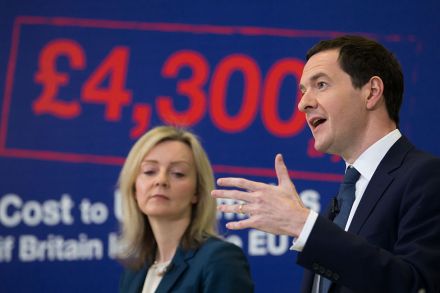
We are now just two months away from the second anniversary of the Brexit vote and therefore in a position to judge the apocalyptic forecast made by the Treasury in May 2016 in the run-up to the vote. In a paper signed off by George Osborne, which neither the former chancellor nor anyone else who has made a grim prognosis for Britain’s departure from the EU should be allowed to forget, the finest minds in the Treasury came up with two scenarios for the aftermath of a vote to leave the EU. In the ‘shock’ scenario, GDP would be 3.6 per cent lower after two years (compared with if the country had voted to remain), the pound would fall by 12 per cent and unemployment would rise by 520,000.

The disturbing reaction to the Hither Green ‘burglar’ stabbing

A black youth living in London might be forgiven for a bit of confusion this morning. All week we have been hearing about the dreadful spate in knife killings on London streets, most of them, it is painfully obvious from the victims’ photographs and the locations, have taken place in black communities. We have heard calls for more stop and search, a clampdown on anyone caught carrying a knife, for youths to be educated in how to channel their anger in order to prevent their emotions erupting into murderous intent. Then an elderly white man stabs an intruder to death and we wake up to headlines such as “give him a medal” and “‘Murder’ fury – petition launched to clear ‘hero’ OAP arrested over ‘burglar murder’”.

Gender pay gap hysteria could make things worse for women

Next time I hear a government minister on radio or television bemoaning Britain’s poor record on productivity I request that the interviewer puts to them a simple question: can you tell us how many man-hours have been spent by large British firms in fulfilling their legal duty to provide data on their gender pay gap – something which they must do by midnight tonight? Whatever happened to that grand talk about taking advantage of Brexit in order to deregulate, to attract investment by giving businesses the freedom to run their own affairs and by getting the government off their backs? In January last year Philip Hammond made a speech in Germany saying how Britain was prepared to ditch its European-style social democratic model.

Are you a winner or a loser from Trump’s trade war?

China’s imposition today of tariffs on 128 imports from the US was inevitable – and is no doubt exactly the reaction that Donald Trump wants, giving him the excuse to announce yet more tariffs in addition to those on steel and aluminium imports which he has already imposed.  After all he did say, even before China announced any form of retaliation:  “trade wars are good.  It should easy for the US to win one”.  A trade war is what he wanted, and what he has got. But does he have any more of a strategy for his trade war than George W Bush had a plan for winning the peace in Iraq? There is an argument for saying that China will come off worse – on the basis that it exports far more to the US than travels in the other direction.

UK investment is at a record high. So why has almost no one reported it?

Why is it that whenever some organisation comes up with some half-baked prediction of doom for the UK economy post-Brexit it is splashed all over the news, yet real data on the economy gets ignored? Yesterday, the ONS quietly released the latest figures for Gross Fixed Capital Formation (GFCF) which covers investment across the whole economy, public and private sectors, manufacturing, construction, services and extractive industries. They showed that contrary to the received wisdom that investors have fled the UK following the Brexit vote, investment grew by 1.1 per cent in the fourth quarter of 2017, to a total of £84.1 billion. Over the course of 2017 it grew by 4 per cent compared with 2016. This was higher than for any other G7 country – with Italy following on 3.

The EU’s petulance is turning its Galileo satellite into a white elephant

Moves by the EU to try to stop British armed forces from accessing the Galileo satellite system, and to prevent British companies from bidding for work on it, are, as one senior UK official told the FT, ‘outrageous’. Britain has contributed 12 per cent of the costs. The EU’s argument that to allow British involvement would be a security risk are perverse, given that China, Israel, Ukraine and Morocco are participating in the project. Does anyone really think that relations between post-Brexit Britain and EU will sink so low that European governments will consider us more of a security risk than China? Galileo isn’t principally a military system at all.

Brexit, immigration, future prosperity: the view from abroad

Brexit, unsurprisingly, has led to a division in opinion in Britain between those who see a troubled island floating away from an economically confident continent, and those who see a bullish island choosing to better itself by parting from an increasingly sclerotic continent. But how do people across Europe see Brexit, and indeed their own fortunes? Are they closer to the view of British Remainers or that of Leavers? Project 28, a Hungarian-based poll of attitudes across the EU, offers an insight. While it doesn’t show dissatisfaction with the EU on the scale of that evident in Britain, it certainly doesn’t suggest that people elsewhere in Europe are feeling any perkier about their future prospects within the EU.

The left’s prophet of doom is still wrong

The Left has found something to raise its cheer. Needless to say, it is someone predicting that mankind is doomed. The most-read piece on the Guardian website yesterday was an interview with Paul Ehrlich – not the one who did something useful, the 19th century immunologist, but Paul R Ehrlich, the Stanford Professor of Biology, who has made a career out of warning that mankind is doomed. His latest thesis is certainly eye-catching. The Guardian quotes him as saying “the collapse of civilisation is a near-certainty within decades”. “Population growth, along with over-consumption per capita,” he says, “is driving civilisation over the edge: billions of people are now hungry or micronutrient malnourished, and climate disruption is killing people.

Let’s hear more of the moral case for Brexit

How many times over the past few months have some remain supporters tried to tell us that tariffs on imported goods are a very big deal indeed? Were trade between Britain and the EU to revert to World Trade Organisation (WTO) rules, they assert, the UK economy would be reduced to ruins. Food prices would soar, leaving millions scrabbling around in bins. British firms will never export anything ever again. This morning comes a slightly different tack. Actually, it seems that tariffs don’t really matter all that much at all. Removing them, according to reports broadcast loudly at various points during the Today programme this morning, will hardly affect consumer prices.     The reason for the sudden change of heart?

The Russian spy row could help Corbyn

It seems obvious, doesn’t it? Jeremy Corbyn, in a comment piece in the Guardian, continues to insist that Putin might not have been behind the Salisbury attack – when even his shadow foreign secretary, Emily Thornberry, says there is ‘prima facie evidence’ of the involvement of the Russian government. Labour backbenchers sign a motion pointedly calling for ‘unequivocal’ recognition of Russian government involvement – exactly what Corbyn has refused to give. And that is just the internal opposition from within the Labour party. Political commentators are scathing of his position, myself included.

Thanks to the anti-fracking lobby, Britain can’t avoid Russian gas

Who stands between the government and a proper, effective sanctions regime against Russia? Not Jeremy Corbyn, though he might wish he could. Putin is going to get away with the Salisbury attack, suffering little more than a token expulsion of diplomats, thanks to anti-fracking protesters. They didn’t mean it, of course. When they stood before the bulldozers in the Sussex village Balcombe, jumped up and down about mini-Earth tremors in Lancashire they thought they were doing the Earth a favour. They saw UK-produced shale gas as a dirty alternative to clean, carbon-free energy. But they were wrong. In the short to medium term at least the alternative to UK-produced shale gas was imported gas, an increasing proportion of which comes from Russia.

IB or not to IB?

The International Baccalaureate (IB), which celebrates its 50th anniversary this year, has — like its home town of Geneva — a slightly goody-goody reputation. Although not founded until the 1960s, it grew out of efforts to build a liberal infrastructure for postwar Europe. It was inspired by a pamphlet written in 1948 by the French pedagogue Marie-Thérèse Maurette called ‘Do Education Techniques for Peace Exist?’ We don’t want our schools and universities creating swots who might just turn out like Josef Mengele, the IB seems to be saying, but well-rounded citizens of the world.

Gavin Williamson was right to be paranoid about Russia

In responding to the Salisbury attack, Theresa May was in little danger of over-reacting. Her challenge was more to come up with a response which would not have Vladimir Putin laughing. As soon as the nerve agent used against Sergei Skripal and his daughter was identified as Novichok – a chemical developed by the Russian military – it became clear that there was going to be no chance of fudging the issue – of doing what the Labour government did after the death of Andrei Litvinenko in 2006: calling an inquiry which concluded the Russian state was ‘probably’ to blame. Unlike the Polonium used to kill Litvinenko, there is really is no other possible source for Novichok.

Don’t pinch the penny!

It always takes a few hours for the nasties in a Budget to become clear. That is as true with today’s seemingly content-less Spring Statement. In the small print is a proposal to do away with one pence and two pence coins. Of course, inflation eats away at the value of coins so as to make the smaller ones pretty value-less over time – an argument made by the Treasury. The country survived the abolition of the farthing in 1971 and the halfpenny in 1984. A halfpenny in the mid-1980s, indeed, was worth more in real terms than a penny now.

Will Philip Hammond drop the Eeyore act in his Spring Statement?

A spring without a Budget is a bit like one without the Grand National or the Boat Race. It doesn’t feel right. The sight of the Chancellor’s red box, regardless of its contents, has always instilled in me a frisson of elation as one contemplates the warmer, sunnier months ahead. We do, however, have the consolation of a spring statement, which Phillip Hammond will deliver next Tuesday. What can we expect? Very little, if the briefings are anything to go by. Hammond has let it be known that the occasion will not mirror the autumn statements of the Brown, Darling and Osborne years, which were used as a second opportunity to jack up taxes or come up with a handout. In some years it was the autumn statement, not the Budget, which carried the more significant fiscal changes.

Does the BBC think northerners starved under the Tories?

Why does almost every BBC programme have to turn into lefty propaganda? For the past few Tuesday nights, there has been a reality TV show on BBC2 called Back in Time for Tea, featuring a Bradford family whose house is transformed into a time capsule – they have ate, slept, worked and entertained themselves one decade of the 20th century at a time. It was a rather good programme for the first few episodes, showing them grappling with old technology and having to eat period food which, in one or two cases, left them bewildered as to how anyone could possible consume such stuff.

Did Munroe Bergdorf not expect the digital inquisition?

But for Toby Young, it is possible that few of us would have noticed the appointment of a transgender model called Munroe Bergdorf, who resigned this morning as a member of Labour’s LGBT advisory board. Her appointment might have gone unnoticed, along with her past comments on social media, which included attacking what she described as 'the racial violence of white people' – adding: 'Yes ALL white people. Because most of ya’ll don’t even realise or refuse to acknowledge that your existence, privilege and success as a race is built on the backs, blood and death of people of colour. Your entire existence is drenched in racism.