Ross Clark

Ross Clark

Ross Clark is a leader writer and columnist who has written for The Spectator for three decades. He writes on Substack, at Ross on Why?

HS2 does nothing for the new Tory heartlands in the North

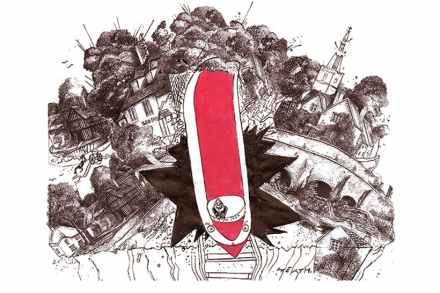
If there is one thing that could yet save HS2 it is the 'letting down the North' argument. Didn’t Boris make a speech in the early hours of 13 December promising the party’s new-found voters in the north that he would never take their votes for granted and never forget them? How, then, would he escape the onslaught that would be launched against him if he decided to dump a high-speed rail line to the north? We’ve had endless open letters from council leaders, business people and so on in recent months begging the government to go ahead with the scheme.

It’s in America’s interests to extradite Anne Sacoolas – but it’s also in hers

Hands up if you have ever heard of Brian Moles? No? Then what about Anne Sacoolas? Yep, I bet that is registering a bit more. Sacoolas, as pretty well the whole country now knows, was spirited out of the country by US authorities after allegedly causing the death of teenage motorcyclist Harry Dunn by driving on the wrong side of the road near an airbase in Northamptonshire last August. Yesterday, US Secretary of State Mike Pompeo announced that he was rejecting a British demand for the extradition of Mrs Sacoolas, arguing that she had diplomatic immunity. And Mr Moles? Last year, Moles pleaded guilty to causing death by dangerous driving at Southampton Crown Court after killing a motorcyclist while making an illegal turn.

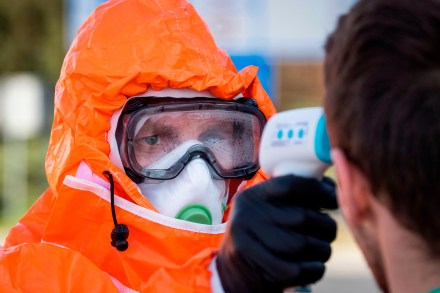
There’s no need to panic about coronavirus

In contrast to prophets of doom, who get invited to Davos, asked to address the UN and are able to build entire careers around their scaremongering, there are few rewards for those who play down fears – even if they turn out to be correct. If there were, then perhaps I wouldn’t have to draw attention to this piece I wrote in the Spectator in September 2005 arguing that the H5N1 strain of bird flu had been hugely over-hyped and was unlikely to kill many of us. At the time, the World Health Organisation (WHO) was predicting there could be up to 50 million deaths worldwide, and former government adviser on infectious diseases Professor Hugh Pennington was claiming that it could be worse than the Spanish flu of 1918.

Will house prices rise after Brexit?

A headline in the Times this week appeared to speak of a boom in house prices since the general election: “Housing Market Enjoys Boris Boost as Prices Rise at Record Rate”. Given Britain’s history of house price booms and busts that sounded dramatic indeed, so what did it really mean? The ‘record’ which turned out to have been broken turned out to be the change in asking prices – as measured by property website Rightmove – between December and January. This month, the average asking price for a property in Britain is £306,810, £6785 or 2.3 percent higher than it was in December. The previous highest uplift that Rightmove has measured was between December 2014 and January 2015.

Climate change isn’t responsible for Australia’s hailstorms

It was pretty inevitable that once rain finally started to fall in South Eastern Australia, extinguishing some of the bushfires which have been raging for weeks, the wet weather, too, would be blamed on climate change. 'Climate apocalypse starts in Australia,' a human rights lawyer tweeted in response to golf ball sized hailstones falling in Canberra. 'You'd be hard-pressed to look at what is going on in Australia right now and not connect it to climate change.' said the website News & Guts, tweeting similar pictures of hailstones falling on the Australian capital. For the Weather Channel it was a case of 'record rains' – citing by way of example the 60mm of rain which fell in an hour in Newcastle, New South Wales. https://twitter.com/BBCWorld/status/1219180999097057281?

The one qualification the next director-general of the BBC needs

There is one qualification which ought to be vital for Tony Hall’s replacement as director-general of the BBC, but you can bet your bottom dollar that the BBC Board, which is charged with making the appointment, will regard it instead as a disqualification. The new director-general needs to accept that the licence fee will disappear when the BBC’s charter next comes up for renewal in seven years’ time and commit to preparing for a fully-commercial future. But don’t hold your breath.

Forget moving the Lords – let’s have an elected senate instead

In two weeks’ time, we will finally escape the European Union, freeing ourselves from its monumental waste. Waste, that is, like continually shifting MEPs and their staff between the two seats of the European Parliament in Brussels and Strasbourg – a farce which the European Parliament itself calculated in 2013 was costing it 103 million Euros (£88 million) a year. So why, then, is our own government seeking to recreate this giant folly in Britain? Proposals floated today include relocating the House of Lords to York, while the Commons embarks on a round-Britain tour.

David Attenborough is making the same mistake as Greta Thunberg

It wasn’t so long ago that Sir David Attenborough came across as a calm voice of reason. His much-admired documentaries touched on environmental issues but were not driven by them; they were not morality plays. But something seems to have got into Sir David. He has become a Greta of the third age. The rot set in last April when he narrated a programme on climate change which used the same, tired old trick Al Gore has used: running a commentary on climate change against pictures of hurricanes, wildfires, droughts and floods, as if to plant in the viewer the idea that all these events were caused by, and therefore wouldn’t have happened without, climate change.

There’s a long way to go before Trump can declare victory in his trade war

From our US edition

There is no shortage of quotes by Donald Trump that his opponents have tried to use against him — few of which have so far damaged him politically, still less embarrass the man himself. But there is one which really does have the potential to cause him harm in this year’s presidential election: his claim, in March 2018, that ‘trade wars are good, and easy to win’. That isn’t looking quite so clever now, two years later when the trade war that Trump started with China is still far from won. The deal signed today by Trump and Chinese vice premier Liu He brings a respite in hostilities, but there is a long way to go before the US can be claimed to have won, or even to have restored trade to what it was prior to 2018.

trade war

Gavin Barwell has shown why Theresa May failed

Gavin Barwell is a decent enough chap, but the more you read of his time as Theresa May’s chief of staff, the more you realise why her government was doomed. He paints a picture of a low-energy government in the midst of high-energy national crisis. Nothing demonstrates this better than the corresponding reading lists of Barwell and his successor at 10 Downing Street, Dominic Cummings. This is the reading list Cummings set for data scientists interested in applying to his ‘weirdos and misfits’ job advert at the beginning of the year: This Nature paper, Early warning signals for critical transitions in a thermoacoustic system, looking at early warning systems in physics that could be applied to other areas from finance to epidemics.

What Meghan’s new fans like to ignore

What would it take to convert Afua Hirsch to the cause of capitalism? We now know the answer because the Guardian columnist has enthusiastically backed the Duke and Duchess of Sussex as the couple seek ‘financial independence’, by such means as registering the trademark ‘Sussex Royal’. As for those who have criticised the Duke and Duchess for doing this? According to Hirsch, writing in the New York Times: “…by taking matters into their own hands, Harry and Meghan’s act of leaving — two fingers up at the racism of the British establishment — might be the most meaningful act of royal leadership I’m ever likely to see”.

Lindsay Hoyle’s biggest achievement? Making Parliament boring again

The biggest news of the week, obviously, is the conclusion of the drama which has rocked Britain for the past 12 months: the moment the EU Withdrawal Bill finally made it through the Commons. Blanket coverage of Thursday night’s vote may have led to some readers being unaware of some of the other news stories of the week, such as the shooting down of a Ukrainian airliner in Iran and the announcement by the Duke and Duchess of Sussex that they no longer wish to work as full-time royals. Or maybe not. How astonishing, given all those days of destiny that we had throughout 2019, that hardly anyone seems to have noticed the final act. That it was reduced to the ‘news in brief’ column is mostly down, of course, to the power of a comfortable Commons majority.

Could this be the beginning of the end for Iran’s mullahs?

It is easy to construct a scenario in which tit for tat actions by the Americans and Iranians lead to all-out war, close off the Gulf, send oil prices soaring, crash the global economy – and, if you are really going to go for it, end in nuclear conflagration. But what about the alternative outcome: that conflict between Iran and the West precipitates a counter-revolution against the mullahs and leads to and end to the 40 year Iranian theocracy? The overthrow of the Iranian regime is the black swan event – or maybe it ought to be called a white swan event – which no-one is talking about, which is odd given that there have been plenty of indications over the past couple of years that ordinary Iranians are finally growing fed up with their regime.

Are over-insulated homes causing more heatwave deaths?

As we know, carbon emissions are going to have to be eliminated in the coming decades to prevent us suffering from fire, flood, tempest and plagues of locusts. But in one important respect is the cure actually worse than the disease? That's the surprising implication of a statement on deaths from last year’s heatwave by Bob Ward, the Director of the Grantham Research Institute on Climate Change at the London School of Economics. In response to figures suggesting that there were 892 excess deaths between last June and August, a period which saw the highest temperature ever recorded in Britain, he said: 'Tragically, many of these deaths are likely to have been preventable.

Train companies need to properly compete if we want rail prices to fall

No, it isn’t a great triumph that train fares are going up by an average of ‘only’ 2.7 per cent today which, as the Rail Delivery Group notes, is a whole 0.1 per cent lower than the Retail Prices Index (RPI). For one thing, RPI is no longer used as an official government statistic because the statisticians believe it to be faulty. When it comes to the government paying us, for such things as the interest on our inflation-linked savings statistics, it is almost always the – usually lower – Consumer Prices Index (CPI) which is used. But that is all a bit beside the point. In what other industry do prices go up automatically in line with a government inflation figure every 2 January, as regulated rail fares do?

Boris Johnson and the Tories should fear a weak opposition

We have a likely candidate who allegedly told one of her colleagues 'I’m glad my constituents aren’t as stupid as yours', and who has threatened to sue the MP who told the story as she says it's untrue. We have a frontrunner who can see nothing wrong in the manifesto with which Labour just crashed to its biggest defeat since the 1930s; another who went down to a limp defeat when she last stood for the leadership against Jeremy Corbyn. The Labour leadership contest is hardly going to worry Tories too much. That might be good news for Boris Johnson, in that he is unlikely to have much of a challenger in 2024. But is it really good to have such a weak opposition?

Scott Morrison is right – Australia’s bushfires aren’t down to climate change

I have long since learned, not least from my interview with Al Gore published here in 2017 that the surest way to get called a climate change denier is to quote genuine science that runs counter to the hyperbolic ‘science’ spun by the likes of Gore, Extinction Rebellion and the global Greta community. But no matter, here goes. No, the devastating bushfires in Australia are not a symptom of a world that is being consumed in conflagration caused by man-made climate change.

What to expect from the new Governor of the Bank of England

Andrew Bailey, announced this morning as the next Governor of the Bank of England, is not, to use a term quoted this morning, a ‘rock star’ banker. He has been sold to the nation as a boring, dependable sort who will steady the horses, the safety-first candidate. It no doubt helps in this impression that he is, in fact, a banker – unlike the labour lawyer now running the European Central Bank, Christine Lagarde. But that rather misses out a bigger question about Andrew Bailey: what is his attitude towards the regulation of banks and the wider financial sector in general? This matters somewhat as, under his watch, Britain will have to decide how to use its new-found freedom over financial regulation – whether to deregulate, increase regulation or follow the EU.

Why Labour will struggle to win back the working class vote

Just how could the Conservatives win so many seats in working class areas in the Midlands and North, areas which the party stands accused of hollowing out through its cruel monetarist policies in the 1980s?       There is a fairly simple answer to this: it is no longer the 1980s, and areas which were once hollowed out through mass unemployment are no longer afflicted in this way.     Today’s employment figures show just what Labour is up against when trying to convince the working classes that they have had a raw deal out of the government. The unexpected jobs miracle of the past decade continues. The employment rate is no longer falling as sharply as it has done over most of the past 10 years, yet at 76.

Trump’s Chinese tariffs are simply a scare tactic

From our US edition

Ever since Donald Trump began his trade war with China there have been two possibilities: firstly, that he intends tariffs to form a permanent feature of the landscape in relations between the US and China: a protectionist device designed to protect American jobs indefinitely; or secondly, that he sees his tariffs as a shock tactic devised to draw China into talks which it would otherwise be loathe to join, and with the ultimate aim of freeing up trade. The latest development, halving a set of tariffs which had been in place since September and canceling another set which had been due to come into place this week, points heavily to the latter.

chinese tariffs