Ross Clark

Ross Clark

Ross Clark is a leader writer and columnist who has written for The Spectator for three decades. He writes on Substack, at Ross on Why?

Why is Boris so determined to save Pret?

There are many reasons why employees might want to return to their offices and why their employers might be keen to get them there – such as to promote the exchange of ideas in an active environment, to help new recruits learn on the job, and, as Matthew Lynn argued here earlier, for employees to avoid their jobs being outsourced to South Asia. But is it really the job of government to launch a ‘back to the office’ campaign just to prop up the nation’s coffee shops?

Children who died of Covid-19 were already seriously ill, new study shows

It has been clear from the start of the Covid-19 crisis – from Wuhan’s experience, before cases were confirmed in Britain – that it was a disease with relatively little impact on children. A broad study led by Liverpool University and published in the British Medical Journal today confirms that – and sheds a lot more light on how Covid-19 affects children. The study looks at data from 260 hospitals in England, Scotland and Wales, to which 69,516 patients were admitted with Covid symptoms between 17 January and 3 July. Of these, 651 were aged under 19 and 225 were aged under 12 months. Serious underlying medical conditions were present in 42 per cent of the children.

An off-the-shelf insect repellent could help kill Covid-19

Should we be spraying surfaces, and ourselves, with an off-the-shelf mosquito repellent to tackle the spread of Covid-19? The Ministry of Defence has revealed that it has been issuing soldiers with Mosi-guard natural, a spray derived from eucalyptus oil and manufactured by a small company called Citrefine, in Leeds, from the beginning of the Covid crisis. The spray has been tested by the Defence Science and Technology Laboratory and found to have a rapid effect on reducing levels of the virus when sprayed onto surfaces. It did not, however, succeed in eliminating the virus altogether. In one test, the product was sprayed onto latex synthetic skin an hour before being exposed to SARS-CoV-2, the virus which causes Covid-19.

Has this Brazilian city reached herd immunity without lockdown?

Throughout the Covid crisis, the international response to the disease has rested on a simple assumption: that none of us have any resistance to it, being caused by a novel virus. Therefore, if allowed to let rip through the population, the virus would exponentially spread until around 60 – 70 per cent of us had been infected and herd immunity was reached. This was the assumption behind Neil Ferguson’s paper in March, claiming that Covid-19 would kill 500,000 Britons if nothing was done and 250,000 of us if the government carried on with the limited mitigation polices it was then following. Yet real world data has challenged this assumption.

What per cent of Covid deaths are directly from Covid?

Just how many people have died of Covid-19, as opposed to having died with the virus? It is a poignant question, especially after it was revealed that Public Health England had been counting a Covid death as anyone who died after testing positive for the virus, even if they swiftly recovered and went on to die of some other cause, like under a proverbial bus. A study by the health authorities in the Östergötland region of south-eastern Sweden aims to answer the question. The study looks at the cases of 122 people who have died in the region outside of a hospital setting – either at home or in accommodation for the elderly – and whose deaths were attributed to Covid-19. Half of this group were aged 88 or over.

Could blood plasma be used to treat Covid-19?

What are we to make of the decision by the US Food and Drug Administration (FDA) to grant emergency use authorisation for blood plasma treatment of Covid-19? Is this a medical breakthrough or a dangerous move forced on it by a desperate president who sees his electoral chances slipping away unless he somehow gets on top of the crisis over the next few weeks? It goes without saying that the approval of drugs ought to be above partisan politics. Introducing novel drugs into everyday use has the potential to bring a huge amount of good – but also the potential to cause a great deal of harm. The only satisfactory way for such decisions to be made is through an independent body that is strong enough to resist pressure from politicians, pharmaceutical companies or anyone else.

What does the evidence say on re-opening schools?

It is still far from clear whether schools will succeed in re-opening next week, as government ministers, education authorities and unions battle it out over safety – or supposed safety – concerns. Now, as back in May, when the government first proposed re-opening schools, the unions have demanded evidence that it will be safe for children to return to the classroom. The difference now is that we do have real-world evidence on the spread of Covid-19 in schools. Public Health England (PHE) has analysed what happened when over a million children finally returned to school in June. In the subsequent weeks until the end of term, 70 children and 128 staff tested positive for Covid-19.

Ending the eviction ban makes sense

With GCSEs out of the way, we didn't have to wait long for the next campaign to make out the Tories to be a bunch of heartless monsters – and for the Tories to fold. This one revolved around the temporary ban on evictions for tenants of privately-rented properties, which was due to come to an end on Monday but has now been extended for a month. Shadow house secretary Thangam Debbonaire took to Twitter this morning to denounce it as an ‘extraordinary thing to do’, to lift the ban when so many people are facing problems paying their rent. That there are a great number of tenants in financial difficulty is clear. According to the charity Shelter, 227,000 private tenants have fallen into arrears with their rent.

Is this the end of the line for public transport?

News that rail fares are to rise by 1.6 per cent in January, and public transport fares in London by 2.6 per cent, would normally be met with outrage – how dare they jack up the fares again when the trains are late and I can’t get a seat. Yet this time around the news has hardly raised a whimper. After all, who uses trains any more? There’s some sort of semblance of normality returning to shops, pubs, restaurants. But larges parts of the public transport network have been all but abandoned – even though the government is no longer officially telling us not to use them.  Department for Transport figures from Monday show use of national rail services to be running at just 23 per cent of the level they were at the beginning of March.

University challenge: the next education crisis

On the insistence of university authorities, freshers’ week will be an online affair this year. But if this autumn is not much fun for students, it will be a lot less fun still for university staff whose admissions system has just been thrown into turmoil by the A-level results debacle. While some institutions now face overcrowding, others face financial ruin. When the Education Secretary Gavin Williamson announced on Monday that he was abandoning the algorithm devised by Ofqual to moderate A-level results and would allow candidates to keep the grades estimated by their teachers, students were relieved — many more will, after all, now be able to go to their favoured university. Admissions officers at the top universities were rather less happy.

Did female leaders trump men in dealing with the pandemic?

It isn’t hard to imagine what would happen if an academic produced a paper claiming that countries led by men were more entrepreneurial or are better at negotiating international deals. The sky would fall in on them before the ink was dry. Their paper wouldn’t find a mainstream journal to publish it, anyway, but the mere existence of the study would be enough to have them denounced by students and thrown out of their university. But if you were to publish a study claiming that countries led by women have coped better with the Covid-19 pandemic, with fewer cases and fewer deaths than countries led my men?

Why weren’t we wearing masks at the start of the crisis?

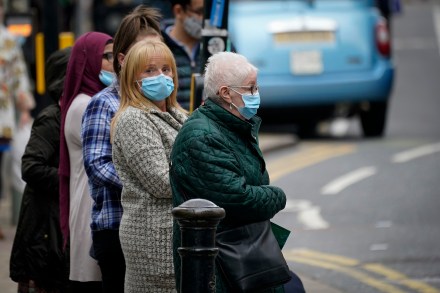
The rise of the face mask has been one of the remarkable features of the later period of the Covid-19 epidemic. Yesterday, France announced that face coverings are going to become mandatory in workplaces where more than one employee is present. It is quite a cultural change for a country that previously banned face coverings in public. Could mask-wearing have been used as an alternative to economically-ruinous lockdown? Compulsory masks in shops are becoming the norm around the world – and in many cases the obligation now extends to the streets and other outdoor public places too.

Why are more people dying at home?

The death drought continues. For the eighth week in a row the Office of National Statistics (ONS) has recorded fewer deaths in England and Wales than would be expected at this time of year. In the week ending 7 August, 8,945 people died, one fewer than the previous week and 157 (1.7 per cent) lower than the five-year average for this week of the year. There is, however, a geographical divide: deaths in the East Midlands are running five per cent higher than the five-year average. While deaths in the North East and North West are slightly higher than usual. What should be worrying the government is the sharp rise of people dying in private homes With the number of deaths across England and Wales below average, the figure for ‘excess deaths’ for 2020 is also down.

A-levels and the dangers of predictive modelling

It turns out we’re not quite so in awe of predictive modelling after all. How different it was back in March when Professor Neil Ferguson and his team at Imperial College published their paper predicting 250,000 deaths from Covid unless the government changed course and put the country into lockdown. It was ‘the science’; it was fact, beyond question. Yet no sooner had the A-level results been published last week than a very different attitude began to prevail. How terrible, nearly everyone now says, that an 18-year-old’s future can be determined by an algorithm which tries to predict what grade they would have achieved had they sat the cancelled exams.

Was Sweden’s refusal to lockdown a gruesome mistake?

Was there ever a jury destined to spend so long over its deliberations as the one considering whether Sweden made a terrible error over its refusal to go into lockdown? Just when you think the data points in one direction, another piece of data nods in the other. The case against Sweden rests largely on its death toll being significantly higher than that of its Nordic neighbours: 572 per million compared with 107 for Denmark, 60 for Finland and 48 for Norway. But then it also happens to be lower than several countries which had especially severe lockdowns, such as Spain (612), Britain (609) and Italy (583). But what of the economy? The counsel for Sweden can point out that the country’s GDP fell in the second quarter by 8.

Boris’s French quarantine makes no sense

Covid-19 has brought us a Dunkirk spirit alright. Once again we have hundreds of thousands of Brits in a mad scramble to get back to Britain from France, as soon as a flotilla of ships will let them. It is just that this time around it feels a little more self-inflicted than last time. Have ministers learned nothing from the fiasco of Spain a couple of weeks ago? Holidaymakers then were given a few hours notice before quarantine rules were brought in, leaving many desperately trying to book flights at horribly inflated prices or else risk having to self-isolate for 14 days upon their return. It went so well that the government has repeated it with France, where 450,000 Britons are currently thought to be on holiday.

What’s the true cost of lockdown on our kids’ futures?

We’ve heard endless statistics on the likely death toll from Covid-19, and over the past week we have learned just how great was the economic devastation in most countries in the second quarter as they locked down to deal with the disease. But what about the global impact on children’s education? That is something the World Bank has attempted to estimate. School closures, it concludes, effectively reduce the times spent in education by between 0.3 and 0.9 years. Globally, before the pandemic, the average child went through 7.9 years of schooling. For the Covid generation this will be reduced to between 7.0 and 7.6 years.

Summer flu is now more deadly than Covid

We are, of course, in the middle of a deadly pandemic of a novel infectious disease. It’s just that it is not, at present, killing remotely as many people in England and Wales as that boring old disease which no-one seems ever to worry about: the summer flu. Winter flu, yes – sometimes we worry about that overwhelming the NHS. We take the precaution of vaccination the elderly and other vulnerable groups. But the summer flu? It hardly registers. Yet few seem to have noticed, while we fret about whether reopening schools, bars and so on will cause a second wave of Covid-19, that flu (and pneumonia) appears to be killing five times as many people in England and Wales.

How Covid spread in Sweden’s care homes

Why did Covid prove so lethal in care homes? Between 2 March and 12 June, there were 66,112 deaths of care home residents in England. Of these, 19,394 ‘involved’ Covid (in the Office of National Statistics’s own terminology) – 29.3 per cent of the total. As has been apparent from the beginning of this crisis, the risk of dying of Covid-19 sharply rises with age, so in that sense it is not surprising for deaths among care home residents to be high – but why has it proved so difficult to protect residents from the disease, not just in Britain but in many countries?