Ross Clark

Ross Clark

Ross Clark is a leader writer and columnist who has written for The Spectator for three decades. He writes on Substack, at Ross on Why?

Brits don’t appear to have been influenced by anti-vaxxers

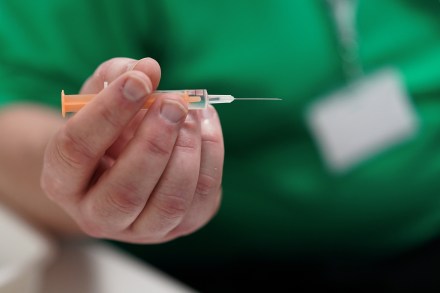
Has the influence of anti-vaxxers been hugely overstated? That is one interpretation of the Office for National Statistics’ latest survey on social attitudes towards Covid-19 and the government’s efforts to tackle it. While fears abound that people might refuse the vaccine, with their minds turned by lies disseminated on social media about Bill Gates wanting to impregnate them with microchips, there is scant sign that the British public is becoming anti-vax. Across all adult age groups, 78 per cent say they are ‘fairly likely’ or ‘very likely’ to take the vaccine if offered it (and it is government policy that all will be offered it in time).

Can any country dodge the Covid bullet?

The government is yet again under fire for its handling of Covid-19, as cases rise across parts of the country. But what about the global context? Is it still possible to argue that Britain has done especially badly in handling the pandemic? Possibly, but it is becoming increasingly hard to do so, as many countries which appeared to handle the virus best the first time around are now suffering second waves much larger than what they experienced in the spring. Germany, which this week announced a hard lockdown over Christmas, is a prime example. In the spring it was held up as an example of how the rest of Europe might have handled Covid-19. New recorded cases never rose over 7,000 a day and daily deaths peaked at 333 on 8 April.

Will the first vaccinated Brits have some immunity by Christmas?

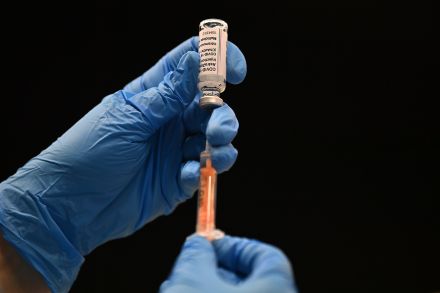
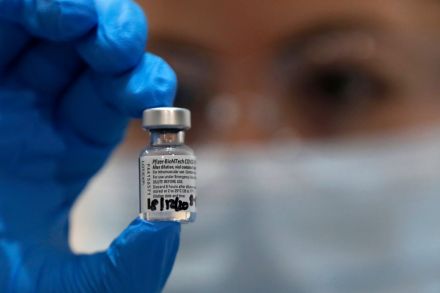
So, Christmas, it seems, will not be cancelled after all. The government has decided instead to tackle fears of a January spike in cases with tougher messaging, telling people that just because they will have the legal right to mix for five days next week doesn’t necessarily mean they ought to avail themselves of that freedom. In other words, we’re not changing the rules, but we’d really rather you didn’t take advantage of them. But could the vaccinations which have already been performed save us from a post-Christmas spike? The Pfizer vaccine – the only one being given to the general public so far – is designed to be given in two doses, 21 days apart. The first people to be given the vaccine had their first jab last Tuesday, 8 December.

The looming Covid unemployment catastrophe

Just how widely is the economic pain from Covid-19 being felt? Still surprisingly little, according to the latest employment figures from the Office of National Statistics (ONS). The absence of an explosion in unemployment goes some way to explaining why the lockdowns and restrictions have been accepted so meekly by the population at large. That said, unemployment is beginning to rise significantly now. There are now 819,000 fewer payroll employees compared with the start of the crisis in February. The employment rate stands at 75.2 per cent, 0.9 per cent down on a year ago, and the unemployment rate is 4.9 per cent, up 1.2 per cent.

Should we worry about the new variant of Covid-19?

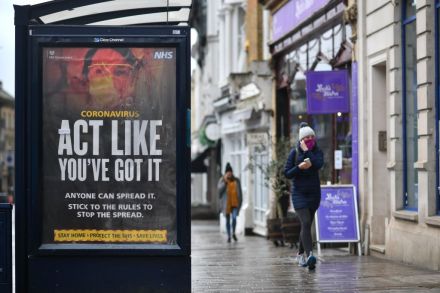
Should we worry about the emergence of a new variant of SARS-CoV-2, the virus which causes Covid-19? News of the new variant – which, it seems, might transmit more easily than previous versions – was the big surprise of Matt Hancock’s statement to the Commons this afternoon. The other big announcement – that London and parts of Essex and Hertfordshire will be going into Tier 3 – was a foregone conclusion. As I wrote here in May, the SARS-CoV-2 virus has already mutated once into a form that might be more transmissible. This could possibly explain why Europe and North America have found it harder to contain the virus than have Asian countries. Were we fighting a slightly different disease to the one which emerged in Wuhan in January?

Enforcing new fisheries policy isn’t ‘gunboat diplomacy’

No, the Channel isn’t going to erupt into naval warfare, and neither is the Prime Minister engaging in ‘gunboat diplomacy’ by deploying Royal Naval vessels to keep French fishing boats out of UK waters in the event of Brexit transitional arrangements ending on 31 December with no trade deal. Yet that seems to be the view of Tobias Ellwood the Conservative chairman of the Defence Select Committee, who protested to the Today programme this morning: ‘This isn't Elizabethan times anymore, this is global Britain - we need to be raising the bar much higher than this.’ Actually – although it may be news to Mr Ellwood, even in his role holding the government to account over defence matters – it is not really a new deployment at all.

The damning verdict on NHS Test and Trace

SAGE has already poured cold water on the NHS Test and Trace system in England, suggesting in September that it was making only a ‘marginal’ difference to Covid infection rates. Now the National Audit Office (NAO) has had its say, publishing its interim report into whether it has been value-for-money. It is not much more flattering.  It depicts a hugely-expensive system which leaves many of its staff sitting around with little to do and which is failing to make contact with nearly as many people as it needs to in order to work as SAGE says it needs to. The budget for Test and Trace over the whole of 2020/21, it says, is £22 billion – quite a lot more than the £12 billion that is commonly quoted as the cost of the scheme.

What the Lancet study tells us about the Oxford vaccine

While the Pfizer vaccine became the first to be used in a public vaccination programme on Tuesday, the Oxford/AstraZeneca vaccine team became the first to publish their results in a peer-reviewed journal, the Lancet. As the press release announcing the results explained, the overall efficacy rate of the Oxford vaccine was measured at 70 per cent, but that concealed a large difference between different arms of the trial. When people were given two standard doses of the vaccine, its efficacy rate was only 62.1 per cent. Yet intriguingly, in one group which was given a half dose followed by a standard dose, the vaccine had an efficacy rate of 90 per cent.

How robust was the evidence for lockdown?

Ever since it was first published in May, the Office of National Statistics’ weekly infection survey has been looked upon as the gold standard of Covid data. It is based on swab testing of a large, randomised sample of the population who are tested repeatedly to see if they are infected with the virus – the results from which are scaled up to arrive at an estimate of incidence of the disease in the population as a whole.  Being a randomised sample, it does not suffer from the drawback of the daily Public Health England figures for confirmed infections – which are heavily influenced by how many tests are being conducted. As the number of tests has expanded, so, too, the number of confirmed infections has risen.

The Met Office’s confused climate change forecasts

Oh, do make your mind up. Is snow in Britain going to be eradicated for good due to climate change – or are we going to be plunged into arctic conditions as climate change breaks down North Atlantic currents and sets up blocking patterns which suck frost down from the North Pole for weeks on end? If you have a preference for either of the above answers, the Met Office will be delighted to oblige. Today the Met Office is warning that climate change is going to do away with winter in Britain in any meaningful sense. According to Dr Lizzie Kendon, who works on climate projections for the organisation: ‘we are saying by the end of the century much of the lying snow will have disappeared entirely except over the highest ground.

Could the Zoe app identify local Covid outbreaks?

In spite of the approval of one vaccine and the likely approval of at least two others, the government seems determined to push ahead with 'operation moonshot' — mass community testing along the lines of that being trialled in Liverpool. That is astonishing, not least because of the cost — put at £100 billion in one leaked document. There is also, as I wrote here a fortnight ago, the matter of the dismal accuracy of the lateral flow tests being used for community testing. It suggests that the government, for all the Prime Minister’s chirpiness this week, has little confidence that vaccination will put an end to the Covid pandemic any time soon. Otherwise, why spend such a fortune on testing for a disease that ought rapidly to die away?

Will Britain lose its vaccine advantage?

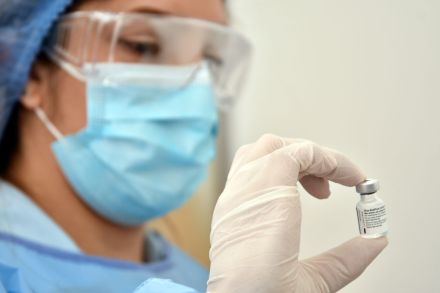
Much has been made of the speed at which UK regulators have approved the Pfizer-BioNTech vaccine for use in Britain. But will being first to approve the drug make much difference anyway, given the news this morning that Pfizer is having some difficulty rolling out the vaccine?  This morning the business secretary Alok Sharma confirmed that the NHS expects to receive 800,000 doses and is ready to begin the mass vaccination programme on Tuesday. The first batch was apparently imported from a Belgian plant through the Channel Tunnel yesterday. That is enough to vaccinate 400,000 people, with two doses, 21 days apart. To put this into context there are 1.1 million people in the highest priority group — care home residents and staff.

Are heat deaths on the rise?

As a case study of how assertion can end up sounding like fact, I thoroughly recommend the Lancet’s report this morning claiming that the number of heat-related deaths globally has more than doubled in the past 20 years — and in particular the reporting of the story on the Today programme this morning. The message of the BBC report could not have been clearer: climate change is killing us at alarming speed and we’d better do something about it quick. 'Research suggests that the number of older people dying from heat-related causes has more than doubled in the UK since the early 2000s,' it began (01:05:55). 'The report published in the Lancet tracks the links between climate change and health.

Two unanswered questions on the Covid-19 vaccine

Britain, we learned this morning, has become the first country in the world to approve the Pfizer/BioNTech vaccine, which is likely to be deployed from Monday onwards. Is Britain being reckless, or are other countries dragging their heels?  The first point to make is that, however tempting though it may be to think so, it is not a case of Britain taking advantage of new-found freedoms enabled by Brexit. It may be in the future that Britain develops a more nimble regulatory system than the EU, and that British patients can benefit for the earlier administration of drugs, but the UK will remain under the European Medicines Agency’s regulatory system until the end of the transition period in a month’s time.

The perils of shared ownership

Fancy buying half a flat, paying 100 per cent of the maintenance and the cost of putting right a developer’s shoddy work? Therein lies the great scandal at the heart of shared ownership, the government scheme which BBC Panorama exposed last week but which I others were writing about over a decade ago. Shared ownership has allowed developers to put fancy price tags on properties which they might otherwise struggle to sell The concept sits at the heart of government efforts to increase the rate of home-ownership. Look around at the prices of London flats, compare them with average London salaries and you wonder how anyone can get on the housing ladder any more. But they do – sort of – thanks to shared ownership.

Were tiers working before lockdown?

Beware data that is released on the eve of a Commons vote on lockdown restrictions. That was the lesson of the graph presented by Sir Patrick Vallance at the Downing Street press briefing on 31 October, which included a scenario of 4,000 deaths a day by December unless drastic action was taken. The figure quickly fell apart when it was revealed that the data was several weeks out of date and the curve shown on the graph was already running well ahead of reality. What, then, to make of the React study published this morning, reported on the BBC news and elsewhere this morning, claiming that Covid cases have 'fallen by about a third over lockdown'? Does the research show that cases fell because of lockdown?

What virtual property viewings don’t show you

I’ve never worked out why anyone would want to buy an outfit over the internet without first seeing it in the flesh and trying it on. I know my wife does it all the time — although the constant piles of parcels by the door, full of stuff waiting to be sent back whence it came, pays testament to drawbacks of buying things sight unseen. Then again, a suit or a dress is only a suit or a dress. I would rather buy clothes online than I would a five-storey townhouse. But maybe I’m a bit of an old stick-in-the-mud. There are some buyers, it seems, who are only too happy to buy blind.

What do excess deaths tell us about Covid?

Assessing the number of Covid deaths has been notoriously difficult throughout the pandemic. Over the summer, English figures were revised down by more than 5,000 after researchers at Oxford University discovered a flaw in the way Public Health England was registering deaths. Another route for assessing the mortality of Covid is to look at excess deaths — while comparing this year's deaths to previous years is a blunt instrument, it is also in some ways more reliable. We may not know the reason for death but we know that more are occurring. Tuesday's release by the Office of National Statistics (ONS) looking at weekly registered deaths in England and Wales painted a bleak picture.

Did Labour just fall into Rishi Sunak’s trap?

Just what is the essential difference between our two main political parties? Certainly not their respective attitudes towards fiscal prudence; the thing which used to provide clear blue water between the two. Now we have two parties which don’t give a damn about public debt, who think that they can spend willy-nilly and that something, somehow will come round and save them in the end.  No, the message of today’s spending review is that the Conservatives and Labour are entrenching their respective positions as the representatives of two tribes: private sector workers and public sector ones. We all know there’s bad news on the horizon in the shape of tax rises and, inevitably at some point, spending cuts.