Ross Clark

Ross Clark

Ross Clark is a leader writer and columnist who has written for The Spectator for three decades. He writes on Substack, at Ross on Why?

Why should Dr Christian Jessen’s fans pay his legal bill?

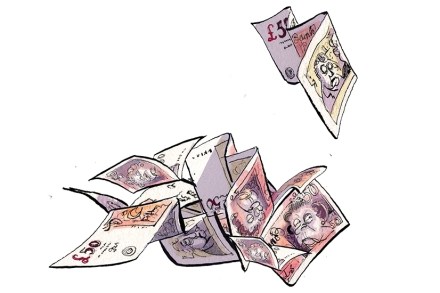
Wasn’t the whole point of crowdfunding supposed to be about enabling community and artistic projects to take place? That was how I remember it being sold to us, at any rate. But no, I got it wrong. It turns out that the real point of it is to help celebrities pay their legal bills.  Dr Christian Jessen, who appears on a Channel 4 show called Embarrassing Bodies, has been ordered by a Belfast court to pay £125,000 in libel damages to former Northern Irish first minister Arlene Foster for tweeting the false allegation that she was having an extra-marital affair. It is believed that legal costs could add a further £300,000 to his bill.  By Monday morning, Jessen had raised £7000 of the £150,000 he is hoping to raise. How to pay?

Biden’s tax plan spells bad news for Ireland

Biden’s America, of course, is all about re-engaging with the world after four years of isolationism. But if you are the Irish finance minister, perhaps the new administration isn’t looking quite so cuddly at the moment.  Biden’s first big achievement in international cooperation looks like being a global minimum corporate tax rate. It seems that G7 nations are about to announce they have agreed on such a tax, set at 15 per cent. It will mean corporations paying a minimum of 15 per cent tax on their profits regardless of where they are based in the world, where they do business and where they pretend to do business.

Covid deaths in context

What would have been your overall chances of dying in the first 19 weeks of 2021 compared with recent years? According to a measure called 'standardised mortality' your overall chances of dying so far in 2021 have been just 1 per cent over the average of the past ten years — that is in spite of January’s peak in Covid deaths. We have been fed a daily diet of Covid deaths for over a year now. As Professor Gordon Wishart argues elsewhere on Coffee House, this daily bulletin has become pretty pointless now that deaths and hospitalisations are so low; a monthly total would be better.  Yet even at the height of the pandemic, the daily death figures were giving us a false impression of the death toll because they were never set in any context.

The many failures of China’s vaccine programme

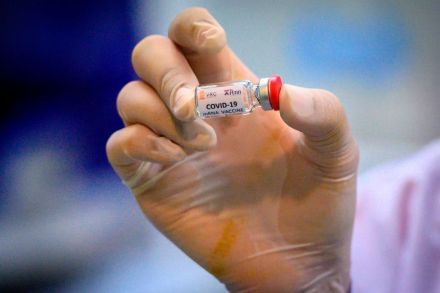
At the start of the year Sebastián Piñera, president of Chile, went to Santiago airport personally to greet a consignment of vaccines from China. ‘Today is a day of joy, excitement and hope,’ he said from a podium on the tarmac. ‘As you see behind me, there is the plane that brought a shipment of almost two million doses of Sinovac vaccines.’ By April, Chile had suffered one of the worst Covid surges in Latin America. The joy and hope, it seemed, had been misplaced. A few weeks ago, Chile’s government announced that, after a real-world study involving 10.5 million Chileans, Sinovac turned out to be only 16 per cent effective at reducing the risk of infection after one shot and 67 per cent effective two weeks after the second dose.

The boiler ban fiasco and the true cost of net zero

Politically it must have seemed an easy promise for Theresa May to make in the dying days of her premiership: to commit Britain to a legally-binding target of achieving net zero emissions by 2050, rather than the 80 per cent reduction previously stipulated in the Climate Change Act. It was the summer of 2019 and Extinction Rebellion protests had taken place with surprisingly little counter-protest. David Attenborough’s TV documentary was received warmly by the press, and polls indicated that the public appeared to supported action on climate change – according to a YouGov poll in December 2018 two thirds of the population stated they did not believe the risks of climate change were being exaggerated.

Covid sufferers aren’t the only victims of the pandemic

Covid deaths are down to a trickle, but what about the indirect consequences of the pandemic: deaths that come from people failing to access timely medical treatment for other conditions? Cancer Research UK has estimated what it believes to be the backlog from disturbance to cancer services and the reluctance of some people to seek medical advice over the past year. Between the start of the pandemic and March of this year, it calculates, 45,000 fewer people started cancer treatment than would have been expected without a pandemic. Looking specifically at cancer screening programmes it estimates that 9,200 fewer people started cancer treatment after referrals from these tests. That was equivalent to a 42 per cent drop.

Is it time to phase out the AstraZeneca vaccine?

We still await good data on the transmissibility of the Indian variants of Sars-CoV-2, something the government insists is vital as to whether the full reopening of the economy and society can go ahead as planned on 21 June. But we do now have some data on efficacy of the Pfizer and AstraZeneca vaccines against the Indian variant B.1.617.2 – whose triple mutation las led to worries that it might be able to sidestep the vaccines. A study lead by Public Health England finds that while the efficacy of both vaccines is slightly lower for the Indian variant compared with the Kent variant, the difference is not great.

The post-Covid boom means inflation will be back

Amid the panic over the Indian variant this week it would have been easy to miss news that the Consumer Prices Index (CPI) more than doubled in a month, from 0.7 per cent in March to 1.5 per cent in April. That is still below the Bank of England’s 2.0 per cent target, but could this be just the beginning? The signs from this month’s Purchasing Managers’ Index (PMI) – a survey of businesses carried out by IHS Markit – suggests strong inflationary pressures. Its index for inflation expectations has soared to 58 this month – with anything above 50 indicating that businesses expect inflation to rise. It is higher than the 57 reached in 2008 – when, within months, CPI hit five per cent.

The rail revolution is nothing of the sort

The government says it is ending a quarter of a century of the ‘fragmentation’ of the railways by gathering all mainline services into an entity called Great British Railways. That will please some critics of privatisation, but has the government actually renationalised the railways, as the unions, the Labour party and – to judge by some opinion polls – the public want? No, but it might superficially look like it. Gone will be the plethora of liveries, along with names such as Arriva, Great Western Railway and East Coast. The familiar old British Rail symbol of an arrow pointing in two directions will return. But anyone calling for the common ownership of the means of production will be left disappointed.

Has India’s second Covid wave peaked?

While the Indian variant continues to dominate the headlines, India itself seems to have dropped out of the news a bit. What is going on there?  It was reported yesterday that India notched up a record number of Covid deaths on Tuesday – 4525 – which indeed was the record of any country during the pandemic. However, that number needs to be put in the context of the country’s population of 1.3 billion. Grim as it is, it works out at 3.5 deaths per million. This is a fraction of the 27.6 deaths per million recorded in Britain on 20 January 2021. Tuesday’s figure is likely to be the high tide mark in India’s second wave of Covid Tuesday’s figure is also likely to be the high tide mark in India’s second wave of Covid.

The problem with investing in ‘value’ stocks

For the first half of the pandemic a simple investment rule would have served you well: buy anything that was being plugged as a ‘tech’ stock – and dump nearly everything else. Lockdown ushered in a new era in which everything would be done online, rendering the traditional bricks and mortar economy. Since 'Pfizer Monday' on 9 November, when the results of the first phase 3 trials of Covid vaccine were made public, the opposite advice has served investors just as well: buy any bricks and mortar company that was dumped during the first phase and sell anything touted as a tech stock. The economy was going to spring back quickly into life, leaving over-valued tech stocks struggling to maintain their toppy values.

Does getting Covid-19 protect you against reinfection?

How well does prior exposure to the SARS-CoV-2 virus protect you against reinfection? It has been a hotly-debated subject since the first trickle of reported cases of reinfection with the virus began to be reported last spring. Now, a study involving 16,000 students from South Carolina has attempted to quantify the protective effect of natural infection. The students involved in the study, which is published in the journal Clinical Infectious Diseases, were each swabbed for a PCR test last autumn, as a condition of being allowed to return to campus. They were swabbed again this spring in similar circumstances.  Out of 16,101 students, 2,021 were found to be infected in the autumn. Of these, 44 – or 2.

What Greenpeace’s ‘Wasteminster’ stunt won’t tell you

Greenpeace has been responsible for many a fatuous stunt over the years, but its latest video has a point. It shows an animated Boris Johnson making a speech outside 10 Downing Street, boasting about his government’s environmental achievements, like banning plastic straws. Meanwhile, plastic waste starts to rain out of the sky, engulfing the Prime Minister as well as all of Downing Street, the Cabinet Office and much of the Foreign Office, too. This immense pile, we are told, is the quantity of plastic waste which we are dumping daily on developing countries. I’ll take Greenpeace’s word for it that the size of the pile is accurate.

Is Britain facing a jobs crisis?

The ONS recorded a sharp recovery in economic growth in March. The Bank of England has already increased its forecast for the growth of the UK economy in 2021. Now comes more evidence of rapid growth. The quarterly CIPD/Adecco Labour Market Outlook, published today, shows a sharp rise in the number of organisations that are hiring extra staff or are expecting to do so over the next few months. The survey, which goes out to 1,000 employers in the private, public, and voluntary sectors, found that 36 per cent of employers are planning to increase staff levels over the next three months. Nine per cent said they are expecting to shrink staff levels, 50 per cent will keep numbers the same and 6 per cent don’t know.

wuhan institute of virology lab theory

Scientists: WHO wrong to dismiss theory that COVID came from lab

From our US edition

If the World Health Organization was hoping that its report earlier this year into the origins of COVID-19 would be the last word on the matter, it is going to be sorely disappointed. A group of 18 immunologists, biologists and other scientists have written to Science, the journal of the American Association for the Advancement of Science, to make it clear that they reject WHO’s conclusion that it is ‘extremely unlikely’ that SARS-CoV-2, the virus which causes COVID-19, entered the human population through a laboratory accident. The report, published on February 28, pretty well rejected the theory that SARS-CoV-2 could have originated as a virus held, even invented, at the Wuhan Institute of Virology, from which it escaped.

Study: AstraZeneca vaccine highly effective in India

Does the Indian variant of Sars-CoV-2, B1.617.2, have the capacity to escape vaccines? Is it really more transmissible than the Kent variant, and by how much? Those are the urgent questions which government scientific advisers are going to have to try to answer over the next week or two – and the answers will have profound consequences for life in Britain over the next few months. If the reopening of society and the economy is to be stalled, or even reversed – as some doctors, including the BMA seem to want – it will suppress an economic recovery, and depress an extremely large number of people who had been led to believe that the reopening was ‘irreversible’, to use the Prime Minister’s word.

Could the Indian variant slow unlocking?

So is the 'irreversible' lifting of lockdown really irreversible after all? There is a grim echo of what happened last year in the sudden panic over the Indian variant of SARS-CoV-2. Yesterday, the Prime Minister said that he 'rules nothing out', following a meeting of the Sage committee over how to respond to the variant. Next month’s proposed reopening of society must now look in doubt. Monday’s relaxation, which will allow indoor hospitality for the first time this year, will for the moment go ahead, but we have seen how quickly these things can change — and with what little notice.

Will our vaccines stop the Indian variant?

As we have often found with Covid-19, no sooner does a path seem to emerge out of the woods than the trees close in again. On Monday, the Prime Minister confirmed that the further relaxation of lockdown rules – including the reopening of indoor hospitality – would go ahead as planned next week. Daily totals of deaths from Covid-19 have been running at very low levels – indeed deaths from all causes are now running 7.3 per cent lower than the recent five-year average, according to the ONS.

Why stamp duty should be lowered for good

Rishi Sunak’s stamp duty holiday has been credited with reviving the property market and blamed for stoking house price inflation, but what has been its effect on the public purse? Remarkably, far from reducing receipts it has actually modestly increased them. In the first quarter of 2021 the public coffers swallowed one per cent more income from stamp duty than they did in the first quarter of 2020, before the holiday was announced on 8 July last year. How come? Because stamp duty hasn’t been suspended altogether; the upper bound of the nil rate band for people buying a main home has been increased from £125,000 to £500,000. But stamp duty is still payable on properties sold for more than that.

Were fears of a third wave overblown?

So, the third wave is officially no more. New modelling by SPI-M, the government’s committee on modelling for pandemics, has, at a stroke, eradicated the predicted surge in new infections, hospital admissions and deaths which it had pencilled in for the autumn or winter as a result of lockdown being eased.  Previous modelling published in April suggested that we could end up with 20,000 in hospital — higher than during the first peak last April. Now the third wave is looking less like the swell off Newquay during an Atlantic storm and a little more like a ripple on the Serpentine.