Ross Clark

Ross Clark

Ross Clark is a leader writer and columnist who has written for The Spectator for three decades. He writes on Substack, at Ross on Why?

Does Warwick’s Omicron modelling make restrictions more likely?

Two weeks ago, the London School of Hygiene and Tropical Medicine (LSHTM) and Imperial College both published modelling showing frightening scenarios if the government did not react to the Omicron variant by imposing immediate restrictions on our day to day lives. The former suggested that hospitalisations could peak at 7,190 a day in January in its most pessimistic scenario; the latter was reported as suggesting that deaths might peak at 5,000 a day in January. Both figures, however, were made on the assumption that Omicron was every bit as virulent as the Delta variant. Since then, several UK studies have suggested that this is not the case, with data showing it is between 20 per cent and two thirds less likely to land us in hospital.

Why warmer days in Alaska are not a sign of climate armageddon

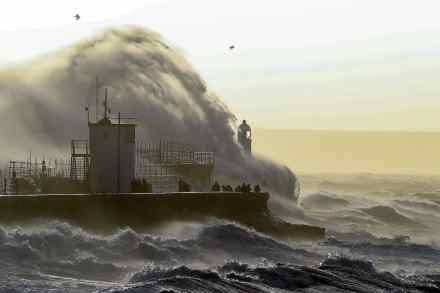
It’s climate panic again. This time, under headlines such as ‘Baked Alaska’, we are informed that the most northerly US state has experienced ‘absurd’ temperatures for December. ‘In December when temperatures would normally be well below zero,’ states the Independent, the town of Kodiak has registered a temperature of 67 degrees Fahrenheit (19.4 Celsius). ‘In late December I would not have thought such a thing possible,’ a climatologist is quoted as saying on CNN. ‘When smashing a temperature record it’s normally by a fraction of a degree,’ tweets the Met Office, ‘not by 20 degrees. But that is what happened in Kodiak, Alaska.

Remember panic-buying? Here’s what will happen next time

It’s post-Christmas, and there are already murmurs about supermarkets with empty shelves. Just as with the petrol shortage in September and shortages of loo paper at the beginning of the first lockdown, these things can rapidly develop into major crises, purely as a result of panic-buying. Tesco, whose store on the Isle of Wight is reportedly especially empty post-Christmas, denies it has any problem with its supply chain — which had been threatened with disruption thanks to an industrial dispute involving the company’s lorry drivers in early December. People may, on the other hand, have stocked up more than usual in response to fears of a post-Christmas lockdown — a fear which appears for the moment to have gone away.

Sage modellers start to accept that Omicron is milder

Public health officials in Britain and South Africa were on different planets for about a fortnight. While those in South Africa kept presenting data suggesting that Omicron caused less severe disease than earlier variants, scientists in Britain continued to claim it was too early to say. Scenarios published by the London School of Hygiene and Tropical Medicine (LSHTM) last week pictured a frightening picture of January, suggesting that hospitalisations could peak above previous waves. An assumption was made that Omicron was just as likely to land you in hospital or kill you compared with Delta. As LSHTM admitted, quite a big assumption:- Due to a lack of data, we assume Omicron has the same severity as Delta.

Why Omicron may not lead to a surge in hospitalisations

There were two takeaways from last night’s press conference: firstly, the hard data showing that the number of recorded cases of Covid had surged by 19,000 – or 28 per cent – in a single day. Second was the assertion that, as a result, the NHS is in danger of being overwhelmed. What was lacking was the hard data on hospitalisations and the number of people in hospital. Although you would never have guessed from the tone of the conference, these both fell. The number of people admitted to hospital – a figure which runs a few days in arrears owing to a delay in the four constituent nations of the UK collating their data – fell from 800 to 774, the lowest figure recorded in a week.

Are a growing number of Brits choosing not to work?

It wasn’t long ago that we were fearing the end of the furlough scheme might be accompanied by a significant rise in unemployment. According to the latest labour market figures released by the Office of National Statistics (ONS) this morning, that doesn’t appear to have happened. What they do show, however, is that the pandemic has led to growth in a section of the population which generally receives little comment: adults of working age who are economically inactive – i.e. not in work and not seeking work either. Moreover, those who are in work are working fewer hours than they did before the pandemic. The figures cover the period August to October, the last month of which falls after the end of the furlough scheme on 30 September.

What does this South African study reveal about Omicron?

While the government’s policy on Omicron is being driven by modelling suggesting the possibility of a huge wave of hospitalisations in January, some more real-world data has come in from South Africa.  A presentation by the South African Medical Research Council this morning has offered evidence that while Omicron does indeed appear to be more transmissible than the Delta variant, the trajectory of hospitalisations is flatter.  This would appear to confirm earlier data from hospitals in Gauteng province that Omicron is causing a milder disease than previous variants.

Boris’s booster jab plan comes at a price

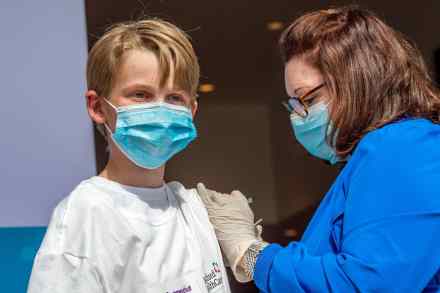
If you haven’t yet been approached about having a Covid booster jab, your phone is about the spring into life – and it is unlikely to let you forget it until you agreed to have your third dose of the vaccine. The Prime Minister’s announcement on Sunday evening that every adult is to be offered a jab by the end of December, as opposed to the end of January as previously planned, will mean averaging a million jabs a day – even more than the peak of the inoculation programme in the spring. But there is a price to pay, and health secretary Sajid Javid admitted as much on this morning’s Today programme.

Does Taiwan hold the answer to the lab leak theory?

It is nine months since the World Health Organisation (WHO) dismissed the possibility that the Covid 19 pandemic could have originated in a laboratory leak, calling it ‘extremely unlikely’. Since then, much scientific opinion has been moving in the direction that it is at least a possibility – especially given that the Wuhan Institute of Virology has been accused of engaging in ‘gain of function’ research into coronaviruses, involving manipulating the viruses into making them possibly more transmissible. Moreover, far from being rare, as the WHO intimated, the original SARS virus is known to have escaped from a laboratory on a couple of occasions. But if Covid did get into the human population, how might it have escaped from the Wuhan lab?

Should we be scared of the Omicron variant?

Why is the government so scared of the Omicron variant? So far, most of the evidence we have for transmissibility and virulence of Omicron is based on very limited data from South Africa, but the UK Health Security Agency (UKHSA) has now published its own preliminary study of the variant — the results of which will presumably have been available to ministers and scientific advisers prior to Wednesday’s decision to enact ‘Plan B’. They appear to show a variant which is more transmissible, more likely to evade vaccines and more likely to reinfect people who have previously had Covid. But there is a very big caveat: they are based on tiny numbers of Omicon cases.

Has Boris seen the Omicron data?

There was nothing but gloom about the Omicron variant at yesterday’s No. 10 press conference. But with reporters preoccupied with last year’s Christmas parties, no one thought to bring up a statement by Tedros Adhanom Ghebreyesus, the head of the WHO, who earlier told reporters that there is ‘some evidence that Omicron causes milder disease than Delta, but again it’s still too early to be definitive.’  You don’t want to make decisions before you have good evidence, but if it does turn out that Omicron is a milder disease, won’t the government’s efforts to suppress it with travel bans and restrictions be counter-productive?

Fact check: are cycle lanes really making traffic worse?

London is the most congested city in the world and it’s the cycle lanes wot done it. That is the impression you will pick up from the headlines this morning.  'Cycle Lanes Blamed as City Named Most Congested,' reads a BBC headline, to take but one example. The story emerges, it turns out, from a global index published by transport consultancy Inrix, which claims that motorists in London spent an average of 148 hours in traffic jams this year, more than in any other country in the world. In the past year, the city climbed from being the 16th most-congested of those studied to the most congested of that lot.

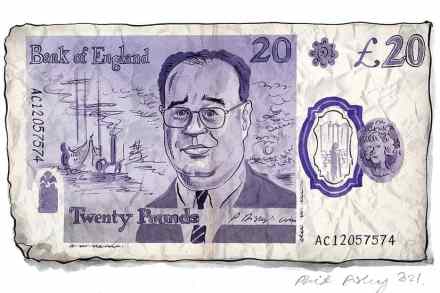
Will someone wake up the Bank of England?

It is called managing expectations: the steady drip of forecasts and scenarios designed to prepare us for bad news, so that when that news does finally arrive it doesn’t seem nearly as bad as it would otherwise have done. So is that what the Bank of England is up to with its deputy governor, Ben Broadbent, telling us that inflation next April could ‘comfortably exceed’ 5 per cent? It is reminiscent of the moment in July when the Bank’s departing chief economist, Andy Haldane, dropped in the suggestion that inflation by the end of 2021 could be closer to four percent than three percent.

What’s the point of vaccine passports?

What is the purpose of vaccine passports: to keep down infection or to try to persuade more people to get vaccinated by making life for the unvaccinated inconvenient and restricted? Danish Prime Minister Mette Frederiksen wasn’t trying to conceal her intentions when she announced in a press conference on 8 November that vaccine passports would be reintroduced. 'For all of you who are not vaccinated, it of course becomes more burdensome and that is also how I think it should be,' she said. 'In my eyes, there are no excuses to not go out and get vaccinated.' 'In my eyes, there are no excuses to not go out and get vaccinated' But did her cajoling do more harm than good?

Why has Shell really decided to ditch the Cambo oil field?

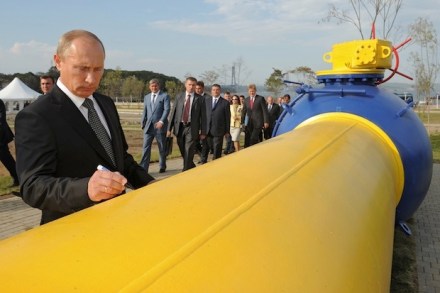
One of the unfortunate side effects of a steeply rising oil price this year is that it seems to have undermined the potential profitability of the Cambo oil field off the Shetlands. Announcing this morning that it was pulling out of the project, in which it had a 30 per cent share, Shell said it had re-examined the figures and ‘concluded the economic case for investment in this project is not strong enough at this time.’ No, it doesn’t make much sense to me, either. If Shell was happy to go ahead with the Cambo project this time last year, when oil was $40 a barrel it is hard to see what has changed to make it less economic with oil at $70 a barrel and the longer-term outlook for oil prices much higher.

When will the Tories do something about house prices?

Anyone who doubts that the fiscal response to the pandemic has stoked inflation needs to look at the latest figures from the Nationwide on the housing market. Yet again they confirm that the deepest recession in modern history has been accompanied by a boom in house prices. Moreover, the inflation does not seem to have been reined-in by the ending of the stamp duty holiday. The price of the average home, according to the building society, rose by a further 0.9 per cent in November to reach £252,687. This is ten per cent up on last November and 15 per cent up on March 2020, at the beginning of the pandemic. How can a global crisis which temporarily put several million people out of work in Britain have resulted in a housing boom?

How concerned should we be about Omicron?

Ministers accused of overreacting to the Omicron variant will feel vindicated by the comments of Moderna chief executive Stéphane Bancel. In an interview with the FT, Bancel said he expects his company’s vaccine to suffer a ‘material drop’ in efficacy against Omicron – on the grounds that the new variant has 32 mutations to its spike protein. The protein, which the virus uses to attach itself to human cells, is targeted by the Moderna vaccine. The vaccine seemed to cope with previous variants – but they had fewer mutations. Bancel said the company’s scientists had told him: ‘This is not going to be good.’ Yes, it will be possible to re-design the vaccine to cope with Omicron, but it will take several months.

Boris could pay a heavy price for his tax hikes

Given the enthusiasm for tax cuts usually shown by Conservative MPs it is remarkable how few of them have, in public, raised objections to the government’s loose fiscal policy. True, the Prime Minister’s announcement of a hike in National Insurance ostensibly to pay for social care, elicited squeals from the back benches, yet last month’s Budget drew only muted objections. This was in spite of claims by the Resolution Foundation that the Budget will cost an average household £3000 a year – if you take into account the effect of higher prices as businesses seek to pass on their higher tax bills to consumers.

The Omicron variant: what we know so far

Will the Omicron variant of SARS-CoV-2, the virus which causes Covid-19, be the black swan that pulls the world back — just when the pandemic seemed to be fading? Global markets certainly seem to think so, with sharp falls on Asian and European trading this morning. But what do we know about the new variant? The variant — otherwise known as B.1.1.529 — was only identified in Botswana on Tuesday. We have had numerous variants emerge this year, few of which have succeeded in establishing themselves as a real concern. But what is worrying virologists about Omicron is that it has an unusually high number of mutations — 50, according to South Africa’s Centre for Epidemic Response and Innovation.

The trouble with a green stamp duty tax

Should homebuyers have to pay a higher rate of stamp duty if the property they are buying has a low energy rating? After all, motorists already pay a higher rate of road tax if they are buying a new car with high fuel consumption. The stamp duty idea has been advanced by a trade body called the Energy Efficiency Infrastructure Group, which takes the example of a two bedroom end-of-terrace property with an agreed sale price of £250,000. At present, the buyers would pay stamp duty of £2500 (or zero if they were first time buyers). Under the new system they would pay £847 if the property had an energy performance certificate (EPC) rating of A, rising to £4796 if it had a rating of E.