Ross Clark

Ross Clark

Ross Clark is a leader writer and columnist who has written for The Spectator for three decades. He writes on Substack, at Ross on Why?

Most-read 2022: Crypto is dead

We’re finishing the year by republishing our ten most popular articles from 2022. Here’s number eight: Ross Clark’s piece from May on the crypto crash. When Britain voted for Brexit, Macron boasted that Paris would eat the City of London’s lunch. It didn’t quite work out that way, with most league tables continuing to put London as the number one or two financial centre, with not a single EU city in the top ten. Emmanuel Macron's government has now announced that it has invited Binance, a crypto exchange site, to set up a European HQ in Paris. You have to ask: has Macron leapt on a bandwagon which has already started to lose its wheels?

Britain’s worrying industrial decline

Economic growth is the third quarter was known to be depressed, but the Office for National Statistics (ONS) has this morning upped its estimate of the retreat in GDP for the third quarter, from a fall of 0.2 per cent to a drop of 0.3 per cent. That need not be too alarming in itself – September was always going to be a difficult month owing to the period of mourning for the Queen and the extra bank holiday for her funeral. The ONS has already reported its first estimate that growth in October rebounded by 0.5 per cent. But it is the detail which is more concerning. While the service sector in the third quarter managed to inch upwards by 0.1 per cent, the production sector fell by a whacking 2.5 per cent, with all 13 sub-sectors of manufacturing falling.

Mick Lynch leads a middle-class union

Mick Lynch told Mishal Husain this week that it is about time she started showing partiality to Britain’s working people. Leave aside the assertion that the BBC should break its impartiality guidelines to please Mick Lynch, is he really representing the working classes? Unless you count as ‘working class’ everyone who does any paid work, the answer is somewhat questionable. The fact is that members of the Rail, Maritime and Transport (RMT) union are significantly better off than Britain’s working population as a whole. Forget Lynch’s flat cap image: judged by income alone, the RMT’s rail members are thoroughly middle class.

Could 30,000 Britons really die of flu this winter?

Could flu really kill 30,000 people in Britain this year as our immune systems, rendered naïve after two years of lockdowns and other anti-Covid measures, are over-ridden by the virus? That suggestion has been reported in places this morning. There has certainly been a sharp increase in people reporting flu symptoms over the past couple of weeks, as shown up in the various metrics used by the UK Health Security Agency. For the first time since the beginning of the pandemic there are now more people being admitted for flu – at 6.8 per 100,000 in the week to 11 December – than are being admitted for Covid (6.6 per 100,000).

The Bank of England’s interest hike shows the worst is to come

After a faltering start in its programme of rate rises, the Bank of England is catching up. Today’s half-point rise in its base rate to 3.5 per cent may be relatively modest compared with last month’s 0.75 per cent rise, but it is still twice as high as any rise the Monetary Policy Committee (MPC) was prepared to inflict on the economy during the first quarter-century of its existence. The MPC has turned itself into a prisoner of the markets – if it does anything unexpected, there is likely to be trouble In the space of three months rates have now been jacked up by 1.75 per cent. That is serious stuff. It is as if the MPC has suddenly woken up and told itself: look, the whole purpose of our existence is to control inflation.

Inflation slows to 10.7% – and may have passed its peak

Has inflation peaked? The Consumer Prices Index fell to 10.7 per cent last month, down from 11.1 per cent in October. This follows predictions that October would be the month in which inflation peaked – so this morning’s figures from the Office for National Statistics will raise hopes that the worst may be behind us. This doesn’t appear to be a blip. The market expects this to continue for the next two years before bottoming out in 2025. There will be optimism, too, that we can look forward to a sharp fall in the CPI over the next few months as the surge in energy prices begins to drop out of the figures. Global oil prices have fallen sharply, as have wholesale gas prices.

The fall of FTX is just the beginning of the crypto collapse

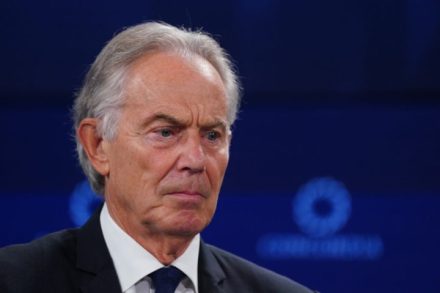
It will come as no comfort to those who have already lost fortunes, but it is remarkable how resilient the crypto currency market has been this year, especially following the collapse of the FTX exchange in November. But if the arrest of FTX founder Sam Bankman-Fried in the Bahamas and the request by US authorities for his extradition isn’t a sign to rush for the exits then I don’t know what is.   Without trying to pre-judge his case, there is going to be a lot more of this to come. FTX, it is easy to forget, was one of the more trusted players in a market that remains largely unregulated. Bill Clinton and Tony Blair both judged Bankman-Fried to be respectable enough to risk their reputations appearing on a platform with him at a public event.

Oxford’s highwayman campaign against motorists

Oxford councillors are feeling rattled by opposition to their proposal to divide the city into six districts and to limit the passage of road traffic between them. The city and county councils put out a press release last week accusing residents of spreading ‘misinformation’ about the scheme. It complained of abuse received from members of the public and said that its staff had been offered ‘support’ to cope with the tirade of abuse, the worst cases of which had been reported to police. If anyone working for the council has been threatened then that, of course, is deplorable and quite properly a police matter. But are residents justified in complaining about the proposals?

John Kerry gets an easy ride from the climate establishment

For climate campaigners, Donald Trump was the anti-Christ, pooh-poohing climate change and withdrawing the US from the Paris climate agreement. But what of the Biden administration – is it really going to make the climate lobby any happier? Things may be a little clearer following the visit to Britain of John Kerry, Biden’s climate envoy, who gave the annual Fulbright lecture at King’s College London on Friday evening. He was certainly keen to assert that America is now wearing a different pair of boots than it was under Trump, telling his audience ‘you need guideposts, and unfortunately in my country many of those guideposts were torn down.

Rishi Sunak needs to get tough on strikers

We are still a long way from the Winter of Discontent, when 29.5 million worker-days were lost to strikes. Nevertheless, with today’s strike of 115,000 postal workers the number is creeping inexorably upwards. This one-day strike alone will cost 40 per cent of the 273,000 lost working days recorded across all industries over the whole of 2018. To describe Britain as being in the grip of a wave of public sector strikes isn’t quite accurate. The 115,000 Royal Mail workers who have walked out today are not public sector workers. Nor are the train drivers, guards and other train staff who have been striking, on and off, for much of the past decade. All are employees of private companies, yet their unions have still managed to engineer national strikes.

Britain should embrace new coal mining

For those of us who remember the miners’ strike in the 1980s it takes some getting used to the journey made by coal miners over the past 40 years: from working class heroes to climate ‘criminals’. To hear today’s reaction to the news that Michael Gove has granted permission to build Britain’s first deep coal mine for a generation is to step through the looking glass into a bizarre world where a Conservative government is considered evil for helping to create mining jobs in a de-industrialised region – and the ‘enlightened’ position is to eradicate the very last traces of the coal industry. Lord Deben, chair of the government’s Climate Change Committee, thinks Gove’s decision to be ‘indefensible’.

Striking railway workers can’t avoid reality for ever

Rail strikes on a couple of days when no trains would be running anyway might not seem the biggest inconvenience facing the British public at the moment, yet the announcement of yet another walkout from the evening of 24 December to the morning of 27 December will have implications for many services: this is the window when a lot of track maintenance is scheduled. That now promises to spill over into the New Year to an even greater extent than in normal years.    By calling a Christmas strike – something he previously said he wouldn’t do – RMT leader Mick Lynch is not looking like a man who is close to doing a deal with his employers; rather someone who is knuckling down for the long-haul.

Prince William’s Earthshot prize won’t save the planet

I hate to pour cold water on the Prince of Wales’ big night out in Boston on Friday, where he hosted the Earthshot Prize for climate change solutions. William needs all the help he can get to distract attention from his brother and sister-in-law as they continue their crazed attack on the royal family. And there is nothing wrong with the Earthshot Prize in itself, as a means of recognising and rewarding entrepreneurs who are developing environmentally-friendly innovations. Good luck to them.  But sorry, the heir to the throne’s big idea does not even nearly live up to its lofty, climate-transforming ambitions.

Ambulance strikes won’t improve record waiting times

The vote for strike action by 10,000 ambulance drivers who are members of the GMB union is more about public safety than about pay, insists the union. How it will benefit patients to have ambulance drivers go on strike is a little hard to fathom. Particularly so as the GMB has chosen to call a strike at a time when ambulance response times are the longest they have been at any time since records started to be kept in their current form in 2017.  In many ways the NHS seems to be coping a lot less well now that it was at the height of the pandemic. The latest statistics on ambulance response times, for October, certainly bear this out.    Ambulance calls are divided into four categories.

Why is the US economy doing better than ours?

The US entered recession earlier than the UK and Europe, and suffered its inflation surge earlier too, so it was always likely that its economy would recover earlier. But is the US emerging from recession while Europe and the UK are still plunging into theirs? That’s what today’s data from the Bureau of Economic Analysis suggests. Real US GDP grew in the third quarter of the year by 0.3 per cent, making for an annualised rate of 2.9 per cent. The figure was negative for the first two quarters of 2022, shrinking by an annualised rate of 0.6 per cent in the second quarter. By contrast, the UK economy shrank by 0.2 per cent in the third quarter (quarter on quarter), and is up 2.4 per cent over the past year. Eurozone GDP rose by 0.8 per cent in the third quarter and is up 2.

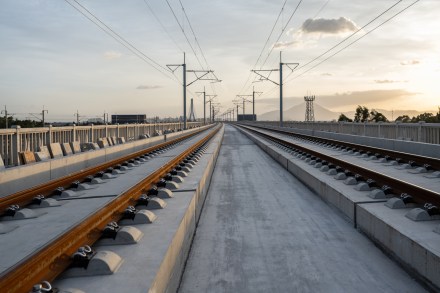
It’s time we stopped subsidising the railways

Rail travel has never been cheap, but should we really each be paying £500 a year even if we never set foot on a train? That, according to figures released by the Office of Rail and Road today, is astonishing sum that each household had to contribute to government subsidies for running the railways in the year to March 2022: a total of £13.3 billion. That is just the subsidy for running existing services; it doesn’t include the billions being spent on HS2. Not that this largesse has, of course, prevented rail workers from demanding above-inflation pay rises, and striking when they are denied them. If they were working in any other hopelessly unprofitable industry they would long since have been put out of a job.

The black hole in Jeremy Hunt’s energy windfall tax

Jeremy Hunt has supposedly just closed a black hole in the government’s finances. But is another black hole opening up before his eyes?   One of the more popular announcements in the autumn statement on 17 November was a rise in the windfall tax applied to oil and gas companies from 25 per cent to 35 per cent. It was popular because it didn’t affect ordinary people directly and because it feeds into the narrative of greedy oil companies making fat profits while households struggle with their energy bill.      By 2028, how much, if any, profits are being made by oil companies is anyone’s guess The 35 per cent windfall tax comes on top of corporation tax, which oil and gas companies already pay at a higher rate than other businesses.

Britain isn’t ready for onshore wind

Staging rebellions against their own government has become a way of life for many Tory MPs – but why choose onshore wind farms as the hill on which to die? If Rishi Sunak concedes to the demands of a group of (reportedly) around 50 MPs and lifts the moratorium on onshore wind which has been in place for seven years, it won’t take long before we find out why it was imposed in the first place. There are few places in England where you can build a wind farm of any size without either causing serious annoyance to locals or compromising valued landscapes. Most of our lowlands are so densely packed with housing that it is hard to find sites which are not within half a mile of residential properties, while many of our upland areas are national parks or some other designation.

Why is Britain still sending foreign aid to China?

Just why is Britain still spending over £50 million a year in development aid to China? Despite it being the world’s second largest economy and investing in UK infrastructure projects, the latest statistical release by the Foreign, Commonwealth and Development Office shows that in 2021 more than £50 million of bilateral aid money was spend there, putting it just outside the top 20 of countries which received the most UK aid. And this is after the UK government promised to phase out foreign aid making its way to Beijing. Is China still a developing country, and if so then at what stage do we declare it finally to be developed?

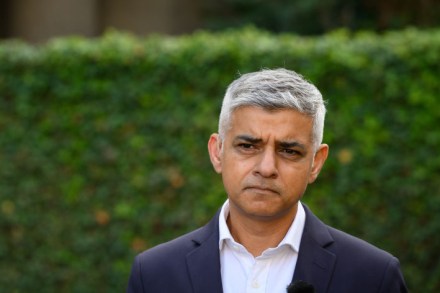
Sadiq Khan’s Ulez expansion punishes the poorest

Imagine if Jeremy Hunt announced a new 60p income tax band that was payable only by people who earn less than £20,000 a year. Or if he reversed council tax so that Band A homes paid three times as much tax as Band G homes, rather than the other way round. There would be more than outrage, perhaps riots. Why, then, do things work so differently with green taxes?  Today, Sadiq Khan has announced that London’s ultra-low emissions zone (Ulez) will be extended to cover the entire city, rather than just the area inside the north and south circular roads as at present. It will mean drivers of non-compliant vehicles having to pay a daily charge of £12.50 to use the roads. Yet where is the opposition?