Ross Clark

Ross Clark

Ross Clark is a leader writer and columnist who has written for The Spectator for three decades. He writes on Substack, at Ross on Why?

Trump is right: Starmer’s Chagos deal is an act of ‘great stupidity’

The excruciating thing about Donald Trump is that the madder and more unreasonable he seems to become, the more he catches everyone out when he says something that is utterly true. The US president's manoeuvres on Greenland are the act of a bully and autocrat; for him to suggest that he wants Greenland as compensation for failing to be awarded the Nobel Peace Prize is babyish. Why does he care about the Nobel Peace Prize when it is awarded by the kind of non-governmental busybodies he has scorned during his five years in office?

The great rail ticket swindle

Normally rail ticket prices are raised in line with the Retail Prices Index (RPI) plus 3 per cent. This January, unusually, they didn’t increase. But that is not how it will feel if you fancy a short break in Edinburgh. In that case, you may well find yourself paying double what you used to pay. Say, on the spur of the moment, you fancy a short trip to the Scottish capital from London this weekend, but you are not quite sure which train you can leave on and when you want to come back. In the past, you could have bought a Supersaver Return, which allowed you to take any off-peak train there and back.

Reform risk becoming the face of Tory failure

How grim things are suddenly looking for Nigel Farage and Reform UK. It isn’t that their poll ratings are crashing – in spite of a minor decline in the polls in recent weeks, the party still holds a commanding lead. For the moment, the outcome of the next election continues to look like being either a Reform UK government of a Reform UK-led coalition with the Tories. At the current rate there is a serious chance that by 2029 the Conservatives could end up looking fresher than Reform UK Conservative MPs are certainly convinced that their party is dying, which is why so many are defecting.

Ed Miliband’s wind power delusion is costing us a fortune

Remember the summer of 2022 when politicians from Ed Miliband to Boris Johnson went around telling us that wind energy was 'four times cheaper' than electricity generated by gas. It wasn’t true then – even at the top of the spike in gas prices which followed the Ukraine invasion. But it looks like an absurd claim now. Miliband, in his latest auction for offshore wind farms, has just committed energy consumers to paying a wholesale price of £90.91 for their electricity, rising with inflation for the next 20 years. Where does that fit with the Energy Secretary's promise to save us £300 a year on our energy bills? No one knows the future course of energy prices, but the average wholesale price of electricity over the past 12 months was £79 per megawatt-hour.

Cutting the drink drive limit won’t save lives

‘Evidence-based policy-making’ is very much in vogue – until, that is, the evidence doesn’t quite support what the government wants to do. Then governments tend to plough on ahead anyway, evidence or not. Just why is the government proposing to lower the drink-driving limit in England from 80mg/100ml to 50mg/100ml? To many people, government ministers included, it just feels the right thing to do. England does, after all, look a bit of an outlier in Europe, where most countries have a 50mg limit. And then there was a 2010 study by Sir Peter North which concluded that lowering the blood-alcohol limit from 80mg to 50mg would save between 43 and 168 lives in the first year alone, and prevent between 280 and 16,000 injuries. Who, then, could possibly oppose the reduction?

Is Cambridge’s state school diversity obsession over?

Shock horror. A Cambridge college has realised that to recruit the brightest students sometimes you have to encourage students from private schools as well as state comprehensives in poor neighbourhoods. You can almost feel the foundations of higher education quivering at Trinity Hall's decision to write to private schools to encourage pupils to apply for certain subjects, such as languages and classics where there is presumably a dearth of applications. Trinity Hall's 'targeted recruitment strategy' has sparked fury Predictably, Trinity Hall's 'targeted recruitment strategy' has sparked fury. One college staff member said it was a 'slap in the face' for state-educated undergraduates.

What Trump should learn from the British empire

From our US edition

One remarkable thing about Donald Trump’s adventure in Venezuela is just how old-fashioned it is. It is a world away from George W. Bush’s neoconservative efforts at nation-building in Iraq and Afghanistan. There is little attempt to justify the arrest of Nicolás Maduro in terms of the human rights of Venezuelan citizens. Little attention appears to have been paid as to how the country will now be governed. Nor have we heard much more about the drugs crimes of Maduro, other than the admission that he perhaps isn’t, after all, quite the lynchpin of an international criminal racket (for all his other offenses against his own people).

Trump

There’s a better way for Farage to win the motorist vote

It is easy to see the political attraction for Nigel Farage of promising to reverse Rachel Reeves’s decision to end the 5 pence cut in road fuel duty. The idea that we are in the midst of a cost of living crisis has not gone away – in spite of the fact that, notionally, average wages are rising well ahead of inflation. It will seem a very different picture for homebuyers who are coming off fixed-rate mortgages this year – rates which were fixed in the months of ultra-low interest rates during and immediately after the pandemic. But is it really such a good thing to suppress taxes on road fuel at a time when the roads are in such poor condition? It might be a better and more popular policy to let road tax rise – and to ring-fence the money for resurfacing work.

The truth about Keir Starmer’s EU ‘reset’

As Keir Starmer found out with digital ID, what the public initially says it wants isn’t always what it turns out to want once the details become clear. A large majority in favour of digital ID turned into a significant majority against once people started to ask themselves: is this scheme really going to tackle illegal migration or is it just going to be another bureaucratic burden on our lives?     Might the same turn out to be true with Starmer’s ‘reset’ of relations between Britain and the EU? Notionally, there is strong support for the idea. A YouGov poll at the time of Starmer’s reset negotiations last May for example, found that 66 per cent of the population were in favour. The same poll found that 53 per cent agreed with going the whole hog and rejoining the EU.

The RMT has doomed the Oxford-Cambridge railway

Thank God for HS2. The scandal of the ever-more expensive and ever-delayed rail line from London to Birmingham (and now no further) has taken the heat off another of Britain’s tortured rail projects: East West Rail, linking Oxford and Cambridge. East-West rail has the distinction of being even older than HS2, having first been proposed in 2006. It shouldn’t have been that big a project, given that Oxford and Cambridge did once have a rail connection, which was closed in 1967. Much of the trackbed remained in place and parts of it have remained in use throughout. Yet still it is proving a little too much for Britain’s miserable infrastructure industry. Where is the Oxford to Cambridge railway line on the 20th anniversary of its proposed reopening?

I have a ‘zero bill’ home – and you’re paying for it

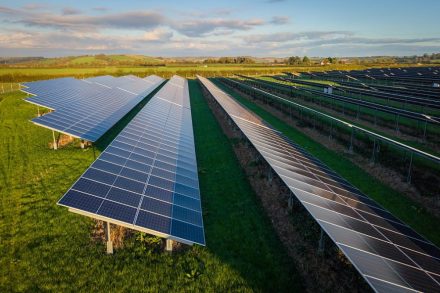
Ed Miliband has given up trying to promise £300 a year off our energy bills. He is now dangling the prospect of something even better: ‘zero bill’ homes. He is expected to announce a new £13 billion ‘Warm Homes Fund’ to subsidise solar panels and heat pumps which could mean some householders paying nothing for their energy whatsoever. That £13 billion Miliband is going to be shelling out to homeowners has to be paid for somehow. It will either come out of our bills or our taxes Is that possible? Yes it is – if you get someone else to pay your energy bills for you. As it happens I already live in a zero bill home, in that the money that I earn from the solar panels on my roof exceeds the sums I pay for electricity and heating oil.

America is better off without Clare Melford

How tempting it is to rush to the aid of Clare Melford, one of the five people told by the Trump regime that they cannot have a US visa on the grounds that their presence in the country is not conducive to America’s commitment to free speech. It is hypocritical, one might say to Team Trump, to make a show of defending free speech by banning people you don’t like from entering your country. Indeed, that was the reaction of Chi Onwurah, chair of the Commons committee on Science, Innovation and Technology. She said last week: ‘Banning people because you disagree with what they say undermines the free speech the administration claims to seek.’ Before accusing the Trump administration of hypocrisy, however, we should know who Melford is.

Would promising to rejoin the EU save Labour?

Could Labour, under a new leader, go into the next election with a manifesto promising to start negotiations to rejoin the EU? It is beginning to look like a real possibility given Wes Streeting’s assertion that Britain should rejoin the customs union. If Britain were to become part of the customs union, it would make questionable sense to remain outside the single market, and if Britain were to rejoin the single market, it could be sold as little more than a tidying-up exercise to apply for full membership of the EU.   Streeting’s remarks have left Keir Starmer – who spent months in opposition calling for a second referendum which he hoped would overturn the result of the first – in the odd position of looking (relatively) like a Eurosceptic.

Why is the Motability boss getting a bumper pay rise?

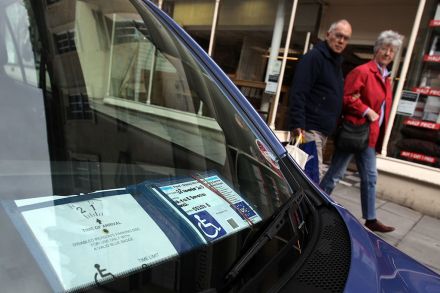
Until Rachel Reeves tightened the rules in last month’s Budget, Motability customers were able to sink into the leather seats of a top-of-the-range Mercedes. But however luxurious the upholstery, it can’t have been as thick and durable as the rhinoceros skin of Motability boss Andrew Miller. He has just been awarded a 23 per cent pay rise to £924,000. There are no prizes for guessing who is contributing to the largesse shown to him by his board. Nearly half of Motability’s £8.1 billion spending last year was covered by the government’s exploding welfare budget. Motability has been under the spotlight Just how impervious to public opinion do you have to be to accept such a rise when you know your organisation is under close public scrutiny?

Did Britain need to rejoin Erasmus?

Is the government engaged in a campaign by stealth to return the UK to membership of the EU? It couldn’t make a better job of it if it was trying. This morning comes the news that Britain is to rejoin the Erasmus scheme, which offers students the opportunity to engage in an exchange with other European universities. The scheme was discontinued when Britain left the EU, but it will now be reintroduced for the 2027/28 academic year, when the government says that 100,000 students could benefit. It is easy to make a case for a scheme that gives students chance to study abroad – the ‘travel broadens the mind’ argument.

Europe’s EV market is rolling backwards

Imagine you are a keen Brexiteer and opponent of net zero plans, especially of the idea of being forced to buy an electric vehicle (EV). There are plenty of people like you; there is much evidence to suggest that the two things go together. But you must now be feeling a little confused. It must be dawning on you that, in terms of your freedom to buy the vehicle that you want, you would have been better off had Britain remained in the EU. Europe has just made the decision to relax the ban on petrol vehicles from 2035 to 2040 – while in Britain it is still planned to take effect from 2030. It is not hard to see why the EU has changed its mind. For one thing, the market for EVs has not just stalled; it has started to roll backwards.

The special needs racket is out of control

We are, as vicars like to tell us, all special in our own way. But none so much as children in Scottish primary schools, 43 per cent of whom are classified as having special needs. This can entitle them to extra tuition and, when they are older, extra time in exams. The expansion of Send is diverting resources from genuine special needs pupils as well as from classrooms in general If ever we needed more evidence that special educational needs and disabilities (Send) is a runaway juggernaut that is bringing the education system to its knees, this is it. Children are routinely being made out to be disabled in some way – either because their schools want more money or because their sharp-elbowed parents want them to have some advantage. I am no stranger to special needs education.

Will I ever be a juror?

David Lammy’s proposal to do away with jury trials for all but the most serious offences has a consequence which hasn’t so far been aired in national debate. It could deprive me of the chance to bang up some evildoer. Whoops! Saying that probably won’t help me realise my ambition. I think it was the wonderful Mary Killen who once suggested to an anguished correspondent, worried that his holiday would be ruined after being selected for jury service, that he write to His Majesty’s Courts and Tribunals Service saying pretty much what I have just said. In return, she wrote, he should expect a letter informing him that actually he wouldn’t be needed after all. But Gawd, have I been waiting a long time. It was 41 years ago that I first became eligible for jury service.

Climate doom is not science

From our US edition

The costs of not dealing with climate change are, of course, much higher than the costs of dealing with it. We know this because, as climate campaigners keep telling us, climate change is going to set the world alight and unleash mad tempests which are going to wreak destruction on the global economy. Not a few of them have been trying to prove this by parroting a paper by the Potsdam Institute for Climate Impact Research published in the journal Nature in 2024 which concluded that a rise of 8.5 Celsius in global temperatures by 2100 will shrink the economy by 62 percent.

Climate change

The day net zero died

Quietly this afternoon, the government’s last remaining hope of achieving net zero by 2050 drained away. BP has abandoned its project to develop a ‘blue’ hydrogen plant on Teesside which was supposed to produce the gas at a rate of 1.2 GW. It is not just a defeat for net zero ambitions but for Ed Miliband personally, given that he had fought hard in cabinet to advance the project while Keir Starmer and business secretary Peter Kyle had favoured using the site for a rival data centre. The data centre is now likely to proceed – an energy-hungry project in place of a green energy one.