Ross Clark

Ross Clark

Ross Clark is a leader writer and columnist who has written for The Spectator for three decades. He writes on Substack, at Ross on Why?

The triumph of oil

From our UK edition

If you want a laugh, I recommend an article which appeared in the March 1998 issue of Scientific American, ‘The End of Cheap Oil’. In it, oil geologists Colin J Campbell and Jean H Laherrere used terribly clever models to tell us that global oil production would peak around 2004-05, after which we would be trying to rely on an ever-dwindling, ever more expensive supply of oil, with huge consequences for the global economy. Campbell was so sure of his thesis that three years later he formed the Association for the Study of Peak Oil, coining a new term which would be thrown about over the next couple of decades.

Tories should never have taken their Ulez challenge to court

From our UK edition

Expanding London's Ultra Low Emission Zone (Ulez) may be a bad policy, a regressive tax which will impact on people of modest means while leaving the not-very-much-less-polluting cars of the wealthy untouched. But that doesn’t mean the High Court is wrong to reject the case brought by Conservative councils against the scheme. On the contrary, anyone who values democracy should be pleased that Ulez has been thrown back into the political arena, where it belongs. It is alarming the way that so many matters of public policy now end up being dragged through the courts under the judicial review process.

The UN’s climate alarmism has gone too far

From our UK edition

UN secretary-general Antonio Guterres has declared that ‘the era of global warming has ended, the era of global boiling has arrived’. As if that were not enough, Guterres declared that ‘the air is unbreathable, the heat is unbearable’. Something is raging out of control but it isn’t the temperature: last week’s famous ‘heat domes’ have subsided, with only a few patches of southern Europe over 30ºC this afternoon. It is hyperbole over the climate. What does Guterres – who appeared to be breathing normally as he delivered his speech – hope to achieve by using language that tries to make out that life on Earth is no longer sustainable? We are in an arms race of extreme language, with everyone falling over each other to outdo each other.

The damage of Covid lockdowns is only now becoming apparent

From our UK edition

There are still those, like Matt Hancock, who think that lockdowns were an unalloyed good – who, indeed, believe that in a future pandemic we must lock down harder and faster. But for the rest of us, the appalling toll of Covid lockdowns continues to become apparent.  The Office of National Statistics (ONS) reveals today that the number of people who are economically inactive due to long-term sickness has grown by 400,000 to 2.5 million since 2019. More than half of these people – 1,350,000 – report depression and anxiety as either the primary or secondary cause of their absence from the workplace.  The pandemic has left us with virtually zero economic growth, much of which is blamed on high inflation and rising interest rates.

Sunak will have to water down net zero sooner or later

From our UK edition

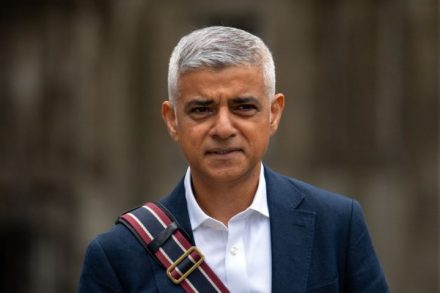
The Uxbridge by-election has thrown Labour into a civil war, or at least a civil skirmish. Keir Starmer has told Sadiq Khan to think again on Ulez, and Khan has shown great reluctance to do so. But it has exposed a schism in the Conservatives, too. Yesterday, Rishi Sunak declared that efforts to reach the government’s net zero target should not be allowed to push up the cost of living for struggling families – leading some to predict that some policies, such as the ban on petrol and diesel cars from 2030, could be scrapped. This has brought out the Tories’ net zero enthusiasts to defend the target, even if it does cost households a great deal of money.

Is global warming behind Greece’s wildfires?

From our UK edition

Summer wouldn’t be complete without hordes of disgruntled British tourists being evacuated from their hotels, flown home early or spending their holidays sprawled on the floor of an international airport. But are the scenes of Rhodes really a symptom of a the world ‘being on fire’, as Greta Thunberg would put it?      Actually, in spite of scenes of burning forests on Rhodes and elsewhere being presented daily on our television screens, 2023 has not been a devastating year for forest fires in Europe. Data from the European Forest Fire Information System (EFFIS), which covers the EU, shows that it has been an average year to date – with an early burst of fires in the spring followed by less activity since then.

The Ulez rebellion has started

From our UK edition

It was, to adapt the famous Sun headline from the 1992 general election, Ulez wot won it. The Conservatives’ narrow hold of Uxbridge and South Ruislip was, as Angela Rayner admitted this morning, down to London mayor Sadiq Khan’s dogged determination to inflict a £12.50 daily charge on the drivers of diesel cars more than seven years old and petrol cars more than 15 years old. It shouldn’t have taken much to work out that a highly-regressive tax on the relatively poor was not going to go down well among Labour voters – yet so blinded are many in the party on green issues that they just couldn’t see it. That includes Keir Starmer who two weeks ago told the obvious fib that Sadiq Khan had no choice but to expand Ulez.

Has Britain avoided falling into recession?

From our UK edition

Earlier in the week, the stock market responded very positively to news that inflation had come out a little lower than expected (even though, at 7.9 per cent, it is still far ahead of where most forecasters, from the vantage point of the beginning of 2023, would have expected it to be by now). Markets have been left largely unmoved, however, by two pieces of positive news this morning: lower than expected public borrowing in June, and higher retail sales, also in June.  The volume of sales was up 0.7 per cent in June compared with May. While that was, in part, due to the extra bank holiday in May, which suppressed sales in that month, sale volumes were also up quarter on quarter, by 0.4 per cent. Sales were, however, down 1.0 per cent on June 2022.

Road rage: the great motorist rebellion has begun

From our UK edition

38 min listen

This week:In his cover piece for the magazine Ross Clark writes about ‘the war on motorists'. He argues that the backlash against London Mayor Sadiq Khan’s expansion of Ulez is just the beginning, as motorists – and Labour MPs – prepare to revolt. He joins the podcast alongside Ben Clatworthy, transport correspondent at the Times, to discuss whether the Ulez expansion is just a money-grab. (01:11).  Also this week: In his piece for The Spectator, journalist Ian Williams compares both Labour and Conservative policy on China. He says that Labour is gearing up to take a much more hawkish stance on China. He is joined by Charles Parton, senior associate fellow at RUSI, who worked as a diplomat in China for over two decades.

Striking consultants aren’t likely to get sympathy

From our UK edition

Today and tomorrow’s strike by NHS consultants underlines how industrial action has become the preserve of the well-paid. The consultants appealing for public sympathy were, according to NHS figures, paid a mean basic salary of more than £97,000 in the year to March. On top of this they received mean overtime and bonus payments of close to £30,000, bringing their total mean earnings to more than £127,000. Yet not all of these were working full-time. The mean basic salary for full-time staff was more than £105,000. And of course, on top of this they have been offered a pay rise of 6 per cent – which they have rejected. The BMA continues to demand a salary increase of 35 per cent, which it says is necessary to restore real earnings to the levels of 2010.

Why have the Tories given up on London?

From our UK edition

Have you ever heard of Susan Hall? Until a month ago, I hadn't. Now that she has been selected as the Conservative candidate for next year’s London mayoral election, her name might well stick – although I am going to write it down somewhere just in case.  This isn't to disparage her abilities. Hall has, apparently, been leader of the Conservative party group in the London Assembly for the past four years – I don’t live in London, which may explain my ignorance. Before being elected a councillor in Harrow she was a mechanic in the family garage business and has also worked as a hairdresser – so she ought to have a connection with ordinary people which is lacking in so many of today’s MPs, many of whom have never had a job outside politics.

Road rage: the great motorist rebellion has begun

From our UK edition

Since Boris Johnson quit as an MP last month, Labour has been confident about winning the Uxbridge and South Ruislip by-election. Yet not so confident that Danny Beales, the party’s candidate, felt he could get through the campaign without lambasting Sadiq Khan’s plans to expand London’s Ultra Low Emission Zone (Ulez) to cover the capital. ‘It’s not the right time to extend Ulez to outer London,’ he told a hustings a fortnight ago. ‘It’s just not.’ It is hard for motorists not to wonder whether there is a campaign to ease them out of their vehicles From the end of next month, anyone driving a non-compliant vehicle – which in practice means most diesel cars sold before 2015 and petrol cars sold before 2005 – is liable to pay a daily charge of £12.50.

How investors could benefit from the cooling housing market

From our UK edition

There are, of course, many people struggling with their mortgage repayments. There are first-time buyers who have been especially hard hit, but also the buy-to-let investors who fooled themselves into thinking that ultra-low interest rates would last indefinitely and have over-borrowed.  Few will feel a lot of sympathy for the latter group, many of whom have been forced to sell up, according to anecdotal evidence. But their plight shouldn’t distract from the fact that, for all the talk of a house price crash, property has not been a bad investment over the past twelve months. This morning, the Office for National Statistics (ONS) published its two monthly indices, on house prices and residential rents.

The strange glee over the European heatwave

From our UK edition

You could almost sense climate campaigners willing those thermometers in Sardinia to nudge into the unknown – a reading above 48.8°C would have marked a new European record and unleashed yet more forewarnings of climatic Armageddon.     But alas, they don’t appear to have got their way – at least not today. As of 6.30 p.m. the highest reported temperatures measured today were in the region of 45ºC, on Sardinia. There was a consolation prize in that the World Meteorological Organisation did finally verify the reading of 48.8ºC in Sicily made on 10 August 2021. Prior to that, the European record was established way back in 1977, which was beginning to look a little inconvenient for the narrative of an Earth which is ‘on fire’.

It’s not for Sunak to save students from themselves

From our UK edition

Rishi Sunak is not wrong to write, as he does in the Telegraph today, that too many young people are being ‘ripped off’ by poor-quality university courses, and that many would be better signing up for apprenticeships. But should a Conservative government really be threatening to tell the universities what to do? David Cameron’s tuition fee hike was meant to make discerning consumers out of university applicants. Rishi Sunak clearly thinks that’s failed. Cameron allowed universities to charge students tuition fees of up to £9,000 per year (since increased to £9,250). Universities would be able to charge full fees on good quality course, but find themselves having to reduce fees on lower quality courses, with poorer employment outcomes, if not cease offering them altogether.

If the Tories scrap inheritance tax, I’m voting Labour

From our UK edition

I have been playing a game with myself recently: asking just what would it take for me to vote Labour at the next election? The gossip out of No. 10 has answered it for me: if, as rumoured, the Prime Minister toys with the idea of abolishing inheritance tax – at a time when the government has jacked up tax for many millions of workers through fiscal drag and lowering the 45 pence tax threshold – then suddenly Keir Starmer is going to look a relatively attractive option. Yes, I really would rather have a PM who thinks a woman can have a penis, than I would a party that delivers a tax cut for the idle rich while workers are struggling with falling real earnings and rising tax bills.

Cruise liners should apologise to Faroe Islanders

From our UK edition

It is not pleasant to think of a poor bunch of creatures in distress, but the passengers who visited the Faeroes last Sunday aboard an Ambassador cruise liner have at least received an apology for their upset. Some 78 pilot whales were driven into a bay and slaughtered in front of them in a traditional hunt which goes back to the 16th century. The company issued a statement saying: We were incredibly disappointed that this hunt occurred, particularly at a time when our ship was in port, and have offered our sincere apologies to all those onboard who may have witnessed this distressing occurrence... While traditional hunts of this type have taken place for many years in the Faeroe Islands to sustain local communities, we strongly object to this outdated practice.

Would road pricing be fair?

From our UK edition

Sometimes there is a problem so glaring that you wonder why no one is addressing it. Sooner or later, the government is going to have to deal with the black hole that will appear in the public finances as a result of the switch to electric cars. True, Jeremy Hunt has announced that electric cars registered from April 2025 onwards will have to pay road tax: £10 in their first year followed by £165 a year from then onwards. But that still leaves disappearing fuel duty. By 2030, according to Office of Budgetary Responsibility (OBR) calculations out today, that will deprive the Treasury of £13 billion a year in lost revenue. Eventually, the lost revenue could grow to £25 billion. Will the government be happy to forgo this income?

Should people with big gardens pay more for their water?

From our UK edition

According to Cathryn Ross, Thames Water’s co-interim chief executive, householders with large gardens should be paying a higher price for their water than people with small or no gardens. Actually, they already almost certainly do. If they have a metered supply, their bills will be proportional to how much water they use – and will be bearing the full cost of watering the lawn or the flowerbeds. If they are unmetered they will be charged a rate that reflects the size of their property. If, on the other hand, Ross means that people who own large gardens should be paying a higher rate for each unit of water they use, it might make sense for monopolistic suppliers to suggest this, as it would raise more cash for them in the politically easiest way. But it is otherwise illogical.

Is Jeremy Hunt following in Gordon Brown’s footsteps?

From our UK edition

Anyone fancy having a flutter with 5 per cent of their pension fund on unlisted start-ups? It is not necessarily a bad idea – it is only 5 per cent, after all. As part of a portfolio which is balanced by more bread and butter investments it need not be reckless. At best, you might just pick a future Microsoft or Google – and at worst, well, the other 95 per cent of your investments could smother your losses. But it seems that we are not really going to have the choice – at least not those of us who have defined contribution pension funds.