Ross Clark

Ross Clark

Ross Clark is a leader writer and columnist who has written for The Spectator for three decades. He writes on Substack, at Ross on Why?

Energy prices are coming down, but they should be cheaper

From our UK edition

It is hard to remember that this time last year soon-to-be prime minister Liz Truss was on the verge of compromising her free market principles by dreaming up a scheme for the state to make an open-ended commitment to subsidise the energy bills of every household in Britain. At the time, there were dire predictions that households would be swamped by energy costs, forecasts for which were rising by the day. This morning, Ofgem has announced that the Energy Price Cap is to fall again, to a level at which the average household will see energy bills of £1,923 a year, down from £2,074 a year at present. The move won’t take prices below the level they were before the invasion of Ukraine in February 2022, but it will take them just below the level they were later that spring.

Scotland shouldn’t pay climate reparations

From our UK edition

Lucky old Scottish homeowners. Not only are they being told that they could be forbidden from selling their homes if they fail to achieve a ‘C’ rating on an Energy Performance Certificate (EPC); they now have the pleasure of knowing that £24 million worth of their taxes will be going to pay climate reparations. The Scottish government has just made such a handout to charities working on climate issues in the developing world. While First Minister Humza Yousaf didn’t quite use the term ‘reparations’ he did say ‘the countries which are the worst affected by the climate crisis are often those which have done little or nothing to cause it.

House prices are falling. But it’s still terrible for first-time buyers

From our UK edition

Hurrah. Housing is now more ‘affordable’ for first-time buyers than it was a year ago. Or so says Halifax, which has produced figures this morning showing that the average home now costs 6.7 times the earnings of the average worker, down from 7.3 times a year ago. This is thanks to two opposing trends. The value of the average home has come down from £293,586 to £286,276. Meanwhile, average earnings have increased by around 7 per cent. Spot the missing factor from this analysis. Yes, that’s right: it’s interest rates Spot the missing factor from this analysis. Yes, that’s right: it’s interest rates.

We are facing an epidemic of online fraud

From our UK edition

At what point are we going to drop the fiction that acquisitive crime is on the wane and admit that we are in an epidemic of fraud? Today, Barclays Bank has appealed to social media firms – rather than banks like itself – to refund victims of online scams. I am sure that social media companies could do more to close down scams, but isn’t the real problem that the law is tolerating online crime in a way that it doesn’t tolerate other crime?  If your house is burgled, you know to contact the police. That doesn’t necessarily mean that they will investigate, or even pay you a visit to take fingerprints, but at least it will be recognised as a crime and you will be treated as a victim – even if you left your doors unlocked.

It’s no surprise that retail sales are down

From our UK edition

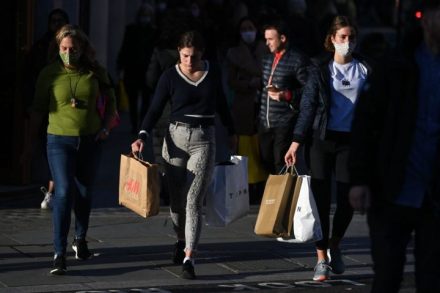
Following last week’s news of unexpectedly strong economic growth in June of 0.5 per cent, today’s retail sales figures for July come as something of a shock. Across the month, the volume of sales fells by 1.2 per cent compared with June, and was 3.2 per cent lower than in July 2022. The fall occurred across the board, with food stores falling 2.6 per cent month on month, clothing stores 2.2 per cent and department stores – which had seemed to enjoy a revival in recent months – falling 2.9 per cent. The only positive news was on non-store retailing – i.e. the internet – sales were up 2.8 per cent. Again, this reverses the recent trend of a switch back towards bricks and mortar retailing following the pandemic. A fall in retail sales ought not to come as a great surprise.

Why is the WHO promoting homeopathy?

From our UK edition

The World Health Organisation (WHO) is meant to implore us to ignore hearsay and folklore, and to follow the scientific evidence. So why is it now suddenly promoting the likes of herbal medicine, homeopathy and acupuncture? In a series of tweets this week, the WHO has launched a campaign to extol the virtues of what it calls ‘traditional medicine’. ‘Traditional medicine has been at the frontiers of medicine and science, laying the foundation of conventional medical texts’, it asserts. It goes on to claim that ‘around 40 per cent of approved pharmaceutical products in use today derive from natural substances’.

Is university still worth it?

From our UK edition

Imagine that, just as Britain was closing down for the first Covid lockdown in the spring of 2020, you were 18 years old and had received an offer from the university of your choice, subject to good exam results. The grades proved to be no problem – with all exams cancelled, you were graded in accordance with your teacher’s estimate of how you would perform, and sailed through. But then the time came to go to university and you couldn’t – not properly, anyway. ‘Lots of students end up in jobs deemed to be low-skilled that would not need a degree in the first place’ You kept finding yourself imprisoned in a hall of residence as one student after another tested positive for Covid; you struggled even to get food.

I’m afraid of higher wages

From our UK edition

So, Britain has finally awarded itself the real-terms pay rise that the unions would say workers ‘deserve’. This morning’s inflation figures show that the Consumer Prices Index (CPI) is up 6.8 per cent in the year to July. Yesterday’s earnings figures showed that wages grew by 7.8 per cent. So, in other words, the UK workforce as a whole has received a real-term pay rise equivalent to a whole percentage point. The period of falling real incomes is finally over – at least for the majority of earners. Some, of course, will still be seeing falling real wages. In the absence of productivity growth, any wage rises will turn out to be illusory But is it really ‘deserved’?

My disturbing experience in a Paris lavatory

From our UK edition

I am happy to add my name to many reactionary causes, but sorry, I draw the line at trying to save the urinal from the onward march of the unisex loo. On Sunday, equalities minister Kemi Badenoch published proposals to oblige every new building to incorporate separate toilet facilities for men and women. To be fair to her, she isn’t trying to prevent architects from designing unisex facilities where every loo is in effect a little private bathroom, with hand-washing facilities incorporated – her beef is with the subtly different ‘gender-neutral toilets’, which are large rooms full of toilets and sinks which can be used by members of either sex. In some cases, these have been known to force women to walk past men standing at urinals.

Should we be looking at geo-engineering the climate?

From our UK edition

Has a well-meaning international effort to cut pollution from ships contributed to a sudden warming of the waters in the north Atlantic this year? That is the extraordinary claim made this week in an article in Science magazine, the journal of the American Association for the Advancement of Science. It asserts that limits on the sulphur content of fuels used by ships have helped reduce sulphur pollution from those vessels by 80 per cent – but at the inadvertent cost of reducing cloud formation over the oceans and so speeding global warming.   Previously, well-used corridors of the Atlantic Ocean were covered with ‘ships tracks’ – yellowish, elongated clouds which followed the paths of passing ships.

UK economy grows by 0.5% in June – defying expectations

From our UK edition

So the economy has defied the predictions of doom once more. The latest figures released by the Office for National Statistics (ONS) this morning show that the economy grew by 0.5 per cent in June, more than countering a 0.1 per cent fall in May, widely attributed to the extra bank holiday for the coronation. Over the three months to June the economy grew by 0.2 per cent, following a 0.1 per cent expansion in the first quarter. One of the most promising aspects of today’s figures is that all sectors of the economy grew in June, with production (1.8 per cent) and construction (1.6 per cent) outpacing services (0.2 per cent) for once. It is hardly fireworks but it does once more call into question the competence of economic forecasters.

Why surging oil prices aren’t yet worth worrying about

From our UK edition

For once we are having an old-fashioned silly season, with no pandemic, no insurgency by the Taliban, no leadership election in the Tory party and no energy crisis – with the result that a few migrants moving onto a barge has become the main story of the week. Or at least we didn’t seem to have an oil crisis until Tuesday, when European wholesale gas prices suddenly surged by 40 per cent, from €30 per MWh to over €40 per MWh. It was a reaction, it seems, to a strike in Australia which has compromised the country’s exports of liquified natural gas (LNG).

Britain has a productivity problem

From our UK edition

First the good news – the fall in living standards may be coming to an end, with wages starting to run ahead of inflation. Now the bad news: it is as much because wages are rising than inflation is falling – which suggests that high inflation is beginning to become embedded in workers’ expectations. Capital Economics is forecasting that next week’s inflation figures will show the Consumer Prices Index (CPI) at 6.8 per cent, down from 7.9 per cent last month. Average earnings figures, it predicts, will simultaneously rise to 7 per cent – up from 6.9 per cent last month and up from 6.1 per cent a year earlier.

First-time buyers fleeing London do so at their own risk

From our UK edition

Have high house prices succeeded where decades of government efforts at regional development have failed? That is, have they managed to redistribute economic development around the country?  According to the estate agent Hamptons, nearly one in three buyers looking to move out of London in the first six months of this year was a first time buyer. It means that the traditional migration – move to London upon graduation, buy a first home in the capital and then possibly move out to the countryside when rearing a family – has been disturbed.

Is the ‘era of cheap food’ over?

From our UK edition

Not so long ago, some were arguing that cheap food was a problem in Britain. We're unlikely to hear such complaints now that food inflation remained at 17.3 per cent in June, not far off its peak of 19.2 percent in March. Is this a blip? An economist from PwC thinks not and has declared that the 'era of cheap food has probably come to an end in the UK'. If so, this will have several serious implications.  Just four years ago, a commission set up in 2019 by the left-leaning think tank the RSA claimed that cheap and unhealthy food was causing a public health crisis and contributing to environmental destruction. 'Our own health and the health of the land are inextricably intertwined,' it added, high-mindedly, but 'in the last 70 years this relationship has been broken'.

Britain might be in a wage-price spiral

From our UK edition

The Bank of England has raised the base rate yet again, this time to 5.25 per cent, a high not seen since April 2008. Like a child trapped in the back seat of a sweltering car, the response of many people will be: ‘Are we nearly there?’      Many people seem to think so – that perhaps there will be one or two rises to come before rates peak and perhaps even start to fall modestly next year. Markets seem to think that 5.75 per cent will most likely be the summit.   I wouldn’t be so sure. What stands out most from the Monetary Policy Report that accompanied the interest rate decision is the expectations for earnings. Private sector pay rose by 7.

Will regressive alcohol duties destroy Britain’s drinks industry?

From our UK edition

What is duty on alcoholic drinks for: to raise revenue or to make us better, more sober people? A close reading of the new duty rates which were announced in the spring budget, but which come into effect today, provide little enlightenment. You can read them for yourself, but here is a summary: On beer or cider less than 3.5 per cent alcohol by volume (ABV) you will pay £9.27 per litre of alcohol in the product. (Wine of that strength would be taxed the same, but it wouldn’t be much of a wine, more a part-fermented grape juice drink.) On beer between 3.5 percent and 8.5 per cent ABV you will pay £21.01 per litre of alcohol. Unless, that is, you are drinking draught beer in a pub, in which case you will pay £19.08 per litre of alcohol.

The collateral damage of lockdowns on children is still emerging

From our UK edition

There has been plenty of evidence published over the past three years of the severe effects on children’s education and wellbeing of closing schools during Covid lockdowns, but a new study by the Institute of Fiscal Studies (IFS) and University College London (UCL) has a slightly different emphasis – linking children’s social and emotional development with the employment situation of their parents. Overall, it found that 47 per cent of parents reported that their children’s social and emotional skills had declined during the pandemic – with just a sixth of parents reporting that there had been an improvement.

How we could reach net zero without dumping oil

From our UK edition

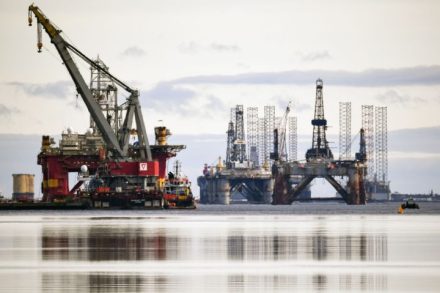
Rishi Sunak has shown no indication that he is considering dumping the government’s legal commitment to achieve net zero by 2050. Nor, so far, has he indicated that he will relax any of the controversial targets for the next decade or so, such as banning new gas boilers or petrol and diesel cars. But his visit to Aberdeenshire today does mark a very sharp change in direction from the government’s green policy in Boris Johnson’s day. Sunak’s policy can be summed up in three words:  Just Continue Oil. For years, government policy has been predicated on the idea that oil and gas are declining, doomed industries and that therefore there is little point in investing or supporting them. Instead, the future lies in renewables.

Backing motorists won’t save Rishi Sunak

From our UK edition

The lesson from the Uxbridge by-election was clear to both parties: the public will not accept green policies at any price. Whilst in general, the public support cutting carbon emissions and other forms of pollution – support drifts away fast when people are confronted with measures which threaten to make them poorer and their lives more difficult. But now Rishi Sunak risks falling into another trap: aligning himself too closely with his party’s Mr Toad tendency. Announcing a Department for Transport review into low traffic neighbourhoods (LTN), the Prime Minister this morning has sided heavily with motorists, declaring 'the vast majority of people in the country use their cars to get around and are dependent on cars.