Ross Clark

Ross Clark

Ross Clark is a leader writer and columnist who has written for The Spectator for three decades. He writes on Substack, at Ross on Why?

Keir Starmer has become the Just Stop Oil candidate

From our UK edition

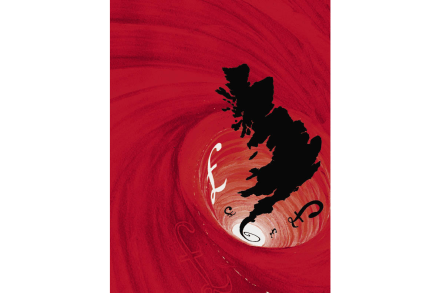
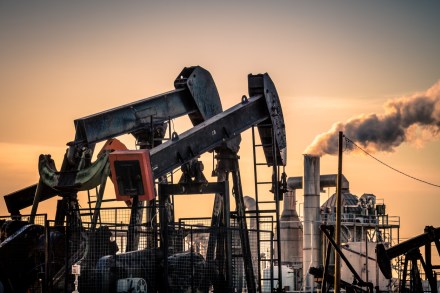
So, Just Stop Oil is now His Majesty’s Official Opposition. Keir Starmer has adopted the group’s main demand – no development of new oil and gas reserves – as his own. Presumably he hopes to attract green votes, especially in Scotland where the SNP has a similar policy. But it means going into the next election with a policy which is both economically and environmentally illiterate. Even with a drive towards clean energy – and even if tricky targets to outlaw new gas boilers and petrol and diesel cars could be met – Britain is going to remain dependent on oil and gas for decades to come. In spite of a boom in the construction of wind and solar farms, solar and wind currently accounts for little over 4 per cent of our total energy needs.

The madness of Sunak capping food prices

From our UK edition

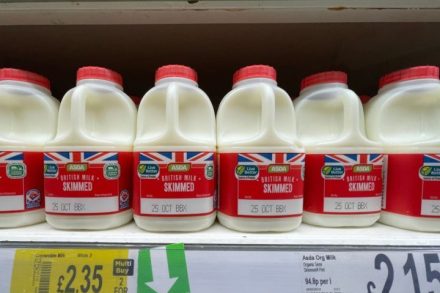
It wasn't long ago that supermarkets stood accused of selling food too cheaply. Their price wars and two-for-the-price-of-one deals were destroying farmers, undermining local shops and making us fat. How long ago that now seems, with the government now considering 1970s-style price controls. While the measures would apparently be voluntary, they would fix the prices of a number of basic foodstuffs – the sort which Jack Monroe keeps her eyes on. The price of price-fixing is likely to be more pictures of empty shelves, which of course will be blamed on Brexit You don’t need to have studied economics in any depth to understand the problem with price controls. In a free market, prices settle at the intersection of the supply and demand curves, ensuring that both are kept in balance.

Online shopping has not killed off the high street, yet

From our UK edition

It wasn’t supposed to turn out this way, not at the beginning of the year when the wise and good were confidently predicting that Brexit-bound Britain would turn out to have the worst economy in the developed world in 2023. The UK economy would be contracting, they said, while almost everyone else's expanded. We have had enough of trying to buy clothes online, though we are happy to buy other stuff in this way Now, as Germany descended officially into recession this week, more evidence emerges that Britain, so far, has avoided the same fate. The Office for National Statistics' retail figures for April show that sales volumes were up 0.5 per cent on the month. This needs to be read in conjunction with March’s figures, which were revised downwards to a fall of 1.

Electricity is to blame for stubbornly high energy prices

From our UK edition

So much for price-fixing. The energy price cap is finally set to fall, with the result that the average household should have to pay no more than £2,074 a year for its energy from 1 July. The price cap itself has fallen from £3,280, but bills were in practice limited by the government’s other great intervention in the energy market: the energy price guarantee. This was, in effect, a cap on the price cap which limited prices at a level where the average household paid no more than £2,500 a year. As a result, household bills will fall from an average of £2,500 to £2,074 – a drop of £426.

What will it take to crash the housing market?

From our UK edition

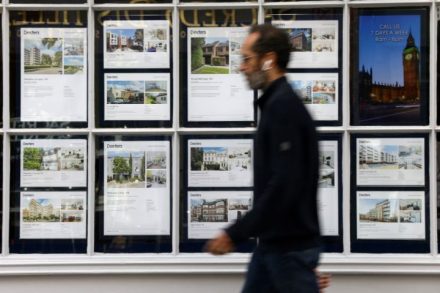
Is there anything that might cause the much-predicted crash in UK house prices? Not – evidently – a pandemic (which perversely caused prices to surge). A sharp, upwards jerk in the Bank of England’s base rate to 4.5 per cent didn't do it either.    The latest edition of the Office for National Statistics's UK House Price Index – the most comprehensive of house prices indices, but which tends to trail Halifax and Nationwide – shows that prices rose by an average of 4.1 per cent in the 12 months to March. That is down from 5.8 per cent in February and is lower than inflation, indicating a real-terms fall in house prices. But it hardly represents a crash.

Is Germany turning against the EU’s Green Deal?

From our UK edition

Last week it was President Macron who was rowing back on green measures. In a speech he asserted that Europe has, for now, gone far enough – if it introduces any more regulations without the rest of the world following suit then it will put investment at risk and harm the economy. This week, the European People’s Party – a centre right grouping which includes the German Christian Democrats, the party of Commission President Ursula von der Leyen – seems to be joining in. Germany now seems to be taking over from France as the seedbed of opposition towards zero carbon policies The party is reported to be considering withdrawing its support for the European Commission’s Green Deal.

Britain’s rivers are filthy

From our UK edition

The name Chris Whitty will forever be associated in people’s minds with Covid-19. But in a recent cri de coeur he reminded us not only that he continues to exist following the end of his daily appearances on our TV screens, but that there are many other ways in which pathogens are out to get us. In a newspaper piece written with the chairs of Ofwat and the Environment Agency, the Chief Medical Officer raised the subject of Britain’s filthy rivers. While Britain’s environment has improved in many ways, with cleaner air, more trees and some species returning after centuries’ absence, our rivers have defied the trend, being more afflicted with sewage than ever before.

BT replacing jobs with AI is nothing to be scared of

From our UK edition

BT has announced that it will cut up to 55,000 jobs by the end of the decade. The company currently employs 130,000 staff, and it could cut up to 42 per cent of its workforce. BT has struggled in recent years as the one-time nationalised giant has had to keep up with a rapidly-evolving communications business. The fact remains that no technology yet invented has prevented employment reaching new highs But the greatest comment will be caused by the 10,000 jobs that BT says it will replace with artificial intelligence. AI can indeed help perform some functions that were previously performed by humans, making staff redundant. In BT’s case, the company says it will employ AI to detect and fix software problems in the network.

Starmer’s savvy Brexit position

From our UK edition

Keir Starmer has made the anodyne demand that Britain seek a ‘closer trading agreement’ with the EU. But why doesn’t he go the whole hog and make it Labour policy to rejoin the single market?  The Labour leader could hardly be accused of seeking to reverse Brexit. Some Leavers, prior to the 2016 referendum, wanted Britain to stay in the single market after Brexit – including Daniel Hannan and, on many occasions, Boris Johnson. So surely rejoining the single market, but staying out of the EU, could be the compromise which would please the greatest number of the public, propelling Starmer into Downing Street as a unifying force?

Europe is turning against net zero

From our UK edition

The contrast couldn’t be greater. In Britain a wealthy cabinet minister goes on television to boast of how he is installing a heat pump in his home – something his government is proposing to force on millions of British homeowners over the next few years in spite of them costing many thousands of pounds more than a gas or oil boiler. Meanwhile, in France, the President makes a speech calling for a ‘regulatory pause’ on green issues in order to push for the ‘re-industrialisation’ of his country. So far, Britain and the EU have moved more or less in tandem on climate change – which is not all that surprising given that until three years ago Britain was a member of the EU and therefore within its regulatory orbit.

Britain is becoming Brussels on Thames

From our UK edition

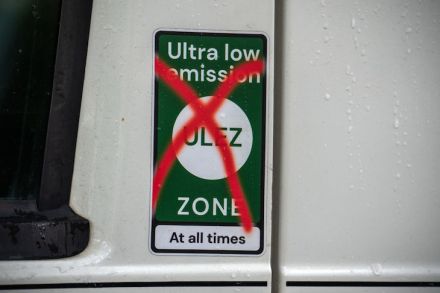
Whatever happened to Singapore on Thames? Weren’t we, after leaving the EU, supposed to be forging a future as a deregulated, low-tax, business-friendly enclave situated 20 miles off Calais? It isn’t quite looking that way at the moment. We are reinventing ourselves as Brussels on Thames – only more so. Do our bureaucrats really need to come down so heavily on big players in the realm of cloud computing games? Our corporation taxes are rising at a time others are static or falling, we keep inventing new regulations which far outdo EU regulations – such as that allowing new employees to demand flexible working. We are ploughing ahead with green measures such as the ban on petrol and diesel cars from 2030 while the EU has allowed some flexibility.

Train companies are finally getting their comeuppance

From our UK edition

As they call yet more strikes today and tomorrow, rail unions are the leading candidates for the most miserable and destructive institutions in contemporary Britain. Train operating companies, though, are not far behind. Having ripped us off for years by ruthlessly exploiting the local monopolies gifted to them through the franchise system they can't even run their trains on time on non-strike days. First Group, which was finally relieved of its Transpennine franchise this week, managed to run just 46.5 per cent of its services on time during the last three months of 2022. Avanti West Coast, which for the moment retains its franchise – though God knows why – managed only 34 per cent. And that was after reducing its timetable by two thirds in some cases.

Why are the Tories so afraid to tackle housing reform?

From our UK edition

If there ever were a couple of policies the government desperately needs to give it a chance of being re-elected next year it is rental reform and leasehold. Both in their own way would make life a good deal less miserable for the younger voters who have drifted away from the party in recent years.  How depressing then that Rishi Sunak seems to have gone cold on them. It nastily exposes the Conservatives’ Achilles' heel: its tendency to drop good and popular proposals in the face of staunch lobbying by those with vested interested.

Justin Welby’s climate confusion

From our UK edition

It is widely expected that Justin Welby, having now screwed the crown on Charles III’s head, will shortly retire as Archbishop of Canterbury and put himself out to grass. If so, he is not going quietly. This afternoon, in the House of Lords, he launched a wholesale attack on the government’s Illegal Migration Bill, which includes measures to offshore the processing of asylum-seekers in Rwanda, describing it as ‘isolationist, morally unacceptable and politically impractical’ to leave developing countries to handle the world’s refugees.    But one comment in particular stands out in the Archbishop’s speech.

The troubling return of 100 per cent mortgages

From our UK edition

Is there a greater weapon of financial mass destruction than the 100 per cent mortgage? Take out a loan equivalent to the full value of your home and it only takes one bad month for the Halifax house price index to land you in negative equity.  If you have bought a new home, you will almost certainly be in negative equity from day one – as with a new car, a brand new home commands a premium which disappears the moment someone moves in and starts scratching the paintwork. But it is not just the borrower who needs to worry. When property prices fall, homes with 100 per cent mortgages secured against them cease to be fully-secured loans.

What happened to the voter ID backlash?

From our UK edition

You might have thought that a heavy defeat for the Conservatives in the local elections would silence those claiming that the government was out to disenfranchise left-wing voters by introducing compulsory photo ID for voters at polling stations. But not a bit of it.   Paul Mason was up bright and early bleating about ‘serious vote suppression’; the Mirror is reporting voters were leaving polling stations ‘in tears’ after turning up without their ID. And a professor of accounting practice at Sheffield university, who also described himself as an ‘economic justice campaigner’, tweeted that this was ‘the first reversal of the right to vote since 1832’.

Can reforms save the London stock market?

From our UK edition

The decline of the UK stock market has finally reached the Financial Conduct Authority (FCA). It has proposed to deregulate it in order to attract more companies to list in London rather than do as, for example, UK-based chip-maker ARM is doing and choosing to list in New York (it was once a UK-listed company before being bought out by the Japanese Softbank and is now being refloated).   The FCA has proposed that the London market become more tolerant of dual share structures – where, for example, a start-up might float on the stock exchange but retain a ‘golden share’ to ensure that the founders remain in full control over non-voting shareholders.

Ed Miliband is wrong about BP’s profits

From our UK edition

Are BP’s profits of $5 billion in the first quarter of this year really the ‘unearned, unexpected windfalls of war’, as Ed Miliband asserted this morning? The idea that any oil company’s profits are unearned must come as news to the geologists and engineers who are employed in the tricky business of exploring and drilling for oil. You might claim that oil traders sometimes make unearned profits, but surely not the oil companies which extract the stuff from the ground – a business which involves large amounts of capital and vast numbers of hours of human effort. BP certainly can’t be accused of profiting from Covid.

When does a banking wobble become a crisis?

From our UK edition

Can a banking crisis really be going this well? After a week of panic withdrawals and a crashing share price, the First Republic Bank in the US will be taken over nearly in its entirety by J P Morgan Chase, in a shotgun marriage facilitated by the Federal Deposit Insurance Corporation (FDIC). No depositors will lose money, and most of the bank’s functions will continue uninterrupted – just as they did in the case of HSBC’s takeover of the UK arm of Silicon Valley Bank last month.     We have now had four major banking collapses in the space of six weeks, with remarkably little spillover into the economy at large and the misery mostly limited to shareholders in the banks concerned. Otherwise, stock markets have largely escaped collateral damage.

Can Britain become the Saudi Arabia of carbon capture?

From our UK edition

Boris Johnson wanted to make Britain ‘the Saudi Arabia of wind’. But Grant Shapps is keen to send Britain's green agenda in a new direction. Speaking at The Spectator’s Energy Summit on 26 April, the Secretary of State for Energy Security and Net-Zero announced the government’s ambitions for Carbon Capture, Utilisation and Storage – CCUS – where carbon dioxide is sucked out of the air with the aid of solvents and either put to use or buried deep in the ground where – hopefully – it will remain locked up forever after. The technology does not merely offer the chance to cut future emissions but also to remove past emissions from the air.