Ross Clark

Ross Clark

Ross Clark is a leader writer and columnist who has written for The Spectator for three decades. He writes on Substack, at Ross on Why?

Are Red Sea ship attacks the start of a crisis for the global economy?

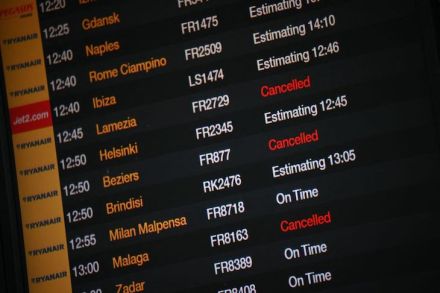
Covid provided a revelation of the vulnerabilities of the global supply chain, but now war in Yemen has provided another. Attacks on shipping by Iranian-backed Houthis has reminded the world of how much trade is reliant on free passage through the Bab-al-Mandeb Strait, an 18-mile wide waterway at the southern entrance to the Red Sea. If shipping cannot get through that then it struggles to get through the Suez Canal. In the past month, 15 ships have been attacked in the strait with missiles and drones, and now shipping lines have had enough. They are instead routing their container vessels an extra 3,000 miles around the Cape of Good Hope. That is an extra ten days’ sailing time. According to the International Chamber of Shipping, $3 billion (£2.

Is the cost of living crisis over?

This morning’s inflation figures are good news. The fall in the Consumer Prices Index (CPI) to 3.9 per cent, from 4.7 per cent, not only exceeded market expectations by a healthy margin, but in November prices actually fell by 0.2 per cent. Given that averages earnings are rising by 7.3 per cent it is hard to sustain the idea that we are still in a cost of living crisis – even though there will inevitably be some people who don’t feel they are getting better off. Prices are falling in almost every sector, with only the cost of communications rising slightly, from 8.0 per cent to 8.1 per cent. The figures dramatically increase the likelihood that interest rates will be cut in 2024, and probably earlier rather than later.

Michael Gove’s housing fantasy

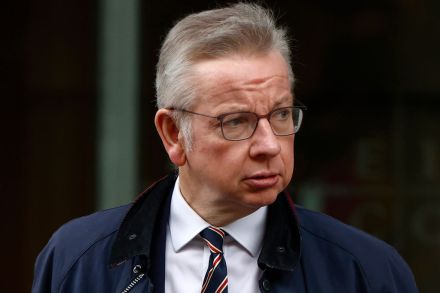
Remember ‘localism’ – when David Cameron was going to return powers to local people when it came to things like planning? If that is how the Conservatives’ 14 years in power began, they seem to be ending with the opposite: with Michael Gove threatening to seize the planning reins from Sadiq Khan and get more houses built. ‘If you cannot do what is need to deliver the homes that London needs, I will,’ he wrote in a sniffy letter to London mayor Sadiq Khan ahead of his speech on planning this morning. He has set up an investigation to see whether Khan’s London Plan is holding up housebuilding.

A Trump presidency could be good for Britain

Donald Trump may be offensive in many ways. He may have defiled his office during his previous stint as president by claiming the 2020 election was stolen from him. But at some point over the next ten and a half months before polling day in 2024 even his detractors are going to have to start asking themselves: might a second Trump presidency actually be in Britain’s self-interest? Had Trump remained in office it is very likely that Britain would by now have a fully-working trade deal with the US – which is after all the largest single country which we export to. It would have required some compromise – dropping, for example, the UK government’s illogical ban on chicken which has been chlorine-washed.

The huge cost of Scotland’s ‘free’ tuition fees

‘The rocks will melt with the sun before I allow tuition fees to be imposed on Scotland.’ So read the words carved into a stone outside Heriot-Watt university in Edinburgh unveiled by Alex Salmond while he was first minister. But as the SNP’s education policy begins to unravel and the budgetary pressures build at Holyrood, how much longer before the Scottish government starts to revisit its practice of subsidising students, even middle-class ones who can well afford to pay tuition fees? From the vantage point of a Scottish sixth former, the system north of the border looks great. Unlike their English cousins, Scots attending Scottish universities pay no tuition fees.

What to expect from the housing market in 2024

The housing market indices have stabilised, started rising even. So is that it? Is the great housing market crash over, before it had had a chance even to begin? Not according to the Office for Budget Responsibility (OBR). Buried in its latest Economic and Fiscal Outlook report is a prediction that the slump is far from over. Average prices, it forecasts, will fall by 4.7 per cent in 2024 and will not return to their 2022 levels until 2027. Transactions, the OBR believes, will also plummet by a further 6.9 per cent next year. While that might not bother homeowners so much it certainly will affect estate agents, who live or die on volumes of transactions rather than on prices. There is another thing about the housing market.

Cop’s pledge to move away from fossil fuels is a farce

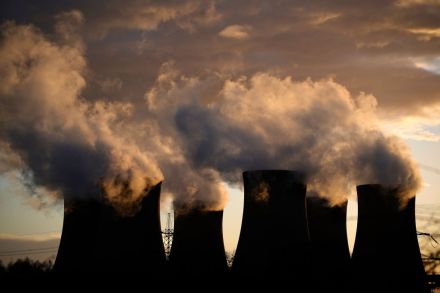
So, a deal has been reached. The world has agreed on what Cop 28 president Sultan al-Jaber has called a ‘robust action to keep 1.5 Celsius in reach'. The world is to ‘transition away’ from fossil fuels. And meanwhile, back in the real world? If the world really had just made a meaningful commitment to end the use of fossil fuels, you might have expected shares in oil companies to have crashed this morning. But have they heck. Shell, BP, all are unmoved. It is expansionary business as usual. The UAE has invested $150 billion (£120 billion) to increase oil production by half to five million barrels a day by 2027. In the US, oil and gas production reached a new record last year. Even coal production was up 2 per cent.

Does a fifth of the population think we should still be in lockdown?

That shutting people away in their homes for weeks on end was going to have a bad effect on mental health was clear from the start of the pandemic, even if the Covid Inquiry doesn’t seem to think it a proper subject to cover the negative consequences of lockdowns. But a poll published this week by the organisation More in Common reveals just how debilitating an effect the pandemic continues to have on a remarkably large section of the population. More in Common asked the following question: ‘Thinking of the current health situation in the UK would you support or oppose the government reintroducing each of the following Covid-19 restrictions at the current time?’ It then listed a series of interventions which were used during the pandemic. The results are astounding.

Net zero has doomed Europe’s car industry

The decision of the European Commission to delay, for three years, tariffs on car exports between Britain and the EU is the harbinger of a more constructive relationship between the two. But is it going to save the European car industry? Probably not. It is net zero targets, not Brexit, which are condemning mass-market car production in Europe to possible extinction. Until this week's decision, car manufacturers faced a cliff edge. Unless they could show that at least 45 per cent of a vehicle, by value, had been made in Europe, that vehicle would face a 10 per cent tariff if exported from Britain to the EU or vice versa.

Expectations are low for Boris Johnson at the Covid inquiry

Boris Johnson will be led into the Covid inquiry this morning like a condemned man. We have all seen enough of this inquiry to know the line of questioning he will receive: one that will try to portray him as a bumbling fool who rejected scientific advice to lock down, killing many thousands of people in the process. He will also be presented as a callous individual who allegedly said it didn’t matter if elderly people died because they had had their time. Johnson’s enemies will just regret that Brexit can’t be added to the list of charges against him. With expectations so low, it is only natural that he will over-deliver, reminding people of the great communicator he is and why he once enjoyed mass popularity.

Why are fewer people buying electric cars?

The rebellion of 26 Conservative MPs against the government’s zero electric vehicle (ZEV) mandate couldn’t have come at a worse time for the Prime Minister. The ZEV will compel manufacturers to ensure that, from 1 January,  at least 22 per cent of their car sales are pure electric. Yet simultaneously comes news of a collapse in sales of electric cars.   There is little other interpretation to put on the figures for new car sales in November put out by the Society of Motor Manufacturers and Traders (SMMT) today. Electric cars have had an appalling month, with sales down 17.1 per cent on November last year. This, in a month when overall cars sales were 9.5 per cent higher than a year earlier. Motorists seems to be abandoning pure electric cars, although they are buying hybrids.

Get used to Labour being the party of low taxes

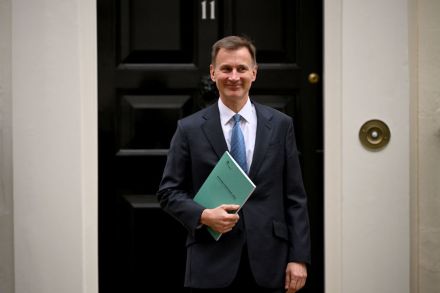
It takes some to get used to Labour posing as the party of low taxes, but it is something that we are going to have to deal with as the election approaches. Today Jeremy Hunt appeared before the House of Commons Treasury Select Committee, and we had a taste of what is to come. In a fairly docile but highly partisan session, Labour MP Siobhain McDonagh asked the Chancellor if he takes the British public for fools, asking if he thinks they will not notice that the 2p cut in employees’ National Insurance will put rather less back into their pockets than fiscal drag is taking out – Hunt is ‘gouging with one hand and giving crumbs back with the other’, as she put it. She then asked him: was the 40 per cent tax rate really designed to hit nurses, teachers and police officers?

Curbing work visas won’t solve Britain’s migration issues

Why can’t we seem to distinguish between good and bad migration? Brexit allowed the government to do what the Leave campaign had repeatedly said it wanted: to create a points-based system which would turn away Romanian Big Issue sellers and welcome Indian surgeons. But now we have that system we don’t seem to like that either. True, the government has failed on illegal migration. The boats continue to arrive, bringing their cargo of mostly young males, some of whom we then put up in four star hotels at vast expense. It is pretty clear that a very large proportion of them are economic migrants rather than genuine refugees, yet our sluggish asylum system seems unable to deport them even when their claims are exposed as fraudulent.

The desperation of Olivia Colman’s climate change video

When you have a surname like Colman you might think it would be best to avoid appearing in an advertising campaign playing a latex-wearing, greedy fossil fuel executive who puts her own wealth above the good of the planet. The name Colman first appeared in England in the 12th century, denoting someone who made their living gathering coal or burning charcoal. But perhaps that irony was lost on actress Olivia Colman when she agreed to front a campaign by a pressure group called Make My Money Matter, which appeals to investors to write to their pension fund managers demanding that they divest from fossil fuels. The group claims that £88 billion of British pension funds are invested in fossil fuels. Thank God for that, many pensioners will be tempted to say.

Cooking oil won’t help the aviation industry reach net zero

Two decades ago, motorists in South Wales realised that they could power their diesel cars with used cooking oil, thereby cutting their fuel bills substantially. They were fined for trying to avoid road fuel duty, but perhaps they should have been bunged £1 million by the government for demonstrating a greener future.  £1 million is the sum the government handed Virgin to enable today’s pioneering transatlantic flight using 100 per cent sustainable airline fuel (SAF). SAF is a blend of 88 per cent hydroprocessed esters and fatty acids (HEFA), manufactured from waste cooking oil, and 12 per cent synthetic aromatic kerosene, made from plant sugars from waste vegetable material.

Climate reparations are an awful idea

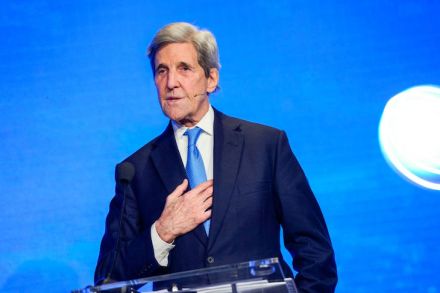
There is a word that we are going to hear once COP28 gets underway in Dubai later this week: ‘reparations’. While US climate envoy John Kerry has tried to rule out any US agreement to pay reparations to countries affected by what he himself might claim were ‘climate-related disasters’, many developing countries are determined to put compensation top of the agenda, and push it far further than the agreement last year at COP27 to create a ‘loss and damage’ fund whereby developed nations hand out money to poor ones deemed to be affected by climate change.     The demands for reparations will be helped along the way by western academics and pressure groups.

What good would forcing cyclists to have number plates do?

There was little competition for the oddest and most obscure bill to be announced in the King’s Speech: the proposal to licence London’s pedicabs. On the list of the most pressing issues facing the nation, it doesn’t tend to feature very highly. There must be many people in Britain who have never seen a pedicab, let alone ridden in one or come into conflict with these vehicles, which tend to ply a tiny zone of tourist London around Piccadilly Circus. But could the move to regulate pedicabs evolve into something a little more substantial? During a debate on the pedicab bill in the Lords this week, Lord Hogan-Howe, formerly chief commissioner of the Metropolitan Police, made the suggestion that the legislation be expanded to cover cyclists in general.

Bailey pours cold water on hopes of inflation falling quickly

Should we bother taking any notice of what Andrew Bailey says about inflation, given that he and his colleagues on the Monetary Policy Committee (MPC) failed miserably to foresee any of the inflationary forces of the past two years? As late as May 2021 they were still predicting that the Consumer Prices Index (CPI) would rise no higher than 2.5 per cent at the end of 2021 before falling back to 2 per cent. For what it is worth, the Governor of the Bank of England has come over all pessimistic. Addressing the Treasury Select Committee this morning he said markets have got it wrong: they are putting too much emphasis on last week’s fall in CPI from 6.7 per cent to 4.6 per cent and are failing to realise that inflation will be around for longer than they think.

Are the richest 1 per cent really to blame for climate change?

Oxfam used to be a worthy charity through which donors in wealthy countries could help fund famine relief in developing countries over-run by natural disasters. That was before it evolved into a left-wing pressure group sandwiched somewhere between Extinction Rebellion and Black Lives Matter. It’s latest report, Climate Equality: a Planet for the 99 per cent, is a real eye-opener. The chief claim in the report is that the richest 1 per cent of the global population are responsible for as many carbon emissions as the poorest 66 per cent. This sounds very dramatic until you read the small print and realise that both groups are responsible for 16 per cent of global emissions each.

Why the Tories shouldn’t cut inheritance tax

‘We know it is painful, especially with inflation at what it is. But there really is no option other than to ask you low-paid workers to contribute a little more in tax so that Rishi Sunak and his wife, when the time comes, can pass on a bit more of their £730 million wealth to their daughters.’   That is, to put it bluntly what Jeremy Hunt will be telling the nation if he does what he is reported to be about to do in the Autumn Statement and cut inheritance tax (IHT). One of the suggestions is that he may halve the rate to 20 per cent.