Ross Clark

Ross Clark

Ross Clark is a leader writer and columnist who has written for The Spectator for three decades. He writes on Substack, at Ross on Why?

Why are white men being shamed as transport polluters?

Black women are the worst for carbon-intensive travelling habits, according to the Guardian, citing research by the Institute for Public Policy Research (IPPR). Oh, sorry, I must have misread that. What the Guardian headline actually says is: ‘Wealthy white men are Britain’s largest transport polluters.’ While is poses as scientific inquiry this is really just political activism dressed up in academic clothes But it is worth quoting the other way around because the former is, of course, a headline you will never, ever read – either in the Guardian, an academic paper or anywhere.

The truth about pensioners and tax

The Tories' ‘Triple Lock Plus’ is a pretty blatant attempt to secure the votes of a demographic group which is more inclined to vote Conservative than any other. That much is clear. The party's proposal would give pensioners a high personal tax allowance to spare them from having to pay income tax as the state pension rises faster than either inflation or average earnings. If the government wants to spare pensioners from having to pay income tax it could, of course, raise the income tax threshold for everyone. But instead, while pensioners are spared tax, the personal tax allowance for working-age people is due to be frozen for another four years. But is it necessarily true that pensioners get the best of everything while the young get screwed over again and again?

Private schools can’t complain about Labour’s VAT raid

Of course Labour’s policy of charging VAT on private school fees is all about throwing a bit of red meat to those in the party who are motivated by class envy. Why otherwise expend so much political effort on a policy which in the opinion of the Institute of Fiscal Studies will only raise £1.6 billion a year? And that, of course, is mere guesswork. No-one really knows how the parents of private school pupils will really behave when whacked with a 20 per cent uplift in fees. Even if parents don’t withdraw pupils immediately, many might be tempted to do so at the end of prep school – and it will certainly impact on the decisions of parents whose children haven’t yet reached school age.

Why is UK retail doing badly?

This morning’s retail sales figures are not what Rishi Sunak will have hoped for as he pitches his case for re-election on economic recovery. They are yet more indication that Britain has fallen out of love with shopping. Sales volumes were 2.3 per cent down in April compared with the previous month, while the March figure was revised downwards from zero to minus 0.2 percent. Some of this might be connected with the timing of Easter: the holiday weekend straddled March and April, so people will have done their food shopping, Easter egg purchases, filled their car with petrol, and everything else, in March rather than April, but the bigger picture is that retail sales volumes have never recovered from the pandemic – and they continue to fall, down 2.7 percent over the past year.

The next Bitcoin bubble will be the largest yet

The power of Bitcoin to make and lose fortunes in a very short time is unmatched in history. But could the biggest boom and bust be yet to come? Since January the value of Bitcoin has staged a remarkable recovery, and is now back trading at or even above the highs it reached in 2022. That is all the more remarkable given that its recovery coincided with the trial, and eventual conviction and imprisonment of Sam Bankman-Fried who, following the collapse of his cryptocurrency exchange FTX, is now reported to be on a new venture: trading grains of rice with his fellow inmates at the Brooklyn Metropolitan Detention Center. For his customers, Bitcoin turned into the scam many of the cryptocurrency’s critics feared it would be. So how come anyone wants to buy it now?

The deluge: Rishi Sunak’s election gamble

53 min listen

It’s a bumper edition of The Edition this week. After Rishi Sunak called a surprise – and perhaps misguided – snap election just a couple of hours after our press deadline, we had to frantically come up with a new digital cover. To take us through a breathless day in Westminster and the fallout of Rishi’s botched announcement, The Spectator’s political editor Katy Balls joins the podcast. (01:35) Next: Our print magazine leads on the electric car bust. Ross Clark runs through all the issues facing electric cars today – from China flooding the market with discounted EVs to Rishi Sunak dropping the unrealistic target of banning new petrol car sales by 2030. ‘Could the outlook suddenly improve for British EVs?’ asks Ross. ‘It’s hard to see how.

Don’t blame climate change for the crummy weather

It was climate change wot gave us such a wet and stormy winter – or so you may have gathered from various reports this week. ‘Never ending UK rain made ten times more likely by climate change,’ declared a Guardian headline. ‘Climate change is a major reason why the UK suffered such a waterlogged winter, scientists have confirmed,’ asserted the BBC. There have also been numerous references to a ‘record stormy winter’ – based on it having the highest number of named storms in, er, the nine years since the Met Office started naming storms. We hear endlessly about the costs of flooding, but not at all about the savings from the declining incidence of strong winds But how much of this reflects reality?

What happened to the electric car revolution?

China is often characterised as a copycat when it comes to industry and technology but in one way it has proved to be a pioneer. It was China which saw the first boom in electric cars – and it was China that was the first to suffer when demand for them collapsed. The vast graveyards of unsold vehicles found in Hangzhou and other Chinese cities are the result of a huge, subsidised push to manufacture electric vehicles, demand for which has never caught up with supply. Ride-share services bought the vehicles– in a rerun of the great cycle-share fiasco of 2018, which led to piles of unused and unwanted bikes. But private buyers have been notably less keen. Where China leads, the rest of the world seems doomed to follow.

A crackdown on foreign students isn’t the only reason universities will struggle

Reducing the number of overseas students able to come to Britain would be a needless attack on one of our most successful export industries. But should we really believe David Cameron’s warnings to Rishi Sunak that universities are in danger of going bust if the graduate visa scheme is removed, or reformed (graduate visas give graduates the chance to stay on and work in Britain for up to two years)? The government would be foolish to choke off foreign students Data from the Higher Education Statistics Agency (HESA) does not appear to show any desperate crisis in university finances. On the contrary, their income has shown a steady and healthy, above inflation rise over the past decade.

Could Rightmove make the wrong move?

Banks have been cutting fixed mortgage rates, leading to hopes among some people that the housing market – which has been pretty flat so far this year – will soon respond positively. While prices and sale volumes haven’t been going anywhere, last month the Royal Institution of Chartered Surveyors reported that enquiries from buyers have risen to their highest level in two years. The company will have to watch its back for app developers out to steal its business But do short sellers tell a different story? Property website Rightmove, according to a list maintained by the Financial Conduct Authority, is currently the fifth most-shorted stock on the FTSE all-share index, behind online grocer Ocado, retailers Kingfisher and Sainsbury’s and clothing-maker Burberry.

Labour and Unite go to war over oil

There is nothing new about battles between the unions and a Labour government. But could a Starmer government be upset by a growing union rebellion from an unexpected quarter? In a move which has been remarkably underreported in England, the union Unite has launched a campaign against Labour’s policy of refusing licences for new oil and gas extraction in the North Sea. The campaign, called ‘No ban without a plan’, demands that Labour suspends the policy. If successful, it means a future Labour government would continue, like the Conservatives, to grant new licences, until it has come up with a plan to create at least 35,000 new ‘energy transition jobs’ in Scotland – equivalent to the current roles held by oil workers.

Hunt’s tax attack on Labour is sure to backfire

It should come as no surprise that Jeremy Hunt has signalled in a speech this morning that  he will try to make taxation a central theme of the coming election campaign. The tactic has certainly worked in the past. In 1992, fears that Neil Kinnock and his shadow chancellor John Smith would jack up taxes played a big role in a campaign from which John Major’s Conservatives – unexpectedly in many people’s eyes – emerged triumphantly. Five years later, Blair and Brown did not make the mistake of being cast as the high-tax alternative: they promised not to raise any income tax rate, or VAT. The Conservatives have a very big problem when it comes to trying to scare people about possible Labour tax rises Hunt’s claim is that Labour has made £58.

Tony Blair’s Foundation takes Ed Miliband to task over Net Zero

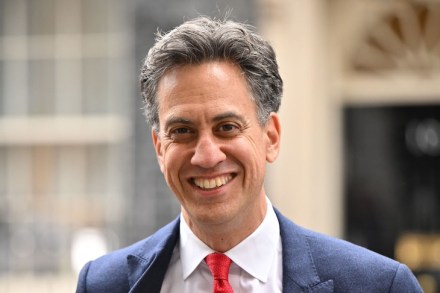
Is Tony Blair, like Margaret Thatcher before him, about to become the voice from beyond the political grave that makes life difficult for his party? Labour’s climate secretary in waiting – Ed Miliband – won’t find a lot of comfort in a paper put out today by the Tony Blair Foundation, Reimagining the UK’s Net Zero Target. The conclusion of the paper, whose authorship is attributed to ‘multiple experts’, is not that Britain should drop its overall target to achieve net zero but that its strategy has become too dogmatic, and revolves around unrealistic targets which, by threatening to make people poorer, are in danger of hurting public support for net zero and setting a damaging precedent for international efforts to tackle climate change.

What Hunt should really do to stop people claiming benefits

It is hard to deny the assertion made by Jeremy Hunt and the Work and Pensions Secretary Mel Stride that there are plenty of opportunities for people who want to work, or at least for a good number of them. If you want the long-term unemployed to take up jobs, you don’t offer them a little gentle encouragement: you send them on compulsory work placements According to the Office for National Statistics, there were 898,000 unfilled vacancies across the UK economy between February and April – meaning there were 1.6 unemployed people for every vacancy. Not all these jobs will be suitable for everyone, of course: they may not be in the right places, or they may require qualifications which not all unemployed people have.

It would be ridiculous to clamp down on foreign students

Oh, the embarrassment. The government commissioned its own Migration Advisory Committee (MAC) to investigate whether graduate visas (which grant overseas students the right to stay in Britain for two years after graduation) are being exploited and should be abolished. This was seemingly in the hope of gaining some ammunition to do away with a measure which it only introduced three years ago. Trouble is, the MAC has now come back and said that the visas are not being abused and should remain. Rather than reform the Human Rights Act to stop outrages, the government clamps down on the soft targets The government now has a choice.

The EU has ruined plastic water bottles

Hurrah, the problem of plastic waste has been sorted – as of this summer all plastic water bottles sold in the EU have to come with a cap that is tethered to the rest of the bottle. If the cap comes attached to the bottle, goes the thinking, then consumers are less likely to discard it – bottle and cap will end up being recycled together. Tethered bottle tops are yet one more example of the EU way of doing things But don’t count on it. People have already started moaning that they are struggling to drink out of the new bottles because the cap is in the way, or that it makes it hard to pour from the bottle.

Britain is right to stand up to the WHO’s vaccine power grab

The World Health Organisation (WHO) hardly distinguished itself during the Covid 19 pandemic. It was slow to declare an emergency, then tried to make up for the delay by trying to persuade governments to lock down and introduce all kinds of illiberal measures. Worst of all it heaped praise on China's handling of the epidemic, failing properly to investigate the possibility that the pandemic had originated from a laboratory leak. When it did finally send a team to investigate this, it allowed itself to be pushed around by the Chinese and laughably ruled out the lab leak theory. None of this, however, has stopped the WHO from trying to get its member states to sign up to a legally -binding agreement as to what should happen in a future pandemic.

Khan may have won, but he should still reverse on Ulez

So what was that all about? Rumours that Susan Hall was close to toppling Sadiq Khan have proved to be wide of the mark. In the event, Hall is failing to match Shaun Bailey’s performance in 2021. There is a swing against the Conservatives in London, and Hall is failing to win in places which Bailey won three years ago. None of this should really be a surprise. There has been a strong swing against the Tories everywhere, Tees Valley included. It would be truly extraordinary if Khan failed to win. But the rumours that Hall was doing a lot better than expected have served to aid Labour with expectation management. They have helped to conceal the fact that the mayoral election has been no landslide on the scale of Blackpool South or other recent by elections.

The local elections have not left the Tories in crisis – yet

The Conservatives have, as predicted, had a pretty awful night, but is there any comfort they can draw from the local election results? True, the next general election now seems to be lost – the public has simply made up its mind that the Tories have been in power for too long and that it is time for a change. But if you are a Conservative strategist peering through a pair of rose-tinted spectacles this is what you might see. Firstly, the Tory party has clung onto Harlow council – a town which was so much in Labour’s crosshairs that it was one of Keir Starmer’s final points of call in the campaign. When Tony Blair won his first landslide in 1997 it was the new towns around London which saw some of the biggest swings.

Wes Streeting should be ashamed of his white supremacist Tory jibe

Over the past few years Wes Streeting has established himself as one of the more open-minded and reasonable members of the shadow cabinet. Rather than nodding along with his party’s traditional worship of the NHS, and utilising the usual, false campaigning tool of trying to claim that the Tories have some secret plan to privatise the health service, he has been frank about its weaknesses. A tweet put out by Streeting yesterday afternoon, however, points in a rather different direction: blatant opportunism. He wrote: ‘A win for Susan Hall and the Conservatives is a win for racists, white supremacists and Islamophobes the world over. Susan Hall’s campaign has been fought from the gutter with dangerous and divisive politics.