Ross Clark

Ross Clark

Ross Clark is a leader writer and columnist who has written for The Spectator for three decades. He writes on Substack, at Ross on Why?

Why is Starmer not fighting the EU’s new carbon tariff?

Why do so many people rail against the trade barriers erected by Donald Trump and yet have so little to say about similar barriers erected by the EU? Where is the liberal outrage against the EU’s carbon border adjustment mechanism (CBAM) which from next January will add tariffs to imports of ferrous metals, aluminium, cement and fertiliser, and which in future is intended to be expanded to other goods with significant carbon footprints? While remainer opinion has condemned Keir Starmer and his government for ‘appeasing’ Trump by considering lowering the Digital Services Tax and easing online safety laws in order to please US tech giants, there is a remarkable lack of objection to Keir Starmer’s proposal to bend to the EU by aligning Britain with the CBAM.

China bans Boeing in targeted trade war shot

From our US edition

“If it ain’t Boeing, I ain’t going,” goes the old adage, championing the supposed superiority of the company’s planes on safety issues. If you are traveling in China in future that probably means that you won’t be going very far at all. The US aviation giant is emerging as one of the biggest losers of Donald Trump’s trade war. China has not merely applied punitive tariffs on the company’s planes; it has banned imports altogether. Even existing orders of planes appear to be affected by the ban. What’s more, the ban applies to Boeing itself rather than to general imports of US aircraft – it is personal. Boeing, already reeling from the crash of two 737 MAXs in Indonesia in 2018 and Egypt in 2019, lost $11.

Why should rich people pay more for their energy bills?

The point of a government energy regulator is supposed to be to make sure that the market is working to achieve proper competition. Their other job is surely to keep an eye on the billing practices of energy companies – to make sure, for example, that they are not hoodwinking people into signing up for their services on the basis of incorrect information. But, as has become common with quango arms-length government agencies, Ofgem appears to be trying to broaden its remit. Ofgem has decided to make a foray into the issue of redistributive taxation. The body has proposed that the standing charges imposed on gas and electricity bills should be varied according to means, with high-income households paying higher standing charges and low-income ones being granted a discount.

We have more to fear from net zero than from Xi Jinping

The threat by the Chinese company Jingye to close down Britain’s last two blast furnaces, in spite of the offer of help from the government, is yet more reminder of the perils of doing business with a potentially hostile state. Whatever the motives for Chinese companies to get involved in the running of critical UK infrastructure, there is a threat that they will wield their power in ways that are not helpful to UK energy and industrial security – to put it mildly. Yet none of this seems to have deterred Ed Miliband last month when he visited Beijing and – it now emerges – signed a ‘clean energy partnership’ with the Chinese government.

Is Britain really going to get a trade deal with the US?

Donald Trump loves Britain and loves the King; therefore we can expect a trade deal. That is the gist of J.D. Vance’s interview with UnHerd. Whether that means anything in practice is another matter. Evidently, the President’s love and affection was not enough to spare us from a 10 per cent tariff on exports to the US (and 25 per cent for cars). While Trump changed his mind last week and delayed most tariffs for 90 days there was no delay to the introduction of the 10 per cent tariffs, which will apply to all countries. All that happened as a result of last Thursday’s pullback was that Britain lost its relative advantage. We are now back in the same boat as the EU and most other countries. Trump’s problem now is one of trust.

Is the NHS losing its appeal for Britain’s youth?

The NHS has survived many Conservative governments which, according to their opponents, were out to privatise it. But can it survive a growing disenchantment on the part of young professionals who are turned off by the idea of having to queue for healthcare? According to the Independent Healthcare Provider Network (IHPN) – admittedly not an entirely disinterested party – the largest growth in the private health sector is among young professionals in their 20s, 30s and 40s, who want rapid scans and other diagnostic tests without the wait.

Good riddance to Cambridge’s May balls

I’m not usually one to hold back from damning the woke and progressive forces which lie within my alma mater, the University of Cambridge. An initiative by the geography department to decolonise the study of icebergs in the Canadian north was the final straw. But there is one conservative cause that I won’t be putting my name to: saving the May Ball. Several colleges are reported to have cancelled their balls this year in reaction to poor ticket sales and students complaining that the events are 'extortionate, overpriced and exclusive'. Trinity college, one of the few whose balls survive, is charging £280 for a ticket.

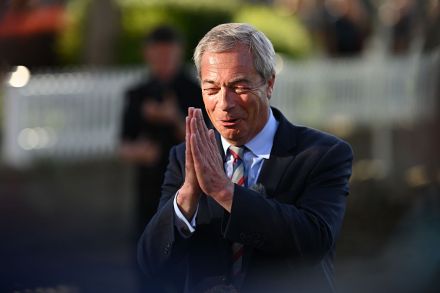
Farage is leading Labour’s policy

For Reform’s supporters drawn from the right of the Conservative party, Nigel Farage’s call to nationalise British Steel never made much sense. Why return Britain to the days of pre-Thatcherite Britain, when loss-making industries were propped up by the taxpayer as they gradually became less and less competitive globally? Yet the political value of Farage’s policy has now become plain. With the government recalling parliament to pass emergency legislation to take control of the ailing British Steel – said by its Chinese owners, Jingye, to be losing £700,000 a day – Farage can now be seen to be leading Labour party policy.

Who knew about Trump’s flip-flop?

From our US edition

As a piece of financial punditry, it could hardly be bettered. “THIS IS A GREAT TIME TO BUY”, screamed a post on the platform Truth Social on Wednesday morning. Hours later, the S&P 500 surged by 9 percent – its biggest percentage rise since 2008. The only trouble is that the tipster handing out this invaluable advice was the same man whose announcement caused the surge in the stock market: Donald J. Trump. Unsurprisingly, it has raised questions about who knew that Trump was about to do an about-turn and delay tariffs for 90 days – and whether any of them used the information to their personal advantage. Insider trading has long been treated as a serious issue among corporations.

shares

Rachel Reeves has managed to grow the economy

Just when everyone seems to be revising down expectations of growth, real world data starts pointing in the opposite direction. The Office for National Statistics estimates this morning that GDP grew by 0.5 per cent in February. It also revised January’s figures upwards to give growth for the last quarter of 0.6 per cent, and annual growth of 1.4 per cent. That is almost looking healthy – although less so when you consider the growth in the population is thanks to high migration. What’s more, growth was reasonably balanced, with the production sector growing by 1.5 per cent in February and construction by 0.3 per cent. Even car manufacturing had a positive month. These are areas of the economy which have shrunk in recent times even when services have grown.

Don’t expect much from Wes Streeting’s waiting list purge

Well, that’s one way to reduce NHS waiting lists: to kick off a load of patients whom you have decided don’t need to be on them. New NHS chief executive John Mackey has ordered that everyone on a waiting list must be ‘validated’ – with the aim of removing 300,000 of the 7.43 million names on them. Examples given are people who have already been seen privately and have no further need for NHS treatment, people who have instead sought help in A&E, people who no longer have symptoms or those who could be seen ‘in the community’ instead (i.e. at GP surgeries or clinics). Many of the names which have been removed will have been a symptom of failure I don’t doubt that there are people on NHS waiting lists who don’t need to be there.

Eco warriors are driving themselves to extinction

It wasn’t that long ago when the fashionable gathering place for young couples was a meeting of the National Childbirth Trust. I remember, in the early months of 1995, sitting in our instructor’s front room as she passed around a plastic model of a female pelvis while she asked us: ‘So how do you think the baby gets out?’ Fast-forward three decades and there is a new way for middle-class would-be mothers to spend their evenings: attending sessions of a project entitled ‘Motherhood in a Climate Crisis’ put on by the University of Bristol’s Brigstow Institute. There is no better way to describe it than to quote the academics’ blurb.

Did Trump really mean to slap tariffs on the world?

So were Donald Trump’s tariffs a negotiating tactic all along – never intended to come into force but rather as a shock tactic to bring other governments to the negotiating table? That was a popular theory before ‘Liberation Day’, but one rather snuffed out by the severity of the tariffs announced and the realisation that Trump might actually be deadly serious about wanting to price foreign goods out of US markets. Lord Hague, for example, wrote earlier this week that people had fooled themselves into thinking that Trump didn’t always mean what he said; we were naïve to think that he should not be taken literally.

Could China collapse the US economy?

Anyone who thought that government bonds would provide a safe haven from the turmoil on global stock markets has just had a rude awakening. While bond yields initially fell after Donald Trump’s ‘Liberation day’, yesterday they rebounded, with the yield on 10-year US Treasury bonds hitting 4.5 per cent – higher than they were before the crisis began. To put it another way, anyone with holdings in US government debt would initially have seen the value of their bonds rise, but now they, like most equity investors, are sitting on a paper loss. The movements in US Treasury bonds have led some to wonder: could the rest of the world bring the US government to its knees by dumping its debt, and indeed, is that what is happening in retaliation for Trump’s tariff wars?

What caused Birmingham’s bin strikes?

Yes, as Wes Streeting says, it is ‘unacceptable’ for rubbish to be left piling up on the streets of Birmingham as the binmen go on strike. But neither he nor all the other government figures complaining about the strike should forget its cause. It is the fallout of Birmingham City Council going bust as a result of an equal pay claim brought by cleaners who complained they were not paid as much as binmen. It was a case based on the principle of ‘work of equal value’.

Why are sports cars being exempted from net zero rules?

You can carry on burning petrol and diesel in your car so long as it is a pricey, niche sports car. If you are a pleb who can only afford a family hatchback, on the other hand, you will have to convert to electric – and the government will pretend that it is saving you money. That just about sum up the government’s new policy on electric vehicles. The Zero Emission Vehicle mandate will be relaxed, but mostly for car manufacturers who produce fewer than 2,500 cars a year, who will be given a free pass. Given that these manufacturers – like Aston Martin – tend to be at the upper, more polluting end of the market, it is rather as if the government had just come up with a tax on airline travel which exempted private jets. Perhaps I shouldn’t give them ideas.

In defence of the Norfolk mega pig farm

The ‘blockers’ who have so offended Keir Starmer and Rachel Reeves have, for the moment, scored another success in thwarting a wealth-creating development – but it is a success which I don’t yet hear the Prime Minister and Chancellor rushing to condemn. Nor, to be politically neutral, did our pro-growth former Prime Minister Liz Truss exactly rush to support the development when it was first proposed for her constituency – although she expressed a more balanced view than many of her constituents. The project in question, which has just been given the heave-ho by the Borough of King’s Lynn and West Norfolk, is a ‘US-style mega farm’ which would house 14,000 pigs and 870,000 chickens in sheds near the villages of Methwold and Feltwell.

Starmer is teaching Europe a lesson on tariffs

The reactions to Donald Trump’s tariffs between London and Brussels could not be more different. Where Keir Starmer was conciliatory, stressing that his government still hoped to negotiate with the US, European Commission President Ursula von der Leyen was quickly out of the blocks with threats of retaliation, saying that a package of measures was being finalised. It has since emerged that the EU plans to wait four weeks before imposing any retaliatory measures. Nevertheless it does rather expose the difference between the EU and post-Brexit Britain. The EU sees itself as a match for the US, and views Trump’s declaration of trade war as a power game. Britain, on the other hand, can afford to be more pragmatic, working out how it can play the situation best to its advantage.

Trump’s tariffs are a real Brexit win

So, Britain has got its trade deal with the US – of sorts. Donald Trump has awarded Britain no exemption from his tariffs. Even so, he has left Britain off lightly, by imposing tariffs of 10 per cent on imports from Britain to the US – the lowest he imposed on any country, along with Brazil. The EU, by contrast, has been imposed with a tariff of 20 per cent. Finally, then, we have a tangible benefit of Brexit that no one can ignore. Were we still members of the EU, our exporters would be hit much harder than they are being. Given that the US is our single biggest trade partner, that is not an outcome to be sniffed at.

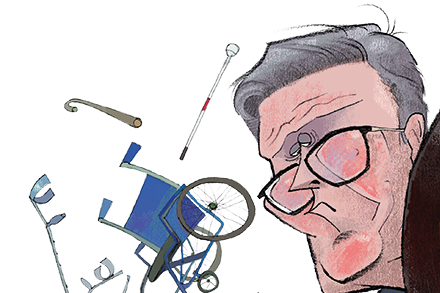
Labour’s welfare crackdown is a sham

You can already sense Rachel Reeves’s spin machine whirring into action. It was Donald Trump wot ruined my careful book-keeping, the Chancellor will tell us as once again her fiscal headroom disappears and she ends up banging her scalp painfully on the ceiling. But could it be unrealistic expectations for her welfare reforms which prove her undoing? Tucked away in the government’s own figures is the revelation that Labour’s welfare shake-up could result in 400,000 more people signed off unfit for any work. Britain’s workshy culture has received another boost The contents of the impact assessment on her Spring Statement, published by the Office for Budget Responsibility (OBR) last week, are still being digested.