Ross Clark

Ross Clark

Ross Clark is a leader writer and columnist who has written for The Spectator for three decades. He writes on Substack, at Ross on Why?

Cut the Border Force budget

Whatever happened to the great promise to ‘smash’ the smuggling gangs? When it came to power just under a year ago the Starmer government promised to pour resources into securing Britain’s borders. There was going to be a new Border Security Command – which was actually set up with £150 million of funding, although if anyone can tell me what it has done or what it has achieved, I am all ears. However, it now seems that the UK Border Force is one of the areas which Rachel Reeves has earmarked for spending cuts. The agency has an annual budget of £1.2 billion and employs 11,400 staff, who enjoy extremely generous overtime – an ‘annualised hours allowance’ to compensate staff for working unsociable hours can add between 20 to 43 percent to their earnings.

Could the Winter Fuel Payment fiasco bring down Rachel Reeves?

When the Chancellor Rachel Reeves announced that she was withdrawing the Winter Fuel Payment from most pensioners on the same day, last July, when she awarded fat pay rises to many public sector workers she perhaps imagined herself as striking a blow for inter-generational fairness. Working people would get more money – at least if they worked in the public sector – and wealthy retirees a little less. Yet it is fast becoming the an issue which could prove her undoing. The tragedy of the Winter Fuel Payment fiasco is that it leaves the far bigger problem untouched We now learn that the government’s partial U-turn will involve pensioners effectively being means-tested.

Labour won’t win back the north with new trams

So now we know how Labour intends to try to head-off the threat from Reform UK. It is going to fight them on the tram lines. Rachel Reeves will announce this morning £15 billion worth of new tram lines in the Midlands and the North as part of a £113 billion package of public investment. There will be £2.4 billion for trams in the West Midlands, £2.1 billion for a new tram system in Leeds, an extension of the Manchester tram system to Stockport and an embryonic tram system between Derby and Nottingham. The idea of a ‘north-south divide’ is 25 years out of date.

It will take more than 3% to make Britain ‘battle ready’

Does anyone really think that spending 3 per cent of GDP on defence would make Britain ‘battle-ready’, as Keir Starmer claims? (Assuming, that is, that he really did spend all that money rather than merely have an aspiration to do so). Here is the statistic of the day, to remind us of what a wartime economy really looks like. In 2023, according to the World Bank, Ukraine spent 36.7 per cent of its GDP on defence. And no, the reason that percentage is so high is not because Ukraine's GDP collapsed: on the contrary, Ukraine's GDP in 2023 was higher than in any year except the Covid rebound year of 2021, plus 2008 and 2013. Russia, in trying to roll over a smaller neighbour, spent 7 per cent of GDP on defence – or rather, on offence in its case.

Net zero is a gift to Nigel Farage in Scotland

It wasn’t long ago that Nigel Farage seemed a hopeless sell in Scotland. In 2013, on his way to campaign in a by-election in Aberdeen, he didn’t get further than Edinburgh’s Royal Mile before he had to be escorted from a pub by police for his own safety. Ukip, which he then led, had a derisory presence north of the border – even when it was making in-roads into working class areas in the North of England. The destruction of North Sea oil and gas is very big deal for Scotland, especially in Aberdeen where Farage was campaigning yesterday What has changed to make Reform UK, Farage’s current party, serious contenders for the Hamilton by-election this week?

Starmer’s welfare cuts are nothing like ‘Tory austerity’

Keir Starmer has already folded on the winter fuel payment, promising a partial reversal of the policy by reinstating it for pensioners in receipt of pension credit. How much longer before the proposed £4.8 billion cuts to welfare benefits go the same way? This morning, the Health Foundation think tank has issued a pronouncement that will be a red rag to critics of Labour’s welfare cuts: that the effect of Starmer’s reform of disability benefits will be four times as great as changes proposed by the Conservatives before the election and on a similar scale to George Osborne’s benefits cuts of 2015.

Reeves is right to slash funds for wealthy landowners

It is beginning to feel a bit like 1998 all over again. That was the year of the first countryside march when it – supposedly – rose up in anger at the Blair government over its plan to abolish hunting, introduce the right to roam and build some houses for people to live in. Landowning interests, already reeling from Rachel Reeves’ decision to partially remove the inheritance tax exemption on agricultural land, are now gearing up to bleat about a proposal to slash the £2.5 billion a year budget for Environmental Land Management (ELM) – the scheme which replaced the Common Agricultural Policy (CAP) after Brexit.  It is reported that the scheme will be designed to be less generous, with payments being retained only for small farms.

Don’t pay the junior doctor Danegeld

Who would have guessed that caving into union militancy and paying a whacking above-inflation pay rise, with no strings attached, would lead to even bigger pay demands? In one of its first acts after coming to power last July the Starmer government awarded junior doctors a 22 per cent pay rise, which they accepted and ended their run of strikes. Is anyone really surprised the BMA has come back this year demanding 30 per cent, threatening yet more strikes? It is not hard to guess what would happen were the government to cave in again: next year’s demand would come in at 50 per cent. Who would have guessed that caving into union militancy and paying a whacking above-inflation pay rise, with no strings attached, would lead to even bigger pay demands?

Is Rachel Reeves prepared to raise taxes?

Some of the most infamous words in politics are ‘read my lips, no new taxes’ – uttered by George H.W. Bush as he accepted the nomination as the Republican candidate for the 1988 US presidential election. It helped him win that year but contributed to his downfall in 1992 as he failed to stick to his promise. We can argue how much of Bush’s defeat by Bill Clinton had to do with the broken tax promise and how much was to do with recession, but ‘read my lips, no new taxes’ should certainly have been on Rachel Reeves’s mind in recent months.

Reform is now a left-wing party

How much longer are Reform’s critics going to be able to get away with calling it a right-wing party? It is an odd kind of right-wing party that proposes to reinstate welfare benefits that even Labour has decided are too expensive; that pledges to nationalise the steel industry and 50 per cent of utilities; and whose manifesto for the last election budgeted for £141 billion of spending increases over five years, including an extra £17 billion for the NHS. Nigel Farage’s party is only ‘right-wing’ if you define your political spectrum entirely in terms of attitudes to national borders and on ‘woke’ issues such as critical race theory and trans rights, or if you see climate change and net zero as a left–right issue.

Britain is enjoying another Brexit dividend

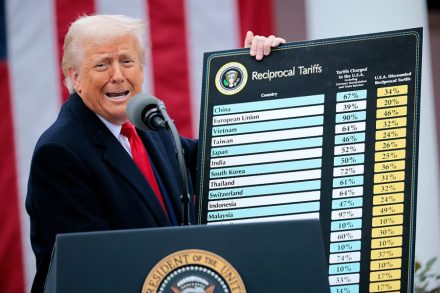
Has there ever been a day when Brexit seemed such a good idea? The story of Brexit began to change on ‘Liberation Day’ on 2 April when Donald Trump announced a 10 per cent tariff on imports from the UK and a 20 per cent tariff on those from the EU. No longer was it possible for anyone to argue there were no tangible benefits from leaving the EU: here was one of them staring us in the face. Following that, all proposed tariffs were suspended for 90 days to allow negotiations. Since then, though, the story has changed dramatically – and in Britain’s favour. Thanks to the trade deal announced by Trump and Keir Starmer a fortnight ago, some tariffs on UK imports will be dropped altogether.

Is it any surprise doctors are trying their luck with more strikes?

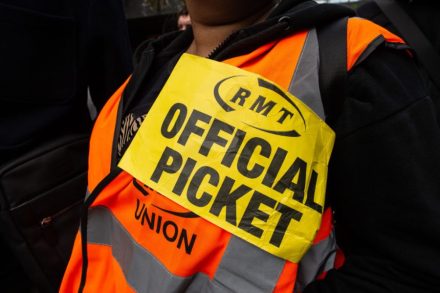
Did anyone really think that the incoming Starmer government was going to appease the public sector unions for long by stuffing their mouths with gold – awarding them fat pay rises without any requirement to improve productivity? When he awarded junior doctors a pay rise of 22 per cent last July, Wes Streeting told us that he had made more progress in days than the Conservatives had made in months. The strikes were over, thanks to grown-up government. Not so fast, Wes. Predictably enough, the government’s largesse towards towards the unions has merely served to embolden them. Now they are back for more – and the government finds itself unable to satisfy them.

Only now are Britain’s high streets busier than before Covid

Finally, in a horrible week for Rachel Reeves which has seen inflation surge, the public finances take a dive and her authority undermined by Angela Rayner’s memo and the Prime Minister’s U-turn on the winter fuel payment, a glimmer of good news. Retail sales rose by 1.2 per cent in April. The Office for National Statistics (ONS) did, however, revise down March’s figure from 0.4 per cent growth to 0.1 per cent. The quarterly figures, which are more reliable, show that sales volumes were up 1.8 per cent between February and April. There is now a clear trend. Retail sales volumes bottomed out in December 2023 and have been generally rising since then.

Miliband’s 2030 clean power target looks increasingly impossible

The answer, according to Ed Miliband in an infamously toe-curling rendition of the Bob Dylan song, is blowing in the wind. But no longer, it seems, if you are on the board of SSE. The energy company, which was one of the first UK electricity companies to commit in a big way to renewable energy, has just pulled £3 billion worth of investment in renewables, citing the 'changing macroeconomic environment' and delays in the planning system. For that read that the projects it had intended to build have become economically unviable now that we no longer have near-zero interest rates, and that the national grid is struggling to absorb so much intermittent green energy.    To put that figure into context, SSE is still planning to invest £17.

Is Britain heading for bankruptcy?

We can thank Rachel Reeves for one thing: setting up a real-world experiment to show the Laffer curve in action. April’s figures for the public finances, like yesterday’s figures for inflation, are truly dreadful. April should have been a bumper month for tax receipts, being the month that the rise in Employers’ National Insurance Contributions (NICs) came into effect. Instead, borrowing surged to £20.2 billion in a single month. It took borrowing for the year 2024/25 to £148.3 billion, a smidgeon less that the Office for National Statistics (ONS) estimated last month but £11 billion higher than the Office for Budget Responsibility (OBR) had forecast. Government receipts in April did advance by a fairly modest £5.6 billion compared with April 2024.

Starmer’s winter fuel U-turn is a big mistake

One of Keir Starmer’s first mistakes in office was to remove the winter fuel allowance from all pensioners other than those in receipt of pension credit. His latest big error is performing a U-turn and telling us that the government is, after all, looking at loosening the eligibility criteria, so that many more pensioners will qualify for the money next winter. Starmer’s explanation for his U-turn during Prime Minister’s Questions was bizarre How can both these things be true? Because the former was a political error, the latter an economic one. The optics of removing the winter fuel allowance at a time when millions of public sector workers were receiving large pay rises was terrible.

Thank God Angela Rayner isn’t Chancellor

Rachel Reeves may have killed off growth with her raid on employers’ National Insurance contributions, but today comes a reminder that she is nevertheless the relatively mild face of the Starmer government. We can at least be thankful that Angela Rayner is not Chancellor. Labour’s deputy leader has written a memo to Reeves suggesting a number of taxes she would like to see increased, and which she believes – somewhat hopefully – would obviate the need for spending cuts at the next Budget. There are cabinet ministers who are even more hostile to the idea of low taxes than Reeves herself is She wants inheritance tax relief on Alternative Investment Market (AIM)-listed shares to be removed altogether (Reeves has merely halved it).

Rachel Reeves is to blame for the 3.5% inflation spike

There is no positive spin to be put on this morning’s inflation figures, which show the Consumer Prices Index (CPI) rising from 2.6 per cent to 3.5 per cent in a single month. If you want to do the trick of stripping out energy and food prices to arrive at so-called ‘core’ inflation (how you can have a cost of living index which excludes two of the biggest costs faced by households defeats me) the picture is even worse – core inflation is even higher, at 4.5 per cent. The grim inflation figures are a sign that you cannot get something for nothing If you want to use the government’s preferred measure, CPIH, which includes an element of housing costs, then that too is higher than CPI, at 4.1 percent.

Miliband’s wind farms won’t ease Britain’s sky-high energy prices

Rachel Reeves is perhaps not a great fan of Donald Trump, but she should be grateful to him nonetheless, and Ed Miliband even more so. The trade war sparked by Trump’s ‘Liberation Day’ tariffs is about to lower energy prices for UK consumers. According to a forecast by consultants Cornwall Insight, Ofgem’s price cap will fall in July by 7 per cent – to a level at which the average home with a dual gas and electricity bill will be paying £1,720 a year. It will reverse the uplift in the price cap in April and moderate the rise in the Consumer Prices Index (CPI), giving Reeves a bit of breathing room and – temporarily – diverting attention from the fact that Britain has the highest energy prices of any member of the International Energy Agency.

Under Labour, Britain is living beyond its means

The bleak future of the UK’s public finances can be summed up in a few statistics. For the financial year just ended, the Office for National Statistics’ provisional estimate for the government’s deficit – the gap between income and expenditure – is £151.9 billion. The Office for Budget Responsibility’s estimate is that spending on welfare (including the state pension) will rise from £313 billion in 2024/25 to £377 billion in 2029/30 in today’s money – an increase of £64 billion. The government, meanwhile, has proposed changes to the welfare system, reducing Personal Independence Payments (PIPs) which it hopes will save £4.8 billion a year.