Rory Sutherland

Rory Sutherland

My solution to unfair traffic fines

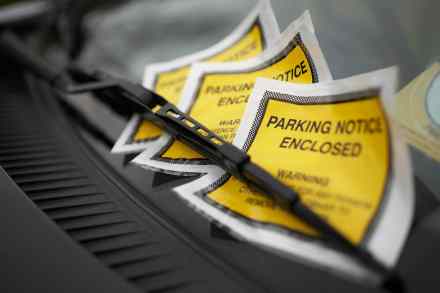
My driveway now lies in the middle of an ‘Average Speed Check Zone’. It’s a wonderful arrangement – for me – since the slower traffic makes it easier to pull into the road. Yet I am still free to drive through the village like Fangio since average speed check cameras do not record your speed, only time taken between two points. Since I rarely drive past my house without stopping, it barely affects me at all. It’s symptomatic of a wider problem. To what extent can we truly rely on technology to replace human judgment in the administration and enforcement of rules? If a traffic camera catches one person a day, that driver is likely at fault.

My plan to cut congestions on our roads

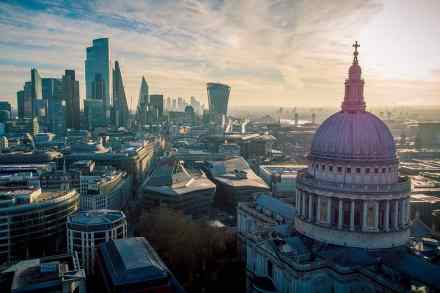
Much of the current antipathy towards the car derives from the excessive influence Londoners exert over national debates. London is an outlier in being one of the very few places where you can avoid owning a car, and where cycling or public transport is faster than driving. Indeed a car is less useful in the middle of London than anywhere else: you can’t drive to work, you can’t park at the shops and, if you set out from inner London, after 30 minutes of fraught driving you will merely end up in a worse part of London. This is not true in other cities, where 30 minutes’ drive will take you from the centre to attractive countryside and fast roads.

How to watch YouTube on your TV – and why you should

According to Pliny the Elder, Scipio Aemilianus was the first man to shave daily. The origin of the name Boeing is Welsh. The family emigrated to the US from Germany, where they were called Böing, but this was a Germanisation of the Welsh patronymic ab Owen. In Pembrokeshire there is a Church of St Elvis. Helen Viola Jackson, the last recipient of a US Civil War widow’s pension, died in 2020. Nothing beats videos produced by the obsessive for the obsessive At the time of the Napoleonic wars, France was the fourth most populous country in the world, behind only China, India and Japan, with double the population of the UK. The origin of the word ‘zydeco’ – to describe the Cajun musical genre – is uncertain.

Should the young pay less tax than the old?

In evolutionary terms, it is obvious why we get more conservative with age. Two strong forces, acting in the same direction, lead us not to bet on rank outsiders when we’re nearing the last race of the day. First, older people have more experience to draw on when making decisions: if you already know what you like, the need to experiment is much less. But that’s not all. The elderly also have far less time remaining to benefit from experimentation. If you happen on a new cuisine, band, social circle or holiday destination in your twenties, you have many decades to profit from the discovery. Someone in their sixties might have one or two.

The link between motorway service stations and shortages of PPE

I spend quite a lot of time attacking what I call ‘motorway service station’ path design. More attentive readers of The Spectator may remember this from 2019: ‘You are tooling down a motorway at 75mph and decide to stop for a break… Once off the slip road you face a barrage of signs: Food Court/Fuel/Lorries/Caravans/Coaches/Travelodge/Costa Drive-Thru, each pointing to a different fork. If your attention briefly wavers and you miss one of these bifurcations, you will find yourself hopelessly trapped in the lorry park with no means of return. This is probably what happened to Lord Lucan.

How to post a parcel without leaving your house

Here’s a useful tip. Go to the Royal Mail website and you can ask your postman to collect letters or parcels from your home at a cost of 60p per item. You pay for postage online, print a label and book a collection for the following day. Granted, it’s an extravagant way to merely avoid a walk to the postbox, but for special delivery items or parcels it’s a godsend. If you don’t have a printer at home, you can even get your postie to bring a label. Given that Royal Mail was founded in 1516, I’m not quite sure why it took 500 years to come up with this particular wheeze, but better late than never. In the US, where they have mailboxes rather than slots in the door, postmen have always collected mail.

Why restaurant food at home beats eating out

‘The opposite of a correct statement is a false statement. But the opposite of a profound truth may well be another profound truth.’ That’s Niels Bohr. Or, as Oscar Wilde put it: ‘In art there is no such thing as a universal truth. A truth in art is that whose contradictory is also true.’ Like physics and art, many other fields require that you embrace contradictions — because you can’t avoid them. Take innovation. Yes, a great deal of progress is combinatory: two or more technologies are combined to accomplish some hitherto impossible task. But, as the Soviet-era scientist Genrich Altshuller noticed, much innovation follows the opposite path, separating things which were previously combined.

The myth of the typical Brexit voter

In Jake’s Thing, Kingsley Amis gave it a name: he called it ‘the inverted pyramid of piss’: ‘One of [Geoffrey Mabbott’s] specialities was the inverted pyramid of piss, a great parcel of attitudes, rules and catchwords resting on one tiny (if you looked long and hard enough) point. Thus it was established beyond any real doubt that his settled antipathy to all things Indian, from books and films about the Raj, to Mrs Gandhi… was rooted in Alcestis’s second husband’s mild fondness for curries.’ It’s high time this phrase was revived, because piss pyramids are everywhere. We assumed more data would help humanity settle its differences: in reality it often exacerbates them.

Is it really such a shock that some people drink at work?

Thirteen years ago we shared an office building with a large international bank. A common lift connected both businesses to the underground car park. Here I once overheard one of the bank employees describing our offices: ‘And you know what else they have up there…’ He spoke in the kind of wide-eyed, aghast tone you might have expected if he were about to reveal an opium den or a branch of Stringfellows: ‘They’ve got a bar.’ This was true. In the evenings after work, while the bankers downstairs were soberly hard at work destroying the world economy, there were people only yards above them shamelessly chatting over a beer. If some nurses or doctors got a bit sloshed together after work, good luck to them Some people drink at work.

Are electric cars a Columbus’s egg?

The explosion in remote and flexible working accelerated by the pandemic slightly supports my assertion that the most important limits to future innovation may be psychological and behavioural, not technological. I am among a number of people who believe that the newly widespread use of video-conferencing is of great economic significance. A few economists and commentators agree, but all of us suffer mild social embarrassment whenever we make our case: it feels faintly absurd to evangelise a technology which is more than 20 years old, rather than pontificating about the ‘metaverse’ or some other fashionable guff. Yet history bears us out.

Everyone should be sick in the street once

I learned a great deal at university, about half of it from a man called Raymond Foulk. Ray was not Professor Foulk or even Dr Foulk: Ray was a near contemporary — he was in the year below me — but a mature student, then aged about 44. Shortly before he arrived at the beginning of my second year to read architecture, the college investigated his past life and sought to exile him to first-year accommodation far outside the college walls to prevent him corrupting the youth. There was nothing remotely illegal or nefarious about his past — but he had created and run the three Isle of Wight Festivals with his brother, and the college authorities had somehow become convinced they were admitting a second Howard Marks.

Why you shouldn’t always ‘follow the science’

Fairly early in the pandemic it was widely accepted in scientific circles that the likelihood of outdoor transmission of Covid at low-density events — say garden parties or beer gardens — was relatively low. It might therefore have seemed logical to allow such gatherings to take place sooner than we did. From a practical point of view, however, it could have been a terrible move. As is so often the case, a straightforward scientific finding does not always translate into practical legislation. Like the saying goes: ‘In theory there is no difference between theory and practice, but in practice there is.’ In reality, policy-makers cannot simply follow the science: there is always something else at work.

The key to happiness? Getting behind the wheel

A friend of mine recently visited a company in Europe which plans to manufacture human-carrying, pilotless drones. These would be capable of carrying a single passenger above the traffic at speeds of around 70 miles an hour. ‘What kind of onboard information would be conveyed to the passenger?’ he asked. Will they be told their airspeed, altitude or location… that kind of thing?’ Even today, 38 years after I passed my driving test, few things give me as much joy as a well-executed parallel park ‘Nothing whatsoever,’ he was told. ‘There is no need. The entire journey is pre-programmed, and there is no need for the passenger to know what is going on, since they are powerless to intervene.’ Now imagine this for a moment.

How men’s wardrobes prove constraints can be good for us

One thing that surprised every-one during lockdown was how many people derived unexpected pleasure from living under imposed restrictions. Can people become happier when temporarily prevented from doing things they would normally do? Almost certainly. Sometimes such circumstances force us to try something new which we subsequently prefer; at other times we enjoy having an external excuse not to do things we don’t want to do at all. There is an episode of Curb Your Enthusiasm where Larry gleefully realises that his mother’s death provides him with a reason to cancel all his upcoming engagements.

The problem with online property searches

In 1966, the legendary adman David Ogilvy set out to buy a home in France. He boarded a transatlantic liner to meet a French estate agent who had a perfect house waiting for him in Paris, but while still in mid-ocean he heard he had been gazumped. There were presumably other houses on sale in Paris at the time, but it seems the agent did not show David any of them. Instead he suggested they board a train to Poitiers, 200 miles away, to an area David later described as ‘the South Dakota of France’. On the banks of the Vienne stood a decaying 13th-century château with around 30 bedrooms and a network of dungeons. David bought that instead. He lived there from the mid-1970s until his death in 1999. Restoring the building and gardens was one of the great joys of his life.

The case for dodging cracks in the pavement

It is interesting to consider what would have happened if the Covid virus had emerged in 1921. Or 1821. Or 1521. There would have been no vaccine, for one thing. Treatment would mostly have been worse. In the 17th century we would have blamed the entire thing on Catholics. But in a few respects, bizarrely, we might have done better. For instance, miasma theory, although technically wrong, might have protected us better against airborne transmission than the early scientific consensus that the disease was spread via droplets on surfaces. A believer in miasma theory might have practised mask wearing (ideally with a large beak), indoor ventilation and outdoor gathering more assiduously than we did.

New world order: can Britain, America and Australia contain China?

43 min listen

In this week’s episode: can the new Aukus alliance contain China? In his cover piece this week, James Forsyth writes that the new Aukus pact has fixed the contours of the next 30 years of British foreign policy. Britain, he says, is no longer trying to stay neutral in the competition between America and China. On the podcast James is joined by Francis Pike, author of Empires at War: A Short History of Modern Asia Since World War II, who also wrote for the magazine this week, giving the case against Aukus. (00:45)Also this week: what can be done to save the Church of England’s parishes?

How do we calculate the value of a painting?

There’s an intriguing conversation on YouTube between Mark Carney, former governor of the Bank of England, and the artist Damien Hirst. It will be easy to find on Google, since these are not names normally found on the same page. Ten minutes in, Hirst makes an engaging observation about the value we attach to art. He explains that art collectors will pay anything for a painting, even though the raw materials cost almost nothing. It’s a hundred quid’s worth of canvas, wood and paint, but you can sell it for millions. ‘The problem happens when you make something like a diamond skull.

The economic case for flexible working

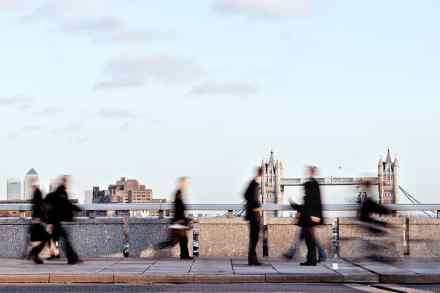
Is flexible working better or worse for productivity? What is the correct blend of remote and office work? Billions of once-healthy pixels will die in the conduct of this debate. But is it possible that we are asking the wrong question entirely? Instead of asking the proximate question ‘Do we want our employees to work remotely?’, businesses should perhaps be asking: ‘Are we ultimately better off if consumers can work remotely?’ If you are Pret, the Duke of Westminster or Southeastern trains, the answer is possibly no. For almost everyone else, however, the answer is a loud yes.

Why no one wants their holiday to last forever

I have been on holiday for two weeks. Well, not quite. You see, a bloke I once met told me that, when you take a long holiday, it’s good to work for a couple of days in the middle, as the contrast will cause you to enjoy your holiday more overall. Since the bloke in question was the psychologist and Nobel laureateDaniel Kahneman, I decided to try this. Unexpectedly, it worked. The principle derives from an idea labelled ‘hedonic adaptation’: the notion that our level of happiness will return to a baseline over time, regardless of circumstances, when our environment remains constant. Put bluntly, it explains why nobody lives permanently on a superyacht, and why, after 14 days in Barbados, you are really quite chipper about the prospect of flying back to Dorking.