Rory Sutherland

Rory Sutherland

Here’s a clue: we should all be doing cryptic crosswords

I was once asked by a previous editor of the Times how to increase sales of the paper. I was slightly more circumspect, but the thrust of my argument was: ‘Don’t bother with all that news and opinion malarkey — just teach more people how to solve cryptic crosswords.’ My argument was simple. There are now 40,000 different places where I can obtain global news and metropolitan opinion, but there is only one Times cryptic crossword. ‘Play your cards right.’ I suggested, ‘and you can be the Bernie Ecclestone of cruciverbalism.’ Revive crossword-solving as a craze; create apps whereby two people can co-operate remotely on a single grid; run live competitions.

The break-up: Is Boris about to lose Scotland?

40 min listen

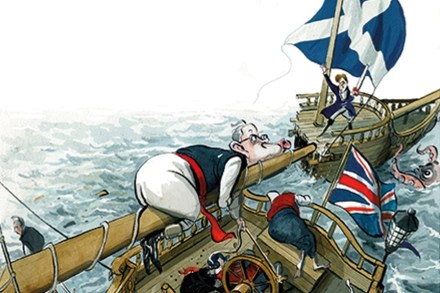
Could No. 10 infighting lose the Union? (00:40) When should the government tell us how to behave? (13:20) Can a relationship work without hugging for a year? (31:30) With The Spectator’s deputy political editor Katy Balls; The Spectator’s Scotland editor Alex Massie; vice chair of Ogilvy and Spectator columnist Rory Sutherland; Deirdre McCloskey, Professor of Economics, History, English and Communications at University of Illinois at Chicago; writer Rob Palk; and journalist Emily Hill.  Presented by Lara Prendergast. Produced by Max Jeffery and Charlie Price.

The art of the public information ad

Bring back the Tufty Club. Bring back the Green Cross Code. Bring back ‘Charley says’. Bring back ‘Only a fool breaks the two-second rule’. Bring back Vinnie Jones and ‘Stayin’ Alive’. Bring back the Country Code and ‘Always take your litter home’. Bring back public information films. Bring back the Central Office of Information. For younger readers, I probably need to explain what the hell I am talking about. Tufty was created for the Royal Society for the Prevention of Accidents, and was an implausibly sensible young squirrel whose behaviour (in contrast to the foolish antics of the louche Willy Weasel) gave lessons to children on road sense. At its height, the Tufty Club had two million members.

The economics of learning languages

There is a kind of conversation which sounds intelligent, and which makes sense at first hearing, but which deeper thought reveals to be stupid. A classic example of this is the dinner party trope where some poncy polyglot belittles the British or Americans for being terrible at learning foreign languages. The raw facts seem to bear this out. But further consideration reveals a reason behind this discrepancy. Seen through the lens of time, it is much harder to learn a foreign language if your first language is English than if it isn’t. How so? Well let’s imagine how a Swede, say, might approach the issue: 1. ‘Do I need to learn another language?’ 2. ‘What language should I learn first?’ Easy answers. 1. ‘Yes’ and 2.

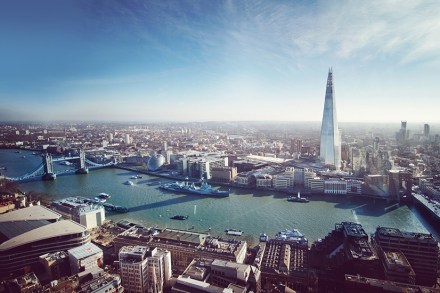
The cult of London

The phrase ‘rich people’s problems’ has its uses. I once overheard a group in a Knightsbridge restaurant sympathising with a companion in tones fit for a bereavement or life-changing injury. ‘Oh, poor you!’ It turned out that their nanny had been ill for two days while they were in Zermatt, and that Farrow & Ball was temporarily unable to supply an obscure shade of paint. To be fair, there are problems unique to the seriously rich. Take Marci Klein, daughter of Calvin. Not only was Marci kidnapped aged ten, but she later complained that in the midst of any passionate encounter with a new boyfriend, she would suddenly find herself confronted with her own dad’s name in inch-high letters. The 99 per cent never have to cope with anything like that.

Hotel breakfasts are a risky business

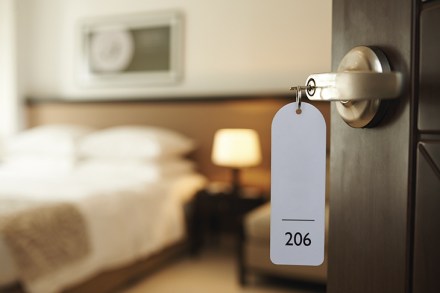
A few Spectator readers may soon find themselves confined to quarantine hotels, so the magazine thought it timely to find someone familiar with hotel life to share their advice. Since Dominique Strauss-Kahn was somehow unavailable, they settled on me. Now the first question to ask is: how fancy a hotel should you choose? This is not as simple as it sounds. Indeed, other than buying a yacht, no extravagances pall faster than a posh hotel. As Viz magazine once recommended: ‘Turn your home into a luxury hotel by installing a small fridge next to the bed and burning a £10 note every time you use it.’ I rather agree with Leo Johnson — Boris’s brother — who argues that the quality of French hotels is inversely related to the price.

Our obsession with city living is out of date

In March last year, the world made an interesting discovery. We found that a high proportion of knowledge-work could be performed remotely. Significantly, this came as a surprise to everyone. It should be a source of mild shame that, for all their talk of innovation, very few companies or institutions had experimented with this possibility beforehand. Given that this technology might help solve the housing shortage, geographical inequality, intergenerational wealth inequality, the transport crisis, the pensions crisis, the environmental crisis and almost everything else people worry about, it seems odd that it attracted so little consideration until a pandemic forced our hand.

Will remote-working strengthen the case for HS2?

Soon after the pandemic hit, the world’s airlines turned off their pricing algorithms and resumed pricing flights manually. Everything the software had learned from people’s past behaviour was suddenly rendered irrelevant. The software had been created for a world of discretionary travel where demand was elastic. If a plane seemed likely to leave half-empty, the software dropped prices to fill remaining seats. In March this once-efficient approach failed spectacularly. The few people who were still flying were doing so only in desperation: everyone else was unwilling to travel at any price. Far from reducing prices to respond to a drop in demand, it now made sense to hike them.

Is it time to reopen technology’s cold cases?

One of the staples of crime drama is the ‘cold-case squad’. This allows programme-makers to add period detail to the scenes set in the past, while the present-day scenes can show implausibly attractive forensic scientists hunting for clues in a creepy location such as a long-abandoned children’s home (an activity obviously best performed during the hours of darkness by two people who separate in mid-search for no apparent reason). I have often wondered whether it is worth establishing a cold-case squad for technology and science, to investigate those lines of inquiry that went cold 50 years ago but would now repay further investigation; or inventions that suffered from a miscarriage of justice.

Will video-calling kill bureaucracy?

Having grown up in a family business, my earliest exposure to corporate life was often baffling. I remember the first time I presented some work in a client’s office 30 years ago. He suggested some small edits, and asked that they be enacted before he presented the work to his superior, who was called Dave. ‘I’ve got a window in Dave’s diary next Wednesday to present the work on up to him, so I’d like to have the changes made by then.’ Fair enough, I thought. Perhaps Dave was flying in from Chicago. Or maybe Dave was a highly elusive figure who only appeared in the building on Wednesdays during the hours of darkness. We agreed to the changes and I left his office.

The surprising brilliance of meal kits

Ford’s Kumar Galhotra once remarked that carmaking is 100,000 rational decisions in search of one emotional decision. You spend five years and billions of dollars perfecting the drive train, the suspension and the onboard software only for people to choose a car based on the number of cupholders or the fact that the satnav is voiced by James Earl Jones. I’m hardly immune to this myself. I recently decided I wanted a Tesla because it offers an ingenious function called dog mode. This is faintly absurd to begin with: it’s even more ridiculous when you consider that I don’t own a dog.

The ludicrousness of stemmed wine glasses

In 1989 I answered my first mobile phone call on Oxford Street using a brick-sized Motorola borrowed from work. Several people shouted abuse at me from passing cars. Back then, it was also rare to make a mobile-to-mobile call. If you did, it was the main topic of conversation for the first few minutes: ‘Where are you?’ ‘On a boat.’ ‘Wow, I’m on a train going through Leighton Buzzard.’ And you’d laugh at the absurdity of the whole thing. The world’s most ludicrous object is the stemmed wine glass. Why does this idiotic item persist? Now let’s imagine that, owing to a technological limitation, early cellphones hadn’t offered interconnectivity with the fixed-line network.

My Covid risk assessment

Classes of people at moderate risk from Covid-19. Addenda to current NHS guidelines. Those at risk from coronavirus now include people who: • Are 70 or older. • Have a lung condition that’s not severe (such as asthma, COPD, emphysema or bronchitis). • Have heart disease (such as heart failure). • Have diabetes. • Are a London property owner, or buy-to-let landlord. You’re at particularly high risk from Covid if you’re an epidemiologist in an open marriage • Are running a university as a highly lucrative property and real-estate business (with a small pedagogical business attached); i.e. 90 per cent of higher education. You’re now just the Open University with crenellations.

Why we should consider testing Covid on prisoners

The Covid problem lies as much in the delayed action of the virus as in the virus itself. Since symptoms emerge only days after infection, testing often comes too late to reveal how transmission occurs, and often too late to prevent onward transmission, since many people may be most contagious before symptoms appear. This delay makes the targeting of restrictions far more complex — like weather-forecasting in reverse. (For this reason, what we may have to fear most from bioterrorism is not pathogens that are most deadly but those with delayed action.) If Covid had immediate effects (your hair instantly turned purple) we might have cracked the problem by now. Yet we still don’t know, say, whether the size of the initial dose affects the severity of the disease.

The case for road rationing

Here’s the quandary. How in future can we make the kind of rapid advances we have made during the Covid crisis without waiting for a lethal pandemic — or worse — to force our hand? We have, after all, made exceptional non-medical discoveries in the past few months. By being forced to adapt simultaneously, we have discovered better forms of collective behaviour which might never have emerged independently. I was an early convert to video-conferencing, yet even I was astounded at the extent to which the world can function remotely.

Have big cities had their day?

About 15 years ago I noticed a few surviving chattel houses in Barbados and wondered what they were. As it turns out, they were an ingenious solution to an age-old problem. These tiny yet exquisite buildings, with barely room for a bed, chair and stove, owe their origins to the abolition of slavery. Though a plantation owner was obliged to pay a wage to freed slaves, he retained ownership of the land. A form of pseudo-slavery emerged, where workers were charged rent more or less equal to their pay (like workers under 30 in London). The ingenious response was to build houses light enough to be portable. You could then carry them to nearby land where rent was lower.

Remote workers of the world, unite!

A few nights ago on Twitter, I quipped that I was planning to launch a trade union for remote workers. With dues of £10 a year, but membership of 200 million worldwide, I planned to become the Jimmy Hoffa of Zoom (my colleague Jamie McClellan, clearly a Microsoft fan, suggested we call ourselves the Teamsters). If our demands for swivel chairs were not met, we would threaten to homework-to-rule — sitting with our backs to brightly lit windows, perhaps, or running vacuum cleaners in mid-presentation. But in a way, a million or so Londoners are already doing something similar by refusing to travel to work. This is a white-collar strike — or more accurately a strike by people who normally wear collars demanding the right to work dressed like Dominic Cummings.

The danger of following ‘the science’

I have decided to divorce my wife after 31 years on scientific grounds. Though perfectly happy, on reassessing my original decision to enter matrimony it has emerged that at no point was that choice subject to peer review, there was no randomised control trial, the experiment could not be replicated and the data-set on which I based my decision failed to provide the levels of statistical confidence required. In reality, what you don’t know is always more critical than what you do I don’t think my decision to marry was bad, but it was definitely unscientific. Most important decisions are. Indeed if one phrase has most irritated me in the past few months, it is ‘the science’. What is ‘the science’ on masks?

Why our greatest inventors are supreme hucksters

People often tell me I have a strange way of looking at the world. Obviously, it doesn’t seem strange to me. But I do tend to see the world backwards. For instance, most people think the principal obstacles to economic and technological growth are all about supply. To me, it’s all in the demand. I have met one Italian economist, Mario Fabbri, who agrees. But apart from him, me and maybe Matt Ridley, there’s nobody else. Now, how crazy is this idea? What if the biggest constraint to progress really is a question of psychology, not economics? Certainly, if it is true, it should not surprise us that economists and policy--makers are reluctant to believe it. The knowledge and influence they possess would be instantly devalued.