Rory Sutherland

Rory Sutherland

Let’s rethink the working week

Whenever I hear the phrase ‘hard-working families’ a little voice in my head asks ‘what about the lazier, chilled-out families? Shouldn’t we think about them too?’ If Cameron simply abandoned this Stakhanovite fetish and announced Britain’s move to a four-day working week, he could win the election outright. It may take decades, but the work week is due for a rethink. It is hopelessly restrictive. Given the attacks on zero-hours contracts, you may be astonished to hear that over 80 per cent of employees on such contracts actually like them. I suspect many are people — carers, parents, students, the semi-retired — who can only work if they can work flexible hours. Surprisingly people are often more productive when they work fewer hours.

Why plane crashes are getting weirder

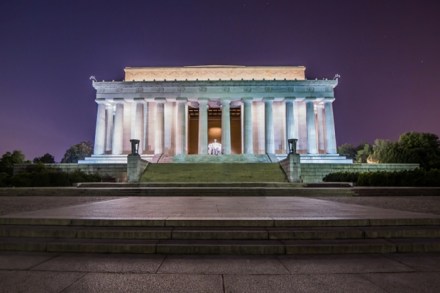
In the late 1980s, the parks service in the United States were concerned about the deterioration of the stonework on the Lincoln Memorial. So they asked the maintenance staff why the stone was decaying. The crew explained that they used high-power sprays every fortnight to clean the masonry. The water penetrated cracks and joins, weakening the stone. But they needed to spray to get rid of the large volume of bird droppings. So they erected bird nets. These scarcely worked, and were unpopular with tourists, so the parks service called in the maintenance workers again and asked, ‘Why are there so many birds?’ ‘The birds come to feed on the spiders,’ they said. ‘And the spiders are there to eat the midges.’ After dark, midges covered the memorial.

A lesson in decision-making from the world’s worst road sign

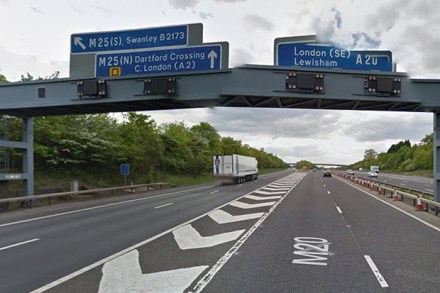
Driving from Dover on the M20 a year ago I missed the turning for the M25. A month later I did it again. Then again. ‘You bloody idiot — you missed the turning,’ I said to myself each time. Eventually, after I had missed the turning five times in ten journeys, I wondered if it was really all my fault. So I logged on to Google Street View and retraced the stretch of the M20 leading up to the junction. That’s when I found the image below. Perhaps it doesn’t look odd to you. It took me a while to spot why it is a contender for the world’s worst road sign. By the time you can read the information it contains, you can no longer act on it. Some idiot has painted a row of chevrons in the road for the previous 500 yards (which it is illegal to cross).

How to make Ukip supporters love green policies

Few people know this, but hidden within the FedEx logo, between the E and the x, there is a small white arrow, pointing to the right. I feel slightly guilty sharing this with you, since from now until your death you will find it impossible not to notice this device. It is something which once glimpsed cannot be unseen. Perception can be irreversible: when you first see that famous blue/black or white/gold dress it may be fairly arbitrary whether you see it one way or the other, but you cannot unlearn your first impression. The brain resolves the ambiguity by making a snap assumption about the light in which it was photographed; yet once your brain has made this unconscious ‘hunch’, you cannot reverse the judgment. Once you go blue/black you never go back.

Want more diversity? Hire groups, not individuals

If I were to give you a budget to choose your perfect house, you would quickly have a clear idea of what to buy. And typically your perfect house will be a bit boring. That’s because, when you can only have one house, it cannot be too weak in any one dimension. It cannot be too small, too far from work, too noisy or too weird. So you’ll opt for a conventional house. On the other hand, if I were to double your budget and tell you to buy two houses, your whole pattern of decision-making would change. You would now be looking to buy two significantly different properties with complementary strengths — perhaps a small flat in a city and a house in the countryside. Your criteria for the two houses would be wildly different.

From Umbrella Man to the Coughing Major, the truth is often very strange

Are you sitting comfortably and wearing your tinfoil hat? If so, open YouTube and watch a full-screen version of the Zapruder film, in particular the section after frame 215 where the presidential limousine passes behind the Stemmons Freeway sign. What you will see, partly obscured by the sign, is a man’s opened umbrella 30 feet from the presidential car when the first shot is fired. Yet it hadn’t rained in Dallas since early morning; Dealey Plaza was bathed in sunshine. As you can imagine, many conspiracy theories formed around ‘Umbrella Man’ — who also appears in still photographs of the scene.

How consumer habits are subject to the law of unintended consequences

Some time in the 1960s, a group of people in an advertising agency (among them Llewelyn Thomas, son of Dylan) found themselves debating the direction of causation in the purchase of electric drills. Their dispute revolved around one question: do men a) conceive a need for making a hole and therefore go and buy a drill or b) buy an electric drill in a shop because it looks cool and then wander around the house desperately looking for any excuse to make holes in things. (One joy of working in advertising is that you get paid to have the kind of conversations when sober which other people are only allowed to have when drunk or stoned.) Yet the question is not quite as silly as it sounds: your approach to selling drills would differ depending on which of these two theories is true.

The joys and sorrows of two-way ratings systems

‘J’ai failli attendre’ — ‘I almost had to wait’ — allegedly said by Louis XIV when his carriage drew up just a few seconds before he reached the bottom of the palace steps. Pathetic, I know, but I try to re-enact this moment with taxi booking apps: I watch the car approach on the map on my phone, then time my departure to emerge from the building exactly when the car pulls up at the kerb. It is a moment of synchronicity which delights the trivial mind — in the way many men enjoy timing the flushing of a lavatory so that the end of the flush coincides with the last moment of micturition. But there is now another reason to do this: to avoid keeping the driver waiting.

Let’s appoint a Ministry of Scandalous Ideas

My children have a phrase called ‘fomo’ — which stands for ‘fear of missing out’. It is a constant, mildly paranoid anxiety, exacerbated by social media, that all your friends are having a much better time than you are. There is a related problem in government, I suspect, called FODM — or ‘fear of Daily Mail’. The effect of FODM is to limit the range of political discussion and opinion to a narrow range of predictable, non--controversial possibilities for fear anything more interesting might allow the media to manufacture a scandal. This is where, unexpectedly, I sympathise with Russell Brand. In fact it was from a Brand podcast that I first heard the phrase ‘Overton window’.

How to pick the perfect present

I had always attributed it to bad luck in the genetic lottery. I am three-eighths Welsh and a quarter Scottish, which is a rotten mixture: part Cavalier, part Roundhead. This means that every pleasurable experience I have in life is coloured by Calvinist guilt: in the remote likelihood that I were ever to find myself sitting in the grotto in the Playboy Mansion, my Welsh part would enjoy it while the Scottish part would be worrying about how much it cost to heat. But it seems this guilt problem is nothing to do with my ethnicity: no human brain is remotely monolithic, but a bundle of conflicting modules cobbled together over millions of years of evolution.

Have the people who design trains and airports noticed that laptops exist?

It’s taken years to work this out, but there is a subtle art to designing an airport lounge. 1) Install power sockets and add useful tables and comfortable chairs… 2) make sure these three items are never located in the same place. You can sit comfortably, use a laptop or even charge it — but do not attempt more than one of these at the same time. In this way, almost all the gains made in information technology are being eroded by the uselessness of furniture designers and the mean-spiritedness of the people who design public spaces.

Why does Amazon think my friend is a kidnapper?

About four years ago, an irate father in Minneapolis walked into his local Target shop with a complaint. He wanted to know why they were sending his daughter, who was still at school, vouchers for baby clothes and cots. Were they trying to encourage her to get pregnant? When they telephoned to apologise a few days later he was more diffident. His daughter had fessed up: a child was due in a few months. But if dad hadn’t spotted any telltale signs of pregnancy, the shop had: she’d been rumbled by her recent purchases, in particular unscented lotions and certain dietary supplements. Some algorithm had spotted the significance of a sudden change in her buying habits, and triggered the ‘bombard with new‑baby offers’ subroutine.

S&M&B&Q: Why aren’t there sex-and-shopping novels for men?

I never got beyond page 20 in Fifty Shades of Grey. No one got shot in the first chapter, and there were more than four characters, so I rapidly found the plot confusing. In any case, I am averse to physical pain in any form (if I were to engage in BDSM activities, my secret codeword would be ‘ouch’) so it wasn’t really my thing. But the book does leave us with one literary Everest still to be conquered: if someone can write a pornographic novel for women, is there a similar fortune to be made writing a sex-and-shopping book for men? So that’s my plan for retirement. To write a novel for blokes where graphic scenes of deviant sexual activity are interspersed with practical, time-saving trips to Argos and B&Q.

The best navigation idea I’ve seen since the Tube map

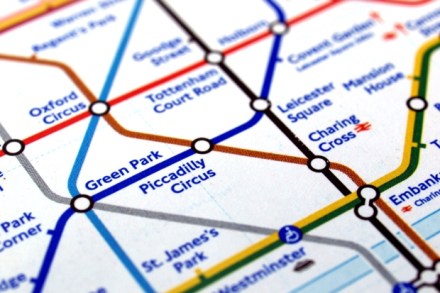
I stopped using London buses when some coward put doors on them. Twenty years ago, you could board any bus headed in the right direction and when it diverged from your intended route you’d jump off and board another. You didn’t need to understand bus routes at all. Now, when bus doors open only at specified stops, an absurd level of research is needed. It takes five minutes to work out where to wait and which route to take. Worse, buses use the dippy Paris Métro approach (Diréction Porte de Clignancourt) where only the final destination is on the front. This demands unrealistic knowledge of the outer suburbs. Where the hell is Clapton Pond? North? East?

Why everywhere should be more like Essex

Apart from the Wye Valley, where I grew up, there are only two places in Britain I’d consider living: Kent and Essex. Since Kent grabbed the ‘Garden of England’ moniker, it’s generally considered the posher of the two, but in reality the two counties are mirror images of each other: in the words of one travel writer, the Medway towns are ‘where you take your northern friends when they claim that southerners are soft’. In both places it is possible to drive through an idyllic medieval village and two miles later find yourself at a KFC drive-thru which is open until two in the morning (I like both). I now live near Sevenoaks — a town so rich that you reach it by exiting the M25 from the fast lane — but in time I’d like to move east.

Was the phrasing of the Scottish referendum question designed to create division?

It is a trick which often works on children. Do not tell them to eat vegetables; instead ask whether they want broccoli or spinach. Question such as ‘Red or white?’ or ‘Still or sparkling?’ are examples of placebo choice: a psychological hack which works rather like the placebo ‘door close’ buttons in lifts (which are usually not wired up to anything but exist to give impatient people the illusion of control). Such questions give the feeling of choice without offering much at all. The hack needs to be viewed with caution since it can subtly transmute ‘I prefer B to A’ into ‘I want B’. Watch out for canny estate agents who show you a slightly inferior house just before they show you the one they really want to sell.

Why is nationalism OK when prefixed by the word ‘Scottish’ but not ‘British?’

My second favourite religious joke is an old Jewish joke (which I read in the Harvard Review, so I assume it has passed the political correctness test). Two Jews pass a church displaying a sign promising $1,000 to all new converts. After much debate, one of the men decides to take up the offer and enters the church. An hour passes, then another as the friend waits outside. Finally he comes out of the church and his friend eagerly asks, ‘So, did you get the money?’ The first man glares back and says, ‘Is that all you people think about?’ You could transfer this punchline to the Scottish independence debate.

Why don’t more non-smokers try e-cigarettes?

I was waiting on an office forecourt recently puffing on an e-cigarette when a security guard came out. ‘You can’t smoke here,’ he shouted. ‘I’m not, actually,’ I replied. He went to consult his superior. A few minutes later he reappeared. ‘You can’t use e-cigarettes here either.’ ‘Why not?’ ‘Because you are projecting the image of smoking.’ ‘What, insouciance?’ ‘Go away.’ I did. This phrase ‘projecting the image of smoking’ — along with ‘renormalisation’, ‘gateway effect’ and the usual ‘think of the children’ — appears frequently in arguments for restricting the use of e-cigs in public places.

Why the World Health Organisation’s fears about e-cigarettes are based on prejudice, not science

This is an extract from this week's Spectator, available from Thursday. To subscribe, click here. I was waiting on an office forecourt recently puffing on an e-cigarette when a security guard came out. ‘You can’t smoke here,’ he shouted. ‘I’m not, actually,’ I replied. He went to consult his superior. A few minutes later he reappeared. ‘You can’t use e-cigarettes here either.’ ‘Why not?’ ‘Because you are projecting the image of smoking.’ ‘What, insouciance?’ ‘Go away.’ I did.

How oneupmanship wrecks things for everyone

‘There’s a little bit of a fascist in all of us. For some, the tragedy of human want may provoke an impatient urge to expropriate and centralise economic resources. Others, alarmed at the world’s exploding population, may be attracted by calls for a programme of mass compulsory sterilisation. But for me it’s letter boxes and street numbering. I want order. I want consistency. I want standards. And I want eye-watering penalties for property owners who try their fellow Britons’ patience and waste our time by making their addresses impossible to find.’ You may remember reading this from Matthew Parris in last week’s Spectator. When delivering leaflets in Derbyshire, he was infuriated by the difficulty of matching houses to their address.