Rory Sutherland

Rory Sutherland

The power of painless payment

I am one of those annoying, mildly claustrophobic people who sit at the end of a row in cinemas. There are plenty of things in life — films, plays, social events — which I can only fully enjoy knowing I can make a sharp exit at any time. It’s not that I leave: I just like to know I can. My idea of hell is a party on a boat. So I am rather enamoured with the new mobile-phone app Qkr, which lets you pay with your phone in some restaurants without waiting for the bill. It’s the honest man’s version of ‘doing a runner’. You check in on your phone, give a four-digit code to the waiter or waitress, and then you are free to order extra items and settle up on your screen.


Q: What is a good school? A: One that other people like

A few months ago I received a call from someone running a small private school near New York. They believed their school was objectively better than a larger, more famous establishment nearby, but had more difficulty attracting pupils. What should they do? This is not easy. You see, however skilled your teachers are, what really makes a good school is often simply having a reputation for being good. When parents choose a school for their children, much as they pretend otherwise, they are not really choosing a school so much as buying a peer group for their offspring (and, to some extent, for themselves).

Things we don’t mind paying for

Here’s a challenge for film buffs: can anyone remember, from the entire canon of cinema and television, a single scene set in an underground car park in which something unpleasant or nefarious did not occur? Yet I still rather like them. By far the best car park in London is the one found underneath Bloomsbury Square, which is in the shape of a double-helix. This allows you to drive all the way down and all the way up again with your steering wheel in one position. About once a year I park in the Mayfair car park at the bottom of Park Lane. I recently noticed that an annual season ticket for the car park is £3,900, which, provided you are happy to sleep in your car and wash in the nearby public toilets, makes it something of a bargain for central London property.

Why the greatest innovations do only one thing, but do it well

McDonald’s got rid of cutlery. Uber does not allow you to pre-book taxis. Amazon began by selling only books. Conventional logic would suggest that successful innovations are best when they allow you to do lots of things. Actually, if you want your innovation to change behaviour, it is often best to launch an innovation which does only one thing. It is much easier to adopt a new technology if its function is unambiguous. The device solves one simple problem, and solves it very well. If X then Y. I have never had much luck with multi-purpose kitchen devices. Although theoretically they have a plethora of different uses, their application is so vague that you end up not using them at all. You may have a microwave which also contains a grill function. Have you used it more than twice?

The other side to the division of labour: the concentration of attention

Adam Smith’s theory on the division of labour first appeared in 1776 in The Wealth of Nations. The idea was later revived by The Coasters in their early 1960s B-side ‘My Baby Comes to Me’. Well, she go to see the baker when she wants some cake She go to see the butcher when she wants a steak She go to see the doctor when she’s got a cold She go to see the gypsy when she wants her fortune told But when she wants good loving my baby comes to me When she wants good loving my baby comes to me. As Mr McClinton explains, rather than dividing his efforts between the supply of cake and fortune-telling, the baker is better off concentrating on the former.

Does HS2 pass the Butterfield test?

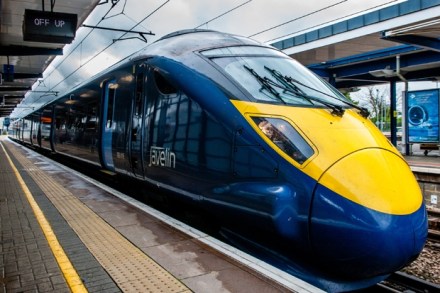
Despite my opposition to High Speed 2, I am quite a big fan of HS1, the line which runs from St Pancras to Ebbsfleet, Ashford and on to other towns in north and east Kent. I also think HS3 — a proposed line linking the cities of t’Northern Powerhouse — is a good idea. Why the inconsistency? Well, I believe HS1 and HS3 are significant innovations whereas HS2, though it costs far more and covers a much greater distance, is not. In fact I would argue, counterintuitively, that HS2’s greater length is precisely what makes high-speed rail less necessary: the cost of the longer journey means that most people do not make it very often.

Hayek was right: you can’t understand society without evolution

In December the controversial satellite TV channel ReallyTV launches its Christmas season with a flagship reality show called From Homs to Hamburg. A dozen refugees, accompanied by their families, will be given a budget of $500 and two-days’ water in a race to cross the German border using any form of transport. The prize for the winning family is a car and a two-bedroom flat in -Billstedt. The show follows the success of the US reality TV show Monterrey to Monterey,in which Mexican families compete to cross the Rio Grande by hiding in shipping -containers. Now, before you recoil in disgust, I should just point out that nothing like this programme will be appearing this Christmas, because I made the whole thing up. ReallyTV does not exist.

Spontaneous recombustion: how vapers have re-invented pipe-smoking in electronic form

A fascinating newcomer on the British high street is the vape shop. These were perfectly described by my friend Paul Craven as ‘like a cross between an Apple Store and an Elizabethan apoth-ecary’. In the splendid All About da Vape in Deal, there is a glass cabinet full of new, hi-tech ‘mods’, ‘tanks’ and ‘coils’, while on rows of shelves behind the counter is a Cambrian explosion of coloured bottles containing e-liquid in many strengths and flavours, hipsterishly labelled Suicide Bunny, Jimmy the Juice Man or Miss Pennyworth’s Elixirs; I recently bought a bottle of something called Unicorn Puke.

We let programmers run our lives. So how’s their moral code?

A few years ago, in the week before Christmas when supermarket sales are at their highest, staff at one branch of a leading British chain regularly did the rounds of local competitors’ shops buying up their entire stock of Brussels sprouts. It was, in its ethically dubious way, an interesting experiment. You might assume frustrated shoppers would merely buy all the other things on their list and then go somewhere else for their sprouts. They didn’t. As the perpetrators suspected, spending 30 minutes in a shop knowing that you’ll eventually have to make a separate trip to buy sprouts feels like wasted time — so people promptly left to find a shop where they could buy everything in one place.

From A to B, differently

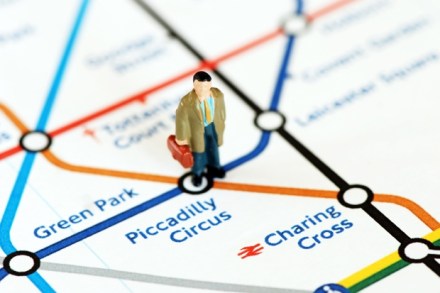
Afamily member is thinking of moving and asked for commuting advice. Well, first add 25 per cent to any journey time estimate containing the phrase ‘door to door’. When commuters cite journey time to work, the journey they have in mind is one which happens with the frequency of a solar eclipse: when every traffic light is miraculously green and the train draws in just as you reach the platform. Generally the words ‘door to door’ can be replaced by ‘in a parallel universe’ without altering the meaning of the surrounding sentence. I also advised asking the estate agent what is the second-best way to get to work. No one ever thinks of asking this, but it is vital.

Eugenics for your email

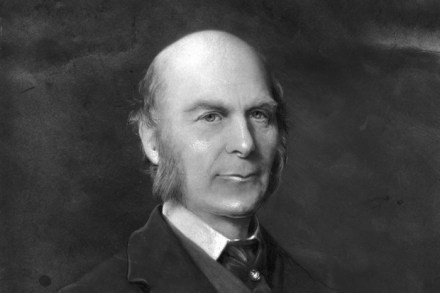
You won’t read much about Sir Francis Galton nowadays because, while it’s inarguable that the man was a giant in scores of scientific fields (many of which he invented), it is hard to deny that he was a teensy-weensy bit racist. That he wrote a letter to the Times in 1873 entitled ‘Africa for the Chinese’ is probably as much as you need to know. At the moment, I can’t find my copy of his 1869 book Hereditary Genius; possibly, along with the rest of my vast library on eugenics, it’s at Der Roryhof, my holiday home perched high on a crag overlooking the Bavarian Alps. But I remembered it when my company updated its email interface last week so ‘Reply all’ was now the default mode of reply.

Two industries in need of regulation

I had a water meter installed in my flat a few months ago. I looked at it just now and it said ‘13’. I didn’t know what ‘13’ meant, so I went online to check. Apparently, in a few months, four of us have used 13 cubic metres of water, or 13,000 litres. The £40 I’ll pay for this seems rather a bargain: £40 is highly preferable to carrying 13,000 litres up two flights of stairs. But in any case I needn’t worry about overpaying, because there’s an organisation called Ofwat which keeps an eye on Southern Water to check that they don’t charge me £1 too much for my 13 cubic metres. Then there’s my electricity bill; that seems fairly good value too.

Free markets and dumb luck

The greatest mistake made by conservatism was its overly close relationship with neo-classical economics. This was a marriage of convenience: finding themselves Johnny-no-mates in the academic world, the conservative establishment hastily bunked up with the only group of social scientists who were prepared to talk to them. This cohabitation was not only unhealthy but boring. Economics is obsessed with a very narrow definition of efficiency, beyond which it can see no other virtues. It hence turns political rhetoric into a slightly Aspergic narrative about efficiency and growth — as though Churchill had urged us to fight the second world war ‘to regain access to key export markets’.

Let’s pay for the BBC content we use

What follows is a proposal for reducing the BBC licence fee and improving the corporation’s output while saving the British newspaper industry. All that’s involved is a basic understanding of pricing psychology combined with a digital currency for micropayments. Under my proposals, half the licence fee would fund the BBC’s Reithian purpose; the other £60 could be paid direct to the BBC as now or, if you chose, paid to you as a digital currency (6,000 Beebcoins). People could buy additional Beebcoins, which could be spent on BBC or competitor content — including content from newspapers. Notionally the BBC would lose out; in practice they would gain revenue, as they could now sell premium services.

The presentation of choice

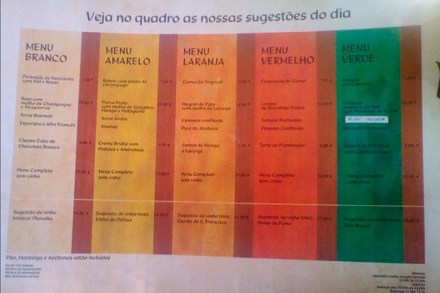
The appallingly bad photograph below was taken on my mobile phone about 15 years ago. It shows the menu layout from the Lisbon restaurant Chapito. I have never seen any other restaurant adopt such an ingenious format. You are given five set menus to choose from (white, yellow, orange, red and green) with a suggested wine for each. But you are perfectly free to substitute any dish from any other menu, or omit a course if you want. It is a brilliant example of what is sometimes called ‘choice architecture’. This format makes it easier to choose what to eat. But it also helps you make a better choice.

Just giving

Seven years ago I wrote here about a site called Kiva.org. I had met the co-founder of this charity when she came to Oxford in 2007 and was intrigued by her idea. Jennifer Jackley had been inspired to start the site by Muhammad Yunus’s work on microlending — the practice of issuing small loans to people in the developing world who would other-wise have no access to credit. At Kiva.org, rather than giving money, you lend it. You choose people and businesses, mostly in the poorest parts of the world, and advance them a fraction of the amount they want to borrow, typically $25. The loan is then paid back to you monthly, usually over a year. You can withdraw it or, more commonly, lend it to someone else. It is a kind of circulatory charity.

A lightbulb moment at the self-checkout

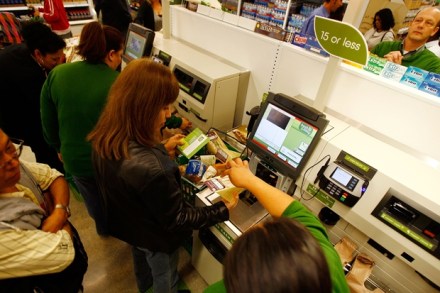
I spent the last few days in Deal and Folkestone with Professor Richard Thaler at Nudgestock, Ogilvy’s seaside festival of Behavioural Science. On my way home I decided to stop off at M&S to buy some runny scotch eggs and a pie, accompanied by some unwanted green things to make my basket look middle-class. Finding a long queue at the main checkout, I grudgingly took my goods to the self-checkout machines. (For the uninitiated, Richard Thaler is the co-author of Nudge, and more recently the author of Misbehaving.

In praise of the ‘Don’t know’ voter

I am scraping the edges of my memory here, but I am fairly sure that opinion polls in my childhood (for the elections of 1970, 1974 and 1979) quoted four percentages: Conservative, Labour, Liberal and ‘Undecided’. Nowadays no figure is quoted for ‘Don’t knows’, and party support is contrived to add up to 100 per cent. Undecided respondents are variously treated according to each polling company’s methodology: a few ignore them completely; others apply a supplementary question such as ‘Which way would you vote if voting were compulsory?’ Their answer to this may be statistically downweighted, but it will still be added to the total for one party or another, rather than being listed under ‘Don’t know’.

The importance of selective inefficiency

Readers of a certain age may remember choosing a cassette player in the 1980s. In theory the process was simple: we would have read reviews of competing devices in audiophile publications and then bought whichever device scored best in terms of sound quality, reliability and value for money. Except we didn’t do this, did we? We went into Comet, looked at three or four examples we considered most attractive, and then pressed the ‘eject’ button on each of them. Invariably we bought the cassette player with the most elegant eject action. If it gracefully whirred open with a sweet damping movement, that was a clincher. Any device in which the cassette holder lunged open with a ‘clack’ was rejected as manifestly rubbish.

Why estate agents aren’t dying out

I don’t like to make business predictions, but — barring some apocalypse — I suspect there will be plenty of estate agents around in 2065, and occupying prominent high-street shopfronts just as they do now. This may seem an absurd prediction: after all, almost no one now uses an estate agent to find a house: we go to property websites instead. And, since we all assume the purpose of an estate agent is to find buyers for a house, a role usurped by Rightmove and Primelocation, we think the remaining days of the estate agency are few. However, perhaps the principal role of an estate agent is not to find us a house so much as to be a scapegoat if the house we buy proves to be terrible.