Roger Kimball

Roger Kimball

Roger Kimball is a US columnist for The Spectator, the publisher of Encounter Books and the editor and publisher of the New Criterion.

Donald Trump’s end-of-year victory lap

From our US edition

As a mighty US armada bobs in the Caribbean off the shores of Venezuela, President Trump just addressed the nation from the Diplomatic Reception Room at the White House. With characteristic delicacy and understatement, he outlined the accomplishments of the first 11 months of his second term in office, lightly criticized his predecessor and cautiously opined about what the future held in store for the United States of America in the coming semiquincentennial year.  Well, some viewers may wish to dispute my emphases and assessments of tone. But let’s just say that the President’s short speech was vintage Trump. It was hyperbolic, yes, over the top, indubitably, but in essence 100 percent true.

trump 2025 achievements

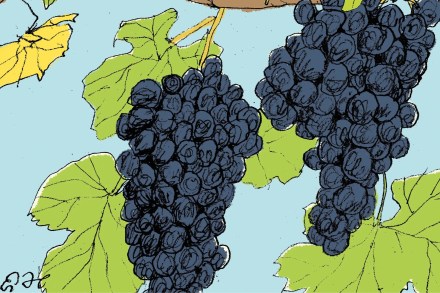
Flirting with Passetoutgrain, Burgundy Pinot Noir’s fun sister

From our US edition

In his History of the Franks, Gregory of Tours (c. 539-594) wrote one of my favorite opening sentences: “A great many things keep happening, some of them good, some of them bad.” Who can disagree? Gregory’s works are full of interesting morsels. Writing about the miracles of St. Julian, for example, he notes that a cask of wine that was left half empty was found “overflowing and forming a rivulet of wine across the floor. Although drawn from repeatedly, the cask remained full until the next day.” A good fellow to have around, that Julian. Gregory seems to have taken a keen interest in wine. He was one of the first people to opine about the wines of Burgundy. which he compared to storied Roman Falernian in 591. What do you suppose that wine was like?

America’s free-speech war on the EU

From our US edition

If I were a bookie, I would be making odds now about when the European Union will finally unravel and die. Unless there is an imminent and drastic course correction, the blessed event cannot be far off.  I might need a Doomsday Clock akin to the one publicized by the Bulletin of the Atomic Scientists. Their clock hovers near midnight, which signifies nuclear Armageddon, the minute hand pushed closer or farther away from the blast depending on minatory world events. My clock would measure the EU’s proximity to implosion. Its recent decision to fine Elon Musk and his company X €120 million for “non-compliance with transparency obligations” has me nudging the minute hand closer to midnight. “Non-compliance with transparency obligations.” What do you reckon that means?

Federal judges crave the spotlight

From our US edition

In the great injunction sweepstakes that have followed Donald Trump’s second administration like a shadow, we have seen district court judges with a hankering for executive power attempt to play president in more than a hundred cases from immigration and tariffs to funding various executive branch agencies, so-called trans-rights, DEI and climate change. Some of these injunctions and temporary restraining orders are still pending. Many, perhaps most, have been resolved by the Supreme Court in ways that favor the Trump administration, not always categorically but usually by affirming the broad scope of executive power envisioned by Article II of the Constitution.

judges supreme court
WIne

Four Twenty Five’s wine list is better than most

From our US edition

I was recently invited by friends to a small birthday fête at Four Twenty Five, Jean-Georges Vongerichten’s latest New York restaurant at (wouldn’t you know it) 425 Park Avenue. It was, as Bertie Wooster might have put it, oojah-cum-spiff, a worthy companion to the Terrace and Nougatine, those other famed New York refectories by Jean-Georges. I won’t bore you with the victuals, which were so far from boring themselves that it would take more than a column just to enumerate those toothsome morsels. Instead, let me mention a couple of the wines we enjoyed, noting for posterity that the wine list at Four Twenty Five is one of the most extensive and thoughtfully selected in New York City. I hope to have occasion to make a thorough study in the years to come.

The attack on the Heritage Foundation is an attack on MAGA

From our US edition

It’s Thursday morning as I write. Has The Wall Street Journal weighed in with another attack on Kevin Roberts yet, the besieged president of the Heritage Foundation? No? Be patient. It’s early hours yet. Another fusillade is due any minute.  I have written about that tempest-in-a-teapot myself. I agree that Roberts’s brief video statement defending the Heritage Foundation’s friendship with Tucker Carlson was ill-advised. I say why in that column. I also think that his efforts at damage control have been ineffective. But given the incontinent fury of the response to that two-minute and thirty-nine-second video, I am not sure that anyone could have calmed the storm.

Heritage Foundation

Time for a reckoning on the 2020 election

From our US edition

Last spring and summer I watched bits of our contemporary gladiatorial contests, AKA congressional confirmation hearings. One thrust that many Democrat inquisitors relied on to soften up their victims was some form of the question: “Do you believe that Joe Biden won the 2020 election?” At least one contestant resorted to the parry “I believe that Joe Biden was seated as president,” which of course is not quite the same thing as acknowledging that he actually won. The subterfuge did not pass by unnoticed. Nothing escapes these Democrat Divas of the Dialectic. Having exposed the equivocation, they attempted to pounce. “Aha! So you are an election denier! Now let’s talk about the attempted insurrection of January 6.

biden campaign
egly-ouriet

What doesn’t kill Egly-Ouriet makes it stronger

From our US edition

In recent columns, we have visited some lesser known spots in Burgundy – Saint-Romain, Maranges, Ladoix – where the wines are good and the prices reassuring.  This time, I’d like to travel to Champagne to introduce you to one of my most exciting recent discoveries, the wines of Egly-Ouriet. You know about Dom Pérignon, Krug, Bollinger and Taittinger. They can be very good. Egly-Ouriet is something else. Remember that Champagne occupies the northernmost precinct of French wine production. The northeastern bit of the area borders Belgium. It’s chilly up there, and damp. Nietzsche famously declared that, “What doesn’t kill me makes me stronger.” That may not be true of people. I am pretty sure it is not. But the observation has a certain application to wine.

Trump inherited a weaponized justice system

From our US edition

Has Donald Trump “weaponized” the justice system to go after his political enemies? The answer is no. “What about former FBI director James Comey?” you ask. “What about New York Attorney General Letitia James?” Both went after Trump hammer and tongs. Now both have been indicted by the Trump Justice Department. Are those not textbook cases of “weaponization,” of “retribution,” of using the power of the system to punish people who have punished you? Hold on. I write this in mid-October. By the time you read it, I suspect that the list of indictments will be much longer.

Trump

Trump knows personnel is policy

From our US edition

In May 1801, Thomas Jefferson wrote a complaining letter to a friend. “There is nothing I am so anxious about as making the best possible appointments.” Donald Trump would appreciate Jefferson’s anxiety. “Personnel is policy.” As far as I have been able to discover, that slogan gained currency in the Reagan administration. But it articulates a truth that political thinkers from Aristotle to Machiavelli to James Madison appreciated. The first line of Article II of the Constitution reads: “The executive Power shall be vested in a President of the United States of America.” That’s “a President.” Only one. Not “a President and a bunch of district court judges.” Not “a President and sundry federal agencies staffed by unaccountable bureaucrats.

personnel
Nunes

Revisiting the Devin Nunes winery

From our US edition

Anyone who writes about wine for a while finds himself coming back to old friends as the years go by. This wine here was actually fuller and more sumptuous in that vintage five years ago, while that wine over there really came into its own in the most recently released vintage. Just as with people, some wines with early promise somehow go astray and never amount to much, while others that were disorganized and introverted when young suddenly blossom and turn outward as they age, the magic sunflowers of viticulture. Most writers about wine will have similar stories. It’s a bit rarer for most of us, however, to get in on the ground floor and stand by while a new vineyard, fawn-like, is born, manages to stand up on its own and then goes trotting off.

Iryna Zarutska and Charlie Kirk have exposed the media’s depravity

From our US edition

“Clarifying.” It seems almost obscene to say that the murders of Iryna Zarutska and Charlie Kirk were “clarifying.” But the huge and still-exploding response to those savage events shows that the mournful synergy of murder can be an occasion for illumination as well as for grief. To say that something is “illuminating” is not necessarily to say that it is pleasant. The media yearned for a pro-Trump, heterosexual, white male killer of Kirk. One out of three was a disappointment A picture is worth a thousand words. Iryna Zarutska, a 23-year-old refugee from Ukraine, was murdered on a commuter train in North Carolina on August 22. The attack went mostly unreported until early September. Then video footage of the incident emerged. That changed everything.

media

The bloodthirstiness of the left is not new

From our US edition

The savage assassination of Charlie Kirk at a Turning Point rally at Utah Valley University yesterday prompts me to wonder, as I have often wondered, what is the leading characteristic of the left? There are several candidates. Intolerance is one. A rancid and anchorless do-goodism – think of Dickens’s Mrs. Jelleby and her “telescopic philanthropy” – is another.   But on balance I think that the late Australian philosopher David Stove was right: the leading characteristic of the left it is bloodthirstiness. Behind all the emollient rhetoric about brotherhood and equality, bloodthirstiness is the left’s most reliable calling card.   That is one reason that the nearly instant emission by prominent Democrats of their opposition to violence rings so hollow.

Charlie Kirk

Trump’s battle against the tyranny of lawfare

From our US edition

A buzzword of the moment is “lawfare.” What is lawfare? It’s one of those portmanteau words that Lewis Carroll taught us about. A combination of “law” and “warfare,” “lawfare” is distinctly less clever an invention than “chortle” – one of Carroll’s coinages, my beamish boy, which combines the words “chuckle” and “snort.” The word “lawfare” apparently dates back to the late 1950s, though the phenomenon – using and abusing the law in order to conduct political warfare – has come into its own only in the past couple of decades. The fact that there is now an eponymous website devoted to the subject is but one patent of its currency.

lawfare
Burgundy

The best bargain burgundies

From our US edition

Apropos the subject of this column, videlicet, wine, a friend told me an arresting story about the once-famous British theater critic and playwright Kenneth Tynan (1927-1980). Sometime in the 1960s, when the prickly Gamal Abdel Nasser ruled Egypt, Tynan went sailing on the Nile. One night, he came ashore to enjoy dinner at the Luxor Hotel. The wine list was impressive. He ordered a famous bottle that cost practically nothing. The head waiter swept over to tell him, so sorry, they’d drunk the wine out. Tynan manfully looked again at the list and asked for the second best bottle. Alas, the waiter replied, that wine, too, had been exhausted. “Well, what do you recommend?” Tynan asked. To which the answer was: “We have no wine of any kind.” That hasn’t happened to me yet.

Poland’s Nawrocki heralds a more mature populism

From our US edition

Yesterday, September 3, President Trump welcomed Karol Nawrocki, the newly inaugurated president of Poland to the White House. It was a stirring occasion, replete with a surprise military fly-over of F-16 and F-35 fighter jets flying in “missing man” formation to honor  Major Maciej “Slab” Krakowian, the Polish pilot who died in a crash in Radom, Poland, last Thursday.  Nawrocki, who narrowly won the presidency in June, is often described as “the Polish Trump.” It’s an accurate epithet. Nawrocki is as much a “Poland First” president as Trump is an “America First” president. The 42-year-old historian (Nawrocki holds a PhD in history) supports a list of policy initiatives that could have come right out of the MAGA playbook.

Nawrocki Trump

Trump is liberating the Smithsonians from ‘Woke’

From our US edition

Back in March, Donald Trump issued an executive order called “Restoring Truth And Sanity To American History.” Its aim was to counter the “revisionist movement” in our cultural institutions that sought “to rewrite our Nation’s history, replacing objective facts with a distorted narrative driven by ideology rather than truth.”   Exhibit number one was the Smithsonian Institution, the sprawling agglomeration of museums, libraries, historical landmarks and assorted educational centers in and around Washington DC with affiliate institutions in 47 states.  Founded in 1846, the Smithsonian was the culmination of an earlier movement, supported by such luminaries as Thomas Jefferson, James Madison and John Quincy Adams, to “promote science and the useful arts.

Smithsonian (Getty)

Trump must end the National Endowment for Democracy once and for all

From our US edition

Readers of J. K. Rowling’s Harry Potter entertainments will recall that the number-one bad hat, Tom Marvolo Riddle, AKA Voldemort, had a clever way of preserving himself. Rightly worried that the forces of good might try to destroy him, the Dark Lord devised a way of infusing living bits of himself into various objects and people. The resulting magical charm was called a “Horcrux.”   “If the body of a Horcrux owner is killed,” we read in a Potter gloss, “that portion of the soul that had remained in the body does not pass on to the next world, but will rather exist in a non-corporeal form capable of being resurrected by another wizard.” Nice work if you can get it.

Cambridge University should be ashamed of itself for honoring Angela Davis

From our US edition

Remember Angela Davis? Few people under fifty do. Was Cambridge University counting on that historical ignorance when it decided to honor Angela Davis with an honorary degree?   In case you, Dear Reader, are a little fuzzy about Davis, I note for the record that the former Black Panther and two-time vice-presidential candidate on the Communist Party ticket with Gus Hall is the recipient of many honors, including the Soviet Union’s Lenin Peace Prize.  Cambridge University, of course, has long demonstrated a certain fondness for Commies, as the names “Kim Philby,” “Guy Burgess” and “Anthony Blunt” remind us.

Trump borders

Trump has the resolve to defend the West

From our US edition

There is never a dull moment in the second, more cheerful reign of Donald Trump. I am writing from London, but was in France last week, picking my way through various battlefields and cemeteries in and around Verdun, Bastogne (think “Easy Company” and “Battle of the Bulge”), and Reims. Well-informed readers will know, as I did not, that “Reims” is not pronounced as its letters might suggest but rather as a nasalized “Reince.” I have always associated the place with champagne, and I am pleased to say that the city capitalizes on the association. But one point of interest had nothing to do with that magical elixir. Reims was also the location of General Dwight D. Eisenhower’s headquarters at the end of World War II.