Roger Kimball

Roger Kimball

Roger Kimball is a US columnist for The Spectator, the publisher of Encounter Books and the editor and publisher of the New Criterion.

The Ukraine debacle showcases Joe Biden’s many failures

From our US edition

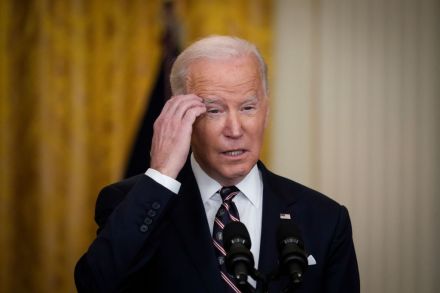
Snap quiz: who was president when Vladimir Putin gobbled up Crimea? If you said Barack Obama, go to the head of the class. What countries did Putin invade while Donald Trump was president? If you said “None,” you get to stay at the head of the class. This is a harder one: who was president when Putin once again violated Ukraine’s borders, sending in Russian troops to two breakaway regions in Eastern Ukraine? I say that this is harder because the obvious answer — “Joe Biden” — is not really, or not wholly, correct. Joe Biden is an empty shell. On good days, he looks like a mannequin. Really, though, he is a puppet, a creature controlled by others. I have called those others “The Committee.

biden ukraine

The heady reds of Avignon

From our US edition

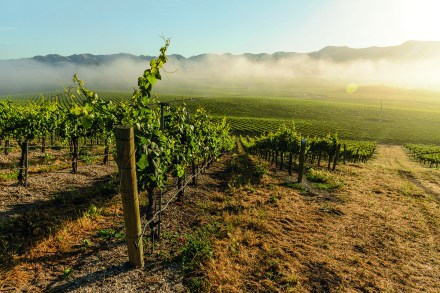
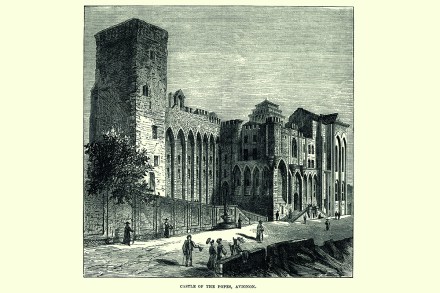
To you and me, “Châteauneuf-du-Pape” means the bold, dark, spicy red wine from the Rhône region of southeastern France, a bit north of the town of Avignon, with bottles usually featuring a glass-embossed representation of the keys of St. Peter. If you were Jacques Duèze, known to history as Pope John XXII, second and longest reigning (1316-34) of the Avignon popes, Châteauneuf-du-Pape meant first of all that “new castle of the pope” he built on the hill overlooking the town. After the popes left, it fell into desuetude and was raided for stone by local builders. During the Revolution, all the buildings except the great tower or donjon were sold off. During World War Two, the Germans attempted to dynamite the structure but succeeded in destroying only the northern half.

Châteauneuf-du-Pape

Little Justin and the secession of the plebs

From our US edition

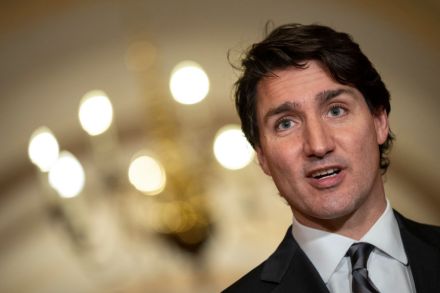
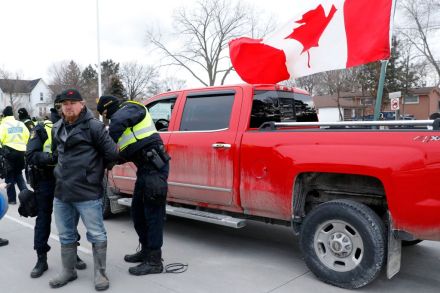
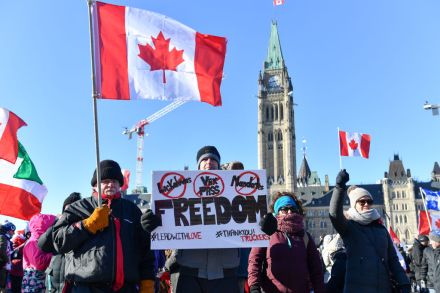
Justin Trudeau, still the prime minister of Canada, is the first person in history to invoke the Emergencies Act, a law enacted in the 1980s to allow the government to take special, temporary action to deal with an “urgent and critical situation” that “seriously endangers the lives, health or safety of Canadians.” Little Justin is embarrassed by the thousands of truckers in Canada who are protesting, first of all, the country’s vaccine mandate but, more to the point, the government’s intrusion into the lives and livelihoods of the people. Justin is embarrassed. That’s the real national emergency. In response, Trudeau is transforming Canada into a police state. People with tow trucks, he said, will be “coerced” into moving the rigs of recalcitrant truckers.

A plague of phony experts and elites

From our US edition

Quick: what do you think when someone tries to convince you of something by prefacing their remarks with the phase “Experts say”? I think of that rude, two-word imperative of Germanic origin that ends in “You.” As Laplace said in another context, it is par expériences nombreuses et funestes that I have this almost Pavlovian reaction. The “experts,” alas, are not expert, i.e, “possessing a high degree of skill in or knowledge of” a certain subject. For proof of my contention I offer the name of Anthony Fauci or the organization that glories in the acronym CDC, that is, the Centers for Disease Control. They are both a bit like Michael Avenatti, once championed everywhere as a genius and presidential material, but now universally exposed and discredited.

elites experts

End of the road for malicious lockdowns

From our US edition

Is a modicum of sanity about to reassert itself regarding the Wuhan Flu? Are the people finally exhausted by their panic over the Fauci-altered coronavirus? Remember those little bulletins that Mike Pence carried around, enjoining us all to to take “fifteen days to stop the spread”? I think we’re at about day 750 now. New York restaurants and many cultural emporia demand that you produce your papiers (it sounds better in German) — identification plus an image attesting to your “vaccination status” — in order to enter. Some are even requiring proof that you’ve had a “booster” jab. Pfizer likes that.

New Rome, new home

From our US edition

I believe that Maximinus Thrax, whose brief reign ran from 235 to 238 AD, was the first Roman emperor never to have set foot in Rome. The Thracian brute started a trend. As the years went by, more and more Roman emperors gave the city a miss. Diocletian (284-305), who brought the crisis of the third century to an end, hated the city. Some later emperors settled on Ravenna as the seat of power for the Western empire. Constantinople emerged as HQ for the East. Rome retained a certain ceremonial significance but was increasingly irrelevant to the business of empire. The turn away from Rome happened for many reasons.

rome
wine

Delicious wines from the Omicron Open

From our US edition

Some people think that it is the job of a wine critic to discover great bargains in the world of bottles and impart the news in hushed but excited tones to the madding crowds. Maybe that’s part of the remit. I incline, however, to this piece of wisdom from George Saintsbury, prosodist to the stars and incomparable, if quirky, cicerone to the fructum vitis et operis manuum hominum, which is to say: wine. “There is no money,” Saintsbury wrote, of the expenditure of which I am less ashamed, or which has given me better value in return, than the price of the liquids chronicled in Notes on a Cellar-Book. When they were good they pleased my senses, cheered my spirits, improved my moral and intellectual powers, besides enabling me to confer the same benefits on other people.

Malik Faisal Akram and our shoddy security state

From our US edition

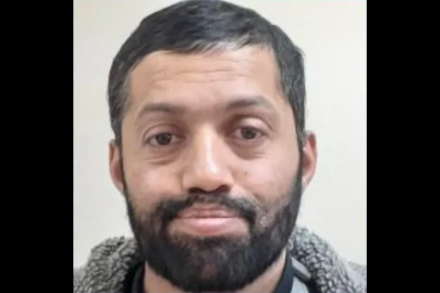
It wasn’t so long ago that an official at London’s Heathrow airport, warned by the scanner through which my luggage was passing, uttered an Archimedean Eureka! (or words to that effect), pounced on my suitcase and abstracted an incriminating bottle of shampoo, which he confiscated. “Over the limit, Sir,” he exclaimed, as a colleague asked me to step aside and extend my hands to be tested for evidence of contact with explosive materials. It’s not only in England, of course, that functionaries subject the populace to their petty tyranny. It’s the same drill in the US. “Oh, but it’s to keep you safe, you know, that’s why we spend billions on our intelligence services and elite crime fighting units, equipping like armies so they can protect us from the bad guys.

malik faisal akram

Ted Cruz’s glorious about-face on January 6

From our US edition

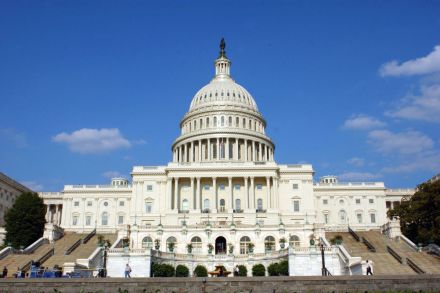
Despite the best efforts of the media, the Democrats, and Liz Cheney, the Capitol protests of January 6 refuse to lodge themselves in the public consciousness as a nightmarish enormity. According to The Narrative, it was an “insurrection” that was worse than 9/11, worse than Pearl Harbor, the worst attack on “our democracy” since the Civil War. Yet almost no one believes that. Why? Because at the end of the day, the rambunctious events of January 6 were nine tenths theater, one tenth tragedy. Tucker Carlson was right. It was a protest that “got out of hand.” That fact is slowly crystalizing as the official narrative begins to crumble. The other day, I wrote a column lamenting Ted Cruz’s comments at the Senate hearings on the January 6 protest at the Capitol.

What was Ted Cruz thinking?

From our US edition

At least since the 2016 election, one of my favorites politicians — one of the few I could stomach at all — was Ted Cruz. He is certainly one of the smartest and most articulate members of Congress — not, I know, a high bar, but Ted really is someone with deep rhetorical gifts, an illuminating grasp of constitutional principles and a steely eyed appreciation of political realities. After a very brief flirtation with Scott Walker, my favored candidate for president in 2016 was Ted Cruz. I endorsed him publicly and even labored on the outskirts of his campaign for a couple of months. But it was not to be. His announcement that, should he win the Republican nomination, he would pick the egregious Carly Fiorina as a running mate made me raise an eyebrow.

ted cruz

Travels with Herodotus

From our US edition

I am part of an informal reading group with a few friends and colleagues. At the moment, we are reading Herodotus’s Histories (or “Inquiries,” as he might have said had he been writing in English). It’s lots of fun, in part because it is also an excuse to conduct a little wine appreciation class, but also because that old denizen of Halicarnassus — Herodotus lived from around 484 to 425 bc — was possessed of such high-octane and companionable curiosity about the world: what happened when and to whom and with what result. He wanted to know; moreover, he wanted you to know. Herodotus is most famously a major source of our knowledge of the Persian Wars and such signal moments as the Battle of Marathon (490 bc), Thermopylae (480) and Salamis (also 480).

Herodotus
revolution

How the 1960s institutionalized us

From our US edition

I was recently on Steve Bannon’s show, The War Room, to talk about my book The Long March. It was first published in 2000, so you might think that it is steeped in the sepia tones of another age. Doubtless in some ways it is. But in essentials, I believe, we are living now with the fruits of ideas that were but tender shoots when I was writing that book. Its subtitle is “How the Cultural Revolution of the 1960s Changed America.” The 1960s! Aren’t we done with that silly decade yet? It was sixty, not twenty, years ago that Sgt Pepper taught the band to play. Haven’t we moved on? You tell me.

Adieu, Teddy Roosevelt

From our US edition

It is a custom to offer a blindfold to prisoners facing a firing squad. Just so, the authorities covered the statue of Teddy Roosevelt that has stood in front of the American Museum of Natural History before it is carted off to its new home in North Dakota. Everywhere one turns, America’s past is being dismantled. Just last month, a statue of Thomas Jefferson that had graced New York’s City Hall for 187 year was removed.  At schools and colleges across the country, images are being covered or removed, buildings renamed, history rewritten. It’s open season on the past. Back in June 2020, I wrote about the decision to remove the statue of Roosevelt from in front of the institution he help to found.

roosevelt

Who’s a vigilante anyway?

From our US edition

The idea that what happened at the Capitol of January 6 was an “insurrection” was always a ridiculous and malevolent exaggeration. The passage of time has exposed that politically motivated lie and sent the rats scurrying for alternative explanations. Right on cue, we find a hobbyhorse leftist taking to the pages of the Washington Post — Jeff Bezos’s onshore publicity organ for the Democratic Party — to warn us against calling the protest at the Capitol an “insurrection.” The memo to Scribes and Pharisees has gone out. It’s no longer an “insurrection.” It’s been rebaptized a “sinister” act of “vigilantism.

january 6 trump vigilante

Silence of the Jussie Smollett defenders

From our US edition

Some people say that the only certainties in life are death and taxes. Nonsense. There is also the certainty that in America circa 2021 anti-black racist events are hoaxes perpetrated by left-wing whites or, more often, by blacks themselves. Right now, the world is mesmerized by the case of Jussie Smollett. Until he faked the “racist” attack on himself back in 2019, no one you knew had heard of Smollett. Now he is famous, not for being an actor, but for being a race-baiting hate monger. The fake-news, enemy-of-the-people, Trump-hating media slobbered all over that story. So did the slimy Democratic politicians sup daily on fifty-seven varieties of “racism” because they think it buys votes.

jussie smollett

John Eastman is right to resist the January 6 committee

From our US edition

John Eastman, a former member of Donald Trump’s legal team, has just declined, through his attorney, to cooperate with the congressional inquiry into the events of January 6, 2021 at the Capitol. I think he was right to do so, for several reasons. In the first place, the congressional inquiry would be better named a congressional vendetta. Its composition is heavily weighted towards Democrats. The committee includes no “ranking members” of the opposition as the rules stipulate, hence the frequent invocation of the “Star Chamber” in descriptions of the inquiry. It is less an investigation than an inquisition.

john eastman

The doctor is mad

From our US edition

I have been writing a lot about the politically inspired perversion of language. The name “Orwell” crops up in any such discussion, as does the word “Newspeak,” that twisted mode of language that Orwell outlined in the appendix to Nineteen Eighty-Four. The goal of Newspeak, Orwell said, was to replace standard English with a sharply diminished patois whose linguistic poverty was its prime political advantage. By reducing the suppleness of language, the elites who controlled society hoped also to reduce dissent — not only the activity of dissent, but also the thoughts and emotions that guided it. This has been a perennial dream of budding totalitarians, from the French Revolution to the varieties of communist tyranny.

medical
chambertin

Silky, sumptuous wines for Christmas dinner

From our US edition

I have had occasion to mention George Saintsbury’s classic, if quirky, Notes on a Wine-Cellar (1920) in this column before. Back then, it was to sample and swish about the mouth Saintsbury’s fondness — which I took to be a broader public fondness — for fortified wines like port, sherry, and Madeira. I suspect that most of my readers, except when listening to Flanders and Swann, rarely give Madeira a second thought. And although afternoons were made for sherry, they were made for other things too. As for vintage port, we are wheeling into the season — Thanksgiving through New Year’s — when it comes into its own and gladdens the hearts of many. I am certainly counting on it to gladden the hearts of the serious thinkers chez Kimball at Thanksgiving and Christmas this year.

Is the Russia collusion hoax about to be exposed?

From our US edition

Ultimately, I suspect, John Durham will break your heart. At least, he will if you think, as I once hoped, that he was going to get to the bottom of the soft coup that was the Russia Collusion Hoax. I admit that I have been bucked up, somewhat, by Durham’s three indictments. Why only somewhat? First, I remember the many long months of silence. He didn’t call, didn’t write. I began to think he didn’t care. Then, in August of 2020, the radio crackled briefly to life. Amazing! John Durham, who had initially been presented as a sort of super Canadian Mounty, a prosecutor who always got his man, had come in from the cold with that scary facial hair and flashing spectacles with a real, honest-to-goodness indictment. At first blush, anyway, it seemed like a choice one.

Actually Youngkin’s victory shows Trump is still strong

From our US edition

Eventually, November 2 will be seen as a key date in American history. I am not thinking of November 2, 2021, however, the day of Glenn Youngkin’s stunning, delicious, gratifying victory in the Virginia gubernatorial race. Important though Youngkin’s victory was and is, it was prepared for and defined by a preceding triumph. The date I am thinking of is November 2, 2020. That was the date on which Donald Trump signed the executive order establishing the 1776 Commission, the purpose of which was to “encourage our educators to teach our children about the miracle of American history and make plans to honor the 250th anniversary of our founding.” 1776, mind you, not 1619.

trump