Roger Alton

Roger Alton

Roger Alton is a former editor of the Observer and the Independent. He writes the Spectator Sport column.

Billy the kid, football’s star of the future

Sadly it looks as though the 2020 Six Nations may have to go down with an asterisk and an explanation that might baffle future scholars — ‘Aborted due to the coronavirus’. Still, after the Wales game we can look back with affection on Owen Farrell at his horribly gobby worst, endlessly getting at Kiwi referee Ben O’Keeffe while dishing out a series of nasty niggly fouls: why does he do it? Then there was Eddie Jones in inimitable fashion blasting away at the laws and of course the ref. You lost a couple of men to foul play, Eddie, I’d keep quiet while the going’s good. I had my ref mic tuned to O’Keeffe throughout the match and he was very fair and clear throughout. ‘It’s still a penalty, Owen,’ he said after one pointless row.

Is it time to consign VAR to Room 101?

Thankfully, Tyson Fury is as good at boxing as he is terrible at singing. But he really should pick on someone his own size: he’s a colossal 6ft 9in tall and 19st 7lb in weight. And he can punch. And he can weave. And he can feint and dip. And he is unbelievably fast. A three-stone advantage is just not on when the bigger man can fight. Quite often exceptionally big men can’t though. The Russian Nikolai Valuev, now a politician, was known as the Beast from the East when he boxed. He was 7ft tall and weighed more than 23st, the tallest and heaviest world boxing champion there has ever been, but he wasn’t much cop. Primo Carnera was much the same: 6ft 7in and 19st, but pretty moderate. He can punch. And he can weave. And he can feint and dip.

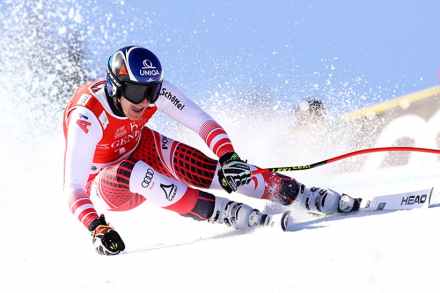
What the Premier League could learn from ski racers

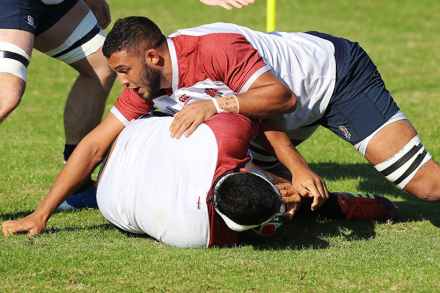
What we have learned in the past few weeks: 1) Don’t play rugby in a howling gale, even though for the Scots that was a balmy early spring day and they really should have beaten England — who, whisper it, are beginning to have a scrum-half problem. Dare we say that Willi Heinz needs more variety to his game? Not 57 different ones, but more breaks and switching direction of play would be welcome. Though I imagine he has heard that gag before. 2) England should scour inner-city schools for raw rugby talent. Ellis Genge, a star of last Saturday’s game, was raised on a Bristol housing estate and has a similar background to Kyle Sinckler, his fellow denizen of the front row.

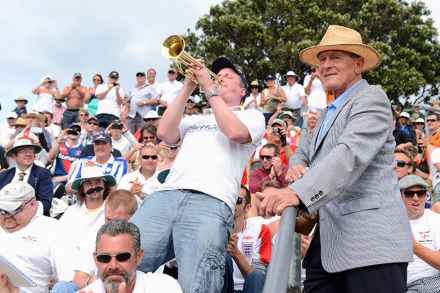
The Barmy Army showcase the best of English character

Not everyone likes the Six Nations — a recent well-received book on the state of rugby union described it as a ‘mean motherfucker’: it is by far the biggest institution in rugby and its revenues easily outstrip the World Cup. But, argues author Mike Aylwin, the Six Nations is run by itself for itself, and the ‘interests of the game’ don’t figure in its remit unless its prosperity is threatened by neglecting those interests. Oh well, you can’t please everybody all the time. Less forensic souls such as myself will always find it a comforting harbinger of spring, and compelling entertainment. The biggest game of this year’s edition is on Sunday. France and England are the only potential winners of the contest.

Sport needs more men like Vincent Kompany

Anyone still vaguely tempted to subscribe to that lazy and stupid cliché about footballers just being overpaid idiots should have been at the Savoy the other night when the Football Writers’ Association paid tribute to Vincent Kompany, Manchester City’s legendary former captain. The term ‘role model’ is hackneyed, but if ever it was applicable it would be to Kompany, a true giant among men. Literally too: he is physically immense and would have been a very troubling sight for any marauding centre-forward. He speaks six or seven languages, and was a natural leader on and off the pitch.

The end of Chelsea’s transfer ban is bad news for football

We don’t half take a lot for granted. We may look up to the Aussies, kowtow to the Americans and look on in awe at the Chinese, but we’re not doing too badly ourselves. To judge from the papers, we’re a nation of fatties who when not pigging out on Pringles on the sofa are waddling down the high street looking for drugs. But it turns out we’re pretty good at sport: cricket World Cup winners, rugby World Cup finalists, women’s football World Cup semi-finalists. It was English teams who contested the Champions League final, after two mesmerising semis when Liverpool thumped Barcelona and Spurs defeated Ajax in the last seconds of added time. At home, Liverpool continue to dazzle under a charismatic manager who has made the Kop his own.

Roger Alton’s highlights from a magical year in sport

We don’t half take a lot for granted. We may look up to the Aussies, kowtow to the Americans and look on in awe at the Chinese, but we’re not doing too badly ourselves. To judge from the papers, we’re a nation of fatties who when not pigging out on Pringles on the sofa are waddling down the high street looking for drugs. But it turns out we’re pretty good at sport: cricket World Cup winners, rugby World Cup finalists, women’s football World Cup semi-finalists. It was English teams who contested the Champions League final, after two mesmerising semis when Liverpool thumped Barcelona and Spurs defeated Ajax in the last seconds of added time. At home, Liverpool continue to dazzle under a charismatic manager who has made the Kop his own.

Only now are we seeing what an extraordinary figure Bob Willis was

Maybe it’s just an age thing, but the death of Bob Willis has left me — and, I am sure, a whole generation of cricket lovers — feeling more than usually bereft. Since when has the passing of a sports-person triggered quite such an outpouring of genuine emotion? But only now are we seeing quite what an extraordinary figure he was. And it wasn’t just cricket: he loved Bob Dylan, Wagner and wine, as should all right-thinking folk. He was a huge, gangling figure with arms like windmills and an awkward ungainly action once described as being like a first world war biplane taking off into a headwind. He bowled very fast and usually seemed to be starting his run-up from beyond the boundary. God knows what it was like to face him: pretty scary, I imagine.

Why Ben Stokes should win Sports Personality of the Year

Oh those lazy, hazy, Stokesy days of summer: how long ago they seem now. When England won the cricket World Cup — or scraped it anyway — in July, and pulled off the unlikeliest of Ashes Test wins on that blazing Leeds day in August, Ben Stokes loomed as a greater certainty to be the BBC’s Sports Personality of the Year than Vladimir Putin to win a Russian election. Don’t think we can be so sure now — about Stokesy, that is. He’s odds-on favourite from the shortlist of six contenders for the award announced by the BBC this week, but it is his misfortune that by the time this silly old competition comes round each year, the cricketing heroics of the summer have gathered so much dust they have pretty much disappeared from view.

England’s rugby team are embarrassingly sore losers

Sports events come and go, but good manners, as William of Wykeham might have put it, last for ever. Or the lack of them. Which is why the surly, petulant behaviour of most of England’s rugby players after losing the World Cup final was so disgraceful. Refusing to wear the medals presented to them (by Sir Bill Beaumont, for heaven’s sake, a man who knows a bit about losing as well as winning), or hastily discarding them, standing around scowling, and then failing to bow in unison to the Japanese people who had created such a marvellous tournament. It was all pretty shameful. The rugby fraternity loftily dismisses this as being because the team care too much and felt they had let down the nation.

Seven things we’ve learned from the rugby World Cup

New Zealanders can teach the world a lot about sportsmanship. Steve Hansen after last Saturday’s All Blacks defeat by England in the World Cup semi-final showed the uncomplaining loser can be just as impressive as the triumphant winner. As he put it: ‘Winning’s easy…[but] when you lose… you have to show humility, do it gracefully and be honest about it. Sometimes you have to bite down on your gumshield and suck it up.’ The Springboks have put rugby back several decades. Big, beastly, and brutal, they made the first half of their semi-final with Wales almost unwatchable. Afterwards the Wales hierarchy talked about losing the ‘arm-wrestle’: but why are Wales trying to arm-wrestle?

Seven things we’ve learned from the rugby World Cup

New Zealanders can teach the world a lot about sportsmanship. Steve Hansen after last Saturday’s All Blacks defeat by England in the World Cup semi-final showed the uncomplaining loser can be just as impressive as the triumphant winner. As he put it: ‘Winning’s easy…[but] when you lose… you have to show humility, do it gracefully and be honest about it. Sometimes you have to bite down on your gumshield and suck it up.’ The Springboks have put rugby back several decades. Big, beastly, and brutal, they made the first half of their semi-final with Wales almost unwatchable. Afterwards the Wales hierarchy talked about losing the ‘arm-wrestle’: but why are Wales trying to arm-wrestle?

The joy of Japanese-style rugby

Proud son of Wexford he may be, and of doughty farming stock too, but the heart sinks at the prospect of seeing yet again Tadhg Furlong, all 20-odd stone of him, emerge from a pile of bodies laying siege to the opposition line to lumber over for a try. Ireland’s brand of suffocating rugby has been effective but uninspiring over this World Cup. And without wishing to offend our cousins across the Irish Sea, the heart sinks at the prospect of Furlong, Stander and the rest of the boyos possibly putting out a free-running (if so far slightly untested) New Zealand in the second of this weekend’s mouth-watering quarter-finals. Those interminable multi-phase pick-and-go assaults might be part of rugby but they are sure as hell not great to watch.

Why rugby is a perfect match for Japanese culture

The ITV set for the channel’s thunderingly good coverage of the Rugby World Cup is more Japanese than anything in Japan. And after the Brave Blossoms’ quite sensational victory over the Irish team — until recently rated world No. 1 — we need more Japaneseyness. More sushi. More Hiroshige. More Hokusai. We should never lose sight of how remarkable Japanese rugby is. The country has had a love affair with the game for more than 150 years. It’s all about konjo — the Japanese word for discipline, endurance, sacrifice, sincerity, courage, strength. There’s the samurai warrior for you: not somebody to mess with but deeply honourable too.

Farewell, Garry Richardson. We’ll miss you

A day of sporting shocks this Sunday past. As if the news of Tracey Horrobin’s bewitching performance with the ball to give Ambridge victory in their grudge match against Darrington wasn’t enough, then out of a clear blue sky, one of the best broadcasters in the country announced that he’d be standing down. For anyone interested in sport, Garry Richardson’s Sportsweek was unmissable. In a dignified little farewell at the end of his last show, Richardson said how much he had enjoyed it and paid generous tribute to everyone who had made it possible. Why should this matter? In an age where sport is expanding like a barrage balloon on steroids, Richardson could cut through the chaff to shine a light on what mattered.

Will Ben Stokes be the greatest cricketer of all time?

Feeling depressed about politics? I hope not. Politicians don’t shape the world: they are the furniture movers, not the furniture makers. It is inventors, scientists, philosophers, craftsmen, artists and poets who influence our lives. And sports people of course. Which means it’s time to think about Ben Stokes again. The Test Match Special lunchtime guest on the Saturday of the Headingley Test was Joe Simpson, ace climber and cricket-lover, and author of the epic Touching the Void. There’s not much Joe doesn’t know about coming back from the dead, and some of it must have rubbed off on Stokes. The most extraordinary moment of that extraordinary innings came when Stokes reached his century.

Bring out the biltong for Labuschagne, an Ashes hero

Funny, the things cricketers put on their bats. England’s Jos Buttler has ‘Fuck it’ written at the top of his blade to remind him it’s only a game (or something like that). Australian Marnus Labuschagne, who for my money was one of the great heroes of the Ashes Test at Lord’s, has the image of an eagle drawn on the bottom of his bat. It’s to remind young Marnus of one of his favourite Bible passages, Isaiah 40:31: ‘For those who hope in the Lord, He shall renew their strength. They shall soar on wings like eagles; they shall run and not grow weary, they shall walk and not be faint.’ It has the edge over ‘Fuck it’, but each to his own.

Stop booing Steve Smith – he’s a hero

During the World Cup (remember that?), Virat Kohli, the very model of a modern major cricketer, appealed to Indian fans not to boo the returned Australian players. It would be nice to think that Joe Root might call for something similar over the next few days from the increasingly egregious English supporters. Current boo-boy tactics haven’t worked particularly well so far. Part of the problem has been the sanctification of Edgbaston as if it was the cricketing equivalent of Notre Dame. Now the sight of a lot of pissed-up Brummies dressed as parrots and chanting ‘Championes, championes…’ seems to be England’s contribution to the summer game. Besides anything else, the swing into cricket of practically mind-dead football chanting is just depressing, no?

What does the future hold for cricket?

The name Cameron Delport might not be immediately familiar, but his exploits last week could mean more for the future of cricket than the electrifying events of the World Cup final. Delport is a burly, well-inked British-South African from Durban, and a few days ago he smacked 129 off just 49 balls to steer Essex to victory over Surrey in their T20 Blast encounter at Chelmsford. More specifically, at the Cloudfm County Ground; once the home of Graham Gooch, Keith Fletcher and Nasser Hussain, now happily sponsored by a facilities management business. (I don’t really know what that means either, but it’s what the ‘fm’ stands for. Not a radio station.) Delport is now one of those itinerant T20 players of no fixed abode, but plenty of air miles.

Rocket’s science

A chum was in Waitrose a year or two back, and was bending down with some difficulty to look at the sandwiches when he realised the sprightly elderly chap next to him, eyeing up the cheese and celery, looked very familiar. It was the greatest tennis player of all time, the one and only Rod Laver, the Rockhampton Rocket himself. They had a pleasant chat, for the Rocket is nothing if not affable, and Laver agreed to call my pal’s tennis coach and say: ‘Hi, it’s Rod Laver here.’ The coach didn’t believe him, of course, but it was true. When you saw the ecstatic reaction of Centre Court last week as Laver, now 80, was presented with a special Wimbledon trophy you realised how lucky we are that he is still with us, and still charming everyone.