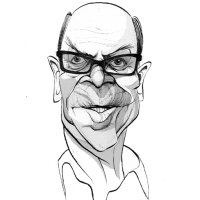
Roger Alton

Roger Alton

Roger Alton is a former editor of the Observer and the Independent. He writes the Spectator Sport column.

Is Eddie Jones’s fate written in the stars?

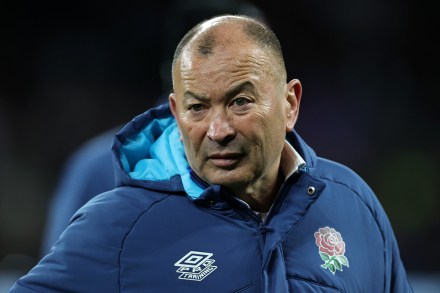
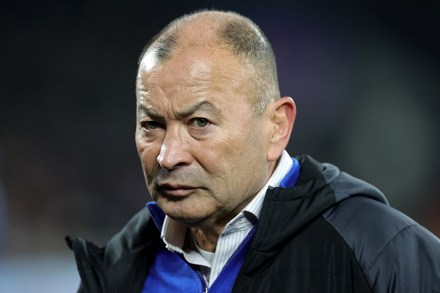
Something is happening here, and you do know what it is, don’t you Mr Jones? Stargazers – and even some more grounded folk – reckon it’s written in the heavens: that the team Eddie Jones was supposed to have been coaching will meet the team he will be coaching in the rugby world cup final on Saturday 28 October in the Stade de France in Paris. Jones, jilted last month after a seven-year relationship with England, the team he was preparing for the tournament that starts in France on 8 September, has this week been welcomed back into the arms of his former flame, Australia (also the nation of his birth), with whom he enjoyed a four-year partnership from 2001-5.
Let’s scrap the January transfer window

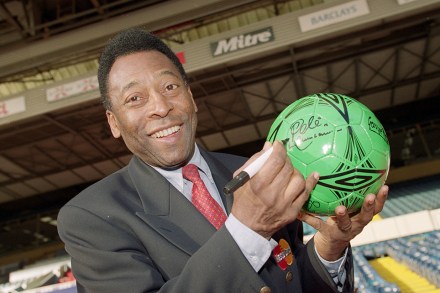
Norwich City are a likeable club, and currently run by a pleasant-seeming bloke called Allan Russell. He used to be the club’s ‘setpiece coach’, whose claim to fame was that he was working with the England squad in 2018 when they scored against the mighty Panama. Good for him, of course, but has football become too dependent on the ever-expanding phalanx of managerial officials now filling up the bench at every game under the sun? Is the beautiful game losing sight of what really matters? After all, this might be a world where a championship side can have a setpiece coach, but it is also a world where Pele had to flog his medals to get by. People tended to scoff at the fair play award won by England in Qatar. But why?

Wesley Hall represents everything that cricket should be

Few sights in the history of cricket have been more thrilling – or more terrifying for batsmen – than the great West Indian fast bowler Wes Hall coming in off his 30-yard run. He is now Sir Wesley, and frail at 85, but still as forthright and impressive as ever. I was privileged to be able to speak to Sir Wesley the other day (for the Oborne & Heller on Cricket podcast) and it was as thrilling as watching him play in the 1960s when I was growing up. He is a glorious figure, a man of adamantine integrity, total sportsmanship and unbreakable moral values, and a reminder, like Frank Worrell and Clyde Walcott, of a golden age of the great traditions of cricket culture.

Eddie Jones must go

So should he stay or should he go? That’s Eddie ‘I don’t really care what other people think’ Jones, currently ruling the roost over England rugby at Twickenham. Though for how long is another matter. Clearly the language around Jones is changing: the announcement of a review of England’s dismal recent performances very clearly avoided any of the usual ‘We stand right behind the coach’ and ‘We are pleased with the team’s steady progress’ guff that normally sugarcoats such statements. The review of course is largely anonymous, in keeping with English rugby’s characteristic transparency.

Rugby’s new golden age

This column may have been somewhat negative about the future of rugby recently – so how cheering to report a spate of magnificent matches, across both codes and both genders, that provided not only brilliant entertainment but also, as young people like to say these days, ‘learnings’. The best game of all was the women’s World Cup final at Eden Park, Auckland, when after 80 minutes of spine-tingling rugby union England lost by just three points. Forget any snooty talk you might have heard about women’s rugby. This match had everything: athleticism, a real sense of adventure and far fewer of those interminable caterpillar rucks and reset scrums which clog up the men’s sport.

The future of sport is in the Middle East

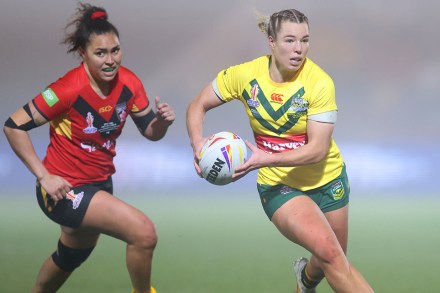
When the burly honchos of the Rugby League World Cup gushed about taking the game to new heights, no one was actually thinking about the Golan Heights – but that’s where we are. What sounds like a fascinating quarter--final takes place on Friday (as I write) when the dominant team in global rugby league, Australia, take on Lebanon in Huddersfield – the birthplace of the game. Amid the blizzard of sporting world cups currently taking place across the globe, this match has it all. The Lebanese team, known as the Cedars, are coached by Australian Michael Cheika, one of the world’s most eminent coaches and a former boss of the Wallabies’ rugby union side. That’s an awful lot of rugby in the mix already.

Rugby union needs its own Richard Thompson

Dear oh dear, as exasperated kings are known to murmur – just look at the state of rugby union. But if our monarch had to pass judgment on the catastrophe enveloping the game in England, you imagine his language would be stronger than that. Mind you, a decent king is just what rugby needs: heads have to be seriously knocked together – off the field – if the game is to survive in anything like its current form. This column feels no shame in returning to this theme; after all, it’s not often that a major sport finds itself looking down the barrel.

English rugby is in crisis

Make no mistake: the game of rugby, which many of us love so much, is in serious trouble: it will have to change or die. The game’s scarily existential issue on the field – especially the brain health of those who play it – is one thing. But what is going on inside the heads of those who run the sport? The financial clouds hovering over English rugby are as menacing as Billy Vunipola coming on to the ball at full speed from the back of the scrum. Worcester Warriors are just the start: Wasps are in trouble, and Bristol could be next. There will be more. Only Leicester, Northampton and Harlequins seem out of the woods. Too much money is going out from the clubs and not enough coming back in. It’s as simple as that.

Will Erling Haaland score 50 goals this season?

Don’t bother watching those gazillion-dollar TV prequels to The Lord of the Rings or Game of Thrones. Who needs gratuitous nudity, multiple dragons and surprise beheadings when the real Nordic legend is bang in front of us, his mighty frame squeezed into the light blue of Manchester City and devouring the grass of the Etihad? (Though not literally, yet.) He is an outlandish--looking creature from the far north, clearly designed by some dotty scientist, faster, bigger, stronger and more ruthless than anyone else in football and effortlessly leaping higher too. Quick to smile, often at awkward moments, he moves effortlessly with that curious stiff-armed gait as he outruns everyone else on the pitch.

Drama at Lord’s: Stumped is a treat for cricket fans

So farewell to cricket’s The Hundred tournament, or what seemed by the end to be beefy South Africans in ‘Butterkist’ shirts belting sixes over cow corner off some fairly inoffensive county seamers. Does anyone remember a single result? Or really have any loyalty? Fine, have it as a marketing exercise to raise a few quid for the game, but there aren’t enough great players. It felt a bit like some upgraded pub cricket – and it’s going to be with us for years. What could be massively more significant for the game in the long term is over the Atlantic, where the former England star Liam Plunkett is one of many former players attached to a new £100 million plan for a professional T20 league in America next summer, in six big cities.

I fancy Emma Raducanu’s chances at Flushing Meadows

British tennis fans famously only acknowledge the sport exists for a couple of weeks in the middle of summer in SW19. But they ought to think about changing the habit of a lifetime over the next couple of weeks, as Emma Raducanu prepares to defend her US Open title at Flushing Meadows. It’s been a dizzying year for Bromley’s best. Her journey from star-struck ingenue when she went to New York a year ago to her arrival back there this week as the champion and the face of a thousand magazine covers must have felt like a rocket ride to the Milky Way. But now she has to prove herself all over again. Since winning the US Open a year ago at just 18, she has failed to win another singles title and has won just 12 matches out of 28 on the WTA tour.

What Richard Thompson can do for English cricket

Well alleluia, English cricket doesn’t seem able to put a foot wrong these days. After hitting three cherries with Rob Key, Brendon McCullum and Ben ‘Bazball’ Stokes, they may well have struck the jackpot with the appointment of Richard Thompson, the Surrey chairman, to take over as head of the English Cricket Board, something this column has long advocated. Thompson has plenty going for him: uniquely perhaps among the game’s administrators he is both traditional and forward thinking. Traditional enough to have realised the Texan conman ‘Sir’ Allen Stanford, with his million-quid pile of money on the Lord’s outfield, was a wrong-un.

I’ve seen the future of motor racing, and it’s quiet

Are petrolheads’ days numbered? I only ask because having just been introduced to the quiet, petrol-less world of Formula E, I’m rather taken by it. Apart from anything else, part of the fun of spectating is making your feelings heard, which isn’t easy against the 130 decibels generated by F1 engines. The Formula E world championship arrives in London’s Docklands this weekend, weaving in and out of the ExCeL for races 13 and 14 of the season. That’s ‘E’ as in electric and plainly non-fossil fuel motoring is the future, though how soon isn’t clear. Formula E people think single-seat racing is a good way to promote it, and once you see a race you have to agree.

How Kyrgios saved Wimbledon

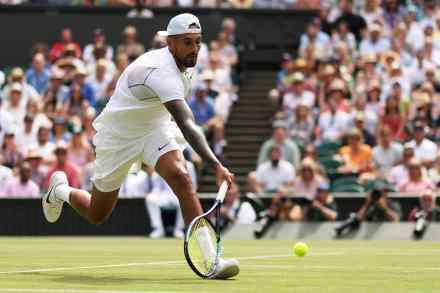
What separates this year’s ‘empty seats on centre court’ scandal from every other year’s ‘empty seats on centre court’ scandal? Wimbledon has always been a garden party with some tennis thrown in, attended by the least sports-driven crowd in existence – the matrons of Guildford and Godalming who manage to love Rafa and Andy for a fortnight, but not much longer, and whose need for a punnet of strawberries and cup of tea at around 4 p.m. is eternal. And for whom it’s funny if the ball hits the umpire’s chair. Wimbledon is half a tennis tournament and half the last redoubt of a disappearing England.

Is any sporting event more brutal than the Tour de France?

That great Frenchman the Marquis de Sade would have been justly proud of the Tour de France had he lived to see the day. Should we deduce that sado-masochism is a French trait? No question. Has there ever been a more brutal event in world sport? This year’s race kicks off in Denmark (yes, really) at the weekend on its way to more than 3,500km of lung-busting effort. The question is: can anyone stop Tadej Pogacar, the 23-year-old Slovenian prodigy and winner of the last two Tours? He is in staggering form this year, having minced his home Tour and a series of other races. A brilliant climber and time trialist, he is also a fearsome attacker: in other words, the complete Grand Tour cyclist. Has there ever been a more brutal event in world sport than the Tour de France?

The brilliance of Ben Stokes

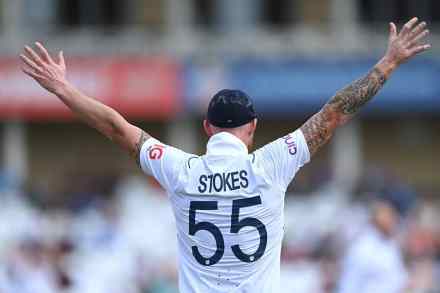
Test cricket, bloody hell! For years, it’s been getting the last rites – now it’s the most exciting way anyone can spend five days. The scale of England’s synapse-stunning victory over New Zealand at Trent Bridge is boggling enough: England’s fifth-highest run chase (299) and fastest ever; the highest number of boundaries scored in a Test; a 77-ball hundred from Jonny Bairstow; Bairstow and Ben Stokes rumbling along after tea at 16 an over – unheard of in Test cricket. But it was about much more than mere stats: the feel-good factor poured out of Nottingham. This was an exuberant, exciting, free-flowing game, with players willing to challenge the traditions of how Test cricket is played.

Rob Burrow is in a league of his own

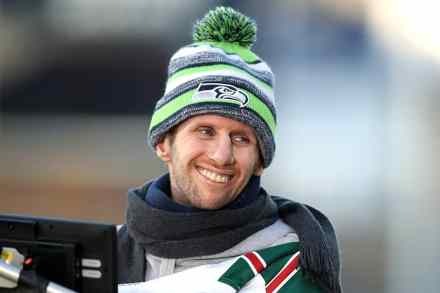
What a privilege the other night to see Rob Burrow, the Rugby League legend, win Autobiography of the Year at the Sports Book Awards at the Oval. Burrow is one of the most successful players in the history of League, although only 5ft 5in and less than 11 stone in a sport populated by big men battering each other. Now he is confined to a wheelchair, ravaged by motor neurone disease, yet radiating huge warmth with a permanent wide smile. He was greeted with a long standing ovation, and made a moving speech using an eye-activated computer device with his own voice. Sportspeople do not have to be the best of us, but it can be overwhelming when they are. And to see a man, once the embodiment of health and fitness, so reduced but still so warm and human was deeply humbling.

My one to watch at the French Open

The timing of Brendon McCullum’s appointment as England’s Test match coach couldn’t be better for him, or for the matey but very canny Rob Key, cricket’s managing director. Had they taken over their jobs when England were at or near the top of the world rankings, things would have been a lot tougher. Getting to the top might be hard, but staying there is a nightmare. Now, with England well and truly in the basement, McCullum’s only way is up. And he kicks off with a Test against his homeland, New Zealand, at Lord’s next month. You hope that sooner or later he finds room for the wonderfully talented if momentarily confused (about Test cricket anyway) Jos Buttler.

The rise and rise of women’s sport

You might have missed this but something very big is happening in women’s sport. The sheer numbers watching are sensational: the crowds might have been papered, but who cares? At Madison Square Garden, 19,000 watched Katie Taylor of Ireland just have the edge on Amanda Serrano in a brutal ten-round title fight. At the same time Newcastle United women’s football team attracted more than 22,000 to see their first appearance at St James’ Park – for a fourth-tier match against Alnwick. In France, more than 42,000 saw Lyon put PSG out of the Champions League, where they will now meet Barcelona in the final in Turin. A world women’s football record of 91,000-plus at the Camp Nou had already seen the Spanish side hammer Wolfsburg in their semi-final.

What English cricket needs now

You couldn’t ask for a more amiable man than Rob Key to run English cricket: affable, shrewd and universally liked, he has the look of a recalcitrant monk, nipping out the back for a quick drink and a fag. Whether he’s any good is another matter, but let’s hope so for all our sakes. The sequence of events seems a bit upside down though – appointing a managing director first, then a chair and CEO. Without coming over all corporate, surely the MD is the next CEO’s biggest appointment. And wouldn’t the new MD, Key, want to know who he’s working with? One man I hope he will soon be working with is Jos Buttler, currently tearing up the Indian Premier League.