Roger Alton

Roger Alton

Roger Alton is a former editor of the Observer and the Independent. He writes the Spectator Sport column.

Thrills and chivalry at the most civilised place on earth

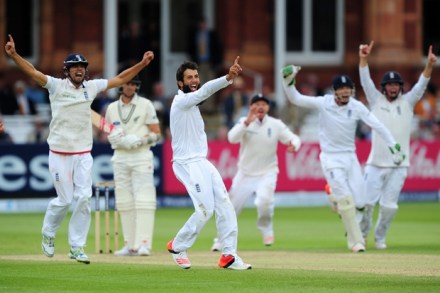
If heaven is a place on earth, as Belinda Carlisle so wisely observed, then surely that place has to be Lord’s on a Test match Saturday. Celestial indeed, and a privilege to have been there for just a part of what was one of the most thrilling Test matches in history. More runs scored than ever before in a Lord’s Test, 40 wickets taken, three magnificent centuries, technically brilliant from Williamson, sage and resolute from the Cook of old, jaw-dropping and Botham-esque from Stokes and five days of extraordinary sportsmanship. There is no more civilised place to watch sport than Lord’s. I love the fact that it still trusts spectators enough to allow them to bring in their own alcohol and doesn’t kick up a fuss when champagne corks are popped on to the outfield.
A few tips for Straussie

If you watched England’s three-day Test defeat by the West Indies in Barbados the other day to the bitter end you will have heard some of the England players being interviewed afterwards. They uniformly referred to their coach, the now departed Peter Moores, as ‘Mooresie’. And therein you feel lies a few of the problems infesting English cricket. It’s hard to imagine even John Terry shouting across the car park: ‘Oi Mouro, that was bang out of order.’ Or in an earlier time, a post-match David Beckham telling the world about ‘Fergie’. No, it was always The Boss, or Sir Alex. I know we are all in favour of flat management structures, shirt sleeves, no ties, Dave and Sam, a few beers after work. But Mooresie? Seriously?

Come on you blues. Or, er, reds

Here’s an election-winning idea for Dave: forget about Aston Villa (or West Ham) and become a full-on Bournemouth fan. They were on the telly the other night, all but sealing promotion to the Premier League, and played a bit like Brazil: fluent high-speed passing, wave after wave of attacks. They play in a very smart red-and-black strip that’s not easily confused with anyone else unless AC Milan come calling. A few years back they were nearly out of the Football League: now they’ll be mixing it with Manchester United and Arsenal. And I’ll bet they won’t go back down. They have their own reclusive Russian petrochemical billionaire, a cove named Maxim Demin, about whom it is almost impossible to find anything.

Cricket’s glorious dead

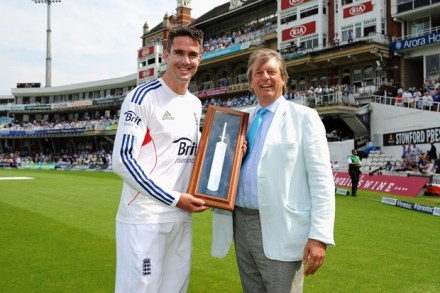
He’s a tall man, Kevin Pietersen, and he casts a long shadow. It loomed large over the Long Room at Lord’s last week where the great, the good, and the not very good at all of the cricket world had gathered for the annual Wisden dinner, one of the most enjoyable events in the life of man. For starters, indeed only a few minutes before we did get stuck into our starters, the hapless Paul Downton had been suddenly sacked as managing director of English cricket. It seems nonsense to blame Downton for all the failures of the England team, but he was the main man in the room for the botched firing of Pietersen last year.

Rory McIlroy and the grandest prize in golf

The grand slam in golf is a feat almost impossible to imagine now. It meant winning all four golfing majors in the same year, and has only been done once, by the extraordinary Bobby Jones in 1930. Jones was awarded a ticker-tape reception in New York, and a golfing writer of the time with a feel for geometry called it ‘The Impregnable Quadrilateral’, a fortress that could never be taken. Jones, a lawyer by profession and unimpeachably honourable in his play, was a canny young man as well as a remarkable player: he had backed himself for the grand slam at the start of the year with a British bookmaker at 50-1. He eventually collected $60,000, or getting on for $11 million today. Who wouldn’t look forward to popping down to Ladbrokes to pick up a slice of that?

In praise of Ben Moon: the man who took rock-climbing to new heights

For anyone who knows or cares about rock climbing — a minority sport if ever there was one, albeit pretty extreme — the turn of the year was heaven. Newspapers, magazines and TV bulletins were full of one specific, highly photogenic though very technical event: the first free ascent of a climb on Yosemite’s mighty El Capitan face called Dawn Wall. It was 3,000 ft and 32 pitches long, and rated the hardest pure rock climb in the world. The two climbers, Tommy Caldwell and Kevin Jorgeson, spent 19 days on the face, but years preparing and training for it. This is, for the time being, the ultimate climb, very difficult but also very safe, with ropes and other gear used to protect the climbers, and entirely free in that they never used any artificial aids.

I miss the days when French rugby was great. Thierry Dusautoir must, too

It used to be such a treat of a winter weekend, sitting down to watch France against Wales in Paris in the Six Nations. And not just because of the anthems. There would be the prospect of seeing players like Sella, Serge Blanco, the Williamses, JJ and JPR, Philippe Saint-André, Scott Gibbs, Rives, Jenkins — an almost endless list of exquisite, fluid runners, the essence of rugby genius. Now less so. It’s Mathieu Bastareaud and Jamie Roberts, a fifth of a ton of gristle and bone, banging into each other. The main question now is quite how poor Les Bleus will be. You can see it all in the resigned but deeply fed-up expression on the face of Thierry Dusautoir, the French captain.

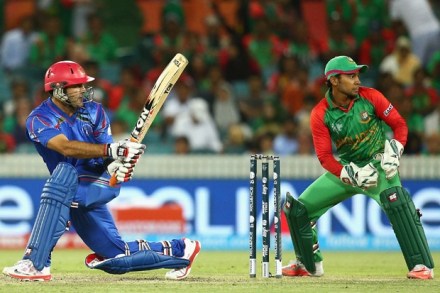
The Cricket World Cup needs minnows

Graeme Swann arrived late for the last cricket World Cup. His wife had given birth before the tournament and he was given leave to miss the warm-ups and just arrive for the first match. No need to worry: it was only the Netherlands, the competition’s weakest side. Naturally England nearly lost it, but Swann took two wickets. At the press conference, Swann was asked about leaving his new baby son. ‘I’m sure he’ll give me shit in the future for missing the first two months of his life,’ he said, ‘and I’ll reply: sorry son, I had to go and help England beat the Dutch.’ England have made a habit of being embarrassed by the Dutch.

We should be grateful for Andy Murray (and Kim Sears)

It wasn’t that long ago when the most exciting event in any British tennis fan’s life was whether Jeremy Bates would make the second week of Wimbledon. If he did, cue weekend raptures and much use of a British bulldog holding a Maxply and encased in the Union Jack (copyright all cartoonists). And that was pretty much that. Then came Tim Henman, and the excitement was almost too much. Here was a player who made six, yes six, Grand Slam semi-finals. Years of excitement, almost unbearable tension, and eventual disappointment ensued. Now we have the era of Andy Murray, six Grand Slam finals (two victories), and 16 Grand Slam semis, plus one Olympic gold medal. A superb record in anybody’s book. But how is the old boy treated?

One-day cricket can make even a turbo-charged century tedious

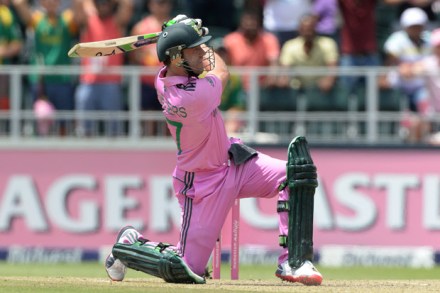
What a remarkable innings that was in Johannesburg earlier this week when South Africa’s admirable Hashim Amla carried his bat throughout the 50-over match against West Indies for 153 off just 142 balls. Or perhaps you didn’t notice. Coming in at the 39th over after the dismissal of R.R. Rossouw (for a mere 128) was A.B. de Villiers, who proceeded to smash endless one-day records with 149 off 44 balls. His reached his century (31 balls) in just 40 minutes: I’ve seen people take longer to get their pads on. De Villiers completely overshadowed Amla’s pedestrian 153, and if the rest of the South African team had scored at the same pace as De Villiers, the team would have scored more than 1,000. Presumably they have had to do extra nets for not applying themselves.

The myth of Steven Gerrard

‘As a leader and a man, he is incomparable to anyone I have ever worked with.’ Obviously quite some guy, that: John Hunt of Everest? Nelson Mandela? The All Blacks’ all-conquering Richie McCaw? No, it’s Brendan Rogers on Steven Gerrard. The Liverpool manager insists that, although the word ‘legend’ is all right for Thierry Henry or John Terry, it is woefully inadequate for Gerrard. The extravagantly coiffed Robbie Savage, who is now the BBC’s default commentator, has declared the departing club captain the best Liverpool player ever. Actually there’s a good argument that he wasn’t even the best Liverpool midfielder ever. Would he have got into the side when Souness and Kennedy were at full throttle?

Fifteen things we learned about sport in 2014

It was the year of KP, Keano and the Kiwis; of Federer, Froch and Phil the Power (no change there then); of Sochi and Suarez; of Rory and Ronaldo; McCaw, McGinley and McCoy (as always). But it was also the year when we learned some very valuable things about sport. 1. For all the boasting about how good the Premier League is, there’s actually only one team in it — which is less than in Italy, Spain or France, or even poor old Scotland. The only country where anything similar is happening is Germany, where Bayern are running away with the Bundesliga, just like Chelsea here. Which only goes to show that Pep and José are, by a mile, the best coaches on the planet — though we knew that already. 2.

What football can tell you about Jim Murphy (and what Jim Murphy can tell you about football)

The author of a rather brilliant little book about football could just hold the key to Labour’s otherwise negligible prospects in next year’s election. Jim Murphy is the last of the devout Blairites left on the scene, following the fratricidal killing of David Miliband, the departure of James Purnell to big bucks at the BBC, and the decision of the head of the church himself to spend more time with his mansions. After 2010, the Ed Miliband team reshuffled him out to international development. Murphy is direct, angry, utterly undeferential and passionate about everything he does.

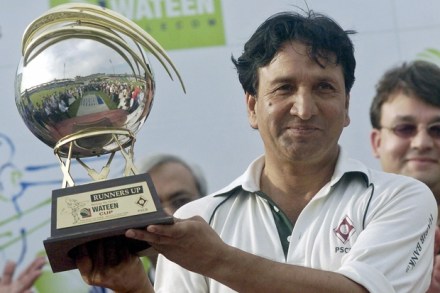
International cricket must return to Pakistan (and my team went first)

In a tiny courtyard just off the teeming alleys of Lahore’s old town, a young Pakistani boy in a gleaming white shalwar kameez picks up his Adidas cricket bat and proceeds to clout to all corners the plastic ball his pal is chucking down. Behind him on the wall the outline of three stumps is drawn, and the word Out! chalked there, more in hope you feel. In the corner a little schoolroom has emptied out and excited young boys and girls, books in hand, look on, giggling happily. Is this the new Imran? Almost certainly not, but we are in one of the holy places of Pakistan cricket, and in this troubled but vibrant country, only cricket comes close to Islam as a unifying passion.

Test cricket and the Archers are both in deep trouble

Lions and weasels The Archers and Test cricket: words you rarely find in the same sentence and more’s the pity as there’s not much else that can give greater innocent pleasure. But could these magnificent institutions be in the midst of some existential crisis? On peaceful old radio, the writers seem devoted to purging The Archers of the Archers: David, Ruth and Jill could be junking Brookfield for Northumberland, Tom Archer hasn’t been seen in Ambridge since that unfortunate incident in the vestry; Elizabeth should be hounded out soon for sexual witchcraft; and then there’ll be just Shula and Kenton. Pretty much like international cricket, which is being stripped of some of its performers. Remember the West Indies?

Pietersen’s unlikely Passage to India

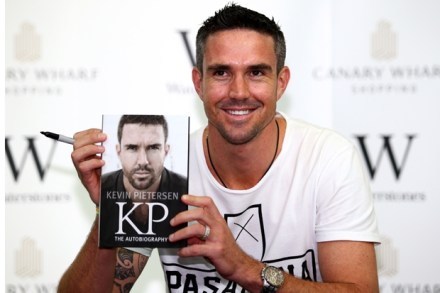
A typical Merchant-Ivory film, their biography informs me, features ‘genteel characters’ whose lives are blighted by ‘disillusionment and tragic entanglements’. No surprise then that Kevin Pietersen is proudly revealed as one of their biggest admirers. In an unusual choice of images in his, er, thoughtful new autobiography, ghosted by the redoubtable David Walsh, KP says comparing English cricket with the Indian Premier League is like comparing Merchant-Ivory with the latest Bruce Willis. It’s a fair point, but hard to imagine the teenage Kevin trawling the arthouse cinemas of Pietermaritzburg in the 1990s for the latest offering from the wistful duo. Few people of course know more about disillusionment and tragic entanglements than KP: Room with a View, anyone?

Please don’t let the Ryder Cup go the way of football

Well, that was a lot of fuss wasn’t it? The Ryder Cup is a strange old creation, only fractionally less momentous than D-Day, judging by some of the hoo-hah, but it can turn even Nigel Farage into a proud European. The Little Englander agreed, very gamely, to appear in a Paddy Power advert, for which I’m told he didn’t get paid a bean, and urge everyone to ‘swing for Europe’. Mocking Americans called Hunter, Webb and Bubba — ‘those aren’t names, they’re noises’ — Nige sighed for heroic European names, such as Henrik, Sergio and Justin. Sometimes you think it is all going the way of football, with ugly tribalism, shaved heads, ‘banter’ and lunatic chest-pumping celebrations. (Step forward Ian Poulter.

Roy of the autobiographers

It has become a weary cliché to say that a book’s publication is eagerly awaited, but when an event is this momentous — the October arrival, thanks to the good offices of Random House, of the long anticipated autobiography of a football legend, perhaps the football legend, Roy Race, or Roy of the Rovers, as he was known wherever football fans gathered — then only cliché will do. It was an illustrious career with Melchester Rovers of the First Division: countless League titles, eight FA Cups, three European Cups, a Uefa Cup, and many Cup Winners’ Cups. He made several international appearances, but never when it mattered. Roy put this down to a number of niggling injuries at crucial times, especially in 1966, though he was never bitter about it.

Just what Diego Costa needed: a guide to the traditions of the Premier League

That excitable but likeable hombre, Everton manager Roberto Martinez, took it upon himself to give a stern lecture to the Brazilian-born Spaniard Diego Costa after Chelsea’s sensational 6-3 victory at Goodison at the weekend. Costa, who operates on the field with the speed and directness of the bullet train and will bring Chelsea the Premier League title, I guarantee it, had indulged in a spot of mild gloating after the Everton defender Séamus Coleman, who otherwise had a fine match, had plonked the ball into his own net. And that was what Martinez took exception to. He wasn’t alone, either: the Everton keeper Tim Howard carried on as if Costa had tried to murder his family. Costa, said Martinez, should learn and respect the traditions of English football.

What does Duncan Fletcher actually do?

Some years ago, when the last Conservative government was limping towards defeat, someone published a book called 101 Uses for a John Major. It was cruel and fairly funny, the premise being that since he couldn’t run his party, there must be some other way he could be employed. Perhaps an Indian publisher is considering a new version after the country wilted in the Test series this summer: 101 Uses for a Duncan Fletcher. What does the India coach actually do? He called his memoirs Behind the Shades, a vain and self-regarding title, but quite what has been going on behind those shades this summer has been a bit of a mystery.