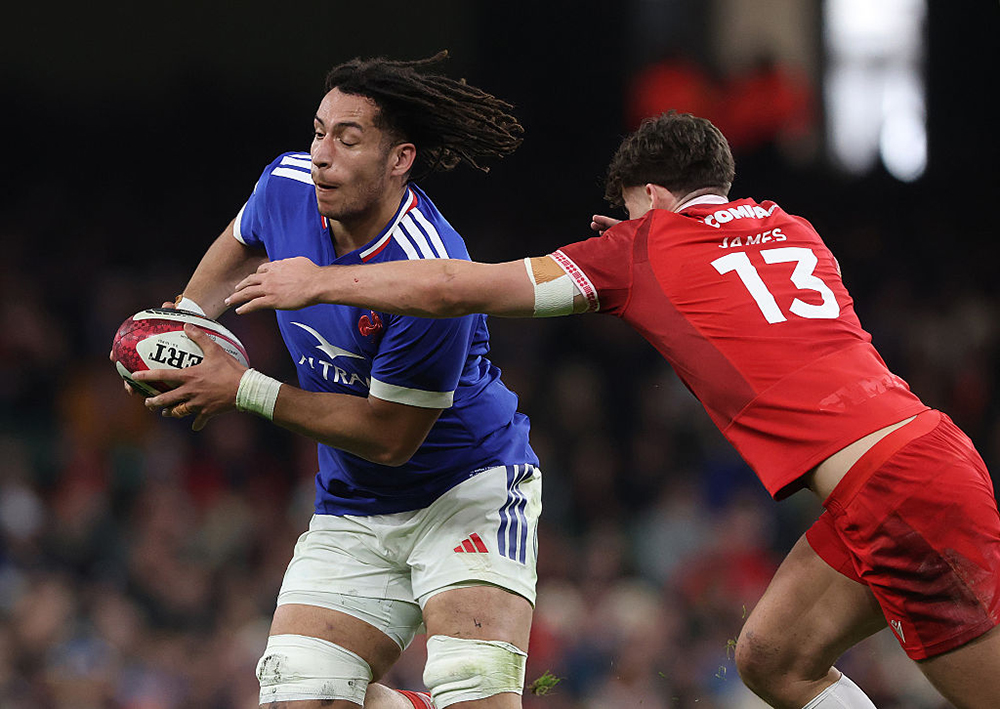

Wales rugby coach Steve Tandy must have the most difficult job in sport, apart maybe from Jim Ratcliffe’s public–relations whizz. In a Churchillian moment, Tandy has called for national unity after Wales were humiliated by a sublime France in front of their lowest Six Nations home crowd in Cardiff. But here is a simpler solution. Ditch those red shorts. Wales have always played in red shirts and white shorts and who wears red shorts away from the beach? It might sound like a footling point, but it is symptomatic of the ease with which great national organisations are willing to turn their backs on their past, doubtless at the say-so of a few kids from marketing rifling through a laptop.
Winter sports people are so admirable. Everyone can see how risky it all is
Anyway, all who care about rugby must wish Tandy well. Rugby needs a strong Wales, just like football needs a high-performing Manchester United. But some of the eternal rugby verities remain, such as quite how Scotland can always lift their game to unseen heights when they are playing England. Finn Russell has never played better than against England, though England brought a lot of it on themselves. Kicking the ball has clearly worked very well up until this game but why didn’t they have the presence of mind at Murrayfield to say, ‘This isn’t working – let’s try something different’? Were they anxious about incurring the coach’s displeasure by changing the game plan?
Like the Six Nations, the Winter Olympics are delivering something really special. Who could not love Britain’s very own Matt Weston picking up two gold medals in one of the most frightening events in sport – and that is just watching, let alone experiencing the nerve-shredding terror of hurtling head first down the ice track at more than 80mph. His obvious joy for his family and friends and, in the team event, for his fellow gold medallist Tabitha Stoecker was why winter sports people are so admirable. They care and they share, and everyone can see how risky it all is.

It is so human too, making you realise quite what sport means and how an elite athlete handles defeat. The Norwegian Atle Lie McGrath is one of the finest slalom skiers on the planet. The gold medal at Bormio was his for the taking. He was a long way ahead of his nearest rivals when he started his second run: all he had to do was finish. But then he straddled a gate early on and the full horror of what happened hit him, not least the sight of the Swiss coaching team celebrating wildly, now that their man Loïc Meillard, lying in second, was assured of the gold. First a disgusted McGrath, who had wanted to honour his grandfather, who had died during the Games’ opening ceremony, threw his ski poles away as far as he could. Then, distraught, he marched off the course and across the fields before lying down in the snow, occasionally covering his face with his hands, and then trudging dejectedly into the woods. You had to love him: all that was missing was a front door to kick.
‘I just needed to get away from everything,’ he said afterwards with great honesty. ‘I’ve lost someone I love so much and that makes it really hard. It’s the worst moment of my career.’ If only more people could talk so bravely when disaster hits.
Some do though, and it is still all about these winter Games. An impossibly handsome young American called Ilia Malinin was widely seen as the best male figure skater in the world when he took to the ice. He was already so far ahead he just had to avoid mistakes to guarantee gold in the freestyle programme. But the pressure was all too much and he fell twice attempting jumps that were second nature. ‘I just thought that all I needed to do was go out there, but of course it’s not like any other competition, it’s the Olympics. It was just something that overwhelmed me and I felt I had no control.’ From a likely first, he finished eighth. But it is the Olympics.





Comments