Robin Ashenden

Robin Ashenden is founder and ex-editor of the Central and Eastern European London Review. His detailed accounts of the media attacks on Lionel Shriver and Toby Young can be read on his substack ‘Letting the Child Run Riot’.

What happened to the Russia I loved?

For three and a half years, between Autumn 2018 and 2022, the most thrilling words I could say to anyone – especially myself – were ‘I live in Russia.’ I had read about the country since I was a child – obsessively from my mid-twenties onwards – and it was Holy Land for me. Other people I knew had flirted with the place on study-courses, temporary work-placements or backpacking, yet always with an end in sight. But I had a child growing up in Rostov, in southern Russia, had put down roots, integrated into its society and planned to grow old there. For the rest of my life, I thought, I would be taking evening strolls down Pushkinskaya Avenue, experiencing its suffocating summers and snowy winters.

Putin’s desperate recruits are in a life-and-death scramble for kit

As Vladimir Putin seemingly dithers over the question of whether to send a further 500,000 of his citizens onto the battlefield this winter, one reason against – as reported on Coffee House – is surely a lack of basic equipment for them. Since the ‘partial mobilisation’ of up to 300,000 hapless men last September, there have been numerous reports of the army’s failure to properly kit them out. Russian soldiers have been sent to the front with children-sized gloves, uselessly thin rubber boots and, for facial protection, paintball masks. ‘They think we’ll walk around in this sh** like in Star Wars,’ one Russian soldier jokes in clip recorded by those sent to fight in Ukraine.

Russia’s wives and mothers are mobilising against Putin

On a Russian Telegram channel, Svetlana from Samara is making a public plea. She has not heard from her brother since the shelling of Makiivka on 31 December, which may have killed up to 400 Russian soldiers. Enquiries to the military registration, the city governor, the Ministry of Defence have apparently turned up nothing. ‘After all my appeals, requests, calls, I became desperate that no one was listening to me. Ordinary, simple people are not needed by anyone.’  Another, older woman, Valentina, posts from the same region. ‘Please help me find my son,’ she says. ‘He was in Makiivka on 31 December. Since then, there’s been no news. He is neither [registered as] alive nor dead. In the military registration and enlistment office they say “wait”.

The Russian conscription adverts that show Putin is losing the plot

‘War is the realm of uncertainty’, said the Prussian military analyst Carl von Clausewitz, and this would seem to apply very well to affairs in Russia at the moment. Following September’s shock ‘partial mobilisation’, rumours have swirled around since of another mass-mobilisation due imminently. Having got Russian New Year (the country’s main December celebration) out of the way, there were fears that Putin might announce the conscription of several hundred thousand more men.  This assumption was based on several factors, not least Putin’s original refusal to limit the mobilisation and the predictions of Ukrainian intelligence – who said 5 January was earmarked for a second wave.

Life in the darkness: How Ukrainians are coping with Putin’s blackouts

In Ukraine’s Odessa, a new way of life is developing. As Putin targets there – as elsewhere – the city’s power-stations and general infrastructure, people are adapting fast. There are news reports of women drying their hair in electrical stores, or of men plugging in their shavers in shopping malls. One enterprising beautician has set up stall in an underground car park, and gives people manicures by battery-powered light. A local notary’s office, I’m told, finding the electricity cutting out just as they were printing a document, searched the neighbourhood for a café where they could plug in the printer and finish the job. ‘It takes so much of your energy, all this,’ says one Odessan resident. ‘And your time.

Putin’s unholy alliance and the sins of the Russian Orthodox church

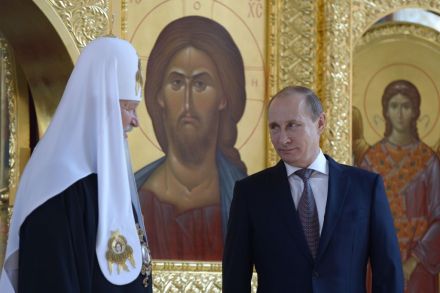
Travel the length and breadth of Russia – as you could fairly easily before the outbreak of war last February – and you will find, in many cities, a museum called Russia: My History. These institutions have a clear message for visitors. Empire-building luminaries like Ivan the Terrible and the despots Nicholas I and Alexander III are depicted as heroes. Vladimir Putin is also exalted. The territorial gains strong rulers can achieve are something to celebrate, as is the state religion they aggressively propagate. But what many visitors don't know about these modern-day monuments to expansionism is the hidden hand that helped curate them: the Russian Orthodox church.

My year of running from Putin

What a difference 12 months makes. Last year, at the Ikea in Rostov-on-Don, South Russia, I splashed out on some especially good Christmas decorations. I had an eight-year-old, half-Russian daughter growing up in that city, and wanted a tree and lights that were made to last and could be brought out each December as a kind of ritual.   Just over two months later, as Ikea closed its doors following Putin’s war, I took the decorations out and chucked them in a skip. My daughter had fled for Italy with her mother, my ex-partner, and my four years in Rostov – the cosy-melancholy city in which I’d planned to make a future – were over. There was no room for baubles or fairy-lights in my luggage, and not much to celebrate either.

Would Solzhenitsyn have supported Putin’s war?

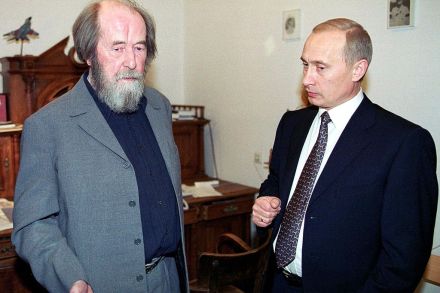
A Day in the Life of Ivan Denisovich, Aleksandr Solzhenitsyn's first novel, appeared 60 years ago this month. Vividly portraying a normal day in the life of a Gulag prisoner, it was followed by Solzhenitsyn's two great anti-Stalinist novels, The First Circle and Cancer Ward (both 1968), which helped establish the Soviet dissident-in-excelsis as a modern-day Tolstoy and a darling of the Cold War West. Soon after that, in 1975, came the third and final part of The Gulag Archipelago, his mighty takedown of the Soviet system. In the words of French philosopher Bernard Henri-Levy, it caused ‘a worldwide earthquake’, dissolving the ‘Communist dream...in the furnace of a book.’ Solzhenitsyn's reputation as one of the most famous writers in the world was confirmed.

Is Netflix’s The Crown fact or fiction?

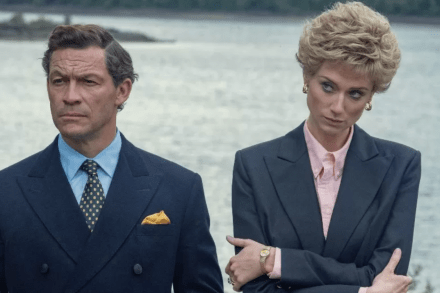
The latest series of The Crown has arrived on Netflix. To its predictable advantage, the show has already had the advance-publicity of raised voices. Ex-PM Sir John Major, commenting on a particular scene in the series between him and the then-Prince Charles, said it was a ‘barrel load of nonsense’ and would be ‘profoundly hurtful to a family who are still grieving...’ Dame Judi Dench, in an open letter to the Times, claimed The Crown presented ‘an inaccurate and hurtful account of history’ and urged its creators (successfully) to add a disclaimer admitting the drama was ‘fictionalised.’ Now Sir Tony Blair has joined the chorus of criticism, letting it be known he considers aspects of the series ‘complete and utter rubbish.

Putin goes to war on gay rights

When I moved to Rostov-on-Don, in the south of Russia, in 2018 for what was to be four happy years, (ending abruptly on 24 February) there was a baker’s shop, one among many, on the main thoroughfare of the city. I wandered past it countless times before noticing a pair of signs hanging outside, one in English, one in Russian. The Russian one, picked out in pokerwork, simply said 'Pederasti zaprishonyi'. Beside it, its English translation read: ‘Faggots not allowed.’ The effect of noticing these words for the first time was like a punch to the stomach, a reaction which never quite wore off however many times you saw it.

Putin’s war is tearing Russian families apart

Renata is a young paediatrician from St Petersburg who, since Russia’s invasion of Ukraine, keeps crying at work. Her colleagues are baffled: why is she sobbing over Ukrainian deaths when she doesn’t have relatives there? She’s surrounded, she says, by ‘complete incomprehension’ from her fellow-doctors, ‘and I’m quietly going insane.’ Her mother Vinera, a school headteacher, advocates the war, believes the West has its eye on Russia’s ‘inexhaustible wealth’ and that it envies Russia’s people for their ‘spiritual’ values. Renata no longer goes home to visit Vinera: ‘I find her disgusting, she’s a hypocrite, I’m disgusted by her views.’ Galya is a violinist from Samara, locked in a failing marriage to Vladimir, a former state investigator.

The tragedy of Truss’s Thatcherite imitation

Thirty two years ago, on a cold November Thursday, Margaret Thatcher resigned as prime minister, pushed out of office following 11 years in government. In 2022, after just 44 days, Liz Truss stood outside Downing Street on another Thursday autumn afternoon, to tender her own resignation to the British public. It had taken a cabal of ministers to topple Thatcher, while Truss’s fate was decided by a single MP, Sir Graham Brady, Chairman of the 1922 Committee. These final differences aside, Liz Truss cosplayed her heroine Margaret Thatcher to the last. Liz Truss’s emulation of Margaret Thatcher always had a whiff of teenage fantasy or fairytale about it. She was the Talented Ms Truss taking on someone else’s identity and living out a dream.

‘In Russia, there’s just emptiness’: An interview with a Putin draft dodger

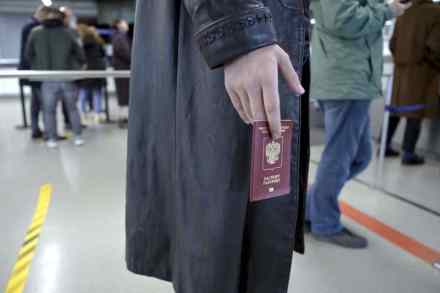
Thousands of Russians are fleeing from Putin's forced mobilisation. To escape from a call-up – and probable death sentence – on the frontlines of Ukraine, men and women are leaving behind their friends, families and possessions. They must dodge patrols and mobile check points at the borders to catch those trying to evade the call up. The lucky ones make it out. But even once these people have escaped Putin's clutches, the terror and fear endures. I met one of these men, Maxim, in a bar in Tbilisi, Georgia. He and his wife had just fled from Russia, after Putin’s ‘partial mobilisation’ order of 21 September. Though it is now well into October, Maxim still seemed agitated from the trauma of the past few weeks.

Do Russia’s conscripts deserve our sympathy?

Russia’s new crop of conscripts are a desperate, dejected bunch. A photograph showing an Orthodox priest blessing these men as they headed off to fight from the settlement of Bataysk in the Rostov region summed up their hopelessness. The names of such little known Russian localities must – to an English reader – all merge into one. They are simply over there, in Russia, where the suffering it has inflicted on a neighbouring country has finally come back to haunt it. https://twitter.com/phildstewart/status/1574444354026061825?ref_src=twsrc%5Etfw But I know where Bataysk is very well. It is a dull suburb of Rostov-on-Don, a city where I lived for four years – a kind of nothing village of one-storey villas, inhabited by Rostov commuters.

When the Ceausescus came to tea

Anyone still in any doubt about the lengths to which Queen Elizabeth II was prepared to go in the line of duty might consider the hideous company the role at times foisted on her. In 1991, she had to clink glasses with Zimbabwean dictator Robert Mugabe, and 20 years earlier had dined with Ugandan despot Idi Amin (though she later privately vowed to hit Amin with a sword if he dared to gatecrash her Silver Jubilee). But perhaps none of these grisly encounters was as gruelling as having to host Romanian tyrant Nicolae Ceaușescu and wife Elena on a three-day state-visit, complete with Palace quarters, in 1978. Though a domestic monster, Ceaușescu’s international stock at the time was high.

Liz Truss should aspire to emulate Thatcher in Russia

The Russian political and media establishment have got Liz Truss in their sights once again. As well as analyst Igor Korotchenko’s crude declaration that Truss ‘doesn’t belong in politics, but in the kitchen’, a clip currently doing the rounds on Russian TV shows her shocked reaction in July when presenter Kate McCann fainted and keeled over in a TV debate. Vladimir Solovyov, a key Kremlin propagandist, has argued that the same stunned helplessness would be Truss’s reaction ‘when Britain falls’ and accused her of ‘delusions of grandeur’.

Aleksandr Dugin’s daughter paid the cost for his beliefs

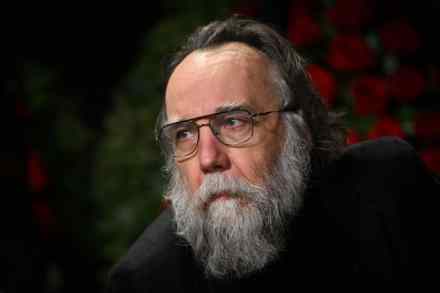
In the spring of 1994, year three of the Bosnian war, Ana, the daughter of the Bosnian Serb Lieutenant Colonel General Ratko Mladic, took a pistol from her father’s room in Belgrade – the special silver pistol with which he’d intended to celebrate the birth of his first grandchild – and shot herself in the head. She was 23 years old. Ana Mladic hadn’t been herself, it was said, since returning from a study trip to Moscow where, people guessed, she had read in a newspaper about her father’s war crimes at Sarajevo. Or had been alerted to them by the cold-shouldering of fellow students.

How Russia’s war in Ukraine has changed Estonia’s outlook

Estonia Independence Day – celebrating the country’s 1918 emancipation from the Russian empire – takes place on 24 February each year. This year, Independence Day for the Estonians was horribly ironic. ‘Instead of opening the news in the morning and seeing the expected 'Happy Independence Day Everyone!'’ Lidia, a language-specialist, told me, ‘the headline was 'Russia has invaded Ukraine'.’ How do you celebrate independence from Russia while reading about the Russian invasion of an independent near-neighbour?’ One result of this, Lidia said, was a ‘deep connection to Ukraine (developing) overnight, something that couldn’t have existed before’. This seems to be true at all levels.

Tory MPs will regret giving Badenoch the boot

If the chaos of recent weeks in British politics has clarified anything, it’s the almost complete schism between Conservative MPs and the party's members. That Rishi Sunak and Liz Truss have made it to the final round of the Tory leadership contest, ahead of their more popular rivals, paints the Conservatives as a party that no longer wishes nor deserves to win. Not since a close ally of David Cameron’s described Tory activists in 2013 as ‘mad, swivel-eyed loons’ has contempt for the party's grass-roots membership – or rather, complete indifference to their wishes – been so marked.  Were there a credible opposition, this would not matter so much.