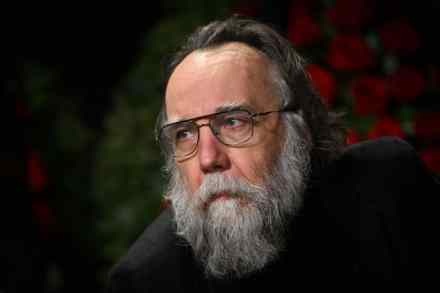
Robin Ashenden

Robin Ashenden is founder and ex-editor of the Central and Eastern European London Review. His detailed accounts of the media attacks on Lionel Shriver and Toby Young can be read on his substack ‘Letting the Child Run Riot’.

When the Ceausescus came to tea

Anyone still in any doubt about the lengths to which Queen Elizabeth II was prepared to go in the line of duty might consider the hideous company the role at times foisted on her. In 1991, she had to clink glasses with Zimbabwean dictator Robert Mugabe, and 20 years earlier had dined with Ugandan despot Idi Amin (though she later privately vowed to hit Amin with a sword if he dared to gatecrash her Silver Jubilee). But perhaps none of these grisly encounters was as gruelling as having to host Romanian tyrant Nicolae Ceaușescu and wife Elena on a three-day state-visit, complete with Palace quarters, in 1978. Though a domestic monster, Ceaușescu’s international stock at the time was high.

Liz Truss should aspire to emulate Thatcher in Russia

The Russian political and media establishment have got Liz Truss in their sights once again. As well as analyst Igor Korotchenko’s crude declaration that Truss ‘doesn’t belong in politics, but in the kitchen’, a clip currently doing the rounds on Russian TV shows her shocked reaction in July when presenter Kate McCann fainted and keeled over in a TV debate. Vladimir Solovyov, a key Kremlin propagandist, has argued that the same stunned helplessness would be Truss’s reaction ‘when Britain falls’ and accused her of ‘delusions of grandeur’.

Aleksandr Dugin’s daughter paid the cost for his beliefs

In the spring of 1994, year three of the Bosnian war, Ana, the daughter of the Bosnian Serb Lieutenant Colonel General Ratko Mladic, took a pistol from her father’s room in Belgrade – the special silver pistol with which he’d intended to celebrate the birth of his first grandchild – and shot herself in the head. She was 23 years old. Ana Mladic hadn’t been herself, it was said, since returning from a study trip to Moscow where, people guessed, she had read in a newspaper about her father’s war crimes at Sarajevo. Or had been alerted to them by the cold-shouldering of fellow students.

How Russia’s war in Ukraine has changed Estonia’s outlook

Estonia Independence Day – celebrating the country’s 1918 emancipation from the Russian empire – takes place on 24 February each year. This year, Independence Day for the Estonians was horribly ironic. ‘Instead of opening the news in the morning and seeing the expected 'Happy Independence Day Everyone!'’ Lidia, a language-specialist, told me, ‘the headline was 'Russia has invaded Ukraine'.’ How do you celebrate independence from Russia while reading about the Russian invasion of an independent near-neighbour?’ One result of this, Lidia said, was a ‘deep connection to Ukraine (developing) overnight, something that couldn’t have existed before’. This seems to be true at all levels.

Tory MPs will regret giving Badenoch the boot

If the chaos of recent weeks in British politics has clarified anything, it’s the almost complete schism between Conservative MPs and the party's members. That Rishi Sunak and Liz Truss have made it to the final round of the Tory leadership contest, ahead of their more popular rivals, paints the Conservatives as a party that no longer wishes nor deserves to win. Not since a close ally of David Cameron’s described Tory activists in 2013 as ‘mad, swivel-eyed loons’ has contempt for the party's grass-roots membership – or rather, complete indifference to their wishes – been so marked.  Were there a credible opposition, this would not matter so much.

Will Putin succeed where Stalin and Khrushchev failed in Ukraine?

A few weeks after Putin’s war against Ukraine began on 24 February, an infamous article was published in RIA Novosti, a leading Russian state mouthpiece. Written by Timofey Sergeytsev, it was entitled ‘What Russia should do with Ukraine’ and was full of ideas. These included ‘ideological repression’ and ‘strict censorship’ for their neighbour country, not only in the political sphere but in culture and education as well. The information space (the media) should become Russian, and all school materials containing ‘Nazi’ (i.e. pro-Ukraine) ‘ideologies’ be confiscated.

Why Georgia is going mad for Ukraine

Georgia seems to have gone Ukraine crazy since the outbreak of war in February. Taxi drivers have the Ukrainian flag on their dashboards. Takeaway coffees come in blue and yellow paper cups with ‘Glory to Ukraine’ written on them. Medicines come in blue and yellow bags. There are Ukrainian-coloured scooters for hire in Tbilisi and written on the huge city metro telescreens are the words ‘Be Brave like Ukraine’. There is so much glory for Ukraine in Georgia you wonder whether the Georgians have any left for themselves. They might well argue, however, that the two things are inseparable.