Robin Ashenden

Robin Ashenden is founder and ex-editor of the Central and Eastern European London Review. His detailed accounts of the media attacks on Lionel Shriver and Toby Young can be read on his substack ‘Letting the Child Run Riot’.

The 1990s were Britain’s sunset years

A myth seems to be developing about the 1990s. In a recent programme on Disney Plus called In Vogue: The 90s, a series of talking heads rhapsodise about the decade. ‘God, the 90s just changed everything,’ oozes Hamish Bowles, a fashion journalist. ‘It was a great time to be alive, it really felt like a revolution was underway,’ says model and actor Tyler Beckford. ‘Wow – what does the 90s mean to me?’ asks Naomi Campbell, suggesting it’s almost too vast a question to answer. Outside the programme, others seem to agree. ‘The 90s were the best decade ever – a time of real fun, freedom and abandon,’ says a recent article in the Irish Mirror. Novelist Bret Easton Ellis adds: ‘They were completely awesome all the way round, from movies, to music to…just freedom.

James Bond is past his best

Is James Bond looking knackered, or is it just me? At 54, I’m at an age where I’ve given up on a lot of things. I lost interest in Question Time when David Dimbleby quit, stopped paying much attention to technology after CDs/DVDs went out, and I’m pretty sure Daniel Craig was my last James Bond too. I liked Craig in the part – he was the first Bond to convince you he’d really been in the services – but there are only so many 007s in a lifetime you can take. The last offering seemed to kill off the spy at just the right moment – he’d dwindled from Connery alphadom to a lugubrious, lovelorn loser moaning about his age (something many of us get enough of at home).

The best short novels for screen-addled minds

Who honestly has the time or inclination to finish long novels these days? I yearn for a serene period when I can read The Red and the Black or The Raj Quartet each night before bedtime, but I seem to be imagining someone else’s life. When new content, cool and engaging, is flooded onto YouTube daily, when you have subscriptions to four different websites, and the telephone regularly pings (or rather, zhuzzes) with WhatsApp messages, entering the world of Julian Sorel or the British in India is a struggle. I used to read two or three books a week, very cheerfully, but since around 2016 we’ve lived in a world so swirling and volatile that literature has at times seemed like its shadow.

Why isn’t Gary Oldman playing Smiley again?

Following the huge success of the 2011 film Tinker Tailor Soldier Spy – from the book of the same name by John le Carré – there was much talk of a second movie, based on le Carré’s 1979 novel Smiley’s People. The possibility was floated by Tinker Tailor cast member Gary Oldman in 2012 and then confirmed by him five years later, but then all went silent.  Until last week, when it was reported that any plans Oldman might have to return to the role had seemingly been – bafflingly – blocked by Le Carré’s sons. As the actor’s manager Douglas Urbanski revealed to the Radio Times: ‘We loved Tinker and we started to do prep for Gary to do Smiley’s People and suddenly there was an unexpected rights issue….

Oasis obsessives should broaden their horizons

For those of us not into Oasis in the 90s, the past month’s mania over their reunion has been baffling. Songs like ‘Wonderwall’ and ‘Don’t Look Back in Anger’ may have hit the spot but as individuals Oasis seemed far from engaging. As John Harris said in his book The Last Party: Britpop, Blair and the Demise of English Rock, ‘It was difficult to think of any group whose career had combined stratospheric success with such stubbornly limited horizons.’ Liam’s wild man antics were risible and often pointlessly insulting The band didn’t appear to read or have interests outside music, Liam’s wild man antics were risible, and they were often pointlessly insulting.

The timeless beauty of Shropshire’s canals

Shropshire is a strange county, little known by those beyond its border, and perhaps that’s part of its appeal. It not only has no coastline, but no city officially either. Phone cover is shaky and transport links sparse (at some times in the day, only one bus every two hours will leave my market town, and they cease abruptly around 6 p.m.). But what it does have are medieval towns, lush green landscapes, and enormous numbers of farm animals – cows, sheep, and horses (for someone coming, as I do, from relatively arable East Anglia, this has a certain H.E. Bates charm to it). The town I’ve moved to, built on a canal, has a livestock auction house on the outskirts, the lowing of cows-for-sale emanating through the carpark outside.

A tribute to the glorious heyday of smoking

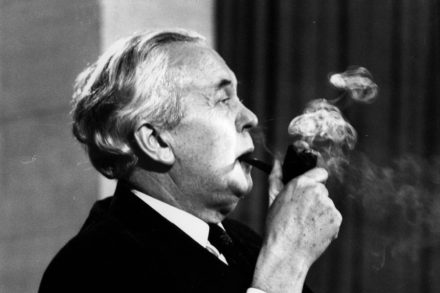
When the revolting news broke that Keir Starmer – whingeing lovechild of Oliver Cromwell and Captain Mainwaring – could be about to ban smoking in parks, public restaurants and beer gardens, I couldn’t help but think elegiacally of my own lifelong love/hate-affair with the pernicious weed, and to nicotine glories past. I was 13 when I started smoking in earnest and had been impatient to develop the habit long before that. Back then everyone smoked, and they did it everywhere too – on buses, in trains, on the underground and at the cinema.

J.D. Vance was a weird teenager. So were most of us

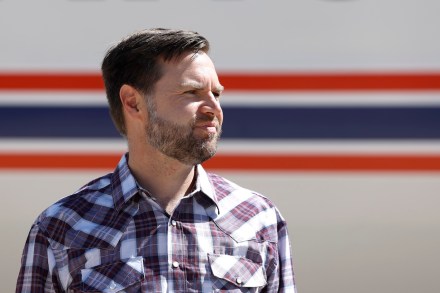
Two photos from the youth of Republican vice-presidential candidate J.D. Vance have recently surfaced and are filling his opponents with glee. In one of them, he’s dressed as a woman, with shoulder-length golden hair, a look of yet-to-be-plucked wistfulness, and three days of teenage stubble. The other shows him loitering in a men’s bathroom, a faint aura of The Munsters about him, as three smiling young women (fellow members of his Ohio school’s student government) pretend to relieve themselves standing up into a row of urinals.

The enduring wisdom of Bill Brand

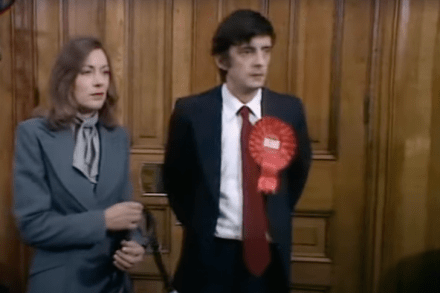
If Labour is taking us back to the 1970s – and the recent strike-secured pay rises and mass rage about immigration suggest more than a nodding similarity between our own time and that one – anyone wanting a deeper insight could do no better than watch Bill Brand. This 11-part series, written by playwright Trevor Griffiths (who died earlier this year) and broadcast by ITV in 1976, explores the working and personal life of a newly elected Labour MP, and was once called by the Sunday Times ‘the most remarkable series ever seen on the box'. Bill Brand, played by Jack Shepherd, is on the hard left of Labour, the kind of MP Kinnock and Blair did so much to eject from the party in the 80s and 90s (and who made something of a comeback under Jeremy Corbyn’s doomed tenure).

Are the Great Novels worth it?

To finish or not to finish? The dilemma of whether to give up on books we aren’t enjoying or plough on to the end lasts a lifetime, but as we grow older it gets easier. We not only have less time, but also the increased confidence to decide that if a great novel isn’t engaging us, it’s possibly the book’s fault. What does it really matter if Thomas Mann’s The Magic Mountain defeats us, or Finnegan’s Wake sends us to sleep? We’ve survived much worse than that.  But in youth, such things torment you, and the more highly regarded the novel, the greater your shame in abandoning it.

Kemi Badenoch’s time has come

The Tories are about to choose a leader once more, and this time cannot allow themselves any self-indulgence. In 2022, they sidelined Kemi Badenoch – far and away the most popular candidate with the party-membership – in favour of a choice between Liz Truss and Rishi Sunak. Tory MPs resembled a football manager ‘fielding the reserves’. The resulting electoral meltdown this summer seemed inevitable. Badenoch clearly doesn’t shrink from a fight Much has been made of Badenoch’s rather inspiring backstory: the birth in Wimbledon to middle-class parents (father a GP, mother a university professor), the childhood under a grim left-wing dictatorship in Nigeria, and her teenage move to the UK with £100 in her pocket.

I miss the food of Eastern Europe

When you live abroad for long periods of time, you get accustomed to certain foods which, returning home, you can’t find anywhere, and the sense of a habit unwillingly broken is acute. If the foreign country is Thailand or Italy, you stand a good chance of finding dishes approximate to those you’ve left behind in a local restaurant. But if your working life has been spent in the countries of Central and Eastern Europe, and you live well outside London, you must learn to make them for yourself or do without. In the warm hotel restaurant, after freshly brewed black coffee, I was given a glass of heated honey vodka The first foreign country I lived in was Estonia.

The rape of Ukraine continues while the world’s sympathies move on

‘Write and record’ was the dying instruction of the historian Simon Dubnow – shot by Nazis in the Riga ghetto – and two books recently emerging from Ukraine embody this spirit in spades. Now that the world’s anger and sympathies have largely moved on to the Middle East, they may do something to rekindle that earlier sense of outrage and remind the ‘caring’ classes of atrocities closer to home. ‘My hatred flows from thesmall things to the big things. Every fibre is filled with it’ The first, Our Daily War, comes from Andrey Kurkov, the celebrated Russo-Ukrainian novelist and author of 2022’s Invasion Diary, a detailed on-the-ground account of Putin’s attack on his country.

I’m an unhappy shopaholic

When I was a child I had a dream, as most kids do, of entering a toyshop and being told I could carry away with me as much as would fit in a large shopping trolley. In would go every kind of Action Man, every game of Buckaroo or Operation, and enough Star Wars figurines to people a small planet. There would be no discriminating and no sense of moderation – just a great tottering tower of swag. This is to say nothing of the house-arrest constant deliveries impose on you Later though, as I got into my thirties, I took a more spartan approach. I wished for a slimmed down, uncluttered life in which everything counted. Without necessarily knowing it, I agreed with William Morris’s adage: ‘Have nothing in your house that you do not know to be useful or believe to be beautiful.

The Tories have much to learn from their 1997 wipeout

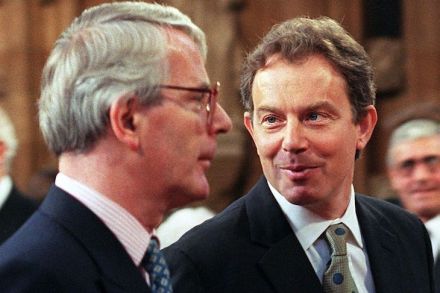
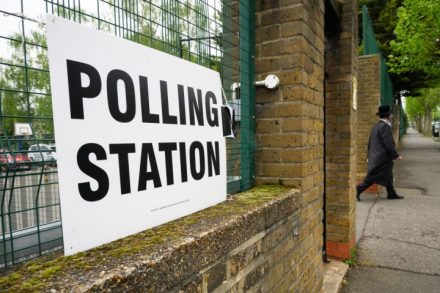
If polls are anything to go by, Labour’s historic 1997 election win – 418 seats to the Tories’ 165 – is about to be dwarfed by this week's vote. An exclusive survey for the Daily Telegraph recently predicted Labour would win 516 seats to the Tories’ 53. A political wipeout, in other words, seems to await Rishi Sunak and his government – their worst result ever. Hanging on to 165 seats in parliament, however woeful it seemed three decades ago, would put smiles of relief on most Conservative faces. Hanging on to 165 seats, however woeful it seemed three decades ago, would put smiles of relief on most Conservative faces Back in 1997, there was still a residual sense of what the party actually stood for.

The case for not voting at this election

Anyone over the age of 40 can scarcely help comparing this election, or the state of our two main parties, with those of the past. Though in 2024 it seems a choice between dumb and dumber (or grey and greyer), this wasn’t always the case.  The government of Blair, Brown, Prescott and Cook seem like a supergroup compared to the current front bench The first election I could vote in was in 1992, and back then there was a clear difference. Yes, Labour, under Neil Kinnock, had kicked out many of the hard left and moved to the centre-ground, but it was more a question of style. The Tories wore velvet-collared covert coats and Turnbull and Asser ties, got caught in massage parlours, and closed hospitals.

Get the government out of my bathroom

Two days before leaving this country for Italy – where, defeated by southern British house prices, I planned to fight for a long-term visa and buy a home – I finally found the exact flat I’d been dreaming of, here in the UK. True, it wasn’t in East Anglia, where I grew up and most of my family still lives, but Shropshire, a county which intrigued me and which emerged over time as my second choice. Green, landlocked, with endless castles, hills and valleys, Shropshire is about as remote from the capital as you can get. It has Ludlow and Shrewsbury, medieval towns with rivers, courtyards, timbered buildings and a pleasing Shakespearean ring to their names. Nearby is Wales which, since two epic holidays in my youth, has been a kind of Holy Land for me. What’s not to embrace?

‘Terrible but magnificent’: the life and times of playwright John Osborne

With the news the Almeida Theatre is to stage John Osborne’s 1956 play Look Back in Anger this Autumn as part of their double-bill ‘Angry and Young’ (its partner play being Arnold Wesker’s Roots), one can only wonder what today’s younger generation will make of it. Osborne’s first produced play, a portrait among other things of the corrosive marriage between a young lower class intellectual and his infinitely better-born wife, perfectly caught the rising mood in 1956 – one of searing frustration with postwar inertia and a moth-eaten establishment of colonels, judges and bishops that seemed set to endure forever. So seismic was the play’s impact, it was credited with changing the British stage, even British society, for good.

I’ve finally succumbed to a canal boat holiday

All my life I’ve wanted to take a narrow boat holiday down one of Britain’s canals but have never got round to it. There’s always been something easier and more pressing, perhaps even a touch more glamorous than a week spent floating around Britain – a trip to Andalusia, a city break, a train-ride round Siberia – but this year, in my mid-fifties, I’m finally making it happen. With my cousin and both our young daughters as crew members, I’ve shelled out on the rental of a four-berth narrow boat – painted a resplendent red and racing green, a bit like a Hornby train.

The hell of interior design

I spent seven hours yesterday cutting up cardboard boxes into little square pieces with a Stanley knife and stuffing them into rubbish sacks. I’ve just moved house and my home is piled high with bulging black bags and looks like Leicester Square during the Winter of Discontent. Given that I don’t currently have the necessary bin from the council, I could end up living with them forever.  These are just some of the stresses of moving into a newly bought flat. Everyone knows the legal process of buying a place is an ordeal – the multitude of documents you can’t find and questions you can’t answer, the survey that over-stresses all the problems, apparent 11th hour impediments to closing the deal that, as in a Hollywood film, finally evaporate as completion day approaches.