Robin Ashenden

Robin Ashenden is founder and ex-editor of the Central and Eastern European London Review. His detailed accounts of the media attacks on Lionel Shriver and Toby Young can be read on his substack ‘Letting the Child Run Riot’.

Georgia’s ‘foreign agent’ law protestors won’t go down quietly

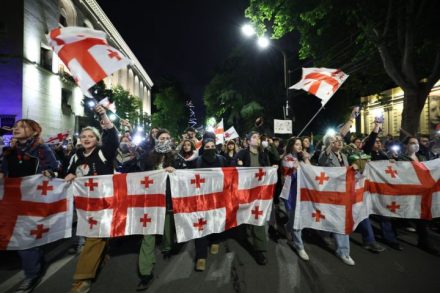
Following the introduction this Tuesday of Georgia’s notorious ‘foreign agent’ law by the ruling party Georgian Dream, there has been widespread popular protest in the capital Tbilisi. The law, proposed last year but postponed in the face of public resistance, demands that any non-governmental organisation receiving more than 20 per cent of its funding from abroad must label itself an ‘agent of foreign influence’ or face fines and even imprisonment. While the government claims it’s simply a practical bid to create transparency in Georgian politics, critics, who call it the ‘Russian Law’, feel it’s a leap towards greater union with the Kremlin. They fear the legislation will simply be abused, as in Russia, to silence dissent and persecute critics of the government.

My battle with a Puglian pugilist

To nearly any English tourist, the small southern Italian town I’m currently living in, half an hour from my daughter’s school, would seem idyllic. It has an old castle, a monastery and olive groves in all directions, but in Puglian guidebooks it barely rates a mention. It’s the scruffy, down-to-earth cousin of richer or bigger towns nearby, places like Monopoli or Bari, but has nearly everything I could want. There are arches and stone stairways, pot-plants everywhere (80 in my alleyway alone), and that delicious, ivory-coloured stone which paves the streets in Puglia and which long use has polished to a shine. At night the street-lanterns turn the white buildings orange, and the sky above is inky blue with stars.

A bloke’s guide to aftershave

In 2020, the year of coronavirus, I came to a fork in the road. I’d just turned 50, a moment of looking back over your life, realising what you’ve failed to achieve, and accepting there’s only a finite number of years left to you. It was clearly a time for making a change of some sort, something fundamental and radical, and I duly made one. I faced reality, took myself in hand, and decided to switch to a new aftershave.  Until then, it had been Dunhill Edition all the way. Launched in 1984, it had caught me in my mid-teens, was my first taste of adult sophistication (Jeremy Irons wore it!) and it hadn’t really occurred to me in the intervening decades to wear anything else.

The monstrous experience of boarding school

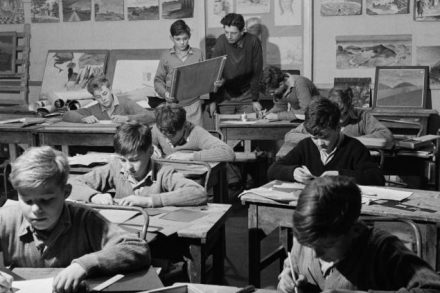
Charles, Earl Spencer published a blistering denunciation of his prep school days – complete with constant corporal punishment and child abuse – in A Very Private School last month. Since then, many of us who attended such places have been recalling our own time there too, nodding in recognition or giving thanks that our experience was better. From 1978 to 1983, I was at such a boarding school myself, in Suffolk. Presumably prep schools have changed a lot since then, but in the late 70s they were still brutal, spartan places. You wore shorts in all weathers, studied and slept with the windows open, and spent your life longing for an extra blanket or a few special minutes by the radiator.

A love letter to the Fiat 500

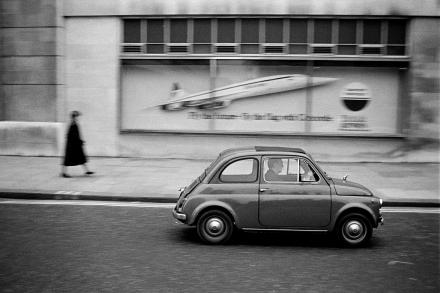
On visits to the continent as a child, what struck me was the strangeness of other European countries. Going to France or Italy, pre-internet, you cut off your connections to the outside world, and even got the British news a day or two late. People ate horse meat, tortellini in brodo or croque monsieurs, and the kids drank Orangina and watered down wine. The smell of black tobacco smoke – dignified and with a kind of ancient wisdom to it – seemed to permeate every public building. But what you also noticed was the cars – Renault 4s on the Riviera, Citroen DS-23s in Paris, and in Italy, overwhelmingly, the tiny, toy-like Fiat 500, a design classic thrumming with character and a part of postwar history.

How was ITV’s trans drama Butterfly ever made?

In the wake of the Cass Report’s damning verdict on the reckless ‘social transitioning’ of children and the prescribing of puberty blockers to minors, it’s perhaps an apt time to recall a mini-series that appeared on ITV a few years ago cheerleading for both. Butterfly was broadcast in October 2018 just as Theresa May’s national consultation about proposed changes to the 2004 Gender Recognition Act was nearing its end, and dealt with the issue of trans children. Written by Tony Marchant and directed by Anthony Byrne, its lead consultant was Susie Green, the then-head of transgender youth support charity Mermaids, who took her son to Thailand for sex reassignment surgery on his sixteenth birthday. Butterfly, over three episodes, told a harrowing story for our time.

The sacking of Frank Skinner is a loss to British comedy

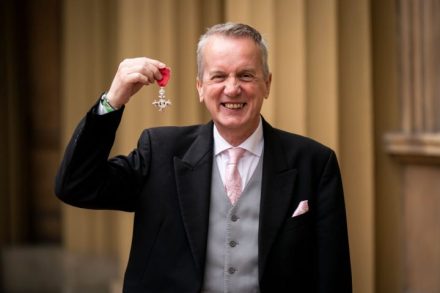
The recent news that comedian Frank Skinner had been sacked from his job at Absolute Radio after fifteen years as presenter feels like a misstep to say the least. It has not been without a whiff of scandal, coming amidst accusations of ‘ageism’. The man himself lamented: ‘I’m not going to pretend I took it well… I don’t want to go.’ Many of us will feel the same way: if, from May when his contract runs out, Frank Skinner is to be not only off our television networks but also national radio as well, it would seem to be comedy’s loss. His brand of humour – smutty, confessional, nudging and winking – is in a long tradition arguably dating back to Chaucer, through seaside postcards, Max Miller and the Carry On films.

My loveless nights in post-Soviet hostels

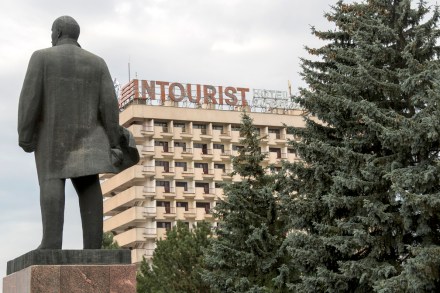
I suppose there are people who stay in four or five-star hotels all their lives and become a kind of expert in them, turning their noses up at rooms I would regard as the acme of comfort, but since my parents stopped paying, I never have. In adulthood my standards have plummeted and, as a traveller, I’ve stayed in any number of grotty places. I’m not complaining either – you have much more fun in life when there’s nothing to protect you from what Maxim Gorky, in a lyrical moment, called the ‘lower depths.’  None of this was erotic in any way but had a kind of anthropological edge to it My real travels started when I moved to Estonia at 26.

Where have the West’s liberal values gone?

Russia is ramping up preparations for a 'large-scale' war with Nato. That's the verdict of the Washington-based Institute for the Study of War, which reports several indications that Moscow is preparing for war with Nato ‘not imminently but likely on a shorter timeline’ than many Western analysts believed. Is the West ready for war? Its self-doubt about what it stands for makes it seem worryingly unlikely. Echoing the words of General Sir Patrick Sanders, head of the British armed forces, that to fight in any such war the UK would need a ‘citizen army’, Latvian Foreign Minister Krisjanis Karins has suggested Britain introduce conscription to prepare for any threat.

Watches satisfy a strange masculine urge

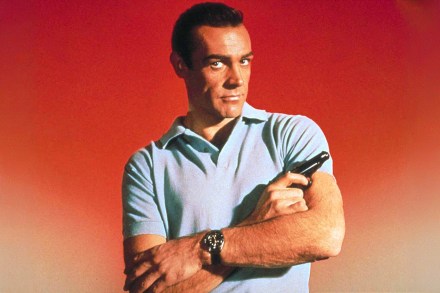
A year or two ago I got my first expensive watch, a Longines Conquest Heritage. It wasn’t quite my dream timepiece – that was a 1960s Omega Seamaster automatic (think Bond films at the Sean Connery stage) but these are priced off the scale and need plenty of specialist upkeep. The Longines Conquest, very much out of the same retro stable (it’s a copy of a 1954 model) was selling at a discount before they upped the prices and released a new model in a much bigger size, and as I have wrists more or less the width of fettucine, it was clearly time to act.

What my strange old friends taught me

As a young man I sought out the company of much older people in the arts, feeling they had some secret to life, often the same one in different guises, which I wanted, needed to discover. In the let-it-all-hang-out youth culture of the 1990s I felt awash, and the elderly (which to a 20-year-old meant anyone over 60) were also kinder, less threatening, more generous with their time. Two people who influenced me most were Daniel Farson – roistering Soho writer and broadcaster, a kind of modern-day Toby Belch – and Karin Jonzen, a septuagenarian Swedish sculptress with a studio off the King’s Road. It was all pure gold, a kind of heightened life you swore you’d always strive for Dan I met by design.

The trials and tribulations of Orthodox Lent

The Russian Orthodox Church, which I converted to in 2018, has disgraced itself in the years since. Its Patriarch Kirill has oiled up to Vladimir Putin and his war effort on every possible occasion since Russia invaded Ukraine. My feelings about this strand of Christianity may be highly ambivalent now: what good is its staggering beauty if it fails to properly call out mass murder? How is Putin, as we’re constantly told, a ‘devout believer’, when it seems he’s simply ticking his way through outraging the Ten Commandments? But my fondness for some of its rituals, including Orthodox Lent, which starts this week, remains.

Navalny’s death has left Russia’s opposition in despair

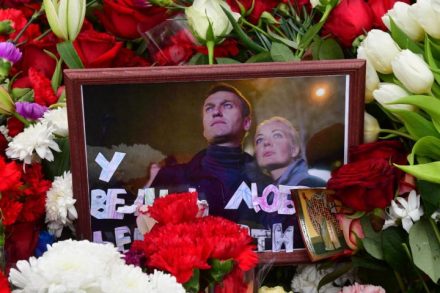
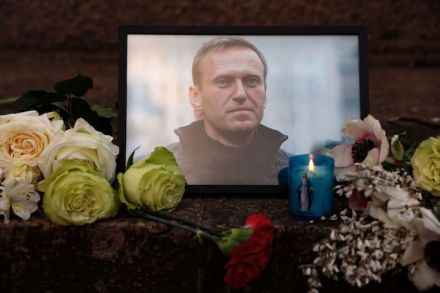
Following the wave of articles that have appeared in the Western press since Navalny’s death come three pieces from émigré Russians. All present a sobering and even chilling picture of Russia’s future now that its leading figure of opposition is gone. The first, published by the Russian-language Meduza on 4 March, was by Shura Burtin, a Russian journalist living in Prague. In his essay, ‘The world doesn’t know how to stand up to evil', Burtin described his devastation at the news of Navalny’s death: ‘Only in the wake of Navalny's murder did it become clear how unconsciously we still lived in hope for a “normal” future.

Lost friendships are a painful price of the Ukraine war

One thing you learn about war, if you are close enough for it to touch you, is that it splits the atom. Situations and relationships that have grown over time and seem to have deep roots – a life in fact – can be blown apart in a day. Now, over two years on from the start of Vladimir Putin’s ‘special military operation’ (which came at a time when I was living in Rostov-on-Don, an hour or two from the Ukrainian border), I’m still in touch with several Russians I knew back then. We find common ground, avoid certain topics and continue the conversation. But other friendships were killed stone dead, and for very different reasons. One was with a young student, Nikolai.

Men don’t belong in Hampstead Ladies’ Pond

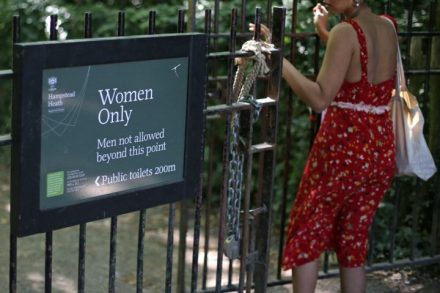
The waters of Hampstead ladies' pond are this week, it seems, more troubled than ever. Last Sunday, amidst cries of ‘traitor’ and ‘shame on you', the Kenwood Ladies’ Pond Association (KLPA) voted against barring transwomen from using it. As a result, this unique bathing site, billed as providing ‘a place of refuge and security for women and girls of all ages,’ would now appear to be suffering from terminal mission creep. This row was triggered by a controversial official decision in 2019 to allow transwomen to swim at the pond. Many regulars were furious and some gender-critical activists like Venice Allen and Maya Forstater vowed to return it to its women-only status.

A Soviet guide to vodka

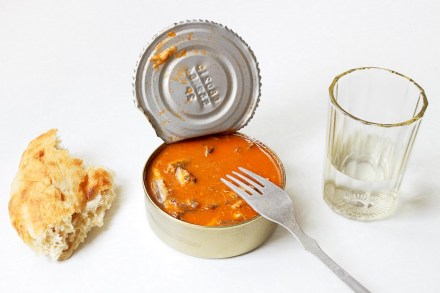
One of the perks – a perilous one – of visiting the Former Soviet Union in the 1990s was the cheapness of the vodka. I was used to paying London prices for it but in Estonia (where I lived for two years) you could find bunker-bars where they’d serve you a generous tumbler – enough to blitz you for an evening – for about 40 pence. Most people wanted nothing more from alcohol than that it should anaesthetise them and help them forget, and vodka was ideal for this. Unlike whisky or brandy, you couldn’t crow over its ‘vanilla overtones’, its ‘hints of butterscotch’ or its ‘aged in the wood’ qualities. It simply got you drunk, no more, no less. And the bars served it that way: doled out, clinic style, in a measuring beaker.

The horror of travelling with pets

It’s 7 in the morning, I’ve got to Milan Linate airport two hours before my plane to Bari, and already things are going horribly wrong. The airline aren’t letting my cats fly with me. I’ve got documents to show they’re microchipped and all their vaccines are in order, but two uniformed men, straight out of Mussolini central casting, are telling me the carry-cage is all wrong. Perhaps I should resent these animals and all the hassle they’ve brought me ‘It should have metal sides,’ they snap. ‘You cannot fly with this cage.’ I tell them honestly that I flew with it from Britain the day before – the very same airline to this very airport – that I always fly with it, but they’re having none of it.

The key difference between Alexei Navalny and Vladimir Putin

Following Alexei Navalny’s suspicious ‘sudden death’ in an Arctic prison camp last Friday, two scenes immediately come to mind featuring Vladimir Putin, who almost certainly mandated it. The first is from December 2018 and his meeting, at the G20 Summit, with Saudi Arabian Crown Prince Mohammed bin Salman, suspected at the time of involvement in the brutal murder of Jamal Khashoggi, a Saudi dissident journalist (a suspicion lent weight by a US intelligence report released in 2021). Though bin Salman was a virtual pariah at the time, felt to have blood still hot on his hands, Putin high-fived him shamelessly, the warmest of smiles on his face, and quickly they sat down to laugh and banter.

Russia’s ‘Red Ripper’ Andrei Chikatilo was a uniquely Soviet serial killer

In the wake of Vladimir Putin’s 2022 invasion of Ukraine, as atrocities like the killings at Bucha and Irpin came to light, there were repeated internet posts comparing Russia's president to another figure from the country's history. This wasn’t some expansionist empire-builder of the past, but Andrei Chikatilo, the mass-murderer and cannibal from Russia’s Rostov region. He was convicted of 52 murders in 1992 (most of them children or minors) and executed a couple of years later. I first caught sight of Chikatilo in 1992 in a British TV news report on his crimes.

My life in storage

I’m off to South Italy for a few months having recently sold my late mother’s house and, if I can find a nice immigration lawyer, perhaps longer. This means my home is now full of cardboard boxes, bubble wrap, marker pens and panic. It’s a feeling I’m perfectly familiar with, having changed my living space (and country) more times in life than I care to count. The boxes won’t be going with me abroad. Instead, I’ll be renting local accommodation for my worldly goods: a storage space. Such austerity’s strictly for saints or lunatics, and most of us don’t make the grade as either The buildings that house storage spaces are nearly always the same. They’re plonked down in industrial estates and look faintly like car-showrooms without cars or windows.