Robert Peston

Robert Peston

Robert Peston is Political Editor of ITV News and host of the weekly political discussion show Peston. His articles originally appeared on his ITV News blog.

Boris Johnson’s Brexit dilemma

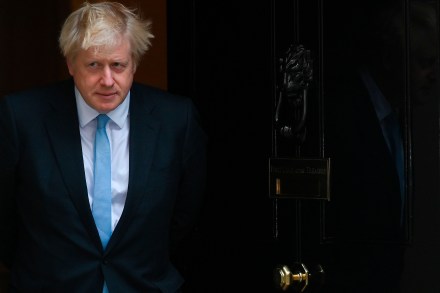
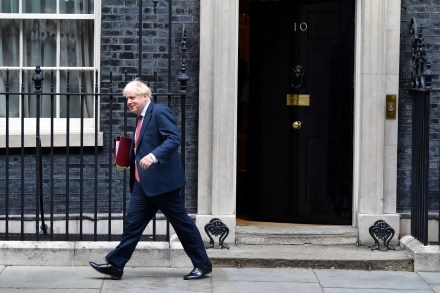
The penny seems to have belatedly dropped for Boris Johnson. He can have a no-trade-deal relationship with the European Union – what he calls an Australian-style relationship – or he can have Northern Ireland as a seamless member of the UK’s internal market. But under the EU Withdrawal Agreement that he signed, he cannot have both.  If we trade with the EU under WTO terms there will be highly significant tariffs levied on UK-EU trade alongside highly significant fiscal and regulatory differences between the UK and EU. And the default position in the Northern Ireland Protocol is that – without agreement to the contrary between the UK and EU – all goods flowing from GB to NI are 'at risk' of flowing across the NI border into the EU.
No. 10 to outlaw gatherings of more than six people

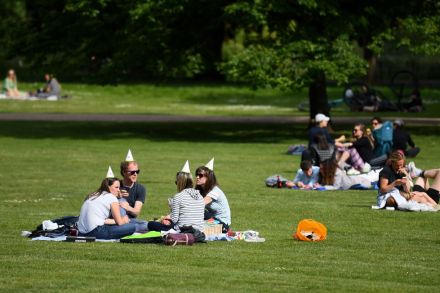
The government is to significantly reduce the threshold for lawful gatherings of people in homes from the current 30, perhaps to as low as six, I understand. This is a first response to the significant spike to circa 3,000 a day in Covid-19 infections we've seen. At the moment, attending a gathering of more than 30 people is punishable with a £100 fine and organising such an event risks a £10,000 fine. Under the reduced threshold, due to be announced perhaps today, the police would be empowered to break up and levy fines on much smaller groups. The new threshold has not yet been decided, however.

Why Boris thinks no deal might be worth the pain

You may wonder why on earth a Tory government led by Boris Johnson, the heirs to Thatcher for goodness sake, are sacrificing the prospect of a trade deal with the EU because they want the right to subsidise British industry. If the Tories and Thatcher stood for anything, it was rolling back the role of the state in the private sector. Well, all that is stuff for the GCSE history syllabus, and turns out to be irrelevant to today's politics. Because if the government of Boris Johnson has an ideology, it is that of Dominic Cummings and his Vote Leave crew. And Cummings's passionate conviction is that Johnson's government MUST have the discretion to invest without fetter in hi-tech, digital, artificial intelligence and the full gamut of the so-called fourth industrial revolution. How so?

The case for cautious optimism ahead of a second wave

The cause of the latest spike of coronavirus cases in Bolton points to why we need continued vigilance against Covid-19, and why it would be highly surprising if we were not now set on an upward national trend. The locus of the Bolton surge was some pubs, and possibly one in particular. And it may be connected to young people socialising after returning from higher risk holiday destinations. This is an important phenomenon. It means the outbreak is correlated with life in general returning to semi-normal, rather than to specific cultural or localised factors. The point is that the data shows earlier summer surges in parts of the Midlands and North West have been disproportionately manifested in Asian communities or in specific factories.

Where is Dominic Cummings?

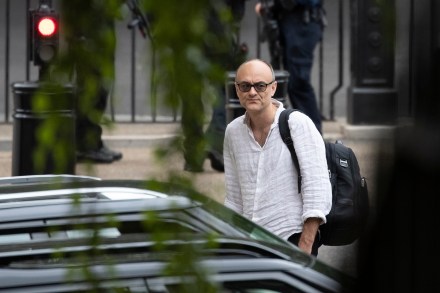
Some in Westminster have been missing Dominic Cummings. It turns out he had an operation in late July, which he delayed a year ago when Boris Johnson persuaded him to become his chief aide, and has been convalescing in the north of England since. He returns to normal duties at No. 10 on Monday. Whitehall source tells me he has not been working and was not looking at emails or messages. I imagine it has been an unmitigated joy for him to switch it all back on again — especially to read the reported remarks of his father-in-law about the PM’s alleged (and denied) early retirement plans.

Why did the UK’s coronavirus response go so wrong?

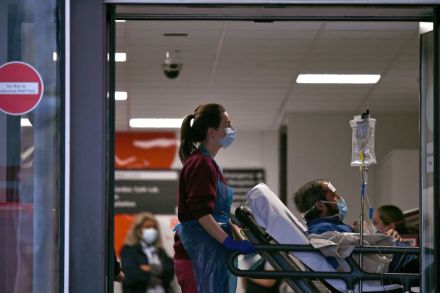
The cost of Covid-19 in the UK, in 45,000 lives lost and considerably more if 'excess' deaths are included, in long term illness for tens of thousands, and in damage to our prosperity, is changing everything. But did the shock have to be so great? Could the government have done more to protect us?

Oxford’s Covid-19 vaccine is showing positive signs

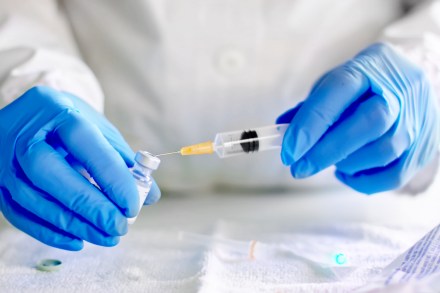
I am hearing there will be positive news soon (perhaps tomorrow) on initial trials of the Oxford Covid-19 vaccine that is backed by AstraZeneca and supported by tens of millions of pounds of government money. The first data is due be published in the Lancet. Apparently the vaccine is generating the kind of antibody and T-cell (killer cell) response that the researchers would hope to see. That said, the efficacy will only be properly established in the large phase III programme that is underway in the viral epicentre of Brazil, to deliver a large database that assesses safety as well as efficacy. One source told me: 'An important point to keep in mind is that there are two dimensions to the immune response: antibodies and T-cells...

Is Boris’s Huawei ban quick enough for Tory MPs?

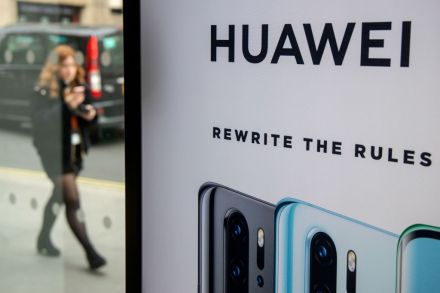
It is a big deal that the Chinese telecoms giant Huawei is being totally excluded from the UK's new fast 5G mobile network, and is redolent of a de facto cold war between the West and China. But Johnson has taken a more gradualist approach to the exclusion of Huawei than his Tory critics wanted and UK telecoms companies feared. BT and Vodafone got more time than they expected to move away from Huawei as a 5G and broadband supplier. The Tory MPs who want no involvement of the Chinese company in important communications infrastructure will feel only partially vindicated; many of them will be disappointed and angry. The UK telecoms giants had hoped they would have till 2027 to remove all kit from 5G.

What the £15bn spend on PPE tells us about the mess we’re in

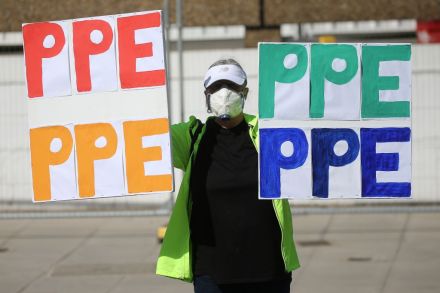
The £15 billion spent on PPE, personal protective equipment, since March is one of those numbers that once it's in your head, it's impossible to unthink it, like a ghoul from a nightmare. It gauges both the scale of the health and economic crisis we're enduring, but also quite how astonishingly unprepared the government really was. Remember at the beginning the Health Secretary Matt Hancock said we had more than adequate stocks of PPE because of no-deal planning. Just for the record, the £15bn dispensed on face masks, gowns and visors – which have a user life of anything from a day to a few weeks – would, on the government's sums, be enough to pay for at least 18 new hospitals.

Can Rishi Sunak prevent mass unemployment?

There is only one test for what the Treasury is billing – with all its magnificent talent for hyperbole – an 'update', which is the impact it will have on taming the looming ghoul of mass unemployment. Will Rishi Sunak's stimulus package deter or even reverse decisions to sack people by those businesses that are most squeezed by the social distancing imperative? That are suffering both a reduction in capacity (tables removed from restaurants, for example) and demand? There are millions employed in such industries, from shops, to bars, to theatres.

The Johnson revolution is decidedly un-British

These may well be the defining few days of the Johnson government. Having failed to make a towering success of the initial response to the Covid-19 crisis – by his own admission on Times Radio this morning – the Prime Minister is now embarked on the kind of structural reform of the machinery of government that will determine whether he will be seen by future generations as a Homeric hero or Homer Simpson. So far we can see the building blocks of the reconstruction, rather than the detail.

David Frost is a controversial appointment for National Security Adviser

One of Boris Johnson’s closest allies, David Frost – who has been negotiating the terms of the UK’s future relationship with the EU – is to become National Security Adviser, succeeding Sir Mark Sedwill, who is standing down both as cabinet secretary and NSA. This is an unusual and controversial appointment because Frost is a political appointment, a special adviser, in his current role – and will continue as a political adviser rather than becoming a member of the civil service. There will be a formal process to find a new cabinet secretary. His appointment is bound to cause a big gulp among the spooks and military top brass Frost is close to Dominic Cummings, and is routinely referred to as ‘Frosty’ in Johnson’s circle.

Is Leicester going to see England’s first local lockdown?

The first local lockdown – and therefore a test of whether local lockdowns will be effective in suppressing coronavirus outbreaks – could take place within days, according to senior members of the government. One pointed out that there has been a surge in cases in Leicester: there were 658 coronavirus cases in the Leicester area in the fortnight to 16 June. New data on the prevalence of the virus in the area has been delivered to Leicester's mayor Sir Peter Soulsby, according to the LeicesterLive website, and he said his officials were analysing the data over the weekend. I am told that the data does not yet show that a full lockdown is required. A senior official said: ‘It would need to be driven by the data and we’re not at that stage right now.

The return to ‘normal life’ is going to be fiendishly complex

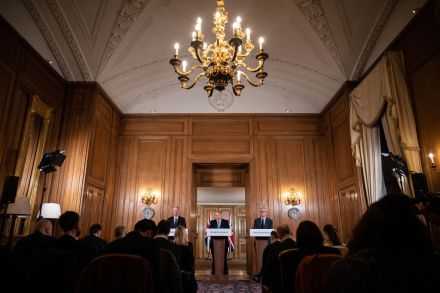
Welcome to C Day - where the 'C' stands for the 'complexity' of living with coronavirus. Because when the prime minister announces the return to something like normal living today, our revised way of life will feel anything but normal, and also bloomin' complicated. For example, we'll be able to have friends or family inside our houses again. But NOT friends and family from different households at any one time, just those from one household at a time. And we won't be allowed to hug, and we can continue to socialise with up to five people from different households if we are outside. And if we live alone and we visit a household in a nominated bubble we will be able to hug.

Three questions that will determine Boris’s next lockdown steps

Here are the outstanding questions to be taken by the Prime Minister and the coronavirus strategy committee he chairs (CS) today about how far lockdown will be eased on 4 July and thereafter. First, on socialising inside where we live; will we be allowed to meet with anyone we like indoors in groups of up to half a dozen, or will we be restricted to socialising with a single family or household of our choice with whom we would form a long-term 'bubble'? This is a choice between a rule more likely to be actually followed, namely the permission to mix with whomever we like so long as there are no more than six of us, versus a rule that the scientists believe is more likely to reduce the risk that the rate of viral transmission will increase dangerously again.

Are only one in nine Covid sufferers being tested and traced?

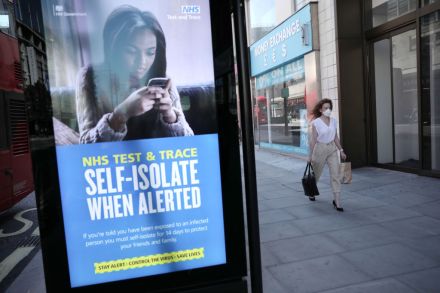
There is little chance of a safe escape from lockdown restrictions unless NHS Test and Trace is picking up most of those infected with coronavirus, and those who have come into contact with them. How is it doing so far? It is early days, but it looks as though only around one in nine of those with the illness are being reached. Here are the numbers that imply too few infected people are being contacted. According to government data, details of around 1,160 people per day were passed to the contact tracers, of whom only 770 were actually contacted. That compares with between 1,500 and 2,000 people per day who tested positive. It is not at all clear why so few of those testing positive were reached. But that is not the most disturbing data.

Can Britain avoid a second lockdown?

What comes next, now that the transmission rate and prevalence of Covid-19 have fallen significantly? (Before you shout at me, yes I know there is frustration and some bemusement among scientists that illness incidence and numbers of deaths have not dropped faster in the UK, but they have nonetheless reduced significantly, if not uniformly, everywhere). There are detailed plans from the government for when and how to restart certain businesses and social activities in the coming six weeks. But there is not a clearly articulated strategy for how we are expected to live and work between now and the end of the year (and beyond). So I've tried to piece together what ministers and officials have said privately and publicly about different elements of the longer-term strategy.

Why Boris Johnson needs Dominic Cummings

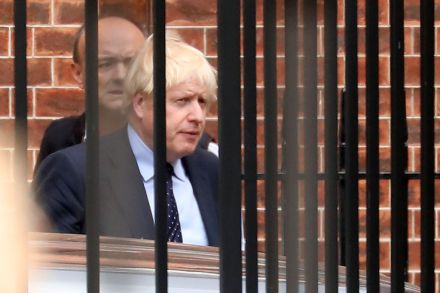
Danny Kruger, the Tory MP who is an old friend of Dominic Cummings and his spouse, got it right last night. The 'affaire Cummings' – as the French would put it – is no longer about the most powerful aide to the prime minister and the minutiae of how he interpreted coronavirus quarantine rules differently from most of the country. Kruger argued that attacks on Cummings are attacks on Boris Johnson, because the PM has so conspicuously become Cummings’s human shield. So as another Tory MP told me – a grandee no less – this is now all about the PM himself and how he governs. It is about why Boris Johnson rates Cummings so highly, and why he needs him at the centre of his government.

Dominic Cummings has become a symbol of a very British inequality

Dominic Cummings knows all about how perception damages public confidence in political parties. Here he is in June 2017: 'People think, and by the way I think most people are right: ‘The Tory party is run by people who basically don’t care about people like me’. That is what most people in the country have thought about the Tory party for decades. I know a lot of Tory MPs and I am sad to say the public is basically correct. Tory MPs largely do not care about these poorer people. They don’t care about the NHS. And the public has kind of cottoned on to that.' And this is what he said yesterday about why it was OK to walk in the Durham woods, when he should have been strictly quarantining because of his Covid-19 symptoms.

Dominic Cummings has a human shield: Boris Johnson

The rule of modern politics, let's call it Trump's first law, is that if you are being attacked for apparently breaking the rules, the best defence is to double down and insist that it is in fact you and your colleagues who have acted with the utmost integrity - and anyone who suggests otherwise is a knave or a fool. Such was how the prime minister defended his chief aide Dominic Cummings - who as I said just now in the daily Downing Street press conference breached not just one but at least three lockdown rules (don't leave the house if someone in it has Covid-19 symptoms, don't spend hours in very close proximity in a confined space like a car with a sufferer and don't go to a second home).