Robert Peston

Robert Peston

Robert Peston is Political Editor of ITV News and host of the weekly political discussion show Peston. His articles originally appeared on his ITV News blog.

Is the EU to blame for AstraZeneca’s vaccine shortage?

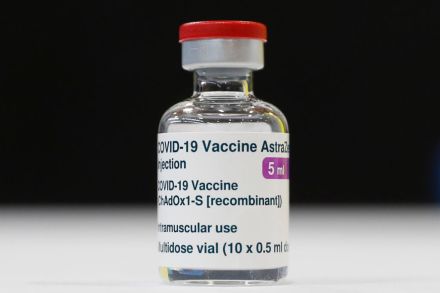
The important difference between AstraZeneca's relationship with the UK and its relationship with the EU – and the reason it has fallen behind schedule on around 50m vaccine doses promised to the bloc – is that the UK agreed its deal with AstraZeneca a full three months before the EU did. This gave AstraZeneca an extra three months to sort out manufacturing and supply problems relating to the UK contract (there were plenty of problems). Here is the important timeline. In May AstraZeneca reached an agreement with Oxford and the UK government to make and supply the vaccine. In fact, Oxford had already started work on the supply chain.
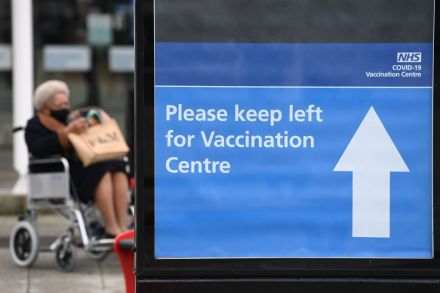
The difficult vaccine debate we’ve shied away from

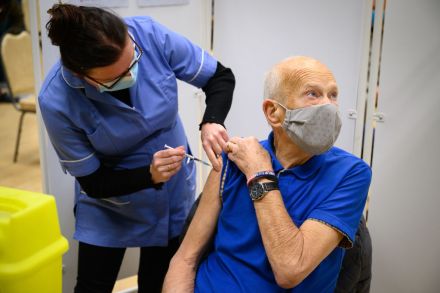
The Prime Minister only has himself to blame for the public outcry over 70-year-olds being vaccinated when there are still many over 80-year-olds waiting even to be invited to be vaccinated. What I mean by this is that there was a perfectly good argument for vaccinating 70-to-80 year olds before the more elderly, or at the same time. But Boris Johnson eliminated all debate about that when he ordered the Joint Committee on Vaccination and Immunisation to organise the vaccination programme so that deaths from or with Covid-19 should be cut as rapidly as possible.

Six things we need to know about the vaccine rollout

We are supposedly getting a lot more data on the numbers of us being vaccinated, later on Monday. What's less clear is whether we will be getting data that is useful. Here is what we should be told on a granular daily basis, to reinforce confidence both that the vaccination operation is efficient and effective and to provide hope that the end of this social and economic misery is a realistic prospect: 1. Numbers vaccinated per day should be published. 2. This number should be broken down between first and second dose so that we know how many are protected to the maximum possible. 3. The status of those vaccinated – are they in the 80 plus category, or healthcare workers, for example? 4.

We need to cut vaccine red tape

As I mentioned on Monday, in a fortnight AstraZeneca will be putting 2 million doses of its coronavirus vaccine into vials every week. At that point the limiting factor on how many people can be vaccinated will switch from manufacturing to distribution – and in particular how long it takes to ‘process’ each person who turns up to be vaccinated. It allegedly takes three times longer in the UK than in Israel to do the on-site paperwork for each vaccinated person. Which, if true, means the UK would be processing a smaller number of people than it could be vaccinating every day. And in the current raging epidemic that would not just be an academic underperformance, but would have a big and huge cost in lives.

Covid statistics suggest schools are likely to be closed soon

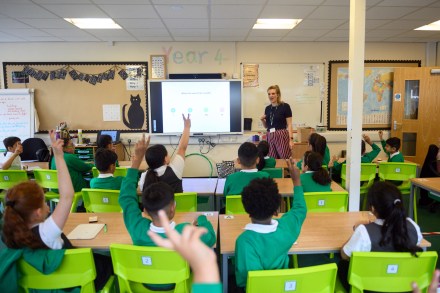
Here are the numbers that show why schools are very unlikely to re-open any time soon in London and the south east, and why within a week or so the whole country may be in a lockdown that includes school closures. Tier 4, the so-called "stay-at-home tier", is broadly equivalent to the two-week circuit-breaking lockdown that was imposed in November. It did not include school closures, but it suppressed the rate of transmission of Covid-19 to 0.85 or 0.9. In other words it led to the infection gradually shrinking in the community. Unfortunately, since then we’ve witnessed the explosive growth of the new strain of Covid-19.

Cummings ready to testify that Boris rejected his lockdown advice

As many hospitals struggle to cope with a surge of Covid-19 patients, the most important judgement yet to be made about 2020 is how much difference it would have made had England been pre-emptively locked down in September. This is not an academic question. Because there were two separate occasions in September when the prime minister's political and scientific advisers urged him to impose tough national restrictions and suppress the incidence of the virus back to low levels. It is well known that on 21 September the government's Scientific Advisory Group for Emergencies recommended a short ‘circuit-breaking’ lockdown.

Covid and Brexit are about to collide

We are back in a full-scale economic crisis. In London and the south east, the richest part of the UK and engine of the economy, normal commerce has been suspended by the imposition of Tier 4. And the decision of much of the EU and a growing number of rich countries to put the whole UK into quarantine is devastating for trade. What are the immediate priorities? Probably the most important one is basic: the creation of a facility to give rapid Covid-19 tests to all lorry drivers leaving the UK so that the transport of freight can be restarted as quickly as possible. Second, to end the cancerous uncertainty for businesses about how they will be buying from and selling to EU countries in just ten days time, after the transition to full Brexit ends.

The EU’s remaining Brexit stumbling block

Here is the fundamental stumbling block to a free trade deal, one that the Prime Minister has just confirmed in PMQs. And it is not clear how it can be sorted. The EU wants the unilateral right to toughen up its labour laws, or environmental standards or other so-called level playing field rules.  Any such new rules would not automatically apply to the UK. But the EU wants an arbitration mechanism to determine whether the change in rules would confer a competitive advantage to the UK. And if the balance of competitive advantage tilted to the UK, the EU would want to allow the possibility of tariffs being imposed on relevant UK exports. The UK would have the symmetrical right if it so chose to toughen its labour laws etc.

What the EU still wants from the Brexit talks

There is a tonne of contradictory stuff flying around about what Michel Barnier says is the EU's bottom line for fair competition in any free trade agreement with the UK. As I understand it, what follows is the EU's position. For the 'level playing field commitments' there should be 'non-regression' — i.e. on standards for working practices, environmental rules etc., the UK must stick to current EU rules and subject to tests. There would be a risk of legal challenge if there is a perceived breach of the obligations. And the non-regression rules apply to the EU as well as to the UK. They are mutual symmetrical obligations in that sense.

Did false data lead to lockdown?

When shaping policy to protect us from Covid-19, the government relies on data from the Office for National Statistics (ONS) to provide the scientific basis for its actions. The weekly ONS coronavirus survey is supposed to be the information gold standard — and in particular it underpinned Boris Johnson's controversial announcement at the end of October to put England back into national lockdown. No other course of action seemed sensible, given that the ONS survey on 30 October showed the incidence of coronavirus in the community in England had surged from 4.3 per 10,000 people on 3 October to 9.52 on 17 October, the latest date for data then available. This was a terrifyingly fast doubling rate.

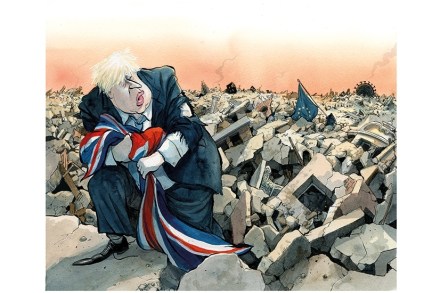
Deal or no-deal? The choice is Boris Johnson’s

If you voted for Brexit, did you think it was a state of pure and perfect national independence, or did you think that given how connected the UK is to the EU – economically, diplomatically, in respect of security – it might be a bit of a fudge and compromise? Is Brexit an absolute state of putative grace – or a place on a spectrum, somewhere between Switzerland and Norway, which are semi-independent, and North Korea, which is wholly independent?

Inside the no-deal reasonable worst case scenario

I've been passed the government's 'reasonable worst case scenario planning assumptions to support civil contingencies planning for the end of the transition period'. The 34-page document describes itself as a 'challenging manifestation of the risk in question' but 'not an extreme or absolute worst case scenario'. A government source confirmed the official sensitive document, which was written in September, still underpins contingency planning. It is 'not a forecast' but a 'reasonable' assessment of what could happen to us if, in the next day or so, talks collapse on a free trade agreement with the European Union and the negotiations can't be rescued.

Covid is a nightmare for libertarian Tories

These are confusing times for all of us. But for small-government libertarian Tories, Covid-19 is all their worst nightmares compressed into nine months. It is hard to think of any basic civil liberty that hasn't been impinged in the cause of limiting the spread of coronavirus, except perhaps freedom of speech. As for Thatcherite constraints on the expansion of the state, we've not seen growth in public spending as fast or as large since 1945. Nor have we witnessed such encroachment by government in markets and enterprises (from underwriting almost all employment, through to banning evictions and creating a whole new diagnostics and vaccinations infrastructure).

The true cost of the coronavirus debt

There is a view that we don't have to worry about the record debt the government has accumulated since coronavirus laid waste to our way of life and our economy. And in two senses I would half agree – though the other half of me is wracked with anxiety.  First, this is not a uniquely British problem; it is a problem of all developed economies. However, you should not underestimate the geopolitical significance of the explosion of debt in the rich West, because it represents by implication the fastest transfer of wealth and power to China and Asia in our lifetimes.  Second, there is the important counterfactual – namely what would have happened if the government had not borrowed and spent all that cash. Which does not bear thinking about.

It will be a three-family, five-day Christmas

Nothing will be decided in a formal sense until all four nations of the United Kingdom are as one. And the decision is slightly harder because Northern Ireland's leadership wants a Christmas consensus with Dublin. But it is looking highly probable that all four UK governments’ special Christmas exemption from coronavirus restrictions will allow us to socialise with people from two households in addition to our own household over five days beginning on 23rd of December and ending on 27th December. Or to put it another way, for those five days, a typical family will be able to enjoy festive meals indoors with both sets of grandparents, or two groups of friends, or whomever is most special to them.

The truth about me and Dominic Cummings

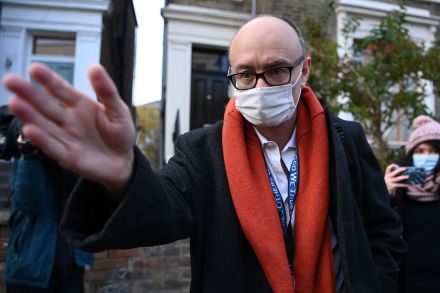
It is such a relief that Dominic Cummings has gone. Not for the sake of the country or the government — you can make your own mind up about that. No, no, I’m talking about me. Over the past year or so, the abuse I’ve received on Twitter and Facebook for reporting anything perceived to have originated anywhere near Cummings has been wearing. I’ve never endorsed anything he said or did. That’s not my job, as you well know. My job is to tell you the thoughts, plans, hopes and dreams of the most powerful member of the government (which he was for a period last autumn). Sometimes that was briefed by him, often it was gleaned from old-fashioned reporting.

Why Dominic Cummings had to go

On 24 July last year, I wrote that the government of Boris Johnson was being taken over by Dominic Cummings and his Vote Leave team. That was not hyperbole. Since then, both the reality of Cummings and the myths about him, have defined Johnson's first 16 months as Prime Minister. Which is why, as one Downing Street insider put it to me, Cummings' departure ‘feels like a fire has raged through the building.’ For all the controversy stirred up by Cummings – or perhaps because of it, to an extent – Johnson owes a substantial debt to the eccentric special adviser who organised the referendum campaign for leaving the EU.

The Bank of England’s terrifying economic projections

The Bank of England includes as one of its ‘conditioning assumptions’ in its forecasts today that the Bank Rate – the interest rate that is the benchmark for all rates – becomes negative for the first time in history next year, at minus 0.1 per cent. It describes a world in which banks are charged for not lending to us and we are charged for saving. And it is one manifestation of the desperate economic scarring caused by the virus. Another striking characteristic of today’s Bank of England projections is that UK GDP, or national income, is set to shrink by 11 per cent for the whole of 2020 – a record.

England’s new lockdown regime

These are the measures to be announced by Prime Minister Boris Johnson at his 5 p.m. press conference, as I understand it. They will last until 2 December. And they are, in effect, a new ‘Tier 4’ that will be imposed for a month – initially to the whole of England – in a bid to curb a rise in coronavirus cases. All pubs and restaurants are to close, though takeaways and deliveries will be permitted. All non-essential retail will close, though supermarkets won't have to follow the Welsh example of fencing off non-essential goods. There will be no mixing of people inside homes, except for childcare and other forms of support. Manufacturing and construction will be encouraged to keep going.  Outbound international travel will be banned, except for work.

Boris has already bungled the second lockdown

‘We could have got away with less if we had done it earlier.’  Those words to me from a scientific adviser to the government – about the lockdown of England the prime minister is planning to announce, probably on Monday – foreshadow a looming crisis of confidence in Boris Johnson’s stewardship of measures to tackle the Covid-19 crisis. Here is the chronology that is devastating for Johnson.