Robert Peston

Robert Peston

Robert Peston is Political Editor of ITV News and host of the weekly political discussion show Peston. His articles originally appeared on his ITV News blog.

David Davis’s latest Brexit red line could cause trouble

I am confused by what David Davis’s new principles to ensure fair competition between Brexit Britain and the EU are supposed to achieve – especially the part on consumer protection. The Dexeu secretary said: 'The UK will continue to be a leading advocate of open investment flows after we leave the EU. But it cannot be that an EU company could merge with a UK company and significantly reduce consumer choice'. Does this mean that he and the Government now regret the sale of our airports, trains, airlines, telecom companies, energy suppliers and so on to huge businesses from Spain, Germany, France and the rest of the EU?

Is Boris preparing to flounce out of the cabinet?

'Is Boris preparing to flounce out of the cabinet?' Not my question, but that of one of his senior ministerial colleagues. Why could that be? Exhibit A. In this morning’s cabinet, he is hijacking Jeremy Hunt’s update about how hospitals are coping with the winter pressures with a headline grabbing and overtly populist demand for the Treasury to find an additional £5bn a year of health spending – which would be a modest down payment on the £18bn ('£350m a week') he pledged during the EU referendum campaign. Theresa May won’t be amused. Hunt can’t be sure if Johnson is friend or foe. But it is the kind of typical Boris intervention that says to his backbench colleagues 'if she’s too timid as PM, look what I would do'. Exhibit B.

Carillion’s collapse ends the love affair between governments and private contractors

If I am reeling from the collapse of Carillion it is because the company, the banks, its advisers and the government apparently thought it was worth having a conversation about a possible bailout of the outsourcing and construction company. Because what we learned this morning is that the gap between Carillion’s debts and the value of its assets is big, and that a significant number of its contracts are toxic. If that were not the case, if many of its businesses were fundamentally viable and valuable, Carillion would have been put into administration, a form of life support, under insolvency rules. And instead it is being liquidated, under the auspices of the Official Receiver - who is an official at the Business Department, or BEIS.

The Brexit rebellion is an embarrassment for Theresa May, not a disaster

The government threw everything at trying to defeat Tory rebels led by the former attorney general Dominic Grieve and their amendment to the EU (Withdrawal) Bill - which forces the government to enact a statute "approving the final terms" of Brexit before the UK leaves the EU. And that is one of the big reasons why this defeat for Theresa May matters: it shows the fury among some of its MPs, notably those who voted to Remain, that they are being ignored, as Theresa May engages in the most important negotiations relating to this nations' future since those that took us into the EU (or what was the Common Market).

To prevent an Irish Sea border, Theresa May will align UK regulations with the EU

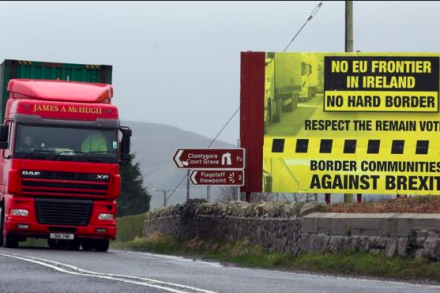
So it turns out there is something Northern Ireland’s Democratic Unionist Party fears and loathes more than the possibility of a government led by Jeremy Corbyn. They would be prepared to sink Theresa May and her government to prevent even the remotest prospect of a border being introduced in the middle of the Irish Sea between Northern Ireland and the rest of the UK. Which is why the prime minister has to be quadruply clear that any regulatory alignment she offers to the EU to prevent the re-establishment of a border between Northern Ireland and the Republic has to be alignment that applies clearly and equitably to the whole of the UK and not just to Northern Ireland.

Corbyn 2.0

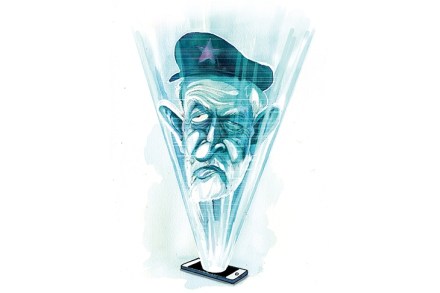
There is a naive belief at the top of government that because the Tories are only a fart’s yard behind Labour in the polls — despite daily manifestations of schism, scandal and incompetence — everything will turn out fine in the end. But this is to ignore the party’s greatest structural weakness: it is clueless in cyberspace. On the social media battlefield, it is fighting with knitting needles against Labour’s laser-guided missiles. The crude stats are humiliating for Theresa May. Her Twitter and Facebook accounts have 411,000 and 540,000 followers respectively, compared with 1.6 million and 1.4 million for Jeremy Corbyn. His online films and tweets are seen by millions, — many times the number who hang on the Prime Minister’s digital words.

May’s Florence speech is a blueprint for keeping Britain in the EU as an ‘associate’ member

I am not a conspiracy theorist. But if I were, I might conclude that the prime minister's speech in Florence represents the victory of Whitehall, led by the cabinet secretary Sir Jeremy Heywood, over the arch Brexiteers in the cabinet. Because although it is spectacularly short on detail, it does not represent a clean break with the EU. And it seems to propose some kind of associate membership of the EU for Britain as the long-term status quo. May proposes a new trading relationship with the EU that is neither membership of the European Economic Area and the single market or a conventional free trade arrangement. She wants our future economic relations with the continent to be more intimate than the latter and a bit less intimate than the former.

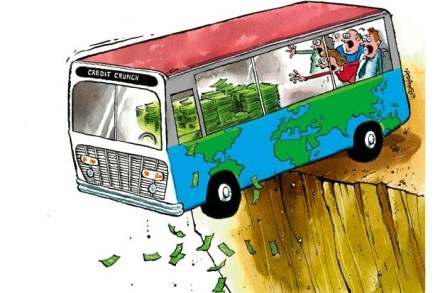
The 2007 financial crash changed all our lives for the worse

It started as displacement activity, my immersion in the market mayhem of the summer of 2007. I was at home looking after my wife Sian Busby and our youngest child. Sian had just been diagnosed with a horrible cancer, and was recovering from radical surgery. She did not want a fuss. And did not want our friends to know the seriousness of what had happened. So in the absence of being able to talk about it, I needed a distraction. So in the study across the hall from where Sian was convalescing, I tried to work out what the hell was happening in global debt markets. What I needed to understand was the mounting mistrust of investors for all manner of what were called asset-backed securities, especially those manufactured from low quality loans to US home buyers, or subprime loans.

Diary – 14 July 2016

I first met a boyish, sunny Tony Blair more than 20 years ago. Our encounters have always been slightly tense since I reported some clumsy remarks he made about tax when he was still an apprentice PM — and he reacted much as Andrea Leadsom did against the Times last week (though via A. Campbell rather than Twitter). On Wednesday afternoon at Admiralty House he is a stricken caricature of how he was: painfully thin; waxy skin; astonishingly terrible teeth. He is a brilliant actor but not that good: he has been tormenting himself over Chilcot. But he isn’t sorry for the invasion, as he told me, and would do it again if circumstances repeated. His journey from fêted hero in 1997 to perhaps the most isolated man in Britain is a national tragedy.

Brown’s dilemma

Robert Peston’s definitive biography of the Chancellor rocked the government. Here he sets out Brown’s plans, his promise of a ‘new individualism’ — and the nightmare he faces positioning himself in relation to Blair At last comes the final settling of accounts between the bosses of The Two Families, Don Antonio and Don Gordono. Don Antonio, the capo di tutti capi, still sits at the head of the table. But not for much longer, as Don Gordono stares him down. In a relationship measured out in mutual accusations of betrayal over many years, the mayhem of the past few days can be traced in part to what Don Gordono sees as the great treachery of 2004.