Robert Peston

Robert Peston

Robert Peston is Political Editor of ITV News and host of the weekly political discussion show Peston. His articles originally appeared on his ITV News blog.

Jeremy Corbyn is getting more serious about Brexit and Theresa May ought to worry

The most important statement by Jeremy Corbyn in today’s Sunday Mirror interview is not that Labour’s leader will embrace a so-called People’s Vote if that were what Labour’s conference backs this week. It is that Labour is “not happy” with the PM’s Chequers Brexit plan “and we would vote against it”. This is Labour's strongest and least ambiguous attack on Chequers. And – as if that were needed – it underwrites the view of many Tory MPs and ministers that the PM’s attempt to sell Chequers to Brussels is even more fatuous than dead-horse flogging, given that some 50 odd True Brexit Conservative backbenchers are adamant that they would vote against it.

Chequers goes pop: Theresa May’s Salzburg catastrophe

Chequers, as the journalist Chris Deerin has pointed out, goes pop. Which wry and funny as it is for those of us of a certain age will not be cheering up Theresa May. Because the EU summit in Salzburg has been a personal catastrophe for her. And worse than that, it was an avoidable catastrophe. Because every EU expert bar those she employs in Whitehall has been saying very loudly for weeks that the trade and commercial proposal in her Chequers Brexit plan would never win favour among the EU 27. So the question is why she waited to have that so publicly and humiliatingly stated by the EU's president Donald Tusk today, rather than quietly acquiring some wriggle room over recent days.

Will EU leaders chuck Chequers in Salzburg?

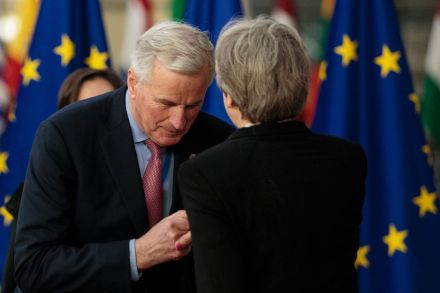
This week's EU summit in Salzburg should settle three important Brexit questions of profound important to this country's future and that of the PM too. Most importantly, the leaders of the EU 27 are being asked by their Brexit negotiator Michel Barnier and the EU president Donald Tusk how specific and prescriptive they want the Political Declaration on Britain's prospective relationship with the EU to be. In a way it is astonishing, with just six months to go before we're out, that Barnier and Tusk do not know something so fundamental about their wishes.

The Brexiteer mutiny against Theresa May has begun

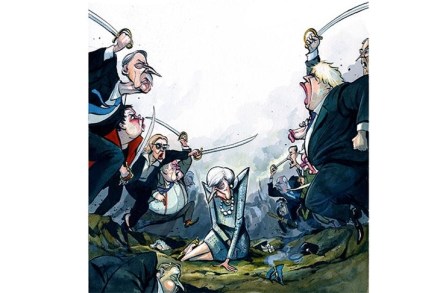
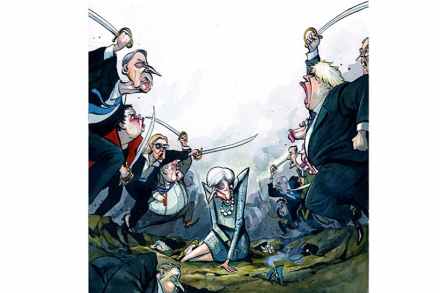
I am just going to let this speak for itself. It’s a slightly edited but verbatim account of tonight’s weekly meeting of the Brexiter European Research Group faction of the Conservative Party. It requires no additional comment from me - other than that I have multiple sources vouching for its veracity. “We've just had an ERG mass meeting, 50 odd MPs present, where virtually the only topic of conversation for 40/50 mins was: how best do we get rid of her? What's the best way to use our letters? Comments included: ‘Everyone I know says she has to go’, ‘she's a disaster’, ‘this can't go on’. You might think that this is usual far for us, but it's not! Not in the mass weekly meeting, never in what's basically a public forum.

Has David Davis triumphed in the battle for Brexit?

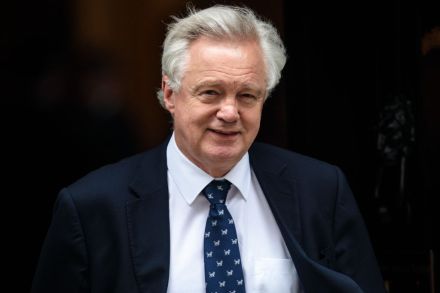
David Davis may have won. What do I mean? Well I am hearing from multiple sources that the only trade deal the EU’s lead negotiator Michel Barnier will countenance is Davis’s cherished Free Trade Agreement, what he called Canada Plus, rather than any version of May’s Chequers plan. Here for example is the debrief of an MP on the Brexit select committee chaired by Hilary Benn, who met Barnier yesterday in Brussels: “Remarkable how dismissive Barnier was of the two central pillars of Chequers - customs and common rule book for goods. It’s not a matter of how it will fare in Parliament. It won’t be agreed by the EU. We are back to Canada-style FTA”. The Brexiters on the select committee are ecstatic; the Remainers are in abject despair.

Will May or Corbyn fall first?

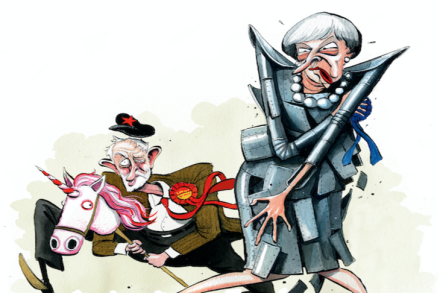
Theresa May and Jeremy Corbyn are both on that Italian Job bus dangling over the cliff, with gold bars at one end and survival at the other. May wants to pursue her Chequers Brexit plan, even though doing so is alienating up to half her own MPs, True Brexiters and some erstwhile Remainers like Nick Boles (though, in truth, he has always been more Govean – or the agriculture secretary’s representative on earth – than europhile).

Is Jeremy Corbyn preparing to back down over Labour’s anti-Semitism row?

Labour is belatedly about to adopt the IHRA anti-Semitism definition with all its examples, according to three members of its ruling NEC. They tell me this should happen at the next full NEC meeting on 4 September. This would seem to represent a big climbdown by Labour’s leader, Jeremy Corbyn, in the face of great pressure from many in the Jewish community. In particular, he and his closest advisers, led by Seumas Milne, have been fervently resisting the IHRA examples which define as anti-Semitic any statement that the Israeli state is racist or that question the right of Jewish people to national self determination. “It looks like we will adopt the IHRA wording and examples in their entirety” said a senior Labour member. But there is a but.

Labour’s anti-Semitism row has left Jeremy Corbyn isolated within his own party

When Labour’s leadership and the NEC were debating how to tackle anti-Semitism in the party, Andrew Murray – Jeremy Corbyn’s close adviser and chief of staff to Unite’s general secretary Len McCluskey – argued that Labour should embrace a much simpler and less contentious code of conduct than what its ruling National Executive ultimately adopted. His recommendation, I understand, was that the Labour Party should employ the widely used IHRA definition of anti-Semitism with all-but-one of its examples – rather than seeking, as it has done, to resile from four of the examples, and create its own illustrations of anti-Semitic language and conduct.

Why Tories are tempted by Justine Greening’s second referendum

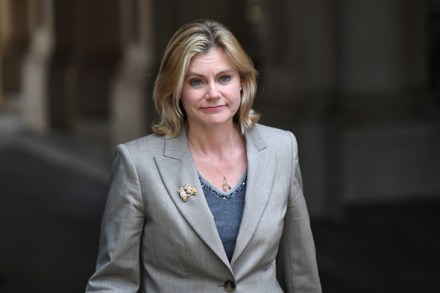
When an influential centre-right Tory, who has served in May's cabinet, says that the prime ministers' Brexit plan is the "worst of both worlds" and a "fudge I cannot support", it is clear beyond doubt that the PM's most important policy is in trouble. For Justine Greening, the proposal to follow EU rules for the production and consumption of goods and food, and to collect tariffs for the EU, is neither properly leaving the EU or a rational "softer" Brexit. What she says she fears, in an article for the Times, is parliament rejecting May's plan, but finding it completely impossible to force through a more satisfactory relationship with the EU. So - and this is something of a shock - she has come round to the idea that there should be a further referendum.

The Tory Brexiters’ ultimatum to Theresa May

With the resignations in the past 24 hours of two of Theresa May's four most senior ministers – Boris Johnson as Foreign Secretary, and David Davis as Brexit Secretary – something very important died. But it is not clear whether what has been snuffed out is Theresa May's Brexit plan or Theresa May's leadership of the Conservative Party. That at least is what Tory Brexiter MPs tell me. Like Davis and Johnson, they see her Brexit proposal – to permanently be governed by EU rules for the making of goods and food, and also to collect EU tariffs at our borders – as a betrayal of the 17.4m people who voted to leave the EU.

Dominic Raab’s appointment is a smart move by Theresa May

The appointment of Dominic Raab as Brexit Secretary to replace David Davis is very smart politics by the prime minister. He is regarded by the True Brexiters as one of them. In fact, David Davis sees Raab as his protege. For what its worth, his promotion shows the influence in Downing Street of the director of communications, Robbie Gibb – late of the BBC – in that Gibb has been a fan of Raab's for some time. If there is a mystery, it is why Raab took the job. The point is that it is pretty unlikely that he fundamentally disagrees with Davis that May's plan to take EU rules for how we produce goods and food represents a breach of what the British people thought they were voting for in the referendum.

How Theresa May trounced the Brexiteers

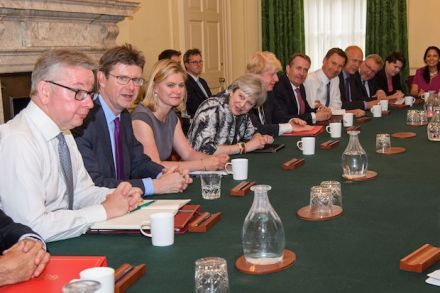
Tory MPs and ministers have consistently under-estimated their leader. What Theresa May achieved at Chequers yesterday was extraordinary. She persuaded her cabinet to sign up for a Brexit plan that drives a coach and horses through what the Brexiters in her team – especially Boris Johnson and Michael Gove – said Brexit was all about, during that historic referendum campaign. What is more, at Chequers yesterday, Gove was a cheerleader for a plan that would enshrine in treaty what is supposedly anathema to his Brexit cause – that the UK now and forever would be subject to European Union rules and regulations governing the quality and safety of the goods we make and buy and also the food we produce and consume.

Revealed: Theresa May’s soft Brexit plan

This is one of the more important notes I've written recently, because it contains what well-placed sources tell me are the main elements of the Prime Minister's Brexit plan – which will be put to her cabinet for approval on Friday. I would characterise the kernel of what she wants as the softest possible Brexit, subject to driving only the odd coach over her self-imposed red lines, as opposed to the full coach and horses. And I will start with my habitual apology: some of what follows is arcane, technical and – yes – a bit boring. But it matters.

Could the ‘True Brexiters’ topple May?

As is often the case, the foreign secretary tonight summed up the PM’s worst nightmare, when tweeting that surely everyone can agree that Jacob Rees-Mogg is a principled MP who only “wants the best for our country”. Note well that he didn’t say his fellow Brexit purist only wants the best for his party. And there lies why May has struggled to even describe a detailed policy for the UK’s future relationship with the EU, let alone secure agreement for it. The point is she fears - correctly - that when it comes to what Brexit represents, for a Mogg, a Cash, a Bone, there are versions of it regarded by the True Brexiters as so toxic to the national interest they would rather see this minority government fall than collaborate with it.

A political showdown is on the way. Will Theresa May lose?

At 3pm yesterday afternoon, the Remainer rebels led by Dominic Grieve thought the government was honouring the PM’s putative commitment to draft an amendment to the EU Withdrawal Bill in the spirit of Grieve’s amendment. At 4.45, Grieve was told by an embarrassed solicitor general Robert Buckland that the deal was off. The Remainer rebels are not happy. And the scene is set for a final parliamentary showdown on the “meaningful vote” issue, in the Lords on Monday and the Commons on Tuesday or Wednesday. Here is what happened and what was at stake. It is complicated so please bear with me.

After today’s vote, there is now no chance of a ‘no-deal’ Brexit

So MPs have (narrowly) rejected the Lords' amendment to the EU Withdrawal Bill, which would (if passed) have given parliament the power to force the PM back into negotiations with Brussels if MPs and Lords reject whatever Brexit deal she ultimately negotiates. (Phew: that was a mouthful). But the price Theresa May is paying for that victory - paying to Tory Remainer rebels led by Dominic Grieve - is that she has agreed to redraft the Bill when it returns to the Lords so as to account of Grieve's own amendment to the bill.

David Davis stays put – for now

For the past 24 hours, there has been a power struggle between the Prime Minister and her Brexit Secretary, David Davis. Theresa May – or rather her officials – had been insisting that a backstop plan for keeping open the Ireland border would not be amended, to include a sunset clause and formal end date for the backstop. Davis said he would quit in the absence of an end date. She caved. According to sources close to Davis, 'the backstop paper has been amended and expresses, in much more detail, the time-limited nature of our proposal'. So to be clear, there is now a termination date in May's backstop proposal. That almost certainly means she faces a double defeat – because the EU will reject any plan that includes an end-date.

Will David Davis resign tomorrow? I would not bet against it

David Davis, the Brexit secretary of state and arguably the most important minister in this government other than the Prime Minister, faces a moment of truth tomorrow. He is completely clear that it would be a disastrous mistake for the Prime Minister and the UK government to offer Brussels a backstop proposal for keeping the Irish border open that does not contain a specified end date. His reason is simple. That backstop would commit the UK to staying in the customs union and single market. And once the EU were to have that commitment, Davis believes - plausibly - that his Brussels interlocutor Michel Barnier would no longer have any incentive to negotiate seriously on alternative arrangements for keeping the border open.

Theresa May’s Brexit bill gamble

Theresa May is arguably the most cautious and methodical politician of this generation or perhaps any generation. So it more than beggars belief that today she announced she would be rolling the dice in the biggest parliamentary gamble I can recall being taken by any PM of modern times, by announcing that next Tuesday she will ask MPs to vote a staggering 15 times, on amendments to that important EU Withdrawal Bill which is so central to the UK’s future outside the European Union. At stake is whether she and her ministers are in charge of Brexit, or whether MPs and Lords will determine our Brexit future.

Why May must back Trump on Syria

It is inconceivable that Theresa May will refuse support to Macron’s France and Trump’s America in any military action – airborne – they are likely to take against Assad in Syria. If she did not manifest that solidarity, she would be snubbing the two governments and individuals who offered the most important cooperation she received in the international response to Russia’s perceived role in the Salisbury atrocity. She would also be flagging that post-Brexit Britain lacks the confidence to take a leading role in maintaining global security – because no one doubts that British intelligence and ministers shares the presumption that Assad was to blame for the appalling use of chemical weapons on his compatriots.