Raymond Keene

No. 407

From our UK edition

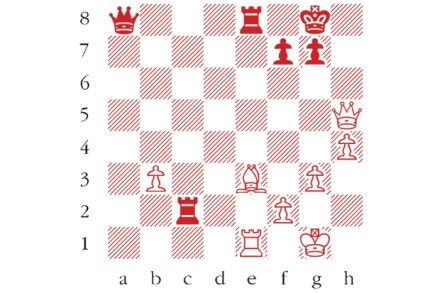
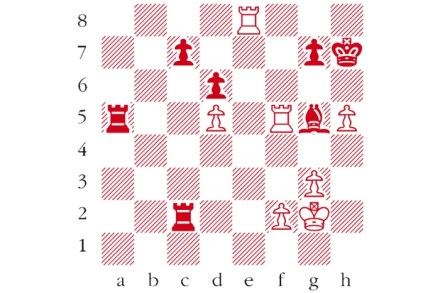
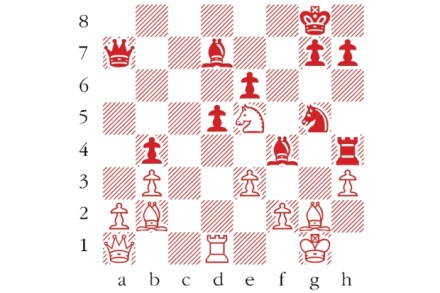
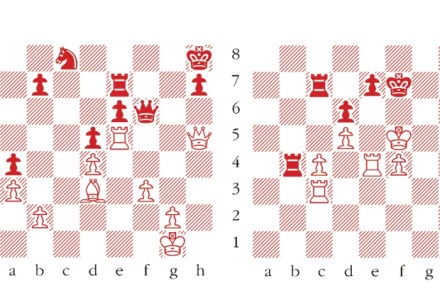
White to play. This is from Pacher-Radnai, Budapest 2016. How did White exploit a tactical opportunity to make a decisive material gain? Answers to me at The Spectator by Tuesday 10 May or via email to victoria@spectator.co.uk or by fax on 020 7681 3773. There is a prize of £20 for the first correct answer out of a hat. Please include a postal address and allow six weeks for prize delivery.
Evolution

From our UK edition

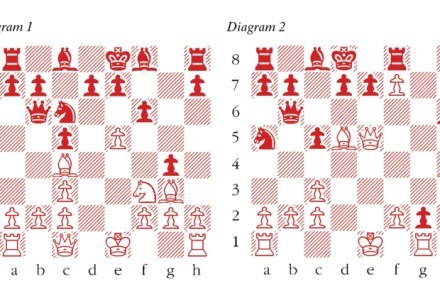
World champion Magnus Carlsen takes much inspiration from the games of the former champion Emanuel Lasker. Lasker and Carlsen share the ability to manoeuvre at length in approximately level positions, without letting the situation dry up and become devoid of winning prospects. Such a style does not always lead to attractive games, and some of Carlsen’s victories have become so obscure that Viktor Korchnoi even accused the champion of hypnotism. Nevertheless, as Carlsen has become more confident, his style has evolved. As can be seen from the following game from the powerful Norway tournament which finishes this week, he is beginning to take risks and play in the sharp style of Morphy, Alekhine, Tal and Kasparov.

No. 406

From our UK edition

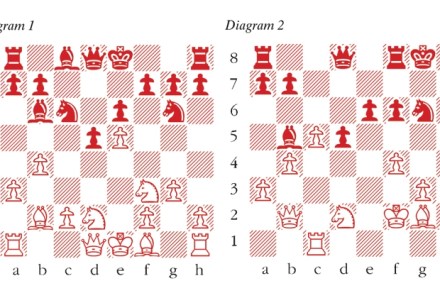
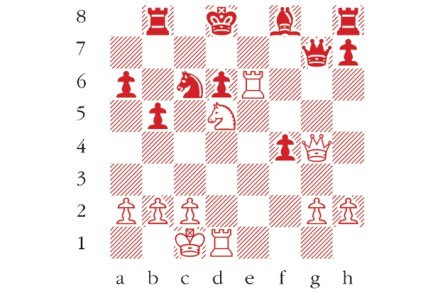
White to play. This is a position from Bjornsson-Sigurdsson, Iceland Team Championship 2016. How did White make the most of his passed pawn on f7? Answers to me at The Spectator by Tuesday 3 May or via email to victoria@spectator.co.uk or by fax on 020 7681 3773. There is a prize of £20 for the first correct answer out of a hat. Please include a postal address and allow six weeks for prize delivery.
The Godfather

From our UK edition

It is often asked how chess became so popular in the USSR. My answer is that most areas of creative thought were closely supervised by the state; literature, art and even music, as Shostokovich and Prokofiev found, were subject to government control. Shostokovich’s opera Lady Macbeth of the Mtsensk District was severely criticised by the Communist Party Congress, for instance. Antagonising the state could be fatal. In chess, though, creative thought could flourish without interference from the commissars. The notion that chess moves could be ideologically unsound was rarely entertained. My theory for the popularity of chess would have had no currency within the Soviet Union.

No. 405

From our UK edition

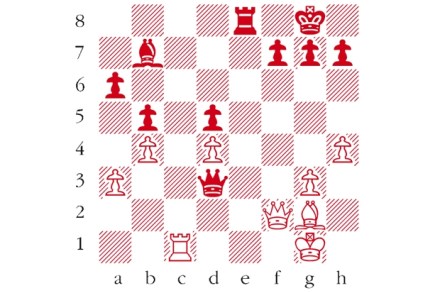
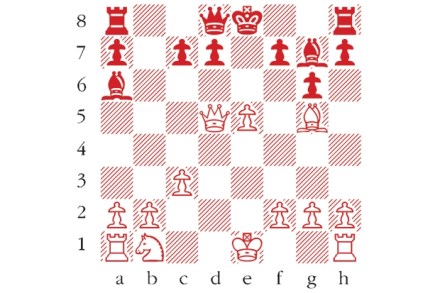
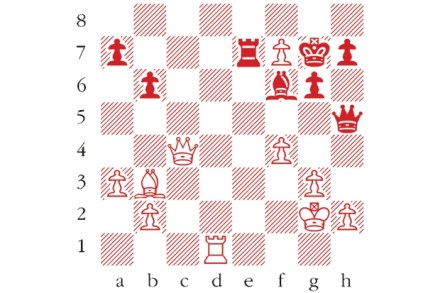
White to play. This position is from Vallejo-Wynn, Bangkok 2016. White has sacrificed a rook and a bishop. He now has only one accurate move — a quiet move which generates an overwhelming attack. Can you see it? Answers by Tuesday 26 April via email to victoria@spectator.co.uk. There is a prize of £20 for the first correct answer out of a hat. Please include a postal address and allow six weeks for prize delivery. Last week’s solution 1 ...
666

From our UK edition

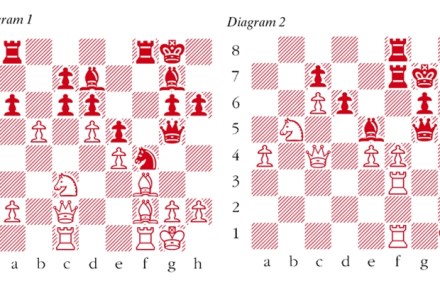
The year 2016 is the anniversary of a number of significant events in the chess world. In 1946 Alexander Alekhine died in possession of the title, the only champion so to do. The following position is taken from Alekhine: Move by Move by Steve Giddins (Everyman Chess). Alekhine-Prat: Paris Simultaneous 1913 Alekhine concludes with a typically brilliant flourish. 22 Qh5+!! Nxh5 23 fxe6+ Kg6 24 Bc2+ Kg5 25 Rf5+ Kg6 26 Rf6+ Kg5 27 Rg6+ Kh4 28 Re4+ Nf4 29 Rxf4+ Kh5 30 g3 Black resigns 31 Rh4 mate is unstoppable. And in 1966 Tigran Petrosian became the first player since Alekhine in 1934 to defend his title successfully in a World Championship match. We join in the decisive 22nd game where Spassky could have announced his intention of playing 25 ...

Puzzle no. 404

From our UK edition

Black to play. This is a position from Carbone--Slipak, Mar del Plata 2016. How can Black conclude? Answers to me at The Spectator by Tuesday 19 April or via email to victoria@spectator.co.uk or by fax on 020 7681 3773. There is a prize of £20 for the first correct answer out of a hat. Please include a postal address and allow six weeks for prize delivery.

Sergey’s sensation

From our UK edition

Sergey Karjakin, who in 2002 became the world’s youngest-ever grandmaster at the age of 12 years and seven months, has won the Moscow Candidates tournament and has earned the right to challenge Magnus Carlsen for his world title later this year. It was thought the match would take place in New York, but given Karjakin’s victory it would not be surprising if it was relocated to Moscow. The full scores in the Candidates tournament were as follows (out of 14): Karjakin 8½; Caruana and Anand 7½; Giri, Aronian, Nakamura and Svidler 7; Topalov 4½. The field was exceedingly close, except for Bulgaria’s Veselin Topalov, the former Fidé World Chess Federation champion, who lagged behind.

No. 403

From our UK edition

White to play. This is a variation from Aronian-Svidler, Moscow 2016. In this game Aronian misplayed his attack and Svidler ended up winning. The puzzle shows a possible conclusion if Svidler had defended inaccurately. How can White win? Answers via email to victoria@-spectator.co.uk by Tuesday 12 April. There is a prize of £20 for the first correct answer out of a hat. Please include a postal address. Last week’s solution 1 ...

Bellum sociorum

From our UK edition

The internecine but friendly annual rivalry between the Universities of Oxford and Cambridge, generously hosted last month by the Chess Circle of the Royal Automobile Club in Pall Mall, resulted in an overwhelming 6-2 victory for the light blues. Cambridge now leads the longest-running chess series in the world with 59 wins. Oxford has 53 wins, and 22 matches have been drawn. Oxford have in the past benefited from grandmaster representation in their team, but this year they were clearly outgunned in rating terms. In spite of dour resistance, the heavily weighted rating, statistics eventually told in favour of Cambridge.

No. 402

From our UK edition

Black to play. This is from Pichot-Khismatullin, Moscow 2016. What was Black’s killing blow? Answers to me at The Spectator by Tuesday 5 April or via email to victoria@spectator.co.uk or by fax on 020 7681 3773. There is a prize of £20 for the first correct answer out of a hat. Please include a postal address and allow six weeks for prize delivery.
Tal story

From our UK edition

With the proliferation of modern opening theory and advances in knowledge of the game, I wonder sometimes if the kind of coruscating brilliance and originality that Mikhail Tal possessed will ever be seen again. Tal, the ‘Wizard of Riga’, was able to summon up lightning attacks from the most unpromising-looking positions. Last week we saw one of Tal’s sparkling efforts from his Candidates tournament victory of 1959 — a sensational result which propelled him directly to a successful championship challenge against the redoubtable Botvinnik. This week, here is another of Tal’s wins from that qualifying event, one of his clean-sweep quartet that demolished Bobby Fischer.

No. 401

From our UK edition

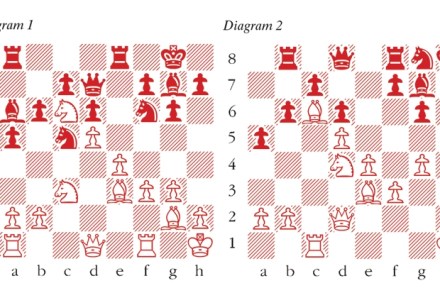
White to play. This is from Karjakin-Nakamura, Fidé Candidates, Moscow 2016. Hikaru -Nakamura has just implemented an ingenious combination to win material, but he has not foreseen White’s counterattack. What has he missed? Answers via email to victoria@spectator.co.uk, by Tuesday 29 March. There is a prize of £20 for the first correct answer out of a hat. Please include a postal address and allow six weeks for prize delivery.
Candidates | 17 March 2016

From our UK edition

The Candidates tournament to determine the challenger later this year to world champion Magnus Carlsen is now well underway in Moscow. Early indications favoured the former champion Viswanathan Anand, the new young talent Sergei Karjakin, and Lev Aronian, Olympiad gold medallist, all of whom scored in the opening rounds. The main victim of their initial surge was Vesselin Topalov, the former Fidé champion, whose conduct in his games at the start was unrecognisably supine. This week’s puzzle features his loss to Anand. An instructive element of the official website (moscow2016.fide.com) is a potted history of previous Candidates tournaments and their winners, including such luminaries as David Bronstein, Vassily Smyslov, Tigran Petrosian and Mikhail Tal.

Puzzle no. 400

From our UK edition

White to play. This position is a variation from Anand-Topalov, Fidé Candidates, Moscow 2016. White can capture the black bishop, but how can he do better? Answers by Monday 21 March via email to victoria@spectator.co.uk. There is a prize of £20 for the first correct answer out of a hat. Please include a postal address and allow six weeks for prize delivery.   Last week’s solution 1 ...

Bunratty

From our UK edition

The tournament at Bunratty is Ireland’s premier chess competition and has been for several years. This year’s event, to which I was invited as a guest to deliver the closing speech, attracted a powerful field including the former world title challenger Nigel Short and the former British champion Gawain Jones as well as grandmasters Peter Wells, Simon Williams and Alexander Baburin. This year, Nigel Short dominated proceedings by winning his first five games and only relaxing his pace with a quick draw in the final round to clinch his victory. The unique selling point of Bunratty is the social atmosphere generated by the hundreds of chessplayers — grandmasters and neophytes alike — all packed into the Castle Hotel over a long weekend.

No. 399

From our UK edition

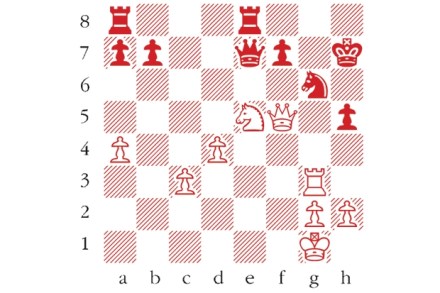
Black to play. This position is from Skulte-Pein, Bunratty 2016. Black’s queen is attacked. His next move didn’t force immediate capitulation but did set up a winning attack. What was it? Answers to me at The Spectator by Tuesday 15 March or via email to victoria@spectator.co.uk. There is a prize of £20 for the first correct answer out of a hat. Please include a postal address and allow six weeks for prize delivery. Last week’s solution 1 ...
Varsity match | 3 March 2016

From our UK edition

On Saturday 5 March the 134th Varsity Match between the teams from the Universities of Oxford and Cambridge takes place at the Royal Automobile Club, Pall Mall. As has become traditional, the annual clash between our premier academic institutions is supported by Henry Mutkin, the doyen of the RAC chess circle. The scores so far are 58 wins to Cambridge, 53 to Oxford with 22 draws. Spectators are welcome, although standard dress rules for London clubs are in force. It is a source of constant bemusement to me that although Cambridge award half-blues for representation in the Varsity Match, Oxford still deny that honour to their chess representatives.

No. 398

From our UK edition

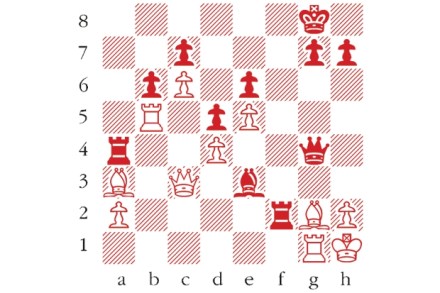
Black to play. This position is from Scibior-Chiu, Varsity Match 2013. Black now powered through into the white position. What was the key move? Answers to me at The Spectator by Tuesday 8 March or via email to victoria@spectator.co.uk or by fax on 020 7681 3773. There is a prize of £20 for the first correct answer out of a hat. Please include a postal address and allow six weeks for prize delivery. Last week’s solution 1 ...
Gnomic | 25 February 2016

From our UK edition

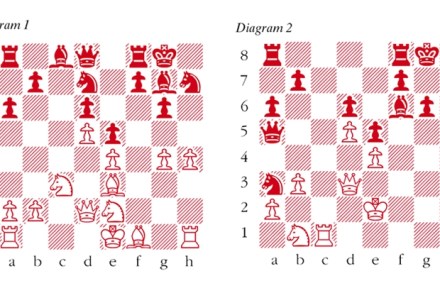
Zurich has been the scene for the latest clash between the titans of chess. Over a mere four days in February, six elite grandmasters contested no fewer than three fast-time-limit all-play-all tournaments, with combined results leading to an overall victory for Hikaru Nakamura, fresh from his triumph in Gibraltar. Zurich was what might be termed a boutique competition, but action-packed nonetheless. Even an apparently unperturbed Sepp Blatter was observed in the VIP enclosure, perhaps following up the theories expounded in the book Football and Chess: Tactics Strategy Beauty (Hardinge Simpole), which identifies similarities between the games. Nakamura-Aronian: Opening Blitz, Zurich 2016 18 Bxh6 Nakamura spots vulnerability in the black camp. If now 18 ...