Raymond Keene

Blazing Sadler

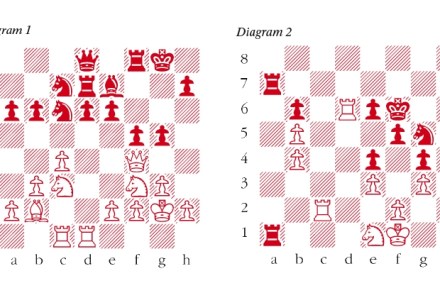
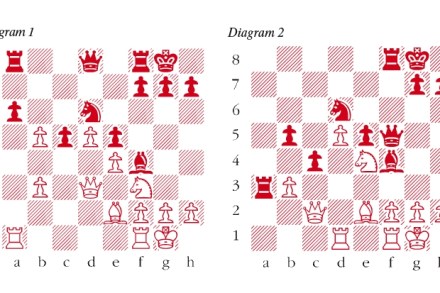
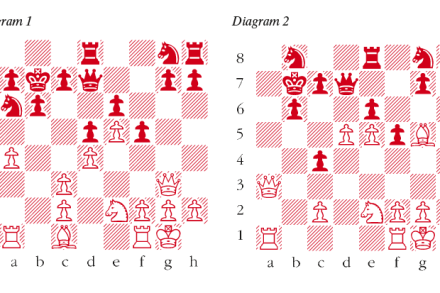
Matthew Sadler’s retirement from full-time international chess is one of the great losses to the British game. Occasionally, the one-time prodigy emerges, usually to make a massive score in a rapid or blitz event in the vicinity of Holland, where he now works and lives. It is also fortunate that he still competes in the Four Nations Chess League.   This week’s game is a Sadler victory against a former two-times World Championship candidate, Jon Speelman.   Sadler-Speelman: 4NCL 2017; French Defence   1 e4 e6 2 d4 d5 3 Nc3 Bb4 4 e5 Qd7 The usual move here is 4 ... c5 with an immediate challenge to the white pawn centre. Speelman may have chosen the text in the erroneous belief that Sadler would have been less well prepared for it.
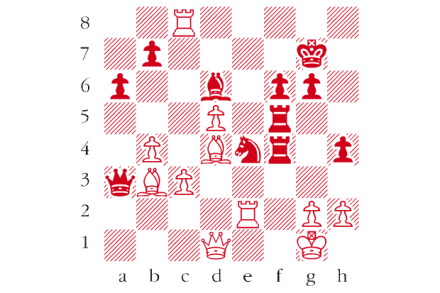
no. 445

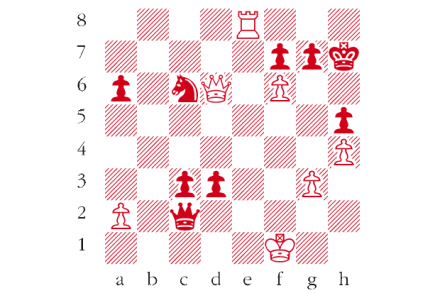
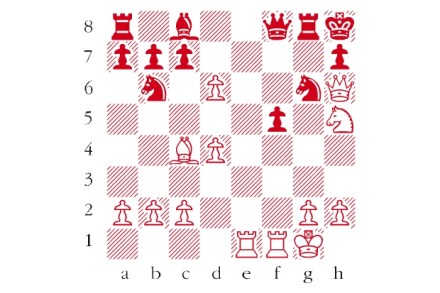
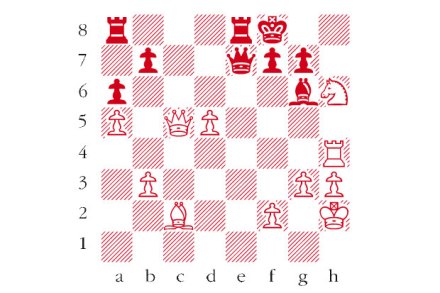
Black to play. This position is from Morozevich-Sadler, Reykjavik 1999, a game from Sadler’s heydey, when he was regularly beating the best players in the world. How did he finish off? Answers to me at The Spectator by Tuesday 28 February or via email to victoria@spectator.co.uk. There is a prize of £20 for the first correct answer out of a hat. Please include a postal address and allow six weeks for prize delivery.   Last week’s solution 1 Rh8+. Last week’s winner R.F. Tindall, Great Shelford, Cambridgeshire.

no. 444

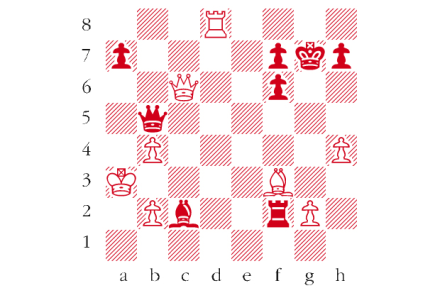
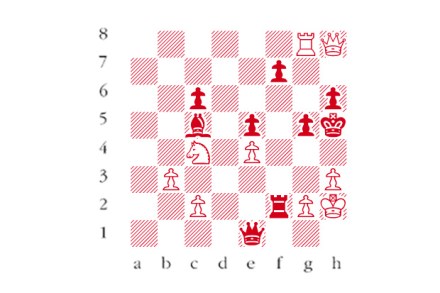
White to play. This position is a variation from Hou Yifan-Ju, Gibraltar 2017. Hou lost this game to her compatriot. The puzzle shows what might have happened if her opponent had gone wrong. How can she conclude her attack? Answers to me at The Spectator by Tuesday 21 February or email victoria@spectator.co.uk. There is a £20 prize for the first correct answer out of a hat. Please include a postal address and allow six weeks for prize delivery.   Last week’s solution 1 ...

Cui Bono

The cause célèbre at the Tradewise tournament in Gibraltar, which finished earlier this month, was the extraordinary protest by Hou Yifan, the reigning women’s world champion, against having to play seven female opponents in ten rounds. In the tenth and final round she made her complaint manifest by deliberately throwing the game in just five moves. The sensational outburst went as follows: (Hou Yifan-Babu Lalith, Gibraltar 2017) 1 g4 d5 2 f3 e5 3 d3 Qh4+ 4 Kd2 h5 5 h3 hxg4 White resigns. The Gibraltar organisers reacted with indignation, pointing out that the pairings for their event are calculated by a well-established computer program which excludes any bias.

Tradewise | 9 February 2017

The Tradewise tournament at Gibraltar has gained a colossal reputation and is even challenging the traditional tournament at Wijk aan Zee (see last week’s column) in terms of playing strength. This year the tournament was graced by our very own Michael Adams and Nigel Short, as well as such illustrious denizens of the international arena as Vassily Ivanchuk, Fabiano Caruana and Hikaru Nakamura. Astonishingly, Nakamura succeeded in winning the event for the third year running, having triumphed in a play-off after an initial triple-tie for first place. His first-prize reward was a handsome £23,000.

no. 443

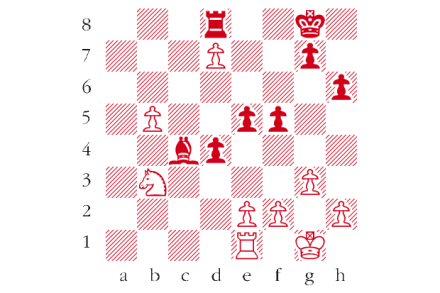
Black to play. This position is from Gledura-Topalov, Gibraltar 2017. Bulgarian grandmaster Veselin Topalov is not the force he used to be, but he played a fine attacking game in Gibraltar, of which this was the conclusion. How did he finish off? Answers to me at The Spectator by Tuesday 14 February or via email to victoria@spectator.co.uk. There is a prize of £20 for the first correct answer out of a hat. Please include a postal address and allow six weeks for prize delivery.

Serendipity

My two previous articles dwelt on Richard Réti’s introduction of the so-called hypermodern systems. Characterised by the double fianchetto of White’s bishops, Réti swept to victory with his invention against both Bogolyubov and Capablanca, as detailed in my columns. A fortuitous coincidence with the publication of Réti: Move by Move by Thomas Engqvist (Everyman Chess) was the victory by the young Hungarian Richard Rapport against world champion Magnus Carlsen at the recent Tata Steel tournament at Wijk aan Zee in Holland.   The tournament was won by the resurgent former Philippine, now USA grandmaster, Wesley So, who appears to have become invincible in his latest competitions.

no.442

White to play. This position is from So-Wojtaszek, Wijk aan Zee 2017. White has only one move to win. Can you see it? Answers to me at The Spectator by Tuesday 7 February or via email to victoria@spectator.co.uk. There is a prize of £20 for the first correct answer out of a hat. Please include a postal address and allow six weeks for prize delivery.

Capa capitulates

The new book by Thomas Engqvist, Réti: Move by Move (Everyman Chess), about the hypermodern leader Richard Réti, is so significant that it deserves further examination.   Perhaps Réti’s most celebrated victory came against Capablanca, who had come through his 1921 world title contest and the subsequent great tournament of London 1922 without losing a single game. When Réti defeated Capablanca with his new opening system at New York 1924, it was the first game lost by Capa in eight years. It created a sensation.

no. 441

White to play. This is from Réti-Spielmann, Opatija 1912. How did Réti conclude his kingside attack? Answers to me at The Spectator by Tuesday 31 January or via email to victoria@spectator.co.uk. There is a prize of £20 for the first correct answer out of a hat. Please include a postal address and allow six weeks for prize delivery.

no. 440

White to play. This is from Réti-Tartakower, Vienna 1910. Can you spot White’s beautiful tactical coup? Answers to me at The Spectator by Tuesday 24 January or via email to victoria@spectator.co.uk. There is a prize of £20 for the first correct answer out of a hat. Please include a postal address and allow six weeks for prize delivery.   Last week’s solution 1 ...

Hypermodern

Richard Réti is one of the most fascinating figures in the history of chess thought. The author of two seminal books, Modern Ideas in Chess and Masters of the Chessboard, Réti was an expert in simultaneous blindfold chess, successfully taking on many opponents at one and the same time. In terms of his theories and games, his assertion that the centre need not be occupied by pawns must have seemed the chess equivalent of Dada to the classically minded grandmasters of his day, such as Tarrasch, Teichmann and Rubinstein. At the time it was dubbed ‘Hypermodern’ by Savielly Tartakower.

Gone Giri

The London Classic is over with the final scores being as follows: Wesley So 6/9; Fabiano Caruana 5½; Viswanathan Anand, Vladimir Kramnik and Hikaru Nakamura 5; Anish Giri 4½; Lev Aronian, Maxime Vachier-Lagrave and Michael Adams 4; Veselin Topalov 2.   This result means that Wesley So not only wins the London leg of the Grand Tour, but also takes first prize in the overall contest. The Grand Tour organisers have now announced the full lineup for 2017, with the nine permanent competitors being as follows: Wesley So, Fabiano Caruana, Magnus Carlsen, Hikaru Nakamura, Vladimir Kramnik, Maxime Vachier-Lagrave, Sergei Karjakin, Viswanathan Anand and Ian Nepomniachtchi.

no. 439

Black to play. This position is from Topalov-Anand, London Classic 2016. How did Black conclude? Answers to me at The Spectator by Tuesday 17 January or via email to victoria@-spectator.co.uk. There is a prize of £20 for the first correct answer out of a hat. Please include a postal address and allow six weeks for prize delivery.

Missed chances

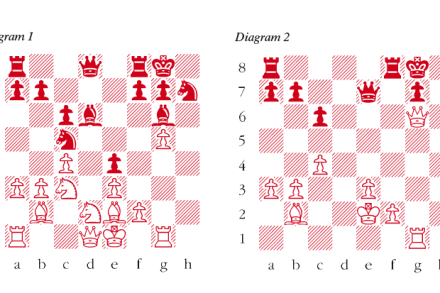
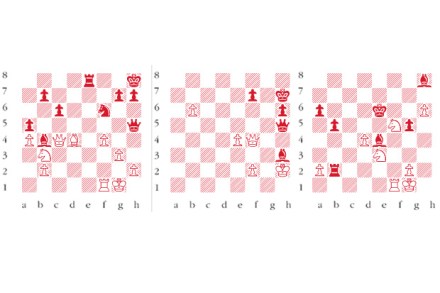
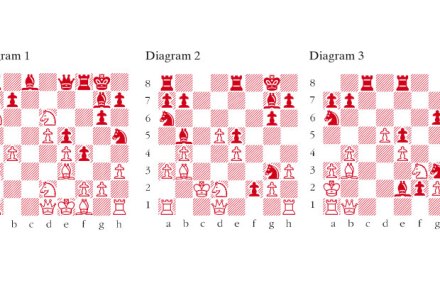
Magnus Carlsen has retained the World Championship but only after Sergei Karjakin, the challenger, missed some glorious opportunities. In game 9 Karjakin, already a point ahead in the match, built up a formidable attacking position, only to miss the coup juste at the critical moment.   Karjakin-Carlsen, New York (Game 9) 2016 (see diagram 1)   In the diagram position, Karjakin played 39 Bxf7+ which fizzled out to a draw after 39 ... Kxf7 40 Qc4+ Kg7 41 d5 Nf5 42 Bc3+ Kf8 43 Bxa1 Nxh4+ 44 Qxh4 Qxd5 45 Qf6+ Qf7. What Karjakin missed was 39 Qb3 when all the variations work in his favour, e.g. 39 ... Nf5 40 Bxf7+ Kg7 41 Rh3 (forced) 41 ... Qe7 (threatening ...Nh4+) 42 Bg8 Nh4+ 43 Rxh4 Qxh4 44 Qf7+ Kh8 45 Qxc7 Kxg8 46 d5 which should win.

no. 438

White to play. This is from Carlsen--Karjakin, New York play-off (Game 4) 2016. What was Carlsen’s stunning move to retain the world title? Answers to me at The Spectator by Tuesday 10 January or via email to victoria@spectator.co.uk. There is a prize of £20 for the first correct answer out of a hat. Please include a postal address and allow six weeks for prize delivery.

Game of the year

Probably the most spectacular game played in the past year was the brilliant win by Gawain Jones in the Olympiad. Gawain, a devotee of the King’s Indian Defence, succeeded in fashioning a masterpiece very much in the style of those King’s Indian heroes David Bronstein, Mikhail Tal and Leonid Stein.   Nguyen (Vietnam)-Jones (England): Baku Chess Olympiad 2016; King’s Indian Defence   1 d4 Nf6 2 c4 g6 3 Nc3 Bg7 4 e4 0-0 5 Nf3 d6 6 h3 e5 7 d5 Na6 8 Be3 Nc5 9 Nd2 Nh5 This is highly unusual. In previous play, Black almost invariably secured the position of his queen’s knight with 9 ... a5.

no.437

White to play and win. This is a position from Caruana-Kramnik, Leuven 2016. Answers to me at The Spectator by Tuesday 3 January or via email to victoria@spectator.co.uk. There is a prize of £20 for the first correct answer out of a hat. Please include a postal address and allow six weeks for prize delivery.   Last week’s solution 1 ...

Chess puzzle | 8 December 2016

Black to play. This position is from Topalov-Nakamura, St Louis 2014. Black seems to be in big trouble, but how did he turn the tables? We regret that because of the Christmas printing schedule, this is not a prize puzzle.

London classic

The annual London Classic is now underway at Olympia. Understandably Magnus Carlsen, after his exertions in New York, is not competing. Nevertheless, the line-up is extremely powerful, consisting of Maxime Vachier-Lagrave, Fabiano Caruana, Vladimir Kramnik, Lev Aronian, Hikaru Nakamura, Wesley So, Anish Giri, Viswanathan Anand, Veselin Topalov and our own Michael Adams. This week, a game and puzzle from previous encounters between the contestants. I have published this game before, but fresh computer analysis has revealed some exciting new possibilities.